What an Adult Female Whippet Weighs
One of the most common worries new Whippet owners face, especially those used to other breeds, is whether their dog is "too skinny." You see those elegant, fine lines and think, "Are they actually getting enough to eat?" This guide is here to put those worries to rest and give you a comprehensive understanding of what a healthy adult female Whippet truly weighs and how to assess her condition, so you can confidently know your lean lady is thriving.
The Typical Weight Range for an Adult Female Whippet
Let's cut right to the chase: adult female Whippets are notoriously lean, and their weight can vary quite a bit, even within the breed standard. Unlike many other breeds where a certain weight is a strong indicator of health, for a Whippet, it's more about how that weight is carried on her frame. Still, there are general guidelines that can help you understand if your girl is within a healthy spectrum.
Breed Standard Guidelines
When you look at official breed standards, like those from the American Whippet Club or The Kennel Club in the UK, they typically provide height ranges rather than strict weight numbers. This is because a Whippet's build is so individual. For instance, a female Whippet might stand anywhere from 18 to 21 inches at the shoulder. A dog at the taller end of that range will naturally weigh more than one at the lower end, even if both are in perfect condition. Generally, an adult female Whippet will fall somewhere between 15 to 30 pounds. This is a pretty wide window, I know, but it reflects the natural diversity you see. Some lines are finer-boned, others a bit more substantial, and all can be perfectly healthy and correct for the breed. Don't fall into the trap of trying to force your Whippet into a specific number if her body condition tells a different story.
Imagine two female Whippets standing side-by-side. One might be 19 inches tall and weigh 22 pounds, looking absolutely ripped and athletic. The other might be 20.5 inches tall and weigh 27 pounds, with the same ideal body condition, just a larger overall frame. Both are perfectly healthy and within the breed's expectations. The critical thing to remember is that Whippets are built for speed and agility, not bulk. Their lean frame is a feature, not a bug.
Real-World Variations
Beyond the official standards, real-world Whippets display even more variation. A female from a long line of show champions might carry a touch more substance than a female whose lineage is steeped in racing. A competitive lure coursing Whippet will be incredibly muscled and lean, often feeling like pure sinew and bone. A beloved pet Whippet, perhaps a little less active in her senior years, might carry a pound or two more. All these scenarios can be perfectly normal. What matters is that her weight allows her to move freely, play with enthusiasm, and enjoy a full, active life. The Twelve to Fifteen Years a Whippet Lives is a testament to their inherent robustness when properly cared for, regardless of minor weight fluctuations within a healthy range.
It's common for owners to compare their Whippet to other dogs at the park and feel like their own is an outlier. But remember, a Whippet isn't built like a Labrador or a Bulldog. Their unique physiology means what looks "thin" on another breed is often ideal for a Whippet. Always consider your individual dog's build, age, and activity level rather than fixating on a single number.
Beyond the Scale: Assessing Your Whippet's Body Condition Score (BCS)
While a general weight range is a starting point, the most crucial tool for assessing your female Whippet's health is her Body Condition Score (BCS). This is far more reliable than a number on the scale because it takes into account her individual build and muscle mass. A vet will often use a 9-point scale, with 4 or 5 being ideal, but even a simpler 5-point scale can be very helpful for owners.
The Visual Assessment
First, take a good look at your Whippet from above and from the side. From above, you should see a distinct waist, like an hourglass figure, tucked in behind her ribs. From the side, her abdomen should tuck up sharply from her rib cage towards her hind legs – this is known as a pronounced "tuck-up" and is a hallmark of the breed. You should be able to clearly see her last three to four ribs when she's standing, especially after she's just finished a burst of play or when she turns. It's not just a sign of being thin; it's a sign of being lean. How Thin a Whippet Should Look explains this visual assessment in even more detail.
If you don't see any ribs at all, or if her waist appears straight or bulging from above, she might be carrying too much weight. Conversely, if all her ribs are clearly visible without even looking closely, or if her hip bones and shoulder blades protrude sharply, she might genuinely be too thin. This visual check is your first line of defense in making sure she's at a healthy weight.
The Palpation Test
Next, get hands-on. Gently run your hands along your Whippet's sides. You should be able to easily feel her ribs, much like feeling the knuckles on your hand when your palm is flat. You should feel them distinctly, but they shouldn't feel sharp or pokey with no padding over them. Now, try feeling her spine. You should be able to feel the bumps of her vertebrae, but again, they shouldn't protrude sharply or be uncomfortable to the touch. Run your hands over her hip bones as well; these should also be palpable but not overly prominent. Feeling a Whippet's Ribs and Hip Bones emphasizes the importance of this hands-on approach.
A healthy Whippet will have a minimal layer of fat over her ribs, spine, and hip bones. If you have to press hard to feel any bones, she's likely overweight. If her bones feel like they're directly under her skin with no cushioning whatsoever, she might be underweight. The key is that easy palpation without sharpness. This tactile assessment gives you crucial information that the eyes alone might miss.
Why Weight Alone Isn't Enough
Relying solely on a scale reading for your Whippet is often misleading. As we discussed, a 20-pound female Whippet could be perfectly healthy, while another 20-pound female could be overweight if she's particularly petite, or underweight if she's unusually tall. It's all about body composition and structure. Muscle weighs more than fat, so a highly athletic Whippet might weigh more than a less active one of the same size, yet still be leaner. What Body Condition Score a Whippet Should Be is a fundamental concept for all sighthound owners to grasp.
Consider an older Whippet. As they age, it's natural for them to lose some muscle mass, even if they maintain the same weight on the scale. This can mean their BCS changes, and you might need to adjust their diet or exercise to maintain their health. A young, active Whippet, conversely, might pack on muscle as she matures without significantly increasing her overall fat. This is why the combination of visual inspection and gentle palpation, along with understanding her typical activity levels and age, provides a much more accurate picture of her well-being than simply a number on the bathroom scale.
Here's a quick guide to understanding your Whippet's BCS:
| BCS (5-Point Scale) | Visual Cues | Palpation Cues | Assessment |
|---|---|---|---|
| 1 (Emaciated) | Ribs, vertebrae, pelvic bones easily visible from a distance. No discernible fat. | Bones extremely prominent, no muscle mass. | Severely underweight, needs immediate veterinary attention. |
| 2 (Underweight) | Ribs, vertebrae, pelvic bones easily visible. Minimal muscle mass. | Bones easily felt, minimal tissue cover. | Underweight, consult vet. May need increased caloric intake. |
| 3 (Ideal) | Ribs (last few) visible, pronounced waist & tuck-up. | Ribs easily felt with slight fat cover. Vertebrae palpable. | Ideal weight, healthy and athletic. |
| 4 (Overweight) | Ribs barely visible, waist slightly noticeable. Slight abdominal sag. | Ribs palpable with difficulty, moderate fat cover. | Overweight, consider diet adjustment and increased exercise. |
| 5 (Obese) | No ribs visible, no waist or tuck-up. Obvious fat deposits. | Ribs difficult or impossible to feel due to heavy fat. | Obese, significant health risk. Urgent veterinary consultation for weight loss plan. |
Factors That Influence a Female Whippet's Weight
Understanding the general weight and BCS is one thing, but knowing why your Whippet falls where she does within that range is also incredibly important. Several factors play a significant role in determining her overall size and build.
Genetics and Lineage
Just like people, Whippets inherit their general body type from their parents. If your female Whippet comes from a line of smaller, finer-boned dogs, she's likely to be on the lower end of the weight spectrum. Conversely, if her ancestors were larger, more substantial Whippets, she might naturally carry more weight, even if she's still perfectly lean and athletic. There can be noticeable differences between show lines, which sometimes prioritize a slightly more substantial build, and racing lines, which are often bred for maximum leanness and speed. What an Adult Male Whippet Weighs might shed light on how genetic tendencies can influence size across the sexes in a litter.
This genetic predisposition means you can't compare your Whippet directly to every other Whippet you see. Her unique genetic blueprint will dictate her natural "set point" for weight and size. It's why two Whippets of the exact same height could have a five-pound difference in healthy weight. Always consider her background and what is typical for her specific lineage.
Activity Levels and Muscle Mass
A Whippet's activity level directly impacts her muscle mass, and muscle is denser than fat. A female Whippet who regularly participates in high-intensity activities like lure coursing, Fast CAT, or even just daily sprints in a secure yard will likely have a more developed musculature. This increased muscle mass will contribute to her overall weight, even if she has very little body fat. Whether a Racing Whippet Is Leaner Than a Show One elaborates on how intense physical activity shapes their physique.
Think about a human athlete versus someone with a more sedentary lifestyle; the athlete might weigh more due to muscle, even if they wear a smaller clothing size. The same principle applies to your Whippet. A Whippet who spends most of her day as a "forty-mile-an-hour couch potato" (a common, affectionate term for the breed!) might have a slightly softer physique and weigh less than her more active counterparts, yet still be perfectly healthy. The key is that her weight supports her activity level without putting strain on her joints or cardiovascular system.
Diet and Metabolism
What you feed your Whippet and how efficiently her body uses those calories are huge factors. Whippets, despite their athletic build, are generally quite efficient eaters. They don't typically require massive amounts of food compared to some other breeds of similar size. However, the quality of that food matters immensely. A diet rich in high-quality protein and appropriate fats supports lean muscle mass and provides sustained energy. Keeping Weight On a Whippet Without Making It Fat is a challenge many owners face, highlighting the delicate balance required.
Some Whippets also have incredibly fast metabolisms, burning through calories at an impressive rate. Others might be a bit more laid-back metabolically. This means what works for one Whippet might not work for another. It's often a process of trial and error, working with your vet, to find the right food and portion size. How Much a Whippet Should Eat isn't a simple equation, as individual metabolism, age, and activity all play a part. While Whippets are often cheap to feed thanks to their moderate appetites, investing in quality nutrition pays dividends in health. Why a Whippet Is Cheap to Feed and Expensive to Insure helps to balance that budget equation.
Common Concerns and How to Maintain a Healthy Weight
It's natural to worry about your dog's health, and with a breed as uniquely built as the Whippet, those worries can sometimes be amplified by misunderstandings about their ideal physique. Let's tackle some common concerns and talk about proactive steps for maintaining her optimal weight.
When to Worry About Underweight
While a lean Whippet is a healthy Whippet, there's a definite line between lean and genuinely underweight. If you notice all her ribs, vertebrae, and hip bones are sharply visible from a distance, or if there's no visible or palpable muscle mass, especially over her rump, it's time to be concerned. Other red flags include lethargy, dull coat, persistent diarrhea, or a loss of appetite. Whether a Whippet's Spine Should Be Visible is a common concern, and understanding the nuances of what's normal versus alarming is key.
If your female Whippet is genuinely underweight, the first step is always a veterinary check-up. This is crucial to rule out any underlying medical conditions, such as parasites, dental issues, or other health problems that might be preventing her from gaining or maintaining weight. Once health issues are ruled out, you can work with your vet to adjust her diet. This might involve increasing portion sizes, switching to a higher-calorie food, or adding nutrient-dense toppers. If you're considering a specialized diet, perhaps a fresh food option like Ollie, remember to consult your vet first to ensure it meets all her nutritional needs without overdoing any particular nutrient. Sometimes, simply feeding more frequent, smaller meals can help, especially if she's a picky eater.
Strategies for Healthy Weight Maintenance
Maintaining a healthy weight for your adult female Whippet involves a balanced approach of appropriate nutrition, regular exercise, and consistent monitoring.
1. Quality Nutrition: Invest in a high-quality dog food that provides balanced nutrition suitable for active dogs. Look for foods with good protein sources. You can find a wide range of high-quality kibbles and supplements on platforms like Chewy to support your Whippet's nutritional needs. While some owners debate Whether a Whippet Needs a High Fat Diet, it's generally agreed that a diet that provides adequate energy for their activity without being excessively rich is ideal.
2. Appropriate Exercise: Whippets need regular opportunities to sprint and stretch their legs in a safe, enclosed area, but they don't need hours of constant running. A few good sprints a day, combined with leash walks, is often sufficient. Consistent exercise helps build and maintain muscle mass, contributing to a healthy body condition.
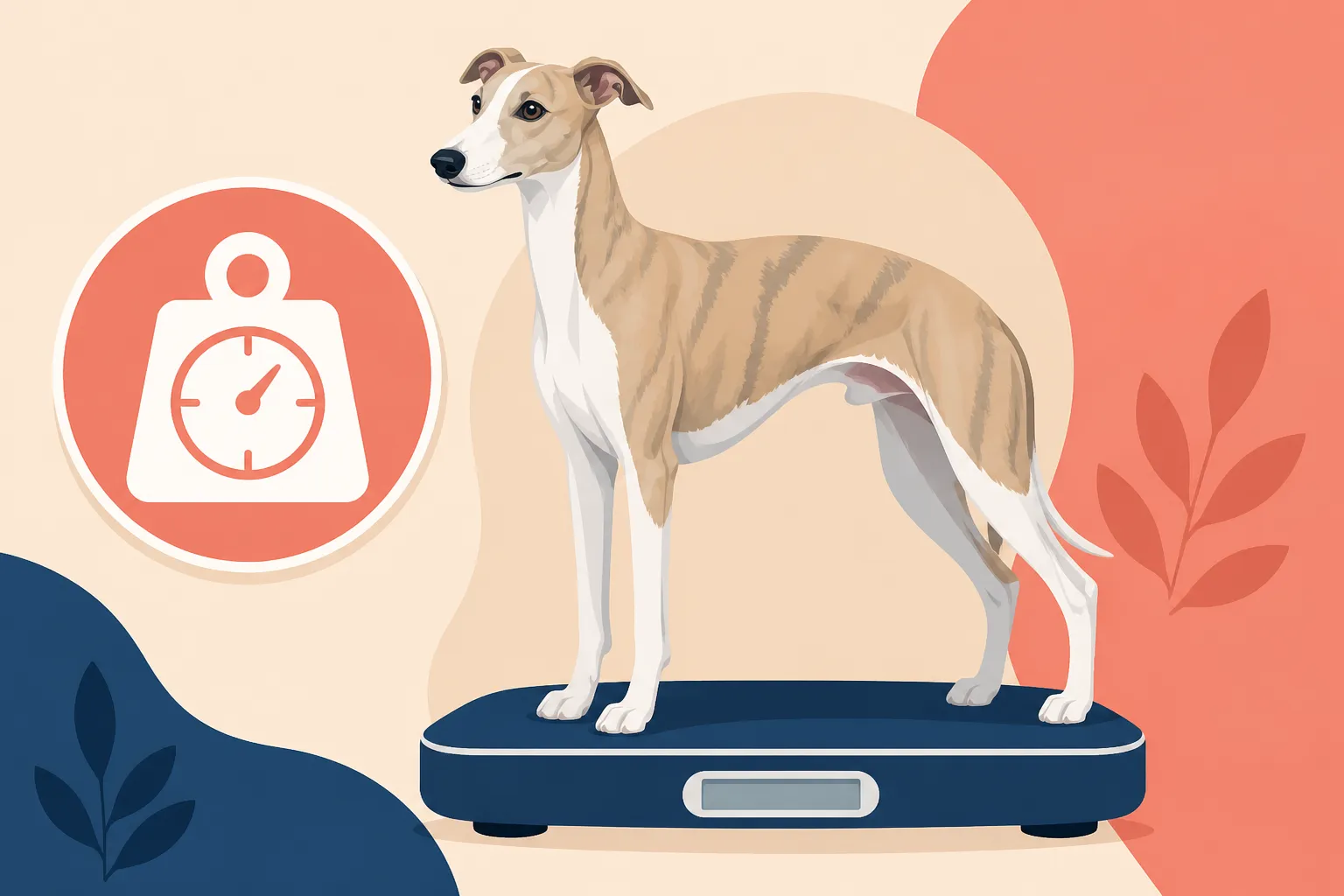
3. Regular Monitoring: Make it a habit to perform both visual and palpation checks regularly, perhaps once a week or every couple of weeks. This allows you to catch any slight changes in her body condition before they become significant. For accurate tracking, a good digital pet scale, often available on Amazon, can be a useful tool, especially for younger Whippets or those needing close monitoring as they age.
4. Veterinary Check-ups: Regular veterinary check-ups are vital. Your vet can provide an objective assessment of her BCS and overall health, catch any subtle changes, and offer tailored advice on diet and exercise as she ages.
Remember, the goal isn't to make your Whippet look "chubby" or heavily built; it's to maintain her naturally lean, athletic physique. A healthy female Whippet is a joy to behold – graceful, swift, and comfortable in her own skin, whether she weighs 18 or 28 pounds.
Disclaimer
This article is for general informational purposes only and does not constitute professional advice. Laws, prices and regulations vary by location and change over time. Consult a qualified professional for guidance on your specific situation.