How Thin a Whippet Should Look
One of the most common worries new Whippet owners face, and certainly one of the most frequent comments we hear from well-meaning strangers, is that our beloved sighthounds look too thin. It's a frustrating experience, constantly having to defend your dog's healthy weight when you know you're providing them with the best care. This guide is here to shed light on what a healthy Whippet should look like, helping you confidently distinguish their naturally lean build from genuine underweight concerns and giving you the knowledge to answer those inquisitive glances.
Understanding the Whippet's Unique Physique
It’s completely understandable why someone unfamiliar with the breed might raise an eyebrow at a Whippet’s svelte figure. We live in a world where many dog breeds are bred to be quite substantial, often with significant body fat and dense coats that mask their true form. A Whippet, however, is a breed built for speed and agility, and their physique reflects this purpose down to every lean muscle and visible bone.
Why a Whippet Has So Little Body Fat
Whippets are sighthounds, and this classification alone tells you a great deal about their body composition. They are designed by generations of selective breeding to be swift, aerodynamic, and incredibly athletic. This means they carry very little subcutaneous fat – that insulating layer that makes many other breeds look "cushy" or full-bodied. Think of them as canine athletes; you wouldn't expect a marathon runner or a sprinter to carry excess weight, and the same principle applies to a Whippet. Their bodies are streamlined, with long, powerful muscles that are meant to propel them forward with incredible bursts of speed.
This lack of fat isn't a sign of neglect or poor nutrition; it's a fundamental characteristic of the breed. Their skin is thin and lies close to their musculature, which means you'll often see the ripple of their muscles and the curve of their bones beneath the surface. For a deeper dive into this, check out Why a Whippet Has So Little Body Fat. It’s a design marvel, really, allowing them to hit those impressive speeds we all adore, but it does mean their appearance can be quite striking and different from the average pet dog.
The Greyhound Influence on Whippet Conformation
The Whippet's lineage is deeply intertwined with the Greyhound, often being referred to as the "poor man's racehorse." This ancestral connection is crucial to understanding their conformation. Greyhounds, too, are renowned for their incredibly lean, muscular bodies, and Whippets inherited many of these same traits, albeit in a more compact package. Both breeds share that distinctive deep chest, arched loin (the 'roach' back), and tucked-up abdomen – all features that contribute to their powerful stride and efficient movement.
These physical characteristics are not just for show; they are functional. The deep chest houses large lungs and a powerful heart, enabling them to oxygenate their muscles rapidly during a sprint. The arched loin acts like a spring, coiling and releasing energy to extend their reach. And the tucked-up belly minimizes drag. When you see a Whippet, you are looking at a highly specialized athlete, a design perfected over centuries for chasing game or racing. Their lean structure is a testament to this heritage, not a cause for concern.
What "Healthy Thin" Really Means for a Whippet
So, if "thin" is normal, how do you know if your Whippet is "healthy thin" and not genuinely underweight? It comes down to understanding the visual cues and, more importantly, what you should feel when you gently examine your dog. It's a skill every Whippet owner quickly develops, often out of necessity to reassure themselves and others.
Feeling a Whippet's Ribs and Hip Bones
This is perhaps the most reliable way to assess your Whippet's body condition. When you run your hands along your Whippet's sides, over their ribs, you should be able to feel each individual rib bone distinctively, almost like feeling the slats of a Venetian blind, but with a very thin layer of muscle and skin over them. They shouldn't feel like they're poking out sharply or feel completely devoid of any covering, but you definitely shouldn't have to press hard to locate them either. If you have to dig your fingers in to feel the ribs, your Whippet is likely carrying too much weight. Conversely, if the ribs feel like knife blades or are visibly sunken between each bone, your dog might be too thin.
The hip bones (pelvic bones) and the points of their shoulders should also be easily palpable, again, with a slight covering. You might even see the hip bones subtly defined, especially when they move or stretch. What you want to avoid is them looking overly angular, as if they've been chiseled, or feeling bare and sharp to the touch. The goal is palpable, not prominent to the point of being alarming. For a more detailed guide on this, see Feeling a Whippet's Ribs and Hip Bones.
How Many Ribs Should Show on a Whippet
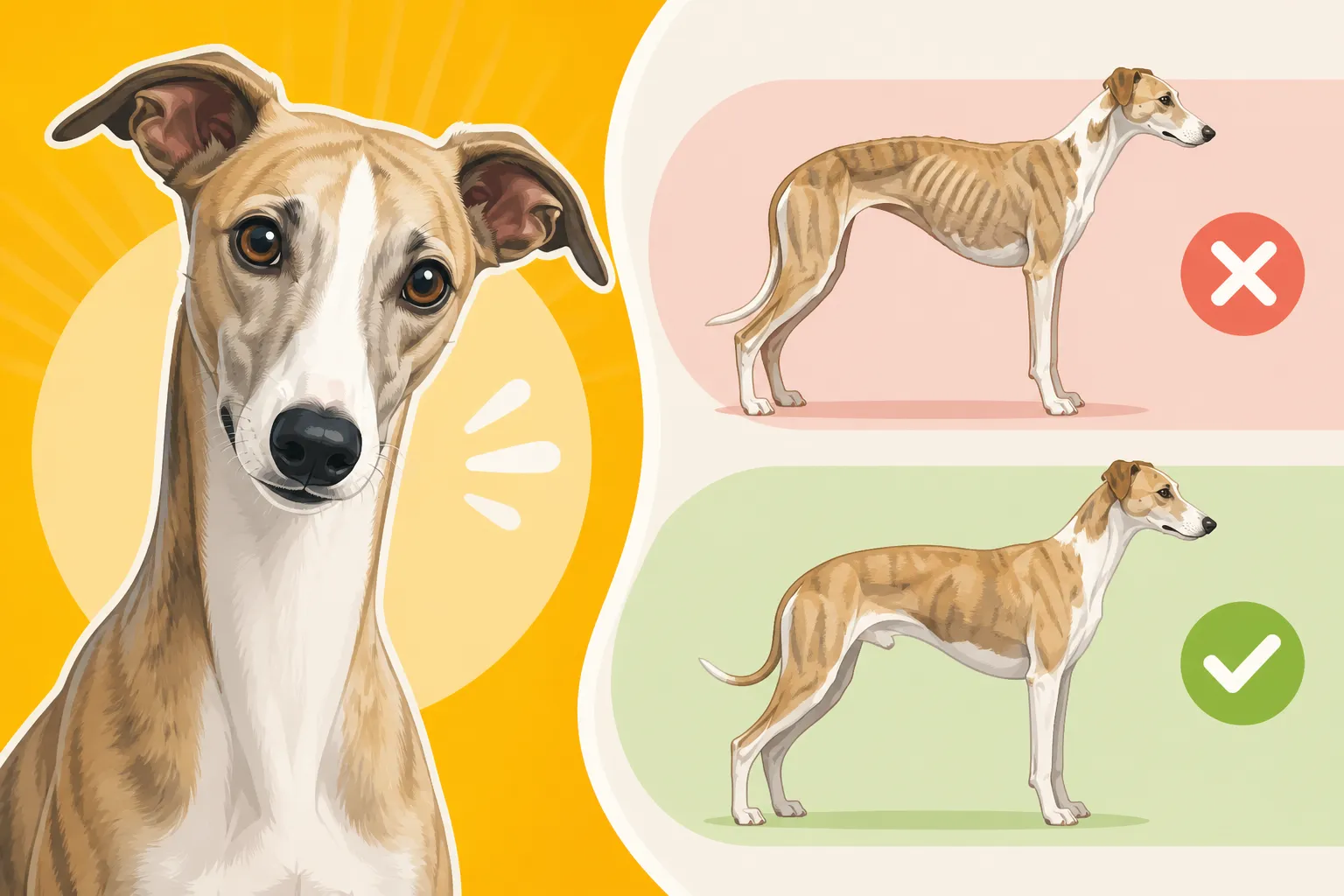
Visually, it's very common and perfectly healthy for a Whippet to show a few ribs, especially the last two or three ribs nearest their flank. This visibility often fluctuates depending on their posture, whether they've just exercised, or even after a big meal. When your Whippet is standing relaxed, you might see the outline of these ribs. As they inhale, the ribs might become more apparent, and when they stretch or arch their back, you might see them more clearly too. This is not a red flag; it's a normal part of their anatomy.
However, if you can clearly see all of your Whippet's ribs from shoulder to hip without them even moving, or if their spine and hip bones are also very clearly defined and protruding, then it might be time for a closer look. While a couple of ribs are fine, a skeletal appearance indicates a potential problem. It's a fine line, but with experience, you'll learn to differentiate between a healthy, lean sighthound and one that genuinely needs a few extra calories. Understanding How Many Ribs Should Show on a Whippet can really help set your mind at ease.
Distinguishing Healthy Thinness from Being Underweight
While a lean physique is normal for a Whippet, there's a definite line between healthy leanness and being genuinely underweight, which can be a sign of underlying health issues. It's important to be vigilant and know the warning signs that indicate your Whippet might need more than just an extra scoop of kibble.
When a Whippet Is Genuinely Too Thin
A truly underweight Whippet will display more than just visible ribs. You might notice:
- Prominent, Bony Spine and Pelvis: While some definition is normal, an underweight Whippet's spine will look like a row of sharp knobs, and their pelvic bones will protrude sharply with no apparent muscle or fat covering.
- Sunken Eyes: Their eyes may appear sunken into their sockets, giving them a weary or emaciated look.
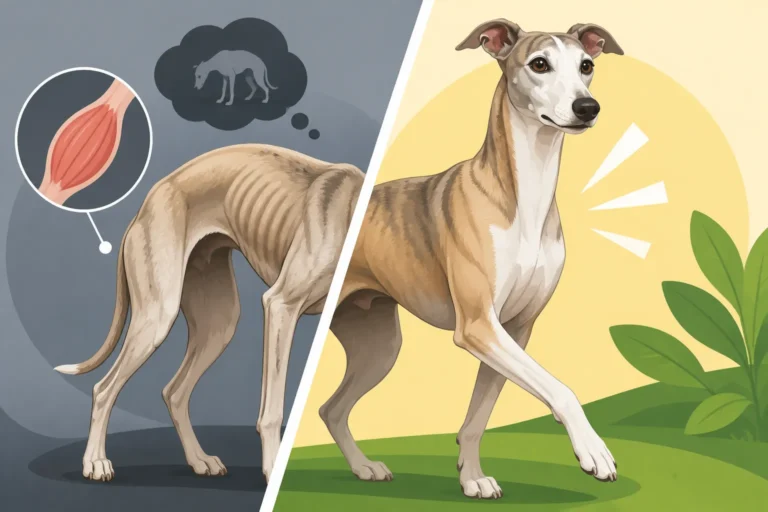
- Lack of Muscle Mass: Run your hands over their thighs and along their back. If you feel very little muscle definition, or if the muscles feel soft and wasted, it's a concern. Healthy Whippets, even lean ones, have incredibly firm and defined musculature.
- Dull Coat and Skin Issues: While not always indicative of weight, a dull, dry, or flaky coat can be a sign of poor nutrition.
- Low Energy Levels: While Whippets are couch potatoes, they should still have bursts of energy for zoomies or walks. Persistent lethargy could be a sign of being underweight or an underlying health issue.
- Frequent Coldness: With so little body fat, Whippets are prone to feeling the cold, but an underweight Whippet may shiver excessively even in mild temperatures.
If you observe these signs, it's crucial to consult your veterinarian promptly. Being genuinely underweight can be caused by various factors, including parasites, dental issues, malabsorption, metabolic diseases, or even stress. Your vet can rule out medical causes and help devise a plan to safely put weight on your Whippet. For more on warning signs, read When a Whippet Is Genuinely Too Thin.
The Role of the Body Condition Score (BCS)
Veterinarians often use a Body Condition Score (BCS) system to objectively assess a dog's weight. This is typically a 1-5 scale or a 1-9 scale, where 1 is emaciated and 9 is morbidly obese. For Whippets and other sighthounds, the standard BCS charts sometimes need a slight adjustment because their ideal "lean" falls into a category that might be considered too thin for other breeds. A healthy Whippet often hovers around a BCS of 3 or 4 on a 9-point scale, whereas many other breeds might aim for a 5.
Here's a general guide adapted for Whippets:
| BCS (9-point scale) | Description for a Whippet | What You See/Feel |
|---|---|---|
| 1 (Emaciated) | Severely underweight | Ribs, vertebrae, pelvic bones easily visible from a distance; no discernible body fat; obvious loss of muscle mass. |
| 2 (Very Thin) | Underweight | Ribs, vertebrae, pelvic bones easily visible; no palpable fat; some muscle loss. |
| 3 (Thin/Ideal) | Ideal for most Whippets | Ribs easily palpable with minimal fat covering; waist easily noted; abdominal tuck evident. A few ribs may be visible. |
| 4 (Lean/Ideal) | Ideal for some Whippets | Ribs palpable with a thin fat covering; waist easily noted; abdominal tuck evident. Ribs less visibly prominent than a 3. |
| 5 (Moderate) | Slightly overweight | Ribs palpable but with a slight excess of fat covering; waist discernable but not prominent. |
| 6 (Heavy) | Overweight | Ribs difficult to palpate due to moderate fat covering; waist barely discernable or absent; abdominal tuck lost. |
| 7-9 (Obese) | Obese | Significant fat deposits over ribs, spine, and tail base; no waist; no abdominal tuck; heavy fat deposits on chest and limbs. |
A score of 3 or 4 is generally considered the sweet spot for a Whippet. It ensures they have enough energy reserves without carrying excess weight that could strain their joints or heart. Regular assessment using a BCS chart can be a great tool for monitoring your Whippet’s condition and giving you confidence in your observations.
Factors Influencing a Whippet's Appearance
Just like humans, a Whippet's body condition isn't static. Several factors can influence how thin or muscular they appear, even when they are perfectly healthy. Recognizing these nuances helps you understand your individual dog better and avoid unnecessary worry.
Age and Activity Level
A Whippet puppy will naturally look different from a mature adult, and a senior Whippet will have yet another distinct appearance. Puppies, especially during growth spurts, can sometimes look gangly and all legs, often appearing quite thin even when eating well. They are channeling all their energy into growth. As they mature, typically around 18 months to two years, they start to fill out and gain more muscle mass. The Age a Whippet Reaches Full Weight is a good read on this. An adult Whippet in their prime will generally maintain that athletic, lean look.
Senior Whippets, however, may start to lose some muscle mass, a natural part of aging, which can make them appear bonier or more angular, even if their fat stores remain the same or even increase in certain areas. Their activity levels might also decrease, influencing their overall body composition.
An active Whippet, one who regularly engages in activities like lure coursing, Fast CAT, or long, vigorous runs, will likely have more defined musculature and appear leaner than a Whippet who primarily enjoys sofa time and leisurely strolls. More exercise burns more calories, maintaining that taut, athletic physique. It's about balance: ensuring they get enough calories to fuel their activity without accumulating fat.
Genetics and Individual Variation
Within the Whippet breed, there's still a spectrum of body types. Some Whippets naturally have a more delicate bone structure, while others are a bit more robust. These genetic predispositions play a significant role in their overall appearance. You might have two healthy Whippets, both eating well and active, but one simply looks a touch finer-boned and leaner due to their individual genetic makeup.
An interesting example of genetic influence is the "Bully Whippet" phenotype, which results from a specific mutation of the myostatin gene. Whippets with two copies of this mutation develop significantly more muscle mass, appearing much bulkier than a typical Whippet. While these dogs are an extreme example, it highlights how genetics dictate body composition. You can learn more about this in Bully Whippet Syndrome and the Myostatin Gene Behind It. Even without this mutation, natural genetic variation means that "healthy thin" can look slightly different from one Whippet to the next.
Environmental and Seasonal Impact
The environment your Whippet lives in, particularly the climate, can also affect their appearance and caloric needs. Whippets, with their minimal body fat and thin coats, are not well-insulated. In colder climates, their bodies burn more calories to maintain core body temperature. This means a Whippet living in a chilly region might naturally be a touch leaner, or require more food, than one in a warmer climate, simply to stay warm. You might even notice them shivering more, which also burns calories. This is why considerations like Whether a Whippet Needs a Coat Below Fifty Degrees are so important.
Conversely, in hot weather, some Whippets might experience a slight decrease in appetite, or their energy levels might drop, affecting their daily calorie expenditure. Stress can also play a role; a Whippet experiencing anxiety or significant changes in their environment might have a reduced appetite or burn more calories due to nervous energy, leading to a leaner appearance. It’s always a good idea to consider these external factors when assessing your Whippet's condition.
Feeding for Optimal Whippet Body Condition
Maintaining that ideal "healthy thin" physique requires thoughtful nutrition. It's not about stuffing them full of food, but rather providing the right kind of fuel in appropriate amounts to support their active lifestyle and lean body mass.
How Much a Whippet Should Eat
Determining the exact amount of food your Whippet needs isn't a one-size-fits-all answer. It depends on several factors: their age, activity level, metabolism, and the specific calorie content of their food. Most dog food bags provide a general feeding guideline based on weight, but for a Whippet, these often need adjustment. A high-quality food with good protein and fat content is crucial. You're looking for nutrient density, not just volume.
Start with the recommended guidelines on your chosen food, then observe your Whippet's condition over a few weeks. Are they maintaining their ideal 3-4 BCS? If they're gaining too much weight, subtly reduce the amount. If they seem to be leaning out too much, gradually increase it. It's an ongoing process of observation and adjustment. Remember, a Whippet that sprints frequently will burn more calories than one who primarily enjoys leisure walks. For detailed information, see How Much a Whippet Should Eat. It's a journey of fine-tuning, and a conversation with your vet can provide personalized recommendations.
Ensuring Proper Nutrition Without Overfeeding
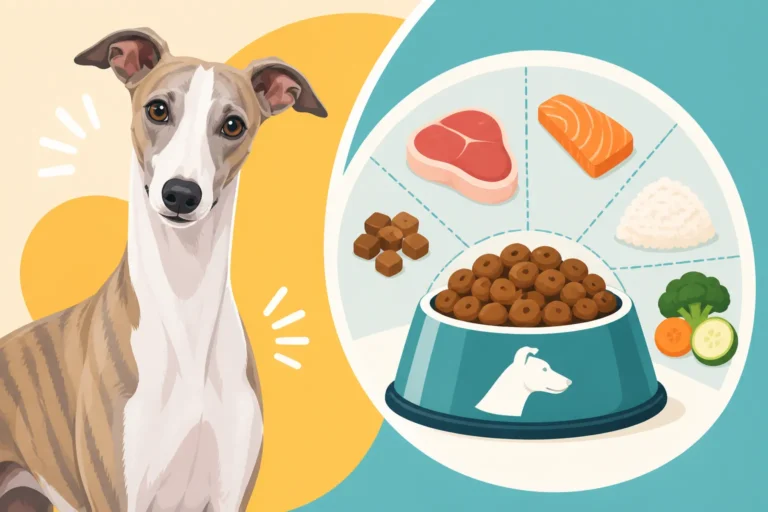
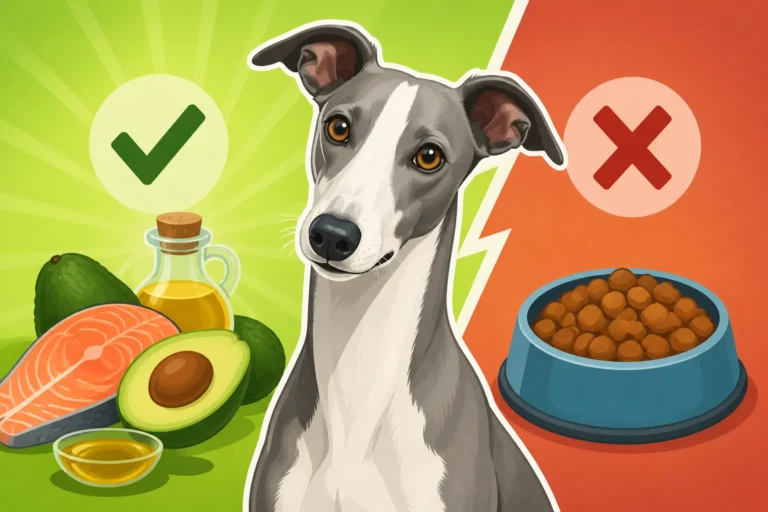
The key to keeping a Whippet at a healthy weight is to feed them a diet that supports their musculature and energy needs without leading to excess fat. This usually means a diet rich in high-quality animal protein to maintain muscle mass, and appropriate levels of healthy fats for energy and a shiny coat. Look for foods where meat is the first ingredient. Many owners find success with premium kibbles, fresh food diets, or even carefully balanced raw diets.
Brands like Ollie offer fresh food options that are pre-portioned and can be excellent for providing balanced nutrition, often with higher quality ingredients. If you prefer kibble, look for reputable brands available on platforms like Chewy or Amazon that prioritize whole ingredients and avoid excessive fillers. Avoid giving too many high-calorie treats, as these can quickly add unnecessary pounds without providing substantial nutrition. If your Whippet is prone to scarfing down their food, consider a slow-feeder bowl to encourage more mindful eating, which can also help with digestion and satisfaction. Feeding a Whippet That Sprints and Then Sleeps covers more on tailoring their diet to their activity. Always make changes to their diet gradually to avoid upsetting their sensitive stomachs.
Dealing with Concerns and Comments from Others
It’s an inevitable part of owning a Whippet: someone, usually a well-meaning stranger, will comment on your dog's weight. It can be frustrating and even a bit embarrassing to constantly defend your dog's healthy physique.
Why Strangers Think a Whippet Is Underfed
The simple truth is that most people are accustomed to seeing dog breeds with a different body type. They might associate a healthy dog with a fuller, more rounded appearance, like a Labrador Retriever or a Golden Retriever, whose dense coats and broader builds naturally conceal their rib cage and hip bones. When they see a Whippet's lean, angular form, with visible ribs and a prominent tuck-up, their immediate assumption is often that the dog isn't getting enough food. They don't understand that this is the Whippet's normal, athletic build.
It's a common misconception, and it comes from a place of ignorance rather than malice. They often mean well, expressing concern for what they perceive as an underweight animal. Instead of getting annoyed, view it as an opportunity to educate. A quick, polite explanation about sighthound anatomy and how Whippets are built for speed can often diffuse the situation. You can even mention the Body Condition Score and how your vet confirms your dog is at an ideal weight. For more insights into this phenomenon, read Why Strangers Think a Whippet Is Underfed.
When to Consult Your Vet
While confidence in your Whippet's healthy leanness is key, it's equally important to know when a change in their body condition truly warrants a professional opinion. If you notice any of the following, don't hesitate to contact your veterinarian:
- Sudden or Rapid Weight Loss: Any abrupt and unexplained drop in weight is a red flag and needs immediate investigation.
- Progressive Thinness: If your Whippet is slowly but steadily losing weight over weeks or months, despite eating normally, it's time for a check-up.
- Changes in Appetite: A significant decrease or increase in appetite, especially coupled with weight changes, can indicate an underlying issue.
- Lethargy or Behavioral Changes: If your typically energetic Whippet becomes unusually sluggish, withdrawn, or shows other concerning behavioral shifts, it could be linked to their health and weight.
- Other Symptoms: Vomiting, diarrhea, increased thirst or urination, or a dull coat accompanying thinness all warrant veterinary attention.
- Prominent Bony Protrusions with Lack of Muscle: If your Whippet’s spine, hips, and shoulders are not just palpable but sharp and protruding, with noticeable muscle wasting, it's a concern.
Routine veterinary check-ups are essential for Whippets. Your vet, especially one familiar with sighthound physiology, can give you an objective assessment of your dog's BCS and address any concerns. They can also perform necessary bloodwork or other diagnostics to rule out health issues that might affect weight, such as thyroid problems, which can sometimes look 'low' in a healthy Whippet but don't need treatment. See What a Sighthound Vet Costs Over a Whippet's Life for more on veterinary care for these unique dogs. Trust your instincts; if something feels off, a vet visit is always the best course of action.
Disclaimer
This article is for general informational purposes only and does not constitute professional advice. Laws, prices and regulations vary by location and change over time. Consult a qualified professional for guidance on your specific situation.