What Body Condition Score a Whippet Should Be
One of the most common worries new Whippet owners face, and even experienced ones still get glances for, is the idea that their beloved dog is "too thin." It's a constant battle against well-meaning strangers or even family members who aren't familiar with the lean, athletic build of a sighthound. This guide is here to cut through the confusion and help you understand exactly what a healthy Body Condition Score (BCS) looks like for a Whippet, so you can confidently ensure your elegant companion is thriving.
Understanding Body Condition Score: More Than Just the Scales
When you look at a Whippet, you're looking at a marvel of canine athleticism – a dog built for speed and agility. This means their body condition is naturally very different from many other breeds. We can't just go by how much they weigh; a number on a scale doesn't tell the whole story of their health. That's where the Body Condition Score comes in, offering a more nuanced, universal way to assess a dog's fat and muscle distribution.
What is Body Condition Score Anyway?
The Body Condition Score (BCS) is a standardized, scientific method veterinarians and pet owners use to evaluate a dog's overall fat reserves. It's usually based on a 9-point scale, where 1 is emaciated, 5 is ideal, and 9 is obese. Sometimes you'll hear a 5-point scale, where 3 is ideal, but the 9-point scale offers more granularity and is widely preferred. The assessment looks at specific areas of the dog's body: the ribs, spine, waist, and abdominal tuck. It's a combination of visual inspection and gentle palpation (feeling with your hands). The goal is to determine if your dog has too much fat, too little fat, or just the right amount to support their health without hindering their physical function.
Why a Whippet's BCS is Different from Other Breeds
Here's the rub: that "ideal" 5/9 score on a general BCS chart often looks a bit different on a Whippet than it does on, say, a Labrador Retriever or a Bulldog. Whippets are sighthounds, bred for chasing prey over short, explosive distances. Their physiology is designed for lightweight speed. They have naturally very little body fat, a deep chest, and a pronounced tuck-up. This means their ribs and hip bones are supposed to be visible and easily felt. Many people, accustomed to seeing dogs with more "cushion," mistake a perfectly healthy Whippet for one that is underweight. It's a classic sighthound characteristic, not a sign of neglect. Understanding this crucial difference is key to getting their body condition right. You might find it helpful to read more about How Thin a Whippet Should Look to truly grasp this concept.
How to Accurately Assess Your Whippet's Body Condition
Assessing your Whippet's BCS is a two-step process: you need to look at them, and then you need to feel them. It's not about being obsessive, but about developing an eye and a touch for what's healthy for your breed. This regular check-in helps you catch any significant changes early, whether they're gaining or losing too much weight.
The Visual Cues: What You Should See
Start by looking at your Whippet from above and from the side.
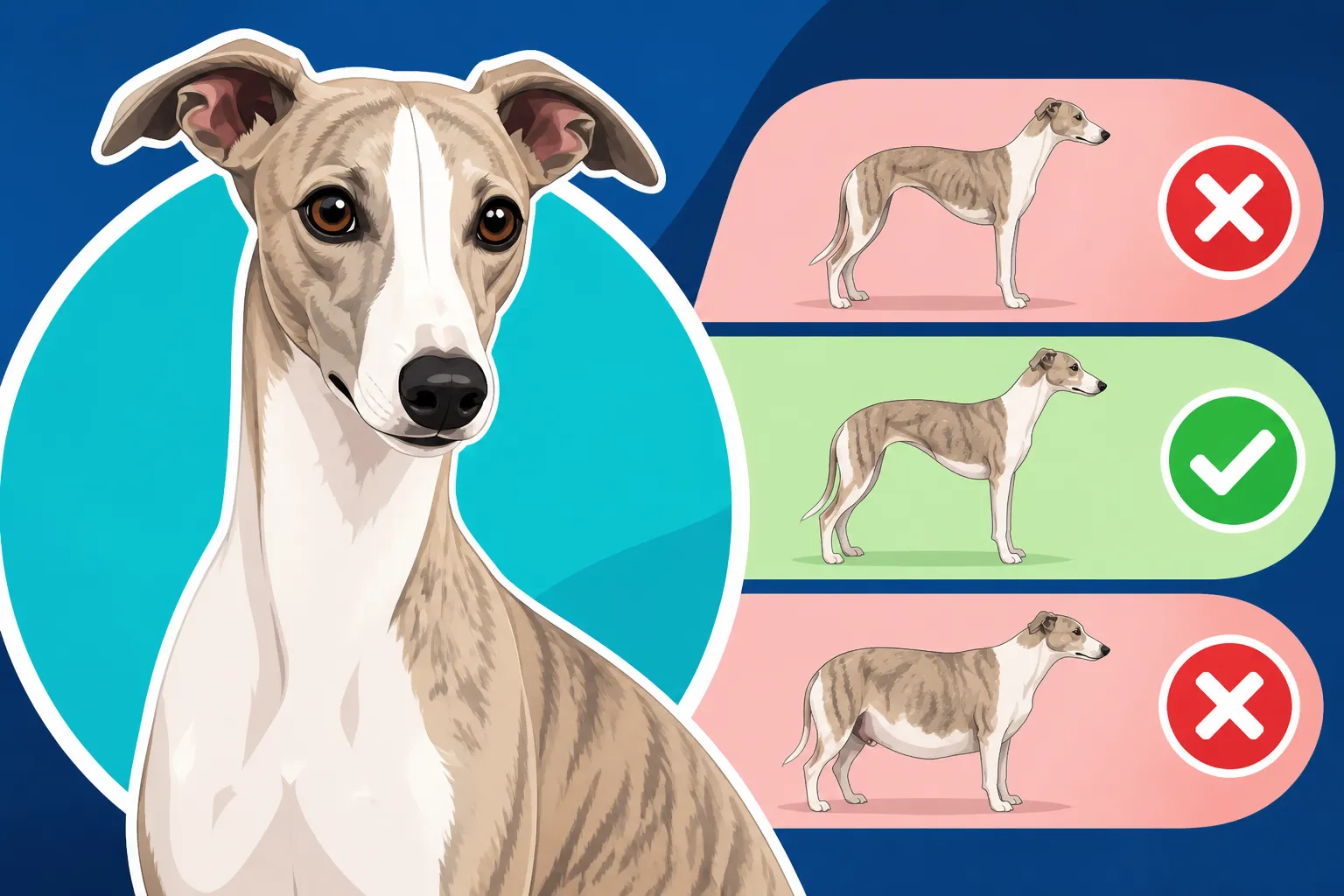
- From above: You should see a distinct, hourglass shape. Their waist should be clearly visible, narrowing significantly behind the ribs and before the hips. It shouldn't be a straight line from chest to tail, nor should it be overly pinched in.
- From the side: Their abdominal tuck-up should be prominent. This means their belly should rise sharply from their chest towards their hind legs, not hang low or flat. You should also be able to see at least two or three ribs faintly, especially when they move or stretch. The deep chest is characteristic, and the belly should tuck up high.
It's common for people to think a Whippet looks "skinny" because of these visual cues. But remember, this is their natural, athletic build. If you don't see this distinct waist and tuck-up, your Whippet might be carrying too much weight, even if they don't look "fat" by conventional standards. For further insight into what is normal, check out Whether a Whippet's Spine Should Be Visible.
The Tactile Test: What You Should Feel
Now, for the hands-on part. Run your hands gently over your Whippet's body, paying attention to specific areas.
- Ribs: You should be able to easily feel their ribs, just under the skin, without having to press hard. They should feel distinct, like the rungs of a ladder, but not sharp or protruding like knuckles. There should be a very thin layer of fat covering them. If you have to dig to feel them, they're probably overweight. If they feel like they're just under the skin with no padding, that might be too thin. Getting a sense of How Many Ribs Should Show on a Whippet can be a great starting point for this tactile assessment.
- Spine: Run your fingers along their backbone. You should be able to feel the individual bumps of the vertebrae with a slight pressure, but they shouldn't feel like sharp ridges. There should be a bit of muscle and a very thin layer of fat over them.
- Hip Bones (Pelvis): Similar to the ribs, you should be able to easily feel the points of their hip bones just under the skin. They shouldn't be overly prominent or sticking out sharply, but they definitely shouldn't be hidden under a layer of fat. Feeling a Whippet's Ribs and Hip Bones provides more detail on how to interpret what you're feeling in these key areas.
This combination of sight and touch gives you the most accurate picture of your Whippet's body condition. It's a skill you develop over time, so don't worry if it doesn't feel completely intuitive at first.
The Ideal Body Condition Score for a Healthy Whippet
When we talk about an "ideal" BCS, especially for a Whippet, we're aiming for a lean, athletic physique. This isn't just about aesthetics; it's about optimal health and longevity for a breed built for specific physical demands.
Aiming for a Healthy Lean: The Sweet Spot for Whippets
For most Whippets, the ideal Body Condition Score is typically a 3 out of 9, or a very lean 4 out of 9.
- BCS 3/9 (Lean): This is often the sweet spot for many athletic Whippets. At this score, you will easily feel the ribs, and they'll be visible with minimal fat cover. The waist will be markedly tucked, and the abdominal tuck will be very prominent. You'll easily feel the backbone with only a slight amount of fat, and the hip bones will be easily palpable and slightly visible. This lean musculature is what allows them to perform at their best, whether it's zooming around the yard or competing in Lure Coursing and Fast CAT.
- BCS 4/9 (Good): A Whippet at this score will still be very lean, but with a slightly less dramatic tuck-up and perhaps one or two fewer ribs visible. You can still easily feel the ribs with a minimal fat covering. The waist is evident, and the abdominal tuck is present. This can be a good target for Whippets who are less intensely athletic or are in their senior years, as a tiny bit more padding can be beneficial.
It's crucial to understand that if a standard BCS chart shows a 5/9 as "ideal," that typically represents a dog with a bit more fat cover than is optimal for a Whippet. Many vets who are not accustomed to sighthounds might incorrectly assess a healthy Whippet as being underweight if they don't apply sighthound-specific knowledge. If you're ever concerned, asking your vet if they are familiar with sighthound body condition is a good idea. Sometimes, a general practice vet might say your Whippet is too thin when they are, in fact, perfectly healthy. For this reason, knowing What a Vet Says About a Whippet's Weight is important, as is finding a vet who understands the breed.
The Dangers of Underweight and Overweight for a Whippet
While it's rare for a Whippet to be truly overweight, and more common for them to be thought too thin, both extremes carry risks.
-
Underweight (BCS 1-2/9): If your Whippet is genuinely underweight, you'll see ribs, spine, and hip bones prominently sticking out with no fat covering whatsoever. Their muscle mass will be significantly reduced, and they may appear frail. True emaciation can lead to a host of health problems, including a weakened immune system, difficulty regulating body temperature (which is already a challenge for Whippets with their sparse coat and lack of fat), poor energy levels, and nutrient deficiencies. If your Whippet is truly underweight, it's vital to consult your veterinarian to rule out underlying medical conditions.
-
Overweight (BCS 5/9 and above for a Whippet): While a 5/9 might be ideal for other breeds, for a Whippet, this often means they're carrying too much weight. You might struggle to feel their ribs without significant pressure, their waist will be less defined, and their abdominal tuck will be less pronounced or even absent. Excess weight, even a little, can significantly impact a Whippet's health. It puts unnecessary stress on their joints, especially their delicate hocks and wrists, increasing the risk of injuries. It can also lead to decreased stamina, overheating, and can exacerbate conditions like Mitral Valve Disease Is What Ends Most Old Whippets. An overweight Whippet simply cannot perform as nature intended, and you'll likely notice How an Overweight Whippet Slows Down. Maintaining their lean body is critical for their athleticism and overall well-being.
Maintaining Your Whippet's Optimal Body Condition
Once you know what a healthy Whippet BCS looks like, the next step is maintaining it. This involves a balanced approach of proper nutrition, appropriate exercise, and regular monitoring with your veterinarian.
Nutrition and Feeding Strategies
Feeding a Whippet isn't always straightforward because they can sometimes be picky eaters, and their high metabolism means they burn calories efficiently. The key is to provide a high-quality, nutritionally balanced diet that supports their lean muscle and energy levels.
- Quality Food: Look for a reputable dog food brand with real meat as the primary ingredient. Some owners opt for fresh food diets, which can be highly digestible and nutrient-dense. Brands like Ollie offer customized meal plans that can help you provide precise nutrition based on your dog's specific needs, which can be fantastic for maintaining ideal weight.
- Portion Control: Even with a high metabolism, it's easy to overfeed or underfeed without realizing it. Always follow the guidelines on your chosen food bag, but remember these are just starting points. Adjust based on your Whippet's activity level and actual body condition. If they're looking a bit too lean, increase food slightly; if they're gaining too much, decrease it. Discuss How Much a Whippet Should Eat with your vet, especially if you're struggling to keep weight on. If you're finding it difficult for your Whippet to gain or maintain weight, perhaps because they're a bit of a finicky eater, exploring options like special toppers or different food textures can help. Sometimes, simply warming their food can make it more appealing. Getting Weight On a Whippet That Will Not Eat dives deeper into strategies for reluctant eaters.
- Treats: Treats are wonderful for training and bonding, but they also contribute to calorie intake. Choose healthy, low-calorie options, and factor them into your Whippet's daily allowance. You can find a wide variety of healthy treats and high-quality food options through online retailers like Chewy, which often have detailed nutritional information to help you make informed choices.
Exercise and Lifestyle Considerations
Whippets are known as "40-mph couch potatoes," meaning they love to sprint but also adore lounging. This balance is crucial for their muscle tone and overall health.
- Regular Sprints: While they don't need hours of intense exercise daily, short bursts of high-speed running are essential for maintaining their powerful musculature. A securely fenced yard or a safe, enclosed park where they can really stretch their legs is ideal. But remember, Why a Whippet Cannot Be Let Off Leash in an Open Field is vital due to their prey drive and lack of road sense.
- Daily Walks: Beyond sprints, regular walks are important for mental stimulation, joint health, and overall fitness. About 30-60 minutes of brisk walking per day, broken into a couple of sessions, is usually sufficient. Understanding How Much Exercise a Whippet Really Needs helps strike the right balance.
- Warmth and Comfort: Because Whippets have so little body fat, they get cold easily. Ensuring they have warm bedding and appropriate coats for outdoor adventures (and even indoors in cooler homes) is not just about comfort, but about preventing their body from burning extra calories just to stay warm. A chilled Whippet might struggle to maintain their ideal weight. After all, A Whippet Has No Insulation and No Padding.
Regular Vet Checks and Monitoring
Your veterinarian is your most important partner in maintaining your Whippet's optimal health and body condition.
- Annual Check-ups: Regular veterinary visits allow your vet to perform a professional BCS assessment, discuss any changes you've observed, and address potential health concerns before they become serious. They can also offer tailored advice on diet and exercise specific to your Whippet's age, activity level, and any health conditions.
- Monitoring at Home: Between vet visits, regularly assess your Whippet's BCS yourself using the visual and tactile methods described above. Keep a mental note or even a small journal of their condition. This helps you quickly notice any trends towards being too lean or too heavy. If you're keen on precise measurements, a good quality digital pet scale can be a helpful tool, available through online retailers like Amazon, allowing you to track weight alongside BCS. This consistent monitoring empowers you to make small adjustments to their diet or exercise before they become significant issues.
| BCS (9-point scale) | General Description | Whippet Appearance / Feel |
|---|---|---|
| 1 (Emaciated) | Severely Underweight | Ribs, spine, hip bones, and all bony prominences are easily visible from a distance and feel very sharp with no fat and obvious muscle loss. Severe abdominal tuck and angular body. |
| 2 (Very Thin) | Underweight | Ribs, spine, hip bones are easily visible and very prominent, feeling sharp. Minimal body fat. Marked abdominal tuck. Some muscle loss evident. |
| 3 (Lean) | Ideal for Whippet | Ribs easily palpable and often faintly visible with minimal fat cover. Waist distinctly tucked when viewed from above. Abdominal tuck is prominent. Hip bones easily palpable, sometimes slightly visible. This is the athletic sweet spot. |
| 4 (Good) | Lean-Good for Whippet | Ribs easily palpable with a minimal fat cover, may not be as visibly prominent. Waist is evident, abdominal tuck present. Hip bones easily palpable but not generally visible. A good condition for less active or older Whippets. |
| 5 (Moderate) | Overweight for Whippet | Ribs palpable but with slight fat cover, not visible. Waist is discernible but not sharply tucked. Abdominal tuck is less pronounced. May start to look more "blocky" from above. |
| 6 (Heavy) | Mildly Overweight | Ribs palpable only with moderate pressure due to a noticeable fat layer. Waist is absent or barely visible. Abdominal tuck largely gone. Fat deposits over the lumbar area and tail base. |
| 7 (Obese) | Overweight | Ribs difficult to feel under a thick fat layer. Waist absent. Abdominal contour rounded or sagging. Obvious fat deposits over lumbar area, tail base, and neck. |
| 8 (Seriously Obese) | Severely Overweight | Ribs not palpable. Massive fat deposits over chest, spine, and tail base. Abdominal distension. Extensive fat everywhere. |
| 9 (Morbidly Obese) | Extremely Obese | Grossly obese. Massive fat deposits, distended abdomen, no palpable ribs or bony prominences. |
Disclaimer
This article is for general informational purposes only and does not constitute professional advice. Laws, prices and regulations vary by location and change over time. Consult a qualified professional for guidance on your specific situation.