What an Adult Male Whippet Weighs
One of the most common things I hear from new Whippet owners, or even just people who meet my dogs at the park, is their concern about how thin they look. It’s a common misconception, especially with male Whippets, that their naturally lean, athletic build means they are underfed or unwell. This guide will delve deep into what constitutes a healthy weight for an adult male Whippet, moving beyond just the number on the scale to truly understand their unique physique.
Understanding the Whippet Standard for Weight and Height
When you first look into getting a Whippet, you'll inevitably stumble upon the breed standard. This document, put forth by kennel clubs, outlines the ideal characteristics of the breed, including general size guidelines. It's often where the confusion about weight begins, because sighthounds are built differently than most other breeds.
The Ideal Range for Male Whippets
The American Kennel Club (AKC) breed standard for Whippets states that dogs should be between 18.5 to 22.5 inches at the shoulder. While the standard doesn't explicitly state a weight range, it implies a certain build: "a medium-sized sighthound of power, strength, and balance, combining a muscular and powerful build with grace and elegance." For an adult male Whippet within this height range, a healthy weight typically falls somewhere between 25 and 45 pounds. However, this is a broad spectrum, and it’s critical to remember that individual variations are vast. A very tall, heavily muscled male bred for racing might easily be at the upper end, while a smaller, more finely boned male might be perfectly healthy at the lower end. What’s important isn’t hitting an exact number, but fitting the overall picture of a lean, athletic sighthound.
It’s not unusual for male Whippets from different lines, even within the same kennel, to have slightly different builds. Some lines tend to produce more substantial dogs, while others are known for their finer, more delicate appearance. These are all considerations that go beyond a simple number. Don't let a vet who isn't familiar with the sighthound build alarm you; it's a common issue where they might mistakenly suggest your Whippet is underweight simply because they aren't used to seeing such a lean dog. This is why knowing What a Vet Says About a Whippet's Weight is so important.
Why the Standard Matters and Why It's Not Always Precise
The breed standard is primarily a guideline for breeders and show judges, helping them preserve the distinctive characteristics of the Whippet. It ensures that dogs remain true to their heritage, both in appearance and function. However, for the average pet owner, it serves more as a general reference point rather than a strict mandate. The standard emphasizes qualities like athleticism, balance, and soundness, all of which are crucial for a sighthound whose purpose was historically to chase prey.
The lack of a precise weight in the standard is actually quite intentional and beneficial. Whippets are individuals, and their ideal weight can fluctuate based on their unique genetics, age, and activity level. Trying to force a Whippet into a narrow weight bracket can be detrimental to their health, either leading to unnecessary overfeeding or underfeeding. What matters most is the dog's overall body condition, which we'll discuss in detail later, rather than an arbitrary number on the scale. A Whippet that is too heavy might face joint issues and struggle with its natural agility, while one that is truly emaciated will lack muscle and energy.
The Difference Between a Show Weight and a Pet Weight
For Whippets destined for the show ring, breeders and handlers often aim for a very specific weight and condition that best highlights their conformation according to the standard. This might mean a slightly different muscle tone or fat distribution compared to a beloved pet who enjoys daily romps in the park but isn't spending hours being stacked and gaiting. Show dogs might be meticulously conditioned to present their best physique, which can involve very controlled exercise and diet.
A pet Whippet, on the other hand, should be kept at a weight that supports its active, happy life without being overly restrictive. An adult male Whippet who spends his days sprinting in a fenced yard and then cuddling on the couch might naturally carry a bit more muscle and less fat than a show dog or vice-versa, depending on his specific activities. The key is balance. Your pet Whippet's health and happiness should be the priority, not fitting a rigid show ideal. It's about ensuring they are comfortable, energetic, and free from the health issues associated with being either underweight or overweight. Understanding How Thin a Whippet Should Look is vital for any owner.
Factors Influencing a Male Whippet's Weight
A Whippet's weight isn't a static number; it's a dynamic reflection of several interconnected factors. Understanding these can help you gauge if your male Whippet is at his optimal, healthy weight.
Genetics and Lineage
Just like people, Whippets inherit their build from their parents. Some bloodlines are known for producing larger, more heavily boned dogs, while others tend towards a finer, more delicate structure. If your Whippet comes from a lineage of racing dogs, he might have a leaner, more muscular build with a deep chest and powerful hindquarters, engineered for speed. These dogs often have less body fat and carry their weight as dense muscle. Conversely, a Whippet from show lines might have a slightly more refined or "elegant" build, though still retaining the characteristic sighthound athleticism. Pet-bred Whippets often fall somewhere in between, with a range of sizes and builds.
It’s also worth considering if your Whippet has any "bully" genetics. Bully Whippet Syndrome and the Myostatin Gene Behind It can result in a significantly more muscular dog, which will naturally weigh more for its size due to increased muscle mass, even if it's the same height as a standard Whippet. This is an extreme example, but it highlights how genetics play a primary role in your dog's inherent size and shape. Knowing your dog's background, if possible, can give you clues about his likely adult weight range.
Activity Level and Muscle Mass
Whippets are known as "40-mph couch potatoes," a perfect description of their need for intense bursts of activity followed by long periods of rest. An adult male Whippet who regularly engages in sprinting, lure coursing, or other vigorous activities will develop significant muscle mass, particularly in his hindquarters and chest. This muscle tissue is denser than fat, so a highly active Whippet might weigh more than a less active one of the same height, even if both are at an ideal body condition.
Think about a human athlete versus someone with a sedentary lifestyle; their body composition and weight can differ significantly even if their height is the same. The same principle applies to Whippets. A Whippet who only goes for leashed walks might have a softer musculature compared to one who regularly stretches his legs in a secure, fenced area. The key is that the muscle should be firm and well-defined, indicating good health and conditioning, not simply bulk for bulk's sake. Regular, appropriate exercise is vital for maintaining a healthy weight and strong body, ensuring your Whippet doesn't become either too slight or too heavy.
Diet and Nutrition
What goes into your Whippet's bowl directly impacts his weight and overall health. A balanced diet appropriate for his age, activity level, and individual needs is crucial. A high-quality dog food, whether kibble, raw, or fresh, provides the necessary nutrients, protein, and healthy fats to maintain muscle mass and a healthy energy level. It's often recommended to choose a food that is easily digestible for sighthounds, as some can have sensitive stomachs.
The amount you feed is also critical. Overfeeding, even healthy food, can lead to weight gain, while underfeeding can result in a truly underweight dog, losing muscle mass and energy. This is where understanding How Much a Whippet Should Eat becomes essential. Some Whippets are notoriously picky eaters, which can make maintaining their weight a challenge. Others might be "hoovers," eager to eat anything put in front of them. Adjusting portion sizes based on your Whippet's individual metabolism and activity is key. For a racing Whippet, for example, calorie requirements will be much higher, so Whether a Racing Whippet Needs More Calories is definitely something to consider. Products from reputable brands like Chewy or Ollie can offer a variety of nutritional options, from specialized kibble to fresh food subscriptions, allowing you to find what best suits your Whippet's dietary needs.
Age and Maturity
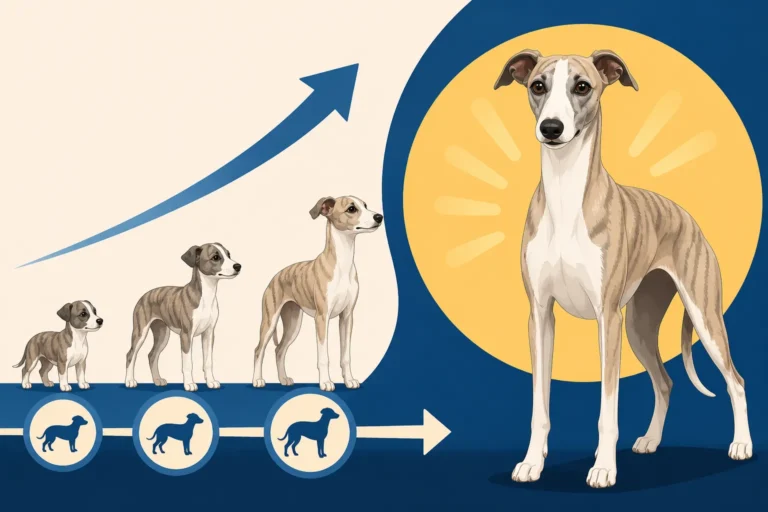
A male Whippet's weight will naturally change throughout his life. As a puppy, he will grow rapidly, gaining weight steadily until he reaches his adult height and then filling out. The Age a Whippet Reaches Full Weight is typically around 18 months to two years, though some may continue to mature and add muscle mass until they are three years old. During puppyhood, ensuring he receives appropriate nutrition to support healthy growth without being overweight is important for joint health.
As he moves into his prime adult years (roughly 2-8 years), his weight should stabilize. However, as Whippets age into their senior years (typically after 8 or 9), their metabolism can slow down, and activity levels might decrease. This can sometimes lead to weight gain if diet isn't adjusted, or conversely, some older Whippets may start to lose muscle mass and become thinner. It's a delicate balance. Caring for an Old Whippet That Feels the Cold often involves ensuring they maintain adequate body fat for insulation without becoming overweight. Regular check-ups with your vet become even more important during these senior years to monitor weight and overall health, ensuring he stays comfortable and active for as long as possible.
Assessing Your Male Whippet's Body Condition, Not Just the Scale
Fixating on a single number on the scale for your Whippet can be misleading. Their unique sighthound build means they naturally look lean compared to other breeds. What truly matters is their Body Condition Score (BCS), which assesses their physical state through touch and sight.
The Importance of Body Condition Score (BCS)
The Body Condition Score (BCS) is a universally recognized tool that veterinary professionals and experienced dog owners use to assess a dog's fat reserves and muscle mass. It's usually on a scale of 1 to 9, where 1 is emaciated, 5 is ideal, and 9 is obese. For a Whippet, an "ideal" BCS might actually look like a 4 or a lean 5 on a typical breed scale, as they are naturally much leaner. This is why it's so helpful to understand What Body Condition Score a Whippet Should Be. A Whippet at a healthy BCS will be agile, energetic, and have a beautiful, flowing movement.
Instead of fretting over a few pounds difference on the scale, focus on the BCS. It gives a much more accurate picture of your dog's health because it accounts for individual variations in bone structure and muscle development. It's a hands-on assessment that considers what you see and what you feel, making it far more valuable than a mere weight reading for a breed like the Whippet.
What to Look For: Ribs, Spine, and Waist
Assessing your Whippet's BCS involves a simple visual and tactile examination:
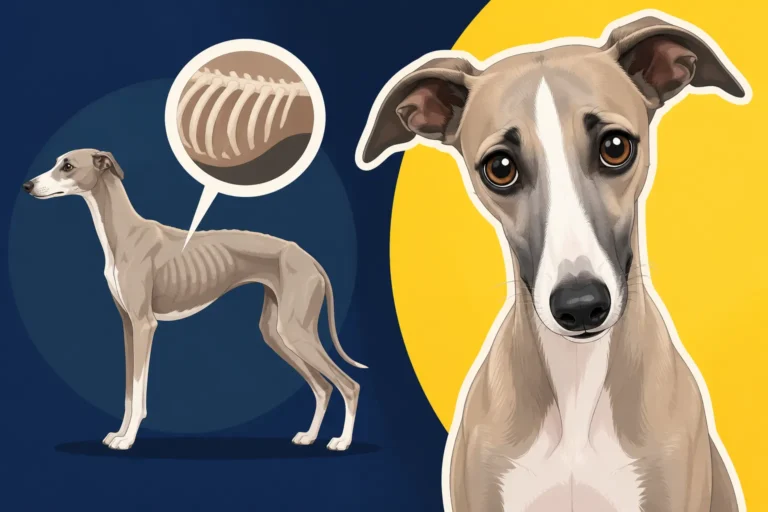
- Ribs: You should easily feel your Whippet's ribs with minimal fat covering, like feeling the knuckles on your hand. In many Whippets, you might even see the last two or three ribs faintly when they are standing and certainly when they turn or stretch. However, they should not be sharply protruding or visible across the entire rib cage. How Many Ribs Should Show on a Whippet is a common question, and generally, a hint of the last few ribs is considered healthy, but seeing all of them clearly, especially from a distance, indicates they are too thin.
- Spine: You should be able to feel the tops of the vertebrae along his spine, but they shouldn't feel sharp or prominent. There should be a slight layer of muscle and skin over them. If the spine is very prominent and you can easily distinguish each individual vertebra with no pressure, your Whippet might be too lean.
- Waist and Abdominal Tuck: When viewed from above, your Whippet should have a distinctly defined waist, narrowing significantly behind the ribs. From the side, he should exhibit a pronounced "tuck-up," where his abdomen rises sharply from his chest to his hind legs. This athletic silhouette is characteristic of a healthy Whippet. If the waist is not defined, or the tuck-up is minimal, he might be carrying too much weight. Conversely, an extreme, hollowed-out tuck-up could indicate being underweight. This is all part of Feeling a Whippet's Ribs and Hip Bones properly.
Common Misconceptions About a Whippet's Thinness
It's almost a rite of passage for Whippet owners to have well-meaning strangers comment on their dog's "thinness" or suggest they need "more food." This can be frustrating, especially when you know your dog is perfectly healthy. The truth is, Whippets are supposed to be lean. They are built for speed and agility, not for carrying extra insulation. Their sleek, aerodynamic shape, minimal body fat, and visible muscle definition are hallmarks of the breed.
Many people are accustomed to seeing dog breeds with much more padding and body fat, so a naturally lean sighthound looks alarming to them. Educating others about the sighthound physique can be helpful, but ultimately, your Whippet's health and your vet's assessment are what truly matter. Ignore the comments and trust your judgment and your veterinarian. If you're concerned about When a Whippet Is Genuinely Too Thin, your vet can help you confirm if there's an actual problem, or if it's just your Whippet being a Whippet!
Practical Tips for Maintaining a Healthy Weight
Keeping your adult male Whippet at his ideal weight involves a thoughtful balance of diet, exercise, and regular health monitoring. It's about consistency and tuning into your individual dog's needs.
Feeding Strategies
Because Whippets are so lean, and some can be picky, feeding them requires attention. First and foremost, choose a high-quality dog food. Look for formulas with good protein sources as the first ingredient to support their lean muscle mass. Many owners find success with foods available from online retailers like Amazon or Chewy, which offer a wide selection of premium brands. Some Whippets thrive on fresh food diets, like those offered by Ollie, which can be highly palatable for selective eaters.
Once you have your food, determine the appropriate portion size. Start with the guidelines on the food packaging for your dog's target adult weight, but be prepared to adjust. If your Whippet is very active, he might need a bit more, especially if he's involved in activities like lure coursing or racing. Monitor his body condition weekly. If he's getting too lean, slightly increase his food. If he's starting to lose that defined waist or you can't feel his ribs as easily, reduce it. Splitting his daily food into two meals can also help with digestion and keep his energy levels more stable throughout the day. For Whippets that are difficult to put weight on, sometimes warming the food slightly or adding a palatable topper can encourage them to eat more consistently. Getting Weight On a Whippet That Will Not Eat can be a real challenge!
Exercise Regimes
Whippets are sprinters, not endurance runners, but they do need regular opportunities to stretch their legs and engage their powerful muscles. Short, intense bursts of speed are their natural mode of exercise. This means having access to a securely fenced area where they can run full-out without fear of them bolting after perceived prey. Many owners utilize dog parks, but only if they are entirely secure and the Whippet is comfortable with other dogs. Long leashed walks are also important for mental stimulation and general fitness, but they don't fulfill the Whippet's need for a good sprint.
Balance is key. Avoid excessive, repetitive jumping or high-impact activities on hard surfaces, especially when they are young, to protect their joints. Focus on varied activities that engage different muscle groups. Mental exercise, like training sessions or puzzle toys, is also vital. A well-exercised Whippet is generally a happy and healthy Whippet, and this contributes significantly to maintaining a healthy body condition. Remember, even though they are fast, a healthy Whippet will slow down if they become overweight, so keeping them lean is crucial for their athletic ability and comfort. How an Overweight Whippet Slows Down is noticeable.
Regular Vet Check-ups
Even with diligent home care, regular veterinary check-ups are non-negotiable for monitoring your Whippet's weight and overall health. Your vet can provide an objective assessment of your Whippet's BCS and offer advice tailored to his specific needs. They can also rule out any underlying health issues that might be affecting his weight, such as thyroid problems or digestive disorders.
During these visits, discuss your Whippet's diet, activity level, and any changes you've observed. Your vet can also help you understand how to adjust his diet and exercise as he ages. For example, as an older male Whippet's metabolism changes, dietary adjustments might be needed to prevent unwanted weight gain or loss. A vet familiar with sighthound physiology will be invaluable in guiding you. Always remember that proactive care, including annual check-ups, is the best way to ensure your male Whippet maintains a healthy weight and lives a long, happy life.
Whippet Body Condition Comparison
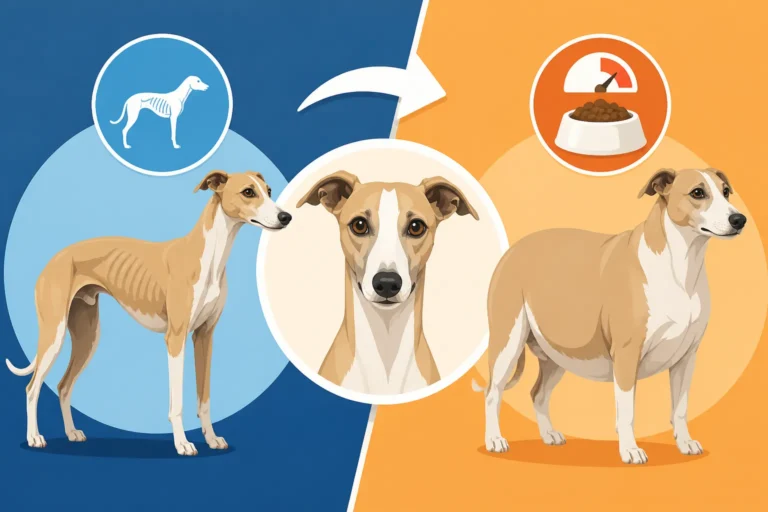
To help visualize the difference, here's a table comparing what a healthy lean Whippet looks like versus one that might be genuinely underweight or overweight. Remember, a picture is worth a thousand words, but feeling your dog is just as important.
| Feature | Healthy Lean Whippet | Underweight Whippet | Overweight Whippet |
|---|---|---|---|
| Ribs (Visual) | Last 2-3 ribs may be faintly visible when standing. | All ribs clearly visible, even from a distance. | Ribs not visible, even when stretching or turning. |
| Ribs (Touch) | Easily felt with light pressure. | Very easily felt, prominent, no fat cover. | Difficult to feel, requires firm pressure to detect. |
| Spine (Touch) | Easily felt, but with some muscle/skin covering. | Prominent, sharp, individual vertebrae easily felt. | Difficult to feel, covered by a layer of fat. |
| Waist (Top View) | Clearly defined, significant tuck behind ribs. | Exaggerated tuck, appears "pinched" in the middle. | Little to no waist definition, appears more rectangular. |
| Tuck-Up (Side View) | Pronounced abdominal tuck. | Very extreme, hollowed-out abdomen. | Minimal tuck-up, belly may sag slightly. |
| Muscle Mass | Well-defined, firm musculature. | Noticeable loss of muscle, especially over hindquarters. | Muscles may feel soft, covered by fat. |
| Energy Level | Energetic, playful, capable of sprints. | May seem lethargic, weak, easily fatigued. | May seem less active, struggles with intense exercise. |
This article is for general informational purposes only and does not constitute professional advice. Laws, prices and regulations vary by location and change over time. Consult a qualified professional for guidance on your specific situation.