Whether a Whippet Can Have Blue Eyes
A Whippet puppy’s pale blue eyes can look striking, but eye color alone does not tell you whether the dog is healthy, purebred, or likely to develop an eye problem. This guide explains why a Whippet may have blue eyes, how puppy eye color can change, what coat color does and does not mean, and which changes deserve a prompt veterinary check.
Can a Whippet naturally have blue eyes
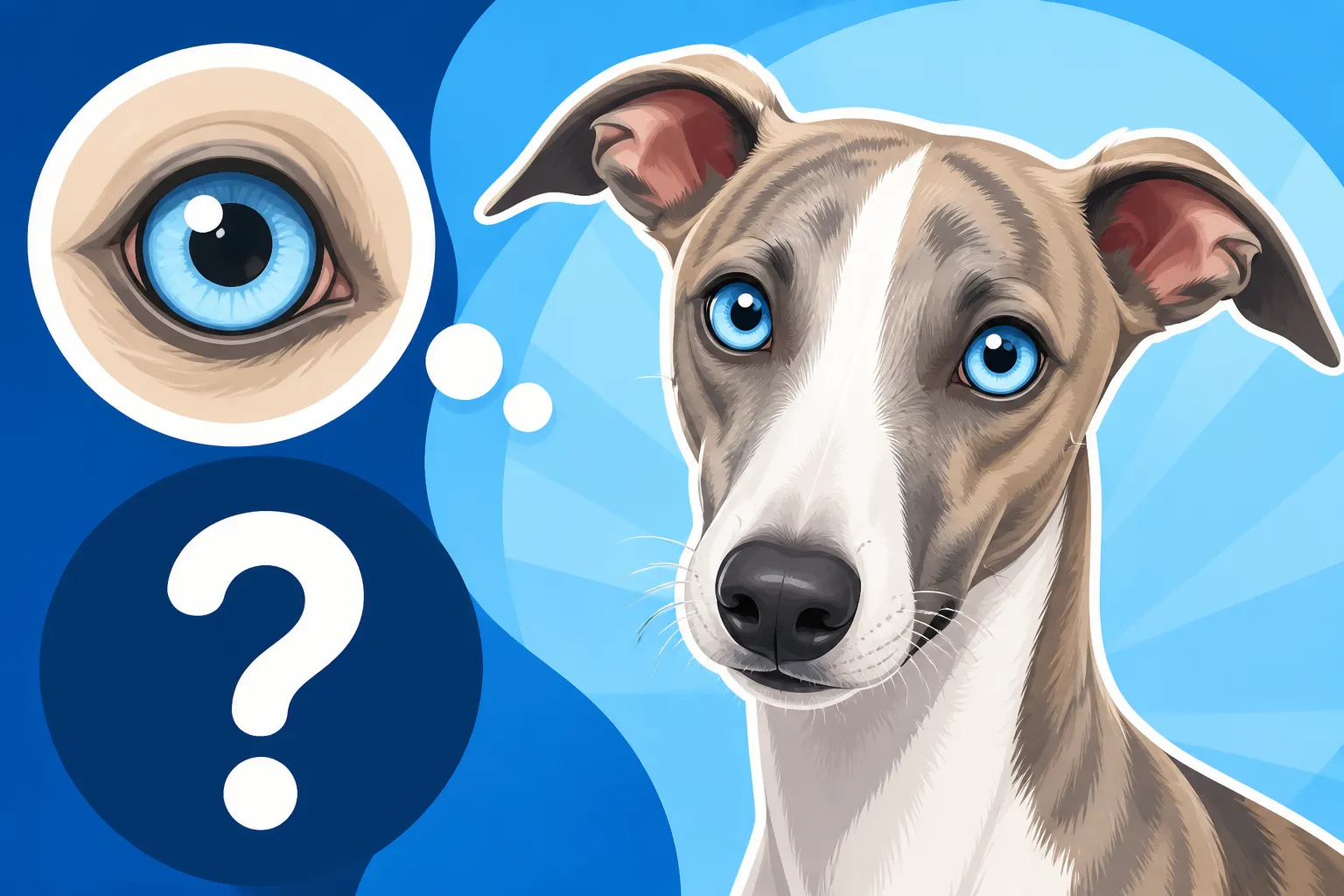
Blue eyes are possible, but unusual
Whippets are generally expected to have dark, bright eyes. Blue or very light eyes are unusual for the breed and may not match the eye-color preference described in breed standards. That does not make the dog’s eye color a diagnosis, nor does it automatically establish anything about its ancestry. A dog can have an atypical feature and still be a much-loved companion.
Eye color comes from pigment in the iris. When there is less pigment, the eyes can appear lighter, sometimes blue or gray-blue. Genetics influence how much pigment develops, but eye color is not a simple, dependable way to identify a Whippet’s genes or predict its health. A breeder’s description, a coat color, or a photograph cannot replace a veterinary examination or reliable pedigree information.
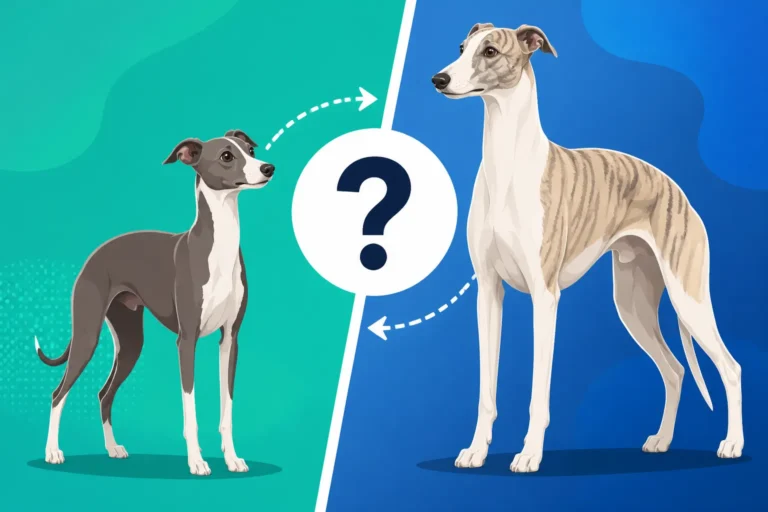
If you are learning how eye color fits into the breed’s range of appearances, The Colors a Whippet Comes In and Which Colors the Whippet Standard Allows provide useful context. It is also worth separating “blue eyes” from a “blue Whippet”: the first describes the iris, while the second usually refers to a diluted coat color. They are not interchangeable terms.
A blue Whippet does not automatically have blue eyes
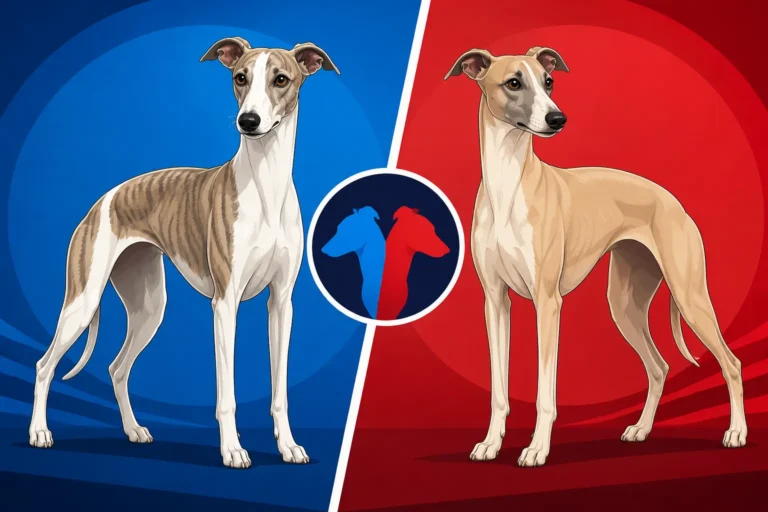
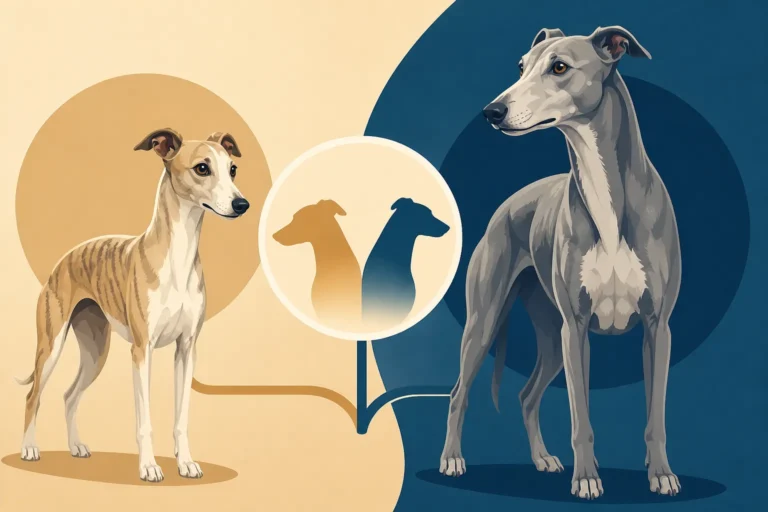
A blue coat is generally a diluted dark coat color. That coat appearance does not mean the dog will have blue eyes, and a blue-eyed dog does not necessarily have a blue coat. A Whippet can have a dark or brindled coat with pale eyes, or a blue coat with eyes that are still brown or dark-looking.
People sometimes assume that a blue coat or blue eyes prove a dog is not purebred. Neither feature, by itself, can settle that question. If you are considering a puppy and want to understand its background, ask the breeder about the parents, pedigree, and any relevant health information rather than trying to draw a conclusion from eye color alone. For more on the coat-color question, see Whether a Blue Whippet Is Purebred and Whether a Whippet Can Be Any Color at All.
| What you notice | What it may mean | What to do |
|---|---|---|
| Both eyes are evenly pale and have looked that way for a long time | The dog may naturally have light irises | Mention it at routine veterinary visits, especially if you do not know the dog’s history |
| A puppy’s eyes look blue after they first open | The color may still be developing | Watch for gradual change and ask your vet if you are unsure |
| One eye is blue and the other is brown | The dog may have different-colored irises | Arrange an exam if this is new, changing, or accompanied by discomfort |
| An eye looks cloudy, whitish, or suddenly different | This may be a change in the eye rather than simply a light iris | Contact a veterinarian promptly |
| Redness, squinting, discharge, or rubbing accompanies the color change | Irritation, injury, or disease may be involved | Seek veterinary advice rather than treating the eye at home |
How Whippet eye color can change as a puppy grows
Early puppy eyes can be misleading
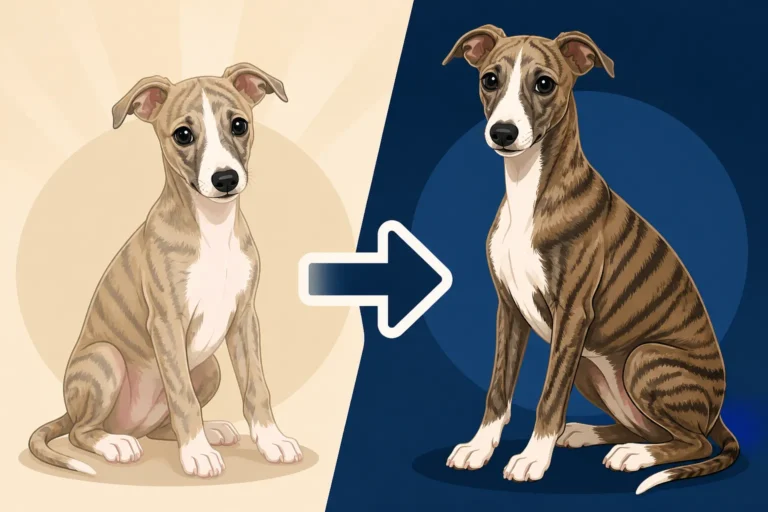
Puppies are born with their eyes closed. When their eyes open, the irises may look blue-gray or cloudy compared with the richer color they develop later. This early appearance is not always the adult eye color. As a puppy grows, pigment can develop and the eyes may darken, though the amount and timing of change vary.
That can make puppy photos confusing. A picture taken soon after the eyes open may show a much lighter color than you see several weeks later. Lighting, camera settings, and reflections can also make brown eyes look lighter or more blue in an image. If you are following a puppy’s development, look at the eyes in natural light and compare them over time rather than judging from a single photograph.
For broader information about how a puppy’s appearance can change, How a Whippet's Color Changes as It Grows covers coat color, while eye color should be considered separately. A change in coat shade does not necessarily explain a change in the iris.
When a puppy’s color is worth asking about
If a puppy’s eyes remain distinctly blue as it matures, that may simply be its natural eye color. Ask the breeder whether the parents or close relatives have similar eyes and whether the puppy has had a veterinary examination. A responsible conversation should be calm and specific: ask what the breeder has observed, whether the puppy’s eyes have been checked, and whether there are any concerns about vision or eye comfort.
Do not rely on a breeder’s reassurance alone if the puppy is squinting, rubbing its face, bumping into objects, or reacting unusually to light. Those signs matter more than whether the iris is blue. A vet can examine the eye’s surface and internal structures and determine whether the appearance is normal for that individual dog.
If you are buying a puppy, eye color should be one small part of your decision, not a substitute for asking about health, temperament, and the parents. What the Whippet Standard Says About the Arch is an example of how breed features are considered in context; appearance is only one part of understanding a Whippet.
Blue eyes, coat color, and health concerns
Light eyes are not the same as cloudy eyes
A naturally blue iris is not the same thing as an eye that has become cloudy. The iris is the colored part around the pupil. Cloudiness can be on the clear outer surface of the eye or deeper inside the eye, and it may be associated with several different conditions. It is not possible to identify the cause reliably by looking at a photo or checking whether the dog has a blue coat.
Pay attention to change. If one eye becomes cloudy, the pupil looks different, or the dog suddenly seems less able to see, do not assume it is just a color variation. Other signs to watch for include redness, tearing, thick discharge, repeated blinking, squinting, pawing at the face, or holding the eye partly closed. These symptoms warrant veterinary advice, particularly if they appear suddenly or worsen.
For a wider overview of conditions that can affect the eyes, read Eye Disease in a Whippet. If a vet is concerned about a specific change, Cataracts in a Whippet may help explain one possible cause, but only an examination can establish what is happening in an individual dog.
Blue coat color does not diagnose an eye problem
A Whippet’s coat color and eye health should be assessed separately. Owners of blue-coated dogs may hear concerns about pigment-related skin or coat changes, but coat appearance alone does not tell you whether a dog has an eye disorder. Likewise, light eyes alone do not prove a health problem or predict that one will develop.
It is sensible to mention unusual eye color at routine checkups, especially if you adopted an adult Whippet and do not know whether the color is longstanding. A vet can record what the eyes look like and compare them at future visits. That baseline can be helpful if you later notice a change. If you are also researching coat-related questions, Whether a Blue Whippet Has Skin Problems addresses a different issue and should not be treated as an explanation for eye color.
If your veterinarian recommends a specific eye-care product, confirm exactly what to use and how to use it. Products intended for skin or general cleaning should not be placed in the eye unless a veterinary professional has approved them. If you are looking for a vet-recommended item, you might check its exact name and ingredients through the clinic or a retailer such as Chewy; do not substitute a similar-looking product without asking.
What to do if your Whippet has blue eyes
Record what is normal for your dog
If your Whippet has blue eyes and seems comfortable, take a clear note of what you see: whether both eyes are the same color, whether the color has been present for as long as you know the dog, and whether there is any discharge, redness, or squinting. A photo in consistent natural light can help you track changes, although it cannot diagnose an eye condition.
Bring up the eye color at your dog’s next routine visit. This is especially useful for a newly adopted Whippet, a puppy whose eyes are still changing, or a dog with one pale eye and one dark eye. A veterinary team can examine the eyes and document the findings. Ask whether a routine eye check is enough or whether the particular appearance calls for a more detailed assessment. Whether a Whippet Should Have a Yearly Eye Exam offers more context on eye-check planning.
Know when to seek help quickly
A stable, naturally light iris is different from a sudden change accompanied by discomfort. Contact a veterinarian promptly if the eye becomes cloudy or swollen, the dog is squinting or rubbing it, the pupil changes shape or size, or you notice an abrupt difference in vision. Eye injuries can be painful, and waiting to see whether they settle may allow a treatable problem to become more serious.
Until you have veterinary guidance, avoid using leftover drops, human eye medication, or home remedies. Do not try to remove anything stuck to the eye. If your Whippet is rubbing its face, prevent further rubbing as safely as you can and call the clinic for instructions. A retailer such as Chewy may be a place to look for a vet-selected protective item, but the clinic should guide you on whether one is appropriate and how it should fit.
If a veterinarian prescribes eye medication, follow the label and the clinic’s instructions carefully. If you need to locate the exact product later, keeping the prescription name and directions with your dog’s records can prevent mix-ups when checking availability through a pharmacy or a retailer such as Chewy. The important part is to use only the product selected for your Whippet’s specific condition.
Keep appearance questions in perspective
Blue eyes can be an unusual feature in a Whippet, but unusual does not automatically mean unhealthy. Eye color is only one part of the picture. A dog’s comfort, vision, eye appearance over time, veterinary findings, and reliable background information matter much more than assumptions based on a coat or a single photograph.
If the eyes are clear and comfortable, ask your veterinarian to note their appearance and continue normal preventive care. If the color seems to change, or if you notice pain, redness, cloudiness, discharge, or vision trouble, arrange an examination instead of trying to interpret the color yourself. That approach gives you a sensible answer without turning a striking feature into a reason for unnecessary worry.
Disclaimer
This article is for general informational purposes only and does not constitute professional advice. Laws, prices and regulations vary by location and change over time. Consult a qualified professional for guidance on your specific situation.