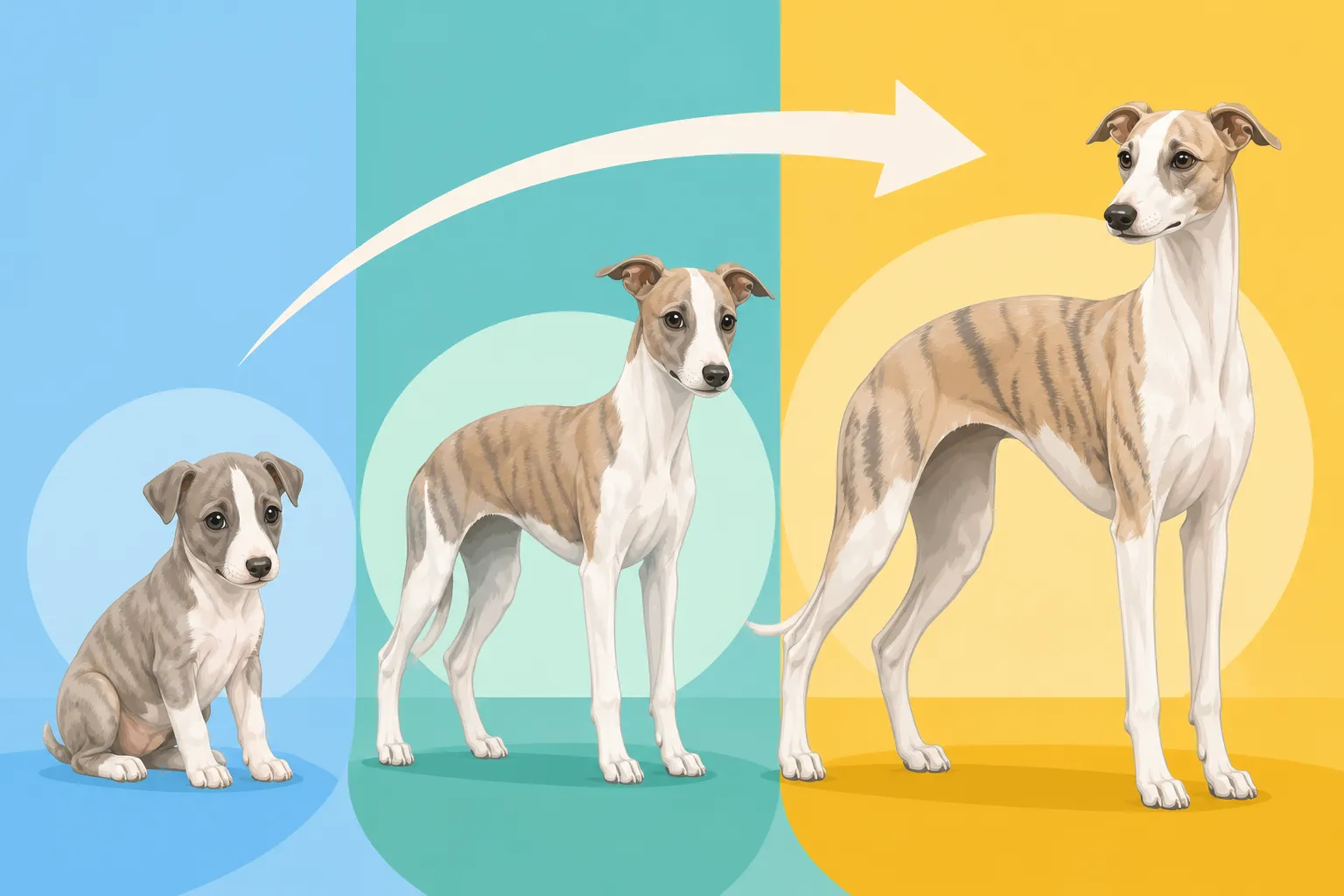
How a Whippet’s Color Changes as It Grows
A Whippet puppy’s coat can look noticeably different by adulthood: brindle stripes may become easier to see, dark coats can soften or fade, and white markings may seem more prominent as the dog grows. Those changes are often part of normal coat development, but sudden color shifts accompanied by bald patches, itching, or irritated skin deserve a closer look.
Why a Whippet’s coat color can change
Puppy coats do not always predict adult coats
A young Whippet’s coat is short and fine, but its color may look softer, fuzzier, or less distinct than it will later. As the puppy grows and sheds its early coat, the adult hair can reveal sharper markings or a different-looking shade. For example, a brindle puppy’s stripes may be subtle at first and become clearer as the coat changes.
The shift is not always dramatic. A puppy may keep the same basic color while gaining more contrast, or the coat may look slightly darker or lighter in different areas. Looking at photos taken in similar lighting can help you notice gradual changes that are easy to miss day to day.
A puppy’s adult appearance can also be affected by how its markings are distributed. A white blaze or chest patch may seem larger as the dog’s body grows around it, even though the marking itself has not expanded. For a closer look at the range of accepted shades and patterns, see The Colors a Whippet Comes In and Which Colors the Whippet Standard Allows.
Coat cycles and shedding affect what you see
Whippets have short coats, but they still shed. Old hairs fall out and new ones grow in, and the coat may look different during that turnover. A coat that seems dull or uneven for a while may simply be between cycles, especially if the dog is otherwise comfortable and the skin looks healthy.
Lighting also plays a surprisingly big role. A dark brindle Whippet outdoors in bright sunshine may show warm brown tones that are hard to see inside. A blue or gray coat can look silver in one room and much darker in another. Wet fur, dust, and loose hair can change the appearance too.
When comparing your dog’s color over time, take photographs in natural, indirect daylight and from the same angle. Avoid comparing a sunny outdoor photo with a dim indoor one and assuming the coat has changed significantly. This small habit is especially useful if you are tracking a puppy’s developing markings.
Age can soften or lighten a coat
Some Whippets develop pale or gray hairs as they get older, particularly around the muzzle. This can make the face look lighter without changing the dog’s underlying coat pattern. Other dogs may gradually show less contrast in their markings, or their coat may seem a little faded compared with photographs from earlier years.
Age-related changes tend to be gradual. They are usually different from a sudden patch of discoloration or a section of fur that changes texture, thins, or falls out. If an adult Whippet develops an abrupt color change along with skin irritation, take note of when it began and discuss it with a veterinarian.
How different Whippet colors may develop
Brindle markings can become clearer
Brindle coats combine darker striping with a lighter background color. The pattern can be easy to recognize in one puppy and surprisingly subtle in another. As the coat matures, the stripes may seem more defined, especially when the adult hairs have a different texture or contrast than the puppy coat.
Brindle also varies across the body. A dog may have stronger striping along the shoulders or back and lighter markings on the legs or face. White areas can make the colored sections look more vivid by contrast, so a growing puppy with white feet or a chest patch may appear to have a changing pattern even when the colored coat is developing normally.
If you are trying to describe a brindle Whippet, use the overall base color and the visible pattern rather than expecting every stripe to stay equally distinct. For more on how this pattern appears across the breed, see Whether a Brindle Whippet Is Common and Whether Whippet Markings Are Faulted.
Blue and dilute coats can look different in changing light
A blue Whippet is not a bright blue color; the term describes a diluted charcoal or gray appearance. Depending on the light, the coat may look slate, silver, or almost brownish-gray. That visual range can be mistaken for a real change when the dog is simply photographed under different conditions.
Some owners notice coat thinning or patchiness in blue dogs and wonder whether the color itself is responsible. Color alone cannot diagnose a skin condition. If the coat is losing hair, becoming sparse, or showing irritated skin, it is worth asking a veterinarian rather than assuming it is a normal color shift. You can read more in Why a Blue Whippet Is a Dilute and Whether Color Dilution Alopecia Affects Whippets.
White markings may seem to change as a puppy grows
White markings can include a blaze, chest patch, socks, or larger areas of white. As a puppy grows, those markings may look different in proportion to the rest of the body. A small chest patch on a young puppy can appear less prominent once the chest broadens; in another dog, the contrast between white and a darker adult coat can make the same marking stand out more.
The colored fur around a marking may also mature or change shade, altering the visual boundary. That does not necessarily mean the white area has spread. If the skin itself changes color or becomes sore, scaly, or itchy, that is a separate issue from ordinary coat-pattern development.
| What you notice | Common explanation | What to keep an eye on |
|---|---|---|
| Brindle stripes look sharper | Adult coat replacing softer puppy hair | Whether the skin and coat remain healthy |
| A dark coat looks lighter outdoors | Strong sunlight or different lighting | Whether the change remains consistent indoors |
| White markings seem more noticeable | Growth changes proportions or contrast | Whether the skin beneath the coat looks normal |
| Gray hairs appear around the muzzle | Gradual aging | Sudden changes elsewhere on the body |
| A patch changes color and loses hair | Possible skin or coat problem | Itching, redness, sores, or spreading hair loss |
Normal color shifts versus coat or skin problems
Signs that usually fit ordinary development
A gradual change in shade or pattern, with a smooth coat and comfortable skin, is generally less concerning than a sudden change paired with other symptoms. Puppy-to-adult coat transitions, seasonal shedding, aging, and changes in lighting can all affect how a Whippet looks.
It is useful to keep a simple photo record if you are unsure. Take a clear picture every few weeks in similar light, and note whether the coat feels different or whether the dog is scratching. This can help you separate a slow, cosmetic shift from a change that is developing quickly.
Routine coat care does not need to be elaborate. A soft brush or grooming mitt can lift loose hair, while occasional bathing with a dog-appropriate shampoo can remove dirt. If you shop for basic grooming supplies through Chewy, check the product label and choose something intended for dogs rather than using human shampoo. The important point is the product’s suitability, not the retailer.
Changes worth discussing with a veterinarian
A change in color is more concerning when it comes with hair loss, persistent itching, redness, sores, scabs, or a coat that becomes brittle or unusually thin. A Whippet that is uncomfortable, repeatedly licking one area, or developing a spreading patch should be checked rather than watched indefinitely.
Make a note of when the change started, where it appeared, and whether it is getting larger. Mention any recent changes in grooming products, bathing routine, medication, or environment. A photo can help show how quickly the area has changed, especially if the appearance varies from day to day.
Avoid applying human hair dye, color sprays, or harsh products to make a coat look different. These can irritate skin or be unsafe if licked. If you need a gentle grooming product, Chewy and other pet-supply shops carry dog-specific options, but a veterinarian can help if the skin is already irritated or the coat is changing unexpectedly. For broader coat-care context, see Why a Whippet's Coat Takes Five Minutes a Week.
Tracking your Whippet’s color as it grows
Keep photos consistent
Choose a spot with indirect daylight and take pictures from the same sides and angles. Photograph the face, back, and any markings you want to track. Consistent images make gradual changes easier to judge than memory, particularly when a puppy’s coat is changing quickly.
You can also jot down a short note with each photo: approximate age, whether the dog had recently been bathed, and whether the coat was shedding. That context can explain why one picture looks brighter or smoother than another. If you share photos with a breeder or veterinarian, include the date and describe any skin symptoms separately from the color change.
Focus on skin health, not just the shade
A Whippet’s coat color is one part of its appearance, not a stand-alone measure of health. A healthy-looking coat should be considered alongside the skin, comfort, and the dog’s overall condition. If you have questions about a particular color, pattern, or puppy’s developing coat, a breeder familiar with the litter may be able to explain what they have seen in related dogs.
For basic grooming supplies, Chewy can be one place to compare dog brushes and shampoos, but choose products based on your dog’s coat and skin needs. If the coat is changing alongside irritation or hair loss, product shopping is not a substitute for an examination. And if you are learning how a puppy’s markings fit into the breed’s wider range, How a Whippet's Color Changes as It Grows can be considered alongside What Colors a Whippet Cannot Be and How a Whippet's Color Changes as It Grows.
Disclaimer
This article is for general informational purposes only and does not constitute professional advice. Laws, prices and regulations vary by location and change over time. Consult a qualified professional for guidance on your specific situation.