Whether a Whippet Can Have a Blue Nose
A Whippet can have a blue nose: the phrase usually describes slate-gray or blue-gray nose pigment, not a health condition or a separate breed. The tricky part is telling inherited coloring from a nose that has recently faded, become irritated, or changed color for another reason. This guide explains what a blue nose can mean, what to watch for, and when a vet should take a look.
What people mean by a blue nose on a Whippet
Blue usually means slate gray pigment
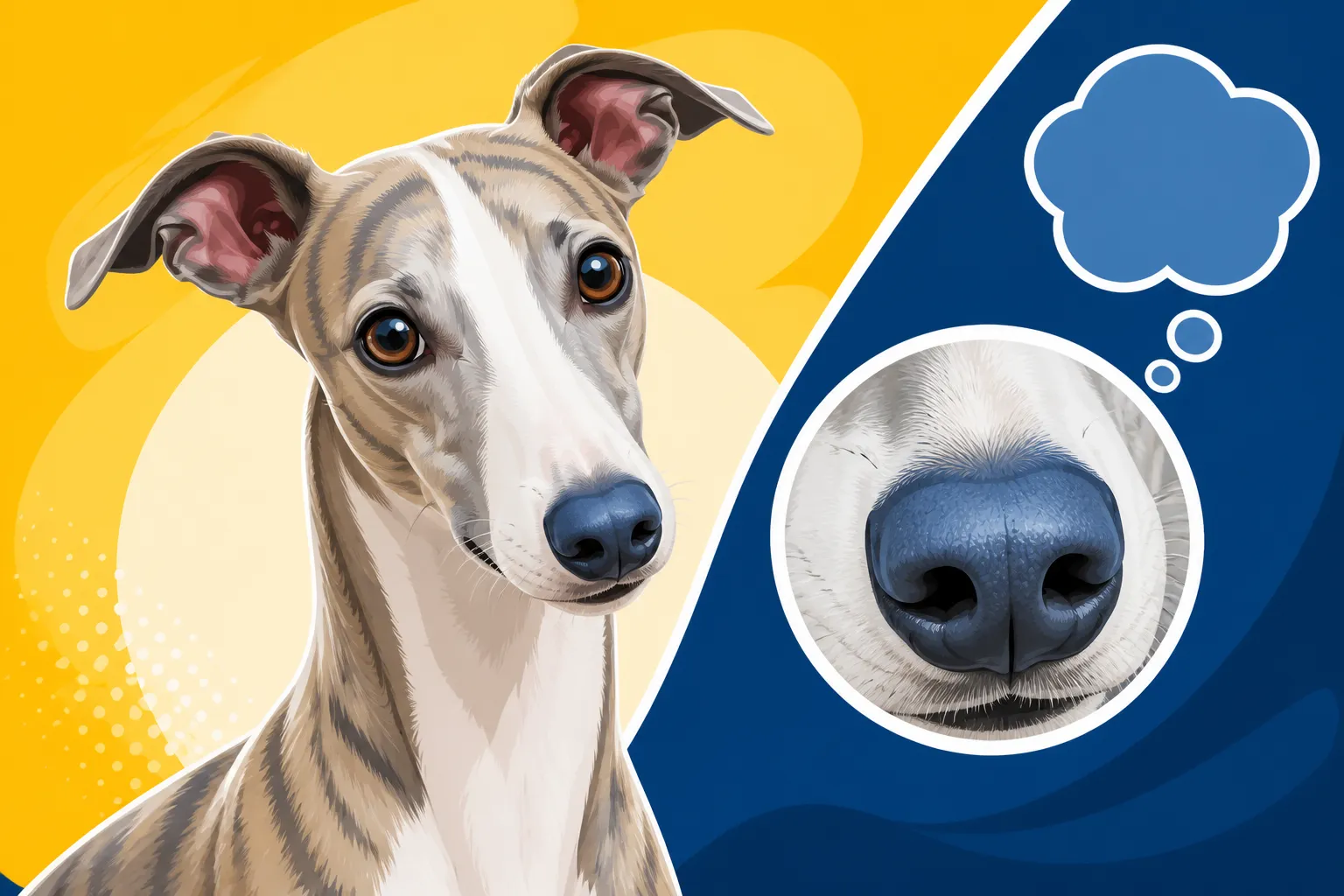
A “blue” nose on a Whippet is generally gray or slate-colored rather than bright blue. It is a casual description of the nose leather—the hairless, textured surface at the end of the muzzle. The color may look more blue-gray in daylight and more charcoal in a shaded room, so photographs can be misleading.
The term is often connected with coat color. When black pigment is diluted, it may appear gray in the coat and nose. That is why some people use “blue” to describe both a Whippet’s coat and its nose. But the nose and coat are not a matched set in every dog, and nose color by itself cannot reliably identify a Whippet’s genetic makeup.
A blue-gray nose is also different from a blue tongue or gums. Those are not ordinary pigment variations. If your dog’s tongue or gums suddenly look blue, gray, or unusually pale, or your Whippet is struggling to breathe or seems weak, seek urgent veterinary help. That kind of color change can indicate a serious problem with oxygen circulation.
How nose color relates to coat color
The dilute gene can soften black pigment into a gray or blue-toned shade. In a Whippet with a diluted black coat, the nose may also be slate-colored. The inherited coat-color dilution commonly involves the MLPH gene, but a visual description alone does not confirm which genes a particular dog carries. The bigger picture of coat genetics is covered in Why a Blue Whippet Is a Dilute.
Not every blue-gray nose belongs to a dog with a solid blue coat, and not every Whippet with a blue-looking coat will have a nose that appears exactly the same shade. Other inherited color genes, markings, age, lighting, and normal individual variation can affect what you see. A nose can also have lighter patches rather than one uniform color.
If you are trying to determine whether a Whippet is purebred, nose color is not enough to answer that question. Whippets come in a wide range of colors and markings, and appearance alone cannot establish pedigree. For more context, see Whether a Blue Whippet Is Purebred and The Colors a Whippet Comes In.
Blue nose does not mean the dog is unwell
A naturally slate-colored nose is usually just pigmentation. If it has been the same color for as long as you have known the dog, the skin looks smooth and comfortable, and your Whippet is behaving normally, the color alone is not a reason to panic.
The key is whether the color is longstanding or new. A puppy’s nose may darken as pigment develops, while an adult dog may have small, stable variations in pigment. By contrast, a nose that suddenly loses color, becomes inflamed, cracks, or develops sores deserves attention. The distinction between ordinary changes and concerning ones is explored in How a Whippet's Color Changes as It Grows.
Why a Whippet’s nose may look blue or change color
Inherited pigment and normal variation
Inherited pigmentation is the simplest explanation when the nose has been slate gray since puppyhood or has changed gradually as the dog matured. Look at the whole dog rather than judging the nose in isolation: coat color, markings, the pigmentation around the lips, and any family history may all offer useful clues. Even then, appearance is not a substitute for genetic testing when a definitive answer matters.
Nose color can be difficult to judge from pictures. A phone camera may make charcoal look blue, and warm indoor lighting can make gray pigment appear brown or nearly black. If you are comparing puppy photographs, try to use images taken in similar natural light and remember that the nose may not have been fully pigmented in the earliest photos.
A breeder may be able to tell you whether the puppy’s color was expected from the parents’ coloring, but that is not the same as confirming the puppy’s genotype. If you need genetic information for breeding decisions, ask your veterinarian or a qualified genetic-testing provider what testing is appropriate. The coat-color background in Whether a Whippet Can Be Any Color at All can help put those questions in context.
Temporary or acquired fading
Some dogs develop a lighter-looking nose during colder months, a pattern commonly called snow nose or seasonal nose fading. The pigment may return or deepen when the weather changes, though the pattern and timing vary from dog to dog. If the surface stays healthy and the change is gradual, it may be less concerning than fading accompanied by irritation or pain.
Other changes can follow an injury, repeated rubbing, inflammation, or a skin condition. A dog that has been rubbing its muzzle on a crate, digging, or scratching may have irritated the area. Changes can also be related to medical conditions that affect pigmentation. It is not possible to distinguish all of these causes just by looking at a color photograph.
Use a simple record if you are unsure: take a clear photo in daylight, note when you first noticed the change, and watch for cracking, crusting, swelling, bleeding, or sensitivity. If the color keeps changing or the skin looks abnormal, show the photos to your vet. This is especially useful when the change is subtle and may look different from one day to the next.
Blue coat and skin concerns
A blue coat is not automatically a sign of skin disease. Some owners worry that dilution means their Whippet will inevitably lose hair or develop painful skin, but coat and skin outcomes vary. If your dog has thinning hair, itchiness, scaling, or recurring infections, those signs deserve an individual veterinary assessment rather than an assumption based on color. See Whether a Blue Whippet Has Skin Problems for more on that distinction.
A blue nose by itself does not tell you whether the dog has a skin problem. Check the texture and comfort of the nose, not just its shade. Smooth, intact skin with stable pigmentation is different from a nose that is rough, sore, crusted, or repeatedly bleeding.
If the nose is dry but not injured, avoid reaching for a human lip balm or an unverified home remedy. Dogs may lick products off, and some ingredients that are fine for people may not be appropriate for pets. If you are browsing nose-care products through a retailer such as Chewy, check the full ingredient list and ask your vet whether the product is suitable for your dog. A product listing or customer review cannot diagnose the cause of a color change.
How to tell normal blue pigment from a problem
Compare the nose with your Whippet’s usual appearance
Your dog’s own baseline is more useful than a general description of what a Whippet’s nose “should” look like. Compare recent photographs with older ones, ideally taken in similar lighting. Ask whether the change appeared gradually, whether it affects the whole nose or just one patch, and whether the surface itself looks different.
A stable slate-gray nose is usually less concerning than a new patch of pigment loss or a rapidly changing color. Still, a gradual change is not a guarantee that everything is normal. If the change persists, spreads, or comes with skin symptoms, arrange a veterinary check rather than trying to identify the cause from breed color charts.
Keep a short note of when you first noticed the change and anything that happened around the same time, such as a scrape, a new muzzle or harness, or repeated rubbing. That information can help your vet decide whether the issue is likely to be irritation, a pigment change, or something that needs further investigation.
Use symptoms to guide your next step
| What you notice | What it may suggest | What to do |
|---|---|---|
| A stable slate-gray nose with smooth skin | Normal inherited pigmentation | Mention it at a routine visit if you have questions |
| Gradual seasonal lightening without soreness | Possible temporary pigment fading | Monitor and photograph it in consistent light |
| New pale patches with redness, crusting, or sores | Irritation or a skin condition | Book a veterinary appointment |
| Bleeding, swelling, discharge, or clear discomfort | Injury or significant inflammation | Contact your vet promptly |
| Blue or gray tongue or gums, especially with breathing trouble | Possible emergency affecting oxygen circulation | Seek urgent veterinary care |
Do not wait for a routine appointment if your Whippet has trouble breathing, collapses, becomes unusually weak, or has blue-gray gums or tongue. The nose leather can be naturally gray; the color of the mouth’s moist tissues is a different concern.
For a mild, dry-looking nose with no open wound, ask your veterinarian before applying anything. If you are comparing pet-safe care options on Chewy, treat product descriptions as a starting point, not medical guidance. Choose only a product your vet considers appropriate, and stop using it if the skin becomes redder or your dog seems uncomfortable.
What to expect at a veterinary visit
Your vet will likely ask when you first noticed the change and whether it has spread or come and gone. They may examine the nose and nearby skin, check for wounds or inflammation, and ask about rubbing, exposure, or other symptoms. If the nose is the only change and the skin is healthy, the next step may simply be observation.
If there are sores, persistent inflammation, hair loss, or changes elsewhere on the body, your vet may recommend additional assessment. The right approach depends on what the examination shows; a blue-gray color alone does not automatically call for extensive testing.
Bring clear photographs if the change varies over time. Photos can help show whether the pigment is genuinely changing or just looking different under different lighting. If you have been considering a balm from Chewy or another retailer, bring the packaging or ingredient information to the appointment so your vet can review it with you.
Caring for a Whippet with a blue nose
Protect the nose without over-treating it
A healthy, naturally pigmented nose usually does not need special care just because it is blue-gray. Keep an eye out for roughness, cracks, or irritation, and avoid frequent scrubbing or applying products simply to make the nose look darker. Trying to alter normal pigment can irritate delicate skin without solving any real problem.
If your Whippet spends time in strong sun, ask your vet whether sun protection is appropriate, especially if the nose has pale areas or a history of irritation. Use a product specifically deemed safe for dogs and follow veterinary advice. Do not assume that a sunscreen or balm intended for people is suitable for a dog that may lick its muzzle.
If you shop for a pet-specific product through Chewy, read the label carefully and avoid treating a cosmetic product as a cure. A balm may help protect dry skin in some situations, but it will not address every cause of pigment loss or soreness. A persistent change is a reason to ask for an examination, not just to try another product.
Keep color questions separate from breed and health questions
People sometimes see a blue nose and immediately wonder whether the dog is a different breed, whether the color is rare, or whether it signals a medical issue. Those are separate questions. Nose pigment can be one part of a dog’s appearance, but it does not prove ancestry, predict temperament, or diagnose a health condition.
If you are choosing a puppy, ask the breeder about the parents, health history, and any testing relevant to the breeding. If your concern is the puppy’s changing nose color, ask whether it has been present from birth and whether the breeder has noticed skin symptoms. For a broader look at the breed’s range of appearance, Whether a Blue Whippet Is Purebred and The Colors a Whippet Comes In are useful starting points.
For an adult dog, focus on the change itself. A naturally slate nose that has always looked the same is very different from a nose that suddenly becomes pale, cracked, swollen, or painful. When in doubt, a clear photo and a conversation with your vet are more useful than guessing from the word “blue.”
Disclaimer
This article is for general informational purposes only and does not constitute professional advice. Laws, prices and regulations vary by location and change over time. Consult a qualified professional for guidance on your specific situation.