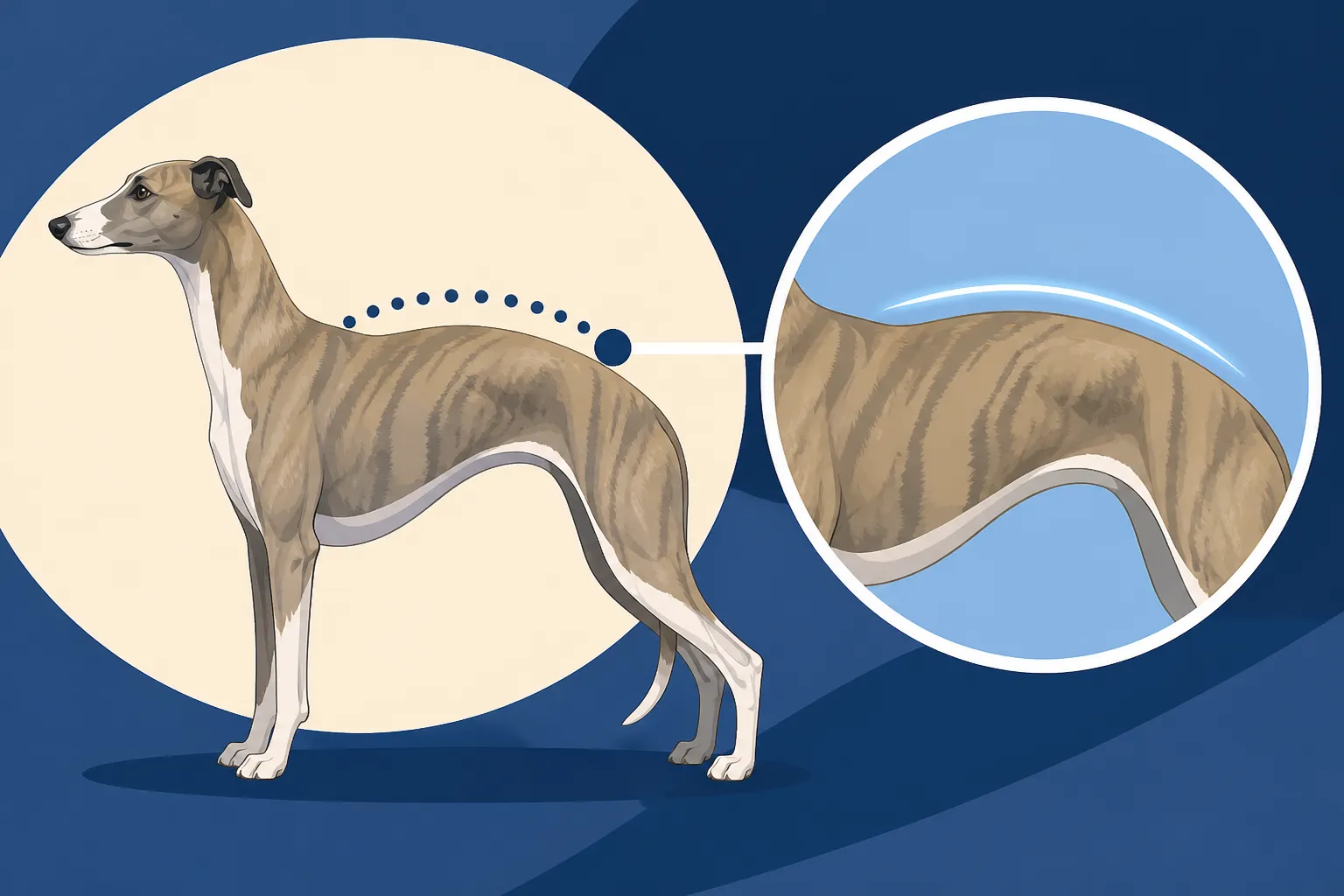
What the Whippet Standard Says About the Arch
Many new Whippet owners, or those simply admiring the breed, often find themselves curious, and sometimes a little confused, by the distinct curve in a Whippet's back. Is it a "roach back" that's a fault, or is it a desired trait? This comprehensive guide will explain exactly what the breed standard mandates regarding the Whippet's topline, demystifying this elegant and functional characteristic.
Understanding the Whippet's Distinctive Topline
The Whippet's back isn't just a random curve; it's a marvel of athletic engineering, carefully shaped over generations to serve a specific purpose. This unique arch is one of the most defining features of the breed, a clear indicator of its sighthound heritage and incredible speed.
The Power of the Elegant Curve
When you first lay eyes on a Whippet, that signature curve over its loin might spark questions. Often, people unfamiliar with sighthound anatomy might mistakenly believe it's a flaw, perhaps referring to it as a "roach back" in a derogatory sense. However, for a Whippet, this arch is precisely what makes them so efficient and powerful. Think of it not as a defect, but as a perfectly calibrated spring, coiled and ready to release immense energy. This natural, graceful curve provides unparalleled flexibility and acts as a pivotal lever system, enabling the Whippet to achieve its astonishing speeds and execute those lightning-fast turns. Without this finely tuned structure, a Whippet wouldn't possess the characteristic explosive acceleration or the agility to pursue its quarry, whether that's a lure on a race track or a squirrel in the park. It’s a testament to form following function, a design masterpiece honed by centuries of selective breeding.
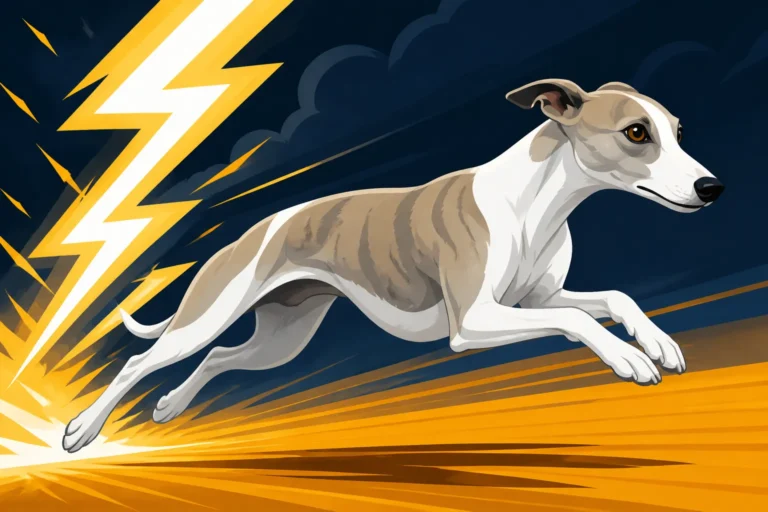
This arch plays a crucial role in the Whippet's iconic double suspension gallop. As the dog sprints, its spine flattens during the extension phase, stretching out its body to cover maximum ground. Then, as the legs tuck underneath, the arch flexes sharply, allowing the powerful hindquarters to drive off the ground with incredible force, propelling the dog forward. This rhythmic coiling and uncoiling is what gives the Whippet its remarkable ground-covering ability and effortless stride. It's this dynamic interplay between muscle, bone, and flexibility that defines the Whippet’s movement, making it one of the most efficient runners in the canine world. A healthy, well-developed arch is therefore not just an aesthetic point, but a cornerstone of the breed's athletic capability and overall soundness. How a Whippet's Roach Affects Its Speed is a great resource to learn more about this connection.
Why a Whippet's Arch is More Than Just Aesthetic
The arch in a Whippet's back is far more than just a pretty line; it's an indispensable component of their anatomical toolkit, directly contributing to their health, functionality, and enduring appeal. This flexible spine, particularly in the loin area, acts like a sophisticated suspension system and a powerful catapult. It's designed to absorb the immense forces generated during high-speed running, protecting the internal organs and providing stability. But more importantly, it's a reservoir of kinetic energy. As the Whippet’s hind legs reach far under its body during the gather phase of the gallop, the back muscles contract, causing the arch to become more pronounced. This action stores elastic energy in the muscles and tendons, which is then explosively released as the dog pushes off, giving it that characteristic spring and powerful drive.
This structural design is not just for elite athletes; it contributes to the everyday comfort and longevity of a pet Whippet too. A correctly formed arch, supported by strong, supple muscles, helps distribute weight evenly and reduces stress on individual vertebrae. This can lead to a more comfortable life, reducing the likelihood of back issues often seen in breeds with less flexible or improperly structured spines. It allows for natural, fluid movement in all activities, from playful zoomies in the yard to cozying up on the sofa. Therefore, when evaluating a Whippet, whether for show, performance, or as a beloved companion, the arch is a key indicator of correct breed type, inherent athleticism, and overall physical soundness. It embodies the very essence of the Whippet: speed, grace, and effortless power.
Deciphering the Breed Standard's Ideal Arch
To truly understand the Whippet's topline, it’s essential to look at the official breed standard. This document, crafted by breed clubs, sets out the ideal characteristics for every part of the dog, including its back.
The Language of a "Long, Flowing Arch"
When you delve into the official Whippet breed standard, whether from the American Kennel Club (AKC) or other international organizations, you’ll consistently encounter specific language describing the ideal topline. Phrases like "long, flowing arch over the loin" are not mere suggestions; they are precise instructions for breeders and judges alike. The term "long" implies that the curvature should not be abrupt or confined to a small, localized area. Instead, it should be a gradual, elegant rise that extends smoothly across a significant portion of the back, avoiding any sharp angles or sudden breaks in the line. "Flowing" further emphasizes this gentle, continuous nature, suggesting a soft, unbroken line that transitions seamlessly.
The arch's most pronounced point, or apex, is specified to be "over the loin." The loin is the muscular region of the back situated between the last rib and the pelvis, a powerhouse of the dog's anatomy. This area needs to be particularly strong and flexible to facilitate the Whippet's unique gait. After reaching its peak over the loin, the standard describes the arch as "tucking up at the end" or "dropping away to the tail." This means the line should gently descend towards the tail set, creating a harmonious and balanced silhouette. This careful description in the standard ensures that the arch is not an isolated feature but an integral part of the Whippet's overall conformation, contributing to its iconic shape and incredible athletic ability. Understanding these nuances helps us appreciate the depth of thought put into preserving the breed's functional beauty.
What Constitutes a Faulty Topline
Just as the breed standard meticulously outlines the ideal Whippet arch, it implicitly defines what is considered a structural fault. A truly flat back is one of the most significant deviations from the desired breed type. A Whippet with a completely flat topline lacks the essential spring and flexibility necessary for its characteristic powerful gallop. Without that inherent curvature, the dog's stride becomes less efficient, its ability to coil and release energy is compromised, and its overall athleticism is diminished. A flat back often suggests a lack of sufficient musculature in the loin or an incorrect spinal structure that simply cannot provide the same dynamic function.
Conversely, an arch that is too abrupt, too high, or appears as a sharp "hump" rather than a smooth, flowing curve is also considered undesirable. This exaggerated arch can restrict the dog's natural range of motion, creating stiffness or an unbalanced gait. Rather than a graceful spring, it can look rigid and unnatural. Such a feature might also indicate structural weakness or an incorrect skeletal alignment, which could potentially predispose the dog to discomfort or injury over time. The key, as always in conformation, is moderation and balance. The arch should be distinct and functional, but never extreme or isolated. It must flow harmoniously with the rest of the Whippet's elegant frame, contributing to a picture of effortless speed and grace. Whether a Flat Backed Whippet Is Faulted delves deeper into why this deviation is considered a fault.
Pinpointing the Arch's Origin and Apex
To properly evaluate a Whippet's topline, it's helpful to know exactly where the arch is supposed to begin, where it peaks, and how it flows into the rest of the body. This isn't just about a general curve; it's about precise anatomical landmarks.
Where the Arch Begins: Behind the Withers
The breed standard explicitly states that the "long, flowing arch" of a Whippet's back should begin "just behind the withers." The withers, for those less familiar with canine anatomy, refer to the ridge between the dog's shoulder blades. It's typically the highest point on the dog's back before the neck. From this point, the topline should not exhibit any dip or be perfectly straight. Instead, it should immediately embark on a gentle, subtle upward curve. This initial segment of the arch is crucial, as it sets the stage for the more pronounced curvature over the loin.
A correct start to the arch ensures a continuous, powerful line that flows seamlessly from the neck and shoulders into the back. If the back appears flat, dipped, or weak immediately behind the withers, it can indicate a structural flaw that disrupts the overall balance and power chain of the Whippet's body. This area needs to be strong and well-muscled to support the dog’s powerful front assembly and allow for efficient transfer of energy. Think of it as the foundation upon which the rest of the dynamic arch is built; a weak or improperly constructed beginning will inevitably compromise the entire structure's integrity and function.
The Apex: Over the Loin and Towards the Tail
The true focal point and most significant part of the Whippet's arch, its apex, should be situated directly "over the loin." As mentioned, the loin is the robust, muscular section of the back that lies between the rib cage and the pelvis. This is the region where the Whippet's spine exhibits its maximum flexibility and where much of its explosive power is generated. The curve here should be clearly defined but still maintain that "flowing" quality described in the standard, avoiding any abruptness or sharp angles. It's a powerful and dynamic curve, indicative of strength and agility.
From this peak over the loin, the arch should then gracefully descend, with the topline "tucking up" towards the tail set. This downward sweep is not merely aesthetic; it's functionally vital. It contributes to the dog's aerodynamic profile and allows for the powerful drive-through of the hindquarters. The tail itself, ideally carried low with a slight curve, should appear as a natural extension of this flowing topline. An arch that peaks too far forward (closer to the shoulders) or too far back (over the hips), or one that drops too sharply, can throw off the Whippet's balance and impede its distinctive gait. Every inch of the topline, from its subtle beginning behind the withers to its graceful end at the tail, is designed for optimal performance and classic Whippet elegance. Why the Whippet Standard Cares So Much About the Topline further explores the detailed requirements for this crucial aspect of Whippet conformation.
The Arch in the Context of Overall Whippet Conformation
The Whippet's arch isn't a standalone feature; it's intricately woven into the entire fabric of its anatomy, working in concert with other physical traits to create a harmonious and highly efficient athlete.
The Arch as Part of a Sighthound Symphony
To truly appreciate the Whippet's arch, one must view it as an integral part of a larger, perfectly synchronized system – a sighthound symphony, if you will. The deep chest, characteristic of sighthounds, provides ample room for a powerful heart and lungs, critical for sustained bursts of speed. Why a Whippet's Big Heart Is Not a Diagnosis sheds more light on the breed's cardiac capacity. This deep chest transitions smoothly into a significant tuck-up of the abdomen, creating a streamlined, aerodynamic profile that perfectly complements the arch. The tucked-up waist not only reduces drag but also allows the hind legs maximum range of motion to reach far under the body during the gallop.
Furthermore, the angulation of both the forequarters and hindquarters is designed to work in perfect harmony with the arch. Proper angulation provides the necessary leverage and flexibility for powerful propulsion, ensuring that the energy generated by the muscles is efficiently transmitted through the flexible spine. Imagine if one part of this system was out of balance – a flat back with well-angled legs, or a perfect arch with poorly angled limbs – the entire machine would be less efficient, less powerful, and ultimately, less "Whippet." Each component supports and enhances the others, creating a cohesive, agile, and incredibly fast canine form. This integrated design is what makes the Whippet such a breathtaking sight, whether at rest or in full flight.
Graceful Movement: The Arch in Action
There’s nothing quite like watching a Whippet in full flight. Their movement is a masterclass in kinetic energy and graceful athleticism, and the arch of their back is the silent conductor of this performance. During a full gallop, the Whippet exhibits what is known as a double suspension gait. This means there are two distinct moments in each stride where all four feet are off the ground simultaneously – once when the legs are gathered underneath the body, and once when they are fully extended. The arch is absolutely critical to this unique movement.
As the hind legs drive powerfully forward and gather beneath the body, the arch becomes more pronounced, allowing the spine to flex dramatically. This coiling action stores enormous amounts of elastic energy in the powerful back and loin muscles. Then, as the Whippet pushes off for the next stride, the back extends, releasing that stored energy to propel the dog forward with incredible force and reach. This elasticity and flexibility, enabled by the flowing arch, allows for the extreme extension and collection that characterizes the Whippet's ground-covering stride. Any stiffness or incorrect curvature in the topline would impede this fluidity, making the dog less efficient, more prone to jarring impacts, and unable to achieve its characteristic speed and agility. The arch isn't static; it's a dynamic, flexing element that truly comes alive when the Whippet moves.
Common Misunderstandings and Real-World Variations
Despite the clear guidelines in the breed standard, there are often discussions and observations about variations in Whippet toplines. It's important to separate genuine structural faults from natural variations or changes due to age and condition.
Addressing the "Flat Back" Confusion
The concept of a "flat back" in Whippets is a frequent point of discussion, sometimes leading to confusion among owners and even those familiar with the breed. While the standard unequivocally calls for an arch, it’s true that not every Whippet will display the exact same degree of curvature. Some perfectly sound Whippets might appear to have a less dramatic arch than others, leading some to incorrectly label them as "flat-backed." It’s crucial to understand the distinction between a true structural fault and a natural variation within a healthy spectrum. A genuinely flat back, lacking any discernable arch, is indeed a deviation that compromises the Whippet's athletic functionality. This often means reduced flexibility and less efficient propulsion.
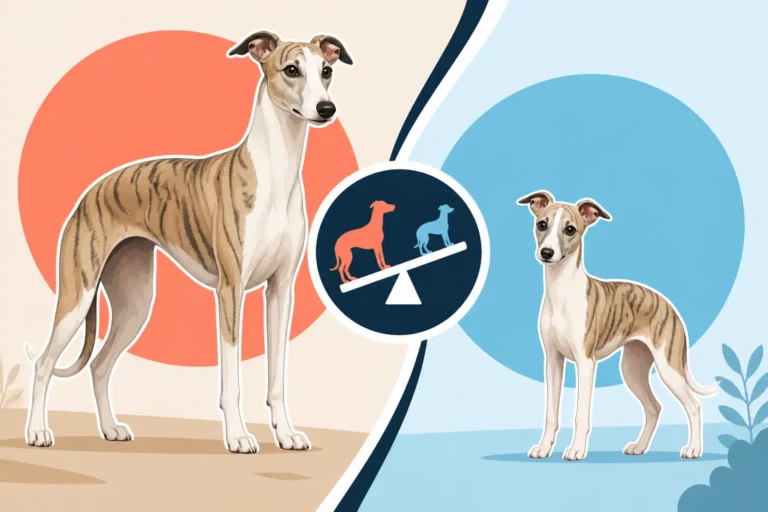
However, a Whippet whose arch is simply less pronounced, yet still present and flowing, is not necessarily faulty. This can be due to individual genetics, the dog's current muscle tone, or even how it stands or moves. Experienced judges and breeders assess the entire dog, focusing on overall balance, proportion, and fluid movement, rather than fixating solely on the visual prominence of the arch. A Whippet might have a slightly flatter presentation but still move with incredible power and grace, indicating a functionally sound back. Therefore, it's essential to look beyond a superficial glance and evaluate the dog's structure and movement as a whole. For comparison, you might consider how the Whippet's structure differs from other sighthounds; The Whippet Against the Greyhound and the Italian Greyhound illustrates these breed-specific nuances.
The Arch Through Life Stages
Just like humans, a Whippet's body changes over its lifetime, and this includes the appearance of its arch. A young Whippet puppy, for instance, might not exhibit the pronounced arch of a mature adult. Their bones are still growing, and their muscles are still developing, so their topline might appear straighter or have a more gentle curve initially. As they grow and fill out, particularly during their adolescent period when they start building more muscle tone through play and exercise, the characteristic arch usually becomes much more evident. It’s part of their natural development, so patience is key!
Similarly, as a Whippet gracefully enters its senior years, the appearance of the arch can undergo subtle changes. While the underlying skeletal structure remains, muscle tone can naturally soften with age, even in well-cared-for dogs. This might make the arch appear slightly less dramatic or give the back a softer line than in its prime. It's important for owners not to mistake these normal, age-related changes for a structural fault. Maintaining appropriate exercise and a healthy diet can help preserve muscle tone and spinal health as long as possible. Caring for a Whippet Past Ten provides valuable insights into how to support your Whippet's changing needs as they age, including maintaining back health. Observing these life stage variations helps us understand that the arch is a dynamic feature, evolving with the Whippet throughout its journey.
Practical Guidance for Whippet Owners
Understanding the Whippet's arch isn't just for show enthusiasts; it provides valuable insight into the breed's physical needs and helps owners ensure their companions live long, healthy, and comfortable lives.
Evaluating Your Whippet's Topline
As a Whippet owner, being familiar with the ideal breed standard empowers you to appreciate your dog's unique structure and recognize what a healthy topline looks like. When you gently run your hand along your Whippet's back, you should feel a smooth, resilient curve, rather than any sharp angles, dips, or rigid flatness. Observe your Whippet in motion: their gait should be fluid and effortless, with the back demonstrating a supple "give and take" that speaks to its flexibility. While you don't need to be a professional judge, knowing these cues helps you identify any significant deviations that might warrant a closer look.
If you ever notice a sudden change in your Whippet's topline, or if they show signs of pain, stiffness, or reluctance to move, it's always best to consult with a veterinarian, especially one familiar with sighthound anatomy. They can assess structural integrity, check for any muscle imbalances, and rule out underlying health issues. A responsible breeder will also be an excellent resource, providing guidance on what to expect as your Whippet grows and offering advice on maintaining good back health. Being attuned to your Whippet's physical form is a vital part of responsible ownership, helping you catch potential concerns early and ensure their continued well-being.
Nurturing a Healthy Back in Your Whippet
Beyond genetics, owners play a significant role in supporting their Whippet's back health throughout its life. A cornerstone of this care is proper nutrition, which provides the essential building blocks for strong bones, supple ligaments, and powerful muscles. High-quality dog foods, easily found from reputable retailers like Chewy, offer balanced diets specifically formulated for active breeds, ensuring your Whippet receives the protein and nutrients needed to maintain their lean, muscular physique and flexible spine. You can often find a wide variety of excellent options on Chewy that cater to different life stages and dietary needs.
Appropriate exercise is another crucial factor. While Whippet puppies need activity to develop muscle, it’s important to avoid over-exertion or high-impact activities like jumping from furniture or repetitive stair climbing, which can stress developing joints and spines. Raising a Whippet Puppy Without Wrecking Its Joints is an invaluable resource for navigating this delicate period. For adult Whippets, regular, controlled running on soft, even surfaces helps maintain muscle tone and spinal flexibility without undue strain. Lastly, providing ample soft bedding throughout your home is non-negotiable for a Whippet. Their famously thin skin and lack of body fat make them highly susceptible to pressure sores on bony prominences if they consistently lie on hard surfaces. Quality, orthopedic dog beds, often available on platforms like Chewy, can provide the necessary cushioning and support for their unique body shape, protecting their spine and joints and ensuring they remain comfortable for all those hours of napping. Our Whippets adore their memory foam beds from Chewy, and we've noticed a real difference in their comfort!
The Significance of Whippet Proportions
The arch, while central, is never truly isolated. Its effectiveness and elegance are deeply dependent on how it integrates with the rest of the Whippet's carefully proportioned body. It's a key part of a larger anatomical puzzle.
Balancing Length and Angulation with the Arch
The functionality of the Whippet's arch is inextricably linked to the overall proportions of its body, particularly the length of its loin and the angulation of its limbs. The loin, the muscular section of the back where the arch is most prominent, must be of sufficient length to allow for the powerful "coiling" action during the gallop. If the loin is too short, the arch can appear cramped or abrupt, restricting the dog's ability to fully extend and collect, thereby limiting its natural reach and drive. Conversely, an excessively long loin, especially if not supported by robust musculature, can lead to a weak back that lacks the necessary spring and power.
Similarly, the precise angulation of both the front (shoulder) and rear (pelvis, stifle, hock) assemblies must be in harmony with the arch. Correct angulation provides the powerful levers and pivots that enable the efficient transmission of force through the flexible spine. Without proper angulation, the arch cannot fully express its dynamic function. For example, if the hindquarters are too straight, the dog cannot gather its legs far enough under its body to effectively utilize the stored energy in the arch. The Whippet breed standard emphasizes balance and moderation in all aspects, ensuring that the arch complements, rather than stands out exaggeratedly from, the overall picture of an agile and powerful sighthound. This anatomical synergy is what allows for their signature effortless movement.
Head, Neck, and Tail Set: The Arch's Neighbors
Even elements that seem visually distant from the arch, such as the head, neck, and tail set, contribute to and are influenced by the overall topline. A long, elegant neck that blends smoothly into well-laid-back shoulders provides the perfect aesthetic and structural prelude to the arch. The way the head is carried – typically proudly and alertly – contributes to the overall impression of a graceful, flowing line from nose to tail. An incorrectly set or carried head and neck can disrupt this harmony, making the arch appear disjointed or out of balance with the rest of the dog's outline.
At the other end, the tail set acts as a natural continuation of the arch's flowing line. The Whippet's tail is ideally long, tapering, and carried low with a slight curve, echoing the elegance of the back. A high tail set can visually break the continuity of the topline, making the arch appear truncated or abrupt, while an overly low or tucked tail might suggest nervousness or an unbalanced overall structure. Every single part of the Whippet's anatomy is designed to work together, contributing to its distinctive silhouette and incredible functional efficiency. Understanding these relationships allows for a deeper appreciation of the breed's carefully sculpted form. For a general understanding of the breed's build, you might also be interested in What a Whippet Actually Weighs.
Training and Daily Life with the Arch
Understanding the Whippet's unique arched back extends beyond conformation and athleticism; it also informs how we care for them in daily life and during training. This distinctive feature requires thoughtful consideration to ensure their comfort and well-being.
Protecting the Whippet's Flexible Spine
While the Whippet's spine is built for incredible flexibility and power, it's not immune to injury. As responsible owners, we need to take proactive steps to protect this vital part of their anatomy. One key area is managing play, especially with much larger or boisterous dogs. While Whippets love to play, they can be delicate, and overly roughhousing with heavy breeds could potentially lead to strains or injuries to their back and joints. Encouraging safe play interactions and supervising mixed-breed playdates is always a good idea.
Furthermore, consider the surfaces your Whippet runs on. While they adore sprinting, consistently running on hard, unforgiving surfaces like concrete or asphalt can put repetitive stress on their joints and spine over time. Whenever possible, encourage them to run on softer ground such as grass or sand. For growing puppies, it's especially important to protect their still-developing bones and growth plates. Discouraging excessive jumping from high furniture or frequent climbs up and down stairs can help prevent undue stress. Raising a Whippet Puppy Without Wrecking Its Joints offers comprehensive advice on protecting your young Whippet’s musculoskeletal system. Providing a comfortable, supportive environment, from well-padded crates to soft beds thoughtfully placed throughout your home, also goes a long way in safeguarding that precious and dynamic topline, ensuring your Whippet remains comfortable and healthy for years to come.
The Arch and Whippet Comfort
The distinctive arch and overall slender, deep-chested build of a Whippet profoundly influence their comfort in daily life, impacting everything from collar choice to apparel. Because their heads are often smaller than their necks and their necks narrow significantly towards the shoulders, standard flat collars can easily slip off. This is why martingale collars are universally recommended for Whippets. They provide a gentle, humane way to prevent escape without choking the dog, accommodating their unique neck and head shape which, in turn, is affected by their arch and deep chest.
Finding suitable apparel is another area where the arch comes into play. Many off-the-rack dog coats and sweaters are designed for breeds with flatter backs and broader chests, meaning they often don't fit a Whippet well. They might bunch up over the arch, gape at the chest, or fail to cover the loin adequately, leaving parts of the back exposed to the cold. Specialized sighthound apparel, often found through dedicated online retailers or sites like Chewy, is patterned to accommodate the deep chest, narrow waist, and, crucially, the graceful arch. These garments ensure optimal warmth and comfort without restricting movement, allowing your Whippet to stay cozy and stylish even in cooler weather. It's a constant reminder that a Whippet's elegant, arched physique requires thoughtful consideration in every aspect of their care, ensuring their well-being and happiness.
| Feature | Ideal Whippet Arch | Flat Back Fault | Exaggerated/Abrupt Arch Fault |
|---|---|---|---|
| Beginning | Smooth, subtle rise just behind the withers | Straight or dipped behind the withers | Can be too sharp or start too abruptly |
| Loin Curve | Long, flowing, graceful curve over the loin (apex) | Straight or slight upward slope, lacks distinct curve | High, sharp peak; often short rather than flowing |
| Function | Acts as a spring for propulsion, aids flexibility & speed | Inhibits powerful extension, less efficient gait | Can restrict flexibility, may indicate structural weakness |
| Appearance | Elegant, powerful, harmonious with overall lines | Boxy or less athletic profile | Humped or uneven look, disrupts fluid lines |
| Mobility | Allows for extreme collection and extension | Limited spinal flexibility | Can lead to restricted movement or stiffness |
Disclaimer
This article is for general informational purposes only and does not constitute professional advice. Laws, prices and regulations vary by location and change over time. Consult a qualified professional for guidance on your specific situation.