Whether a Whippet Can Be Any Color at All
A Whippet can come in a remarkably wide range of colors, from solid black or white to brindle, blue, fawn, and combinations with white markings. That variety can make it hard to tell whether a striking coat is normal or unusual. This guide explains what the breed standard allows, how color works, and why coat shade alone cannot tell you whether a Whippet is purebred or healthy.
What colors can a Whippet be?
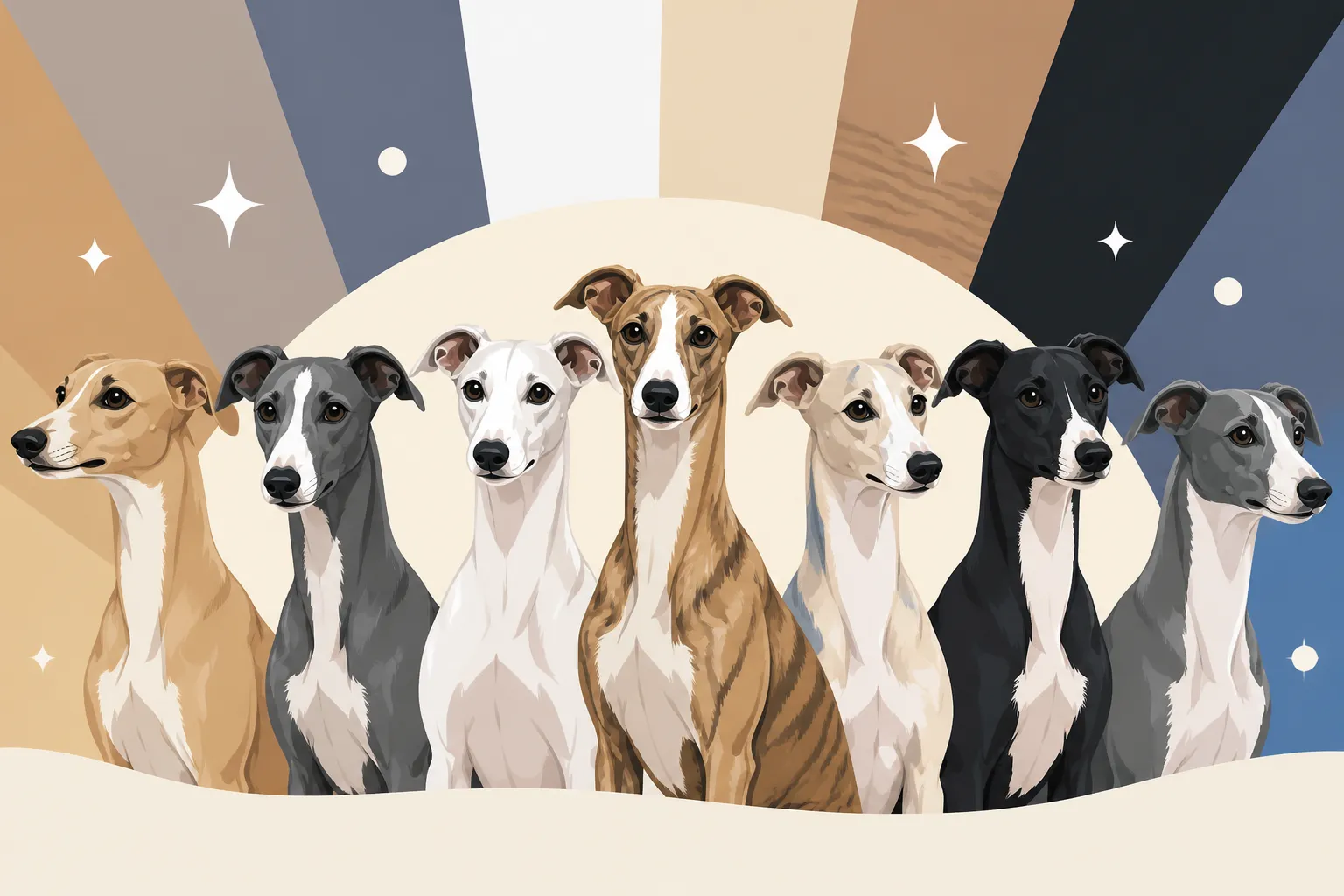
The short answer is that Whippets can be almost any color, and their coats may be solid, patterned, or mixed. Breed standards in major registries allow a broad range of colors and combinations rather than limiting Whippets to a short approved palette. In practical terms, a Whippet’s coat color is rarely a reason to question whether the dog belongs to the breed.
The breed’s colors include black, white, blue, fawn, red, cream, and brindle, along with many mixtures and markings. A dog might have a mostly white coat with colored patches, a dark brindle pattern, or a single solid shade. For a closer look at the range, see The Colors a Whippet Comes In.
Solid colors and mixed coats
A solid-colored Whippet has a coat that appears mostly one shade, although small white markings may still be present. Black, blue, fawn, red, and cream are examples of colors owners may describe as solid. In sunlight or close-up, subtle shading can make a coat look less uniform than it first appears.
Mixed-color Whippets can have patches, spots, or areas of white alongside another color. You may hear these dogs described as parti-colored or marked, though everyday descriptions vary. One Whippet might have a white chest and toes, while another has large colored patches across a white background. These patterns are normal variations, not evidence that a dog is a different breed.
Brindle coats have darker stripes or streaks over a lighter base color. The pattern can be bold and obvious, or so subtle that it is easiest to see when the coat catches the light. Brindle may appear across much of the body or alongside white areas. For more on how common this pattern is, read Whether a Brindle Whippet Is Common.
| Coat description | What it usually means | Is it accepted as a Whippet color? |
|---|---|---|
| Black, red, fawn, or cream | A coat that appears mostly one shade | Yes |
| Blue | A diluted shade that may look gray or slate | Yes |
| Brindle | Dark stripes or streaks over a lighter base | Yes |
| White marked | White areas combined with another color | Yes |
| Mostly white | A largely white coat, sometimes with colored patches | Yes |
| Mixed or patched | Two or more colors arranged in patches or markings | Yes |
White, markings, and unusual combinations
A Whippet can be solid white or mostly white, and white can also appear as markings on a coat of another color. A white chest, blaze, feet, or collar-like marking is not unusual. The size and placement of markings can differ from dog to dog, even among puppies from the same litter.
People sometimes worry that a large white patch or an unexpected combination makes a Whippet “off standard.” In general, Whippet standards allow broad color variation, and coat markings are not a reliable way to judge a dog’s breed or quality. If you are interested in the details of markings, Whether Whippet Markings Are Faulted offers a more focused explanation. You can also read Whether a Whippet Can Be Solid White if a mostly white coat is what prompted the question.
What does the Whippet breed standard say about color?
A breed standard describes the characteristics used to evaluate a breed, particularly in conformation shows. Whippet standards allow a wide range of colors and combinations. That means a color that looks rare or surprising to you may still fit comfortably within the breed’s accepted appearance. For a direct overview of the standard’s wording, see Which Colors the Whippet Standard Allows.
Color is only one small part of a Whippet’s appearance. A show judge assesses the whole dog, including structure, movement, proportions, and condition. A distinctive coat may catch your eye, but it does not by itself make a Whippet more correct, more valuable, or healthier than another.
Does a rare color mean a Whippet is not purebred?
No. A Whippet does not need to be a common color to be purebred. A blue, brindle, white-marked, or unusually patterned dog can still be a Whippet. Conversely, color alone cannot prove that a dog is purebred. Pedigree records and reliable documentation are much more useful than coat appearance.
This matters because color is sometimes used as a sales hook. A seller may describe a shade as exceptionally rare or suggest that it guarantees a special bloodline. Treat those claims cautiously. A dramatic coat can be attractive, but it is not a substitute for asking about the puppy’s parents, health history, temperament, and the breeder’s practices. The same principle applies when someone claims that a particular color is impossible in the breed: What Colors a Whippet Cannot Be discusses why those claims can be misleading.
If you are considering a puppy, ask for clear information about its background rather than relying on a color label. Ethical breeders should be comfortable discussing health testing and answering ordinary questions about the litter. A color description can help you talk about what you see, but it should not carry the weight of proof.
Do kennel clubs disqualify Whippets for coat color?
Whippet standards are notably inclusive about color. The exact wording can differ between organizations, so anyone preparing for a particular show should check the rules for that registry and event. But a coat being blue, brindle, white, or a combination is not, by itself, a reason to assume that a Whippet cannot be shown.
That distinction is useful for pet owners too. A dog does not need to be show quality to be a wonderful companion, and a show-related color question does not determine whether a pet Whippet is healthy or well cared for. If you are comparing a dog to breed descriptions, remember that appearance is a collection of traits rather than a single color test.
How do Whippet coat colors happen?
Coat color is shaped by inherited genes that influence pigment, pattern, and the distribution of color across the body. Puppies receive genetic information from both parents, so a litter can include several different-looking pups. Even when the parents look similar, their puppies may not all share the same shade or markings.
The visible coat is the result of multiple inherited factors, not a simple one-color-per-parent formula. That is why predicting a puppy’s exact adult appearance from a quick glance at the parents can be difficult. Some coats also change subtly as a puppy grows, and lighting can make the same dog look warmer, cooler, darker, or lighter.
Why can littermates look so different?
Two littermates share parents but not identical combinations of inherited traits. One puppy may inherit a pattern that produces brindle, while another may have a more solid-looking coat. White markings can also vary: one pup may have a small chest spot, while another has extensive white across the body.
This variation is ordinary and does not automatically indicate that the litter has mixed parentage. If you have a specific concern about a puppy’s lineage, use pedigree documentation and speak with the breeder rather than trying to infer parentage from color alone. Coat patterns are too varied to serve as a dependable shortcut.
Can a Whippet’s color change as it grows?
A puppy’s coat can look different as it matures. The shade may deepen or soften, and patterns can become easier or harder to see depending on the coat and light. A brindle pattern that seemed faint in puppyhood, for example, may stand out more as the dog’s coat develops. Individual dogs vary, so there is no single predictable change for every color.
Photographs can exaggerate these differences. Indoor lighting, camera exposure, and the angle of the sun can shift how a coat appears. If you are comparing a puppy’s color over time, look at it in natural, indirect light and avoid treating minor changes in a photo as a sign of a health problem.
Does a particular Whippet color mean a health problem?
Most of the time, a Whippet’s color is simply a variation in appearance. A blue coat, for example, does not automatically mean that a dog is ill or has a specific condition. Still, some color-related topics deserve sensible attention, especially when a coat shade is linked to dilution genes or when a dog develops skin changes.
The important point is not to diagnose health from a color label. Look at the individual dog: its skin, coat condition, comfort, and overall health matter more than the name used to describe its shade. For a focused discussion of blue coats and skin concerns, see Whether a Blue Whippet Has Skin Problems.
Are blue Whippets purebred?
Yes, a blue coat can occur in a purebred Whippet. “Blue” generally describes a diluted dark pigment that gives the coat a gray, slate, or bluish appearance. It is a color description, not a separate breed or proof of crossbreeding. For additional context, read Whether a Blue Whippet Is Purebred.
Some people associate dilute coat colors with color dilution alopecia, a condition that can affect the hair and skin of some dilute-colored dogs. That association does not mean every blue Whippet will develop a problem. If your dog develops thinning hair, recurring irritation, scaling, or other skin changes, ask a veterinarian to assess the cause rather than assuming the color is responsible.
Do white markings mean a Whippet is deaf?
A white coat or white markings are not enough to determine whether an individual Whippet can hear. Color alone cannot replace an appropriate hearing assessment. If a puppy does not respond consistently to sound, or you are concerned about hearing, discuss it with a veterinarian and ask whether a formal test is appropriate.
It is also worth separating ordinary white markings from broad claims about health. A Whippet with white areas is not automatically fragile, deaf, or less healthy. For a related discussion of coat-color concerns and hearing, see Whether a White Marked Whippet Can Be Deaf. The practical approach is to assess the dog in front of you, not to make a diagnosis from its markings.
How should you care for a Whippet’s coat, whatever its color?
Whippets have short coats that are generally straightforward to maintain, but their skin can be delicate. A quick weekly check is useful for noticing scratches, irritation, flakes, or small lumps. Gentle brushing with a suitable soft brush can remove loose hair without the vigorous grooming some longer-coated breeds need.
A light-colored coat may make dirt or staining more noticeable, while dark coats can show flakes or dust in certain lighting. Those are cosmetic differences, not reasons to use harsher products. If you are shopping for a mild dog shampoo or grooming supplies, retailers such as Chewy may offer several options; check product labels carefully and ask your veterinarian about persistent skin concerns. Avoid using human shampoo unless your vet specifically recommends it.
Does coat color affect sun protection?
A Whippet’s coat is short, and areas with little pigment or sparse hair can be more exposed to sunlight. That does not mean every light-colored dog needs the same routine, but it is sensible to limit prolonged exposure during intense sun and provide shade. Pay particular attention to lightly pigmented areas, such as the nose or thinly coated parts of the body.
If you are considering sunscreen, use a product made for dogs and ask your veterinarian which ingredients and application areas are appropriate. Some products intended for people are unsafe if a dog licks them. Chewy may be one place owners browse for pet-care supplies, but product availability is not a substitute for checking ingredients or getting advice for a dog with sensitive skin.
Should color guide your choice of puppy?
It is completely reasonable to have a color you love. Perhaps you have always admired a brindle coat, or you are drawn to a mostly white Whippet with dark patches. The useful balance is to treat color as a preference—not the main test of whether a puppy is right for your home.
Put greater weight on health information, temperament, the breeder’s transparency, and whether the puppy’s needs fit your lifestyle. If a seller focuses heavily on a supposedly rare shade while offering little information about health or background, pause and ask more questions. When comparing coats or buying dog-safe grooming products, Chewy can be one practical shopping option, but the decision to bring home a particular puppy should rest on much more than its color.
Disclaimer
This article is for general informational purposes only and does not constitute professional advice. Laws, prices and regulations vary by location and change over time. Consult a qualified professional for guidance on your specific situation.