How Close the Whippet Came to Dying Out
The Whippet’s history is often told as a near-extinction story, but the reality is more complicated: the breed’s role and popularity changed, and two world wars disrupted dog breeding and racing. This guide separates genuine periods of vulnerability from dramatic shorthand, tracing how the Whippet moved from working-class hunting and racing companion to a recognized breed with a lasting place in homes and sport.
Why the Whippet Became Vulnerable
A breed shaped by work and recreation
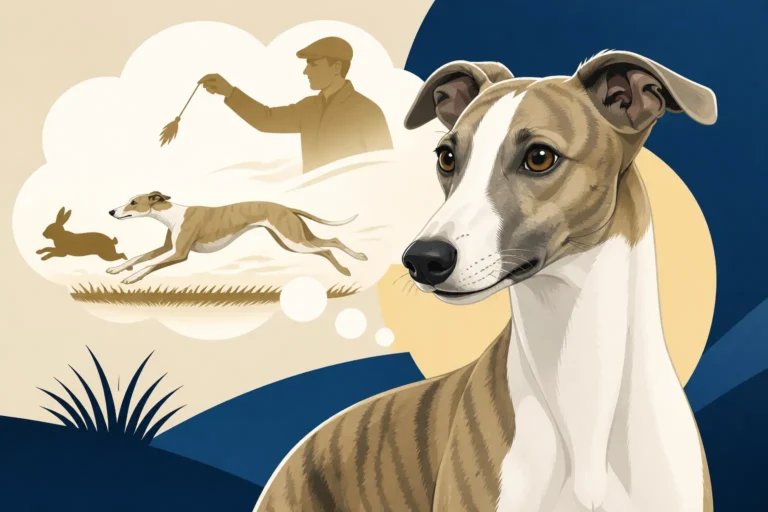
The Whippet developed in northern England among people who valued a fast, versatile dog but could not necessarily keep a large Greyhound. Its early appeal was practical as well as sporting: Whippets could hunt small game, live close to the family, and race for amusement or prizes. To understand why the breed later faced periods of uncertainty, it helps to start with how closely it was tied to particular communities and ways of life.
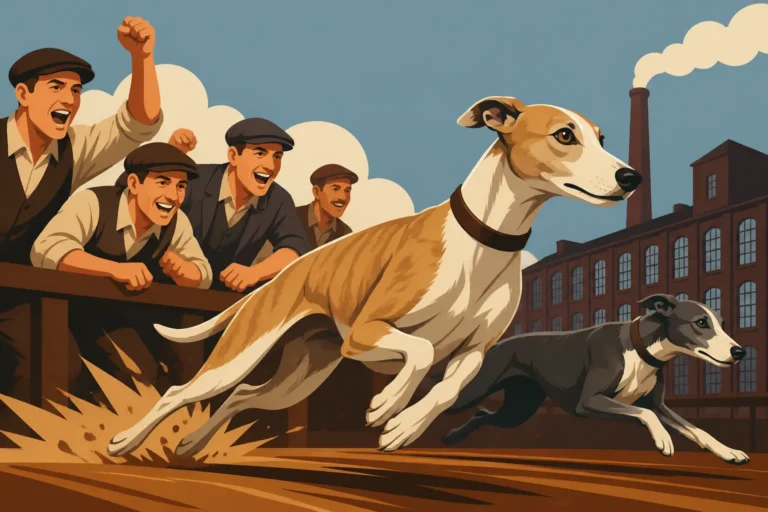
The breed’s roots are often associated with industrial and mining communities in counties such as Lancashire and Northumberland. Local traditions varied, and the Whippet did not appear fully formed in one place or at one exact moment. Its development was gradual, shaped by the dogs people had available and the traits they valued. For more background, see Where the Whippet Was Developed and Which English Counties Made the Whippet.
A small, swift dog suited the conditions of working-class homes better than a larger sporting animal. Whippets could be kept as companions and turned out for a race or a chase, rather than maintained solely for formal sport. That blend of home life and speed helped give the breed a recognizable identity, as described in How Miners Built the Whippet From a Greyhound They Could Afford and The Poor Man's Racehorse: Whippets in the Northern Coalfields.
When the old way of life began to change
A breed that depends heavily on a particular job or pastime can lose ground when that activity changes. Whippets were associated with rabbiting, local contests, and informal racing. As work patterns, leisure, and attitudes toward hunting and betting shifted, those everyday reasons for keeping a Whippet could weaken. That did not mean the dogs vanished, but it did mean the breed had to find other ways to remain valued.
The Whippet’s early history also did not follow a single, uninterrupted path toward modern dog shows. Local racing traditions and working dogs existed alongside growing interest in organized breeding and exhibition. Those worlds overlapped, but they did not always prioritize the same qualities. A working owner might care most about speed, soundness, and a dog that could thrive at home; a show enthusiast also looked for consistency in appearance and type.
That transition matters when people ask whether the Whippet almost died out. A decline in one use does not necessarily equal a collapse in the breed’s population. In the Whippet’s case, the more accurate story is a shift: its traditional working and racing roles changed, while organized breeding and new forms of ownership helped preserve it.
What the Breed’s Recognition Changed
Formal standards gave breeders a shared reference
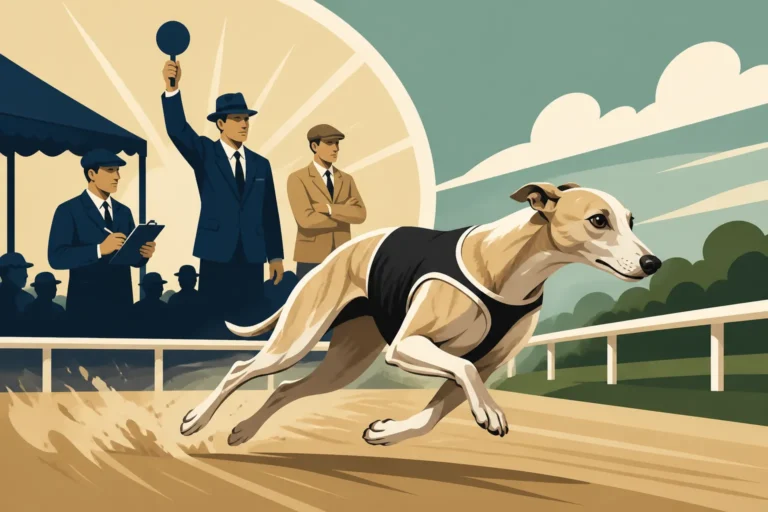
The Whippet gained formal recognition from the Kennel Club in 1891. Recognition created a clearer framework for identifying and breeding dogs as Whippets, rather than relying only on local descriptions or a dog’s reputation as a fast runner. A written standard helped people compare dogs and agree on the general type they wanted to preserve.
Standards can have a stabilizing effect, but they are not a magic guarantee against decline. A breed still needs people who want to keep it, breed it responsibly, and pass on knowledge. Formal recognition helped the Whippet become more visible to people outside its original working communities, while showing offered another reason to maintain distinct Whippet lines. For a closer look at that development, read The Year the Kennel Club Recognized the Whippet and How the Show Ring Refined the Whippet.
The show ring also brought a new emphasis. Breeders considered conformation and consistency as well as athletic ability. That did not make every show-bred Whippet slow or every racing-bred Whippet unlike the standard; it meant different communities sometimes had different priorities. The distinction remains useful when discussing the breed’s history, as explored in The Split Between Racing and Show Whippets.
Recognition helped, but it did not erase vulnerability
Being recognized gave the breed a more durable public identity. Whippets could be exhibited, recorded, and bred with a clearer understanding of what made them distinct. That visibility likely helped carry the breed beyond the places and activities that first made it popular. It also gave enthusiasts a way to organize around a shared breed, even when local racing customs changed.
However, formal recognition did not protect Whippets from broader disruptions. Wars, economic hardship, changes in recreation, and the practical difficulty of maintaining dogs during periods of scarcity could affect breeding across many breeds. A registry or breed club can keep records and sustain interest, but it cannot make food, veterinary care, or breeding stock available when circumstances become difficult.
This is why “recognized” and “secure” are not the same thing. Whippet history is better understood as a succession of adaptations. The breed had a foundation in work and local sport, then gained a stronger foothold through organized breeding, exhibition, and wider companionship.
Did the World Wars Bring the Whippet Close to Extinction
War disrupted breeding and dog ownership
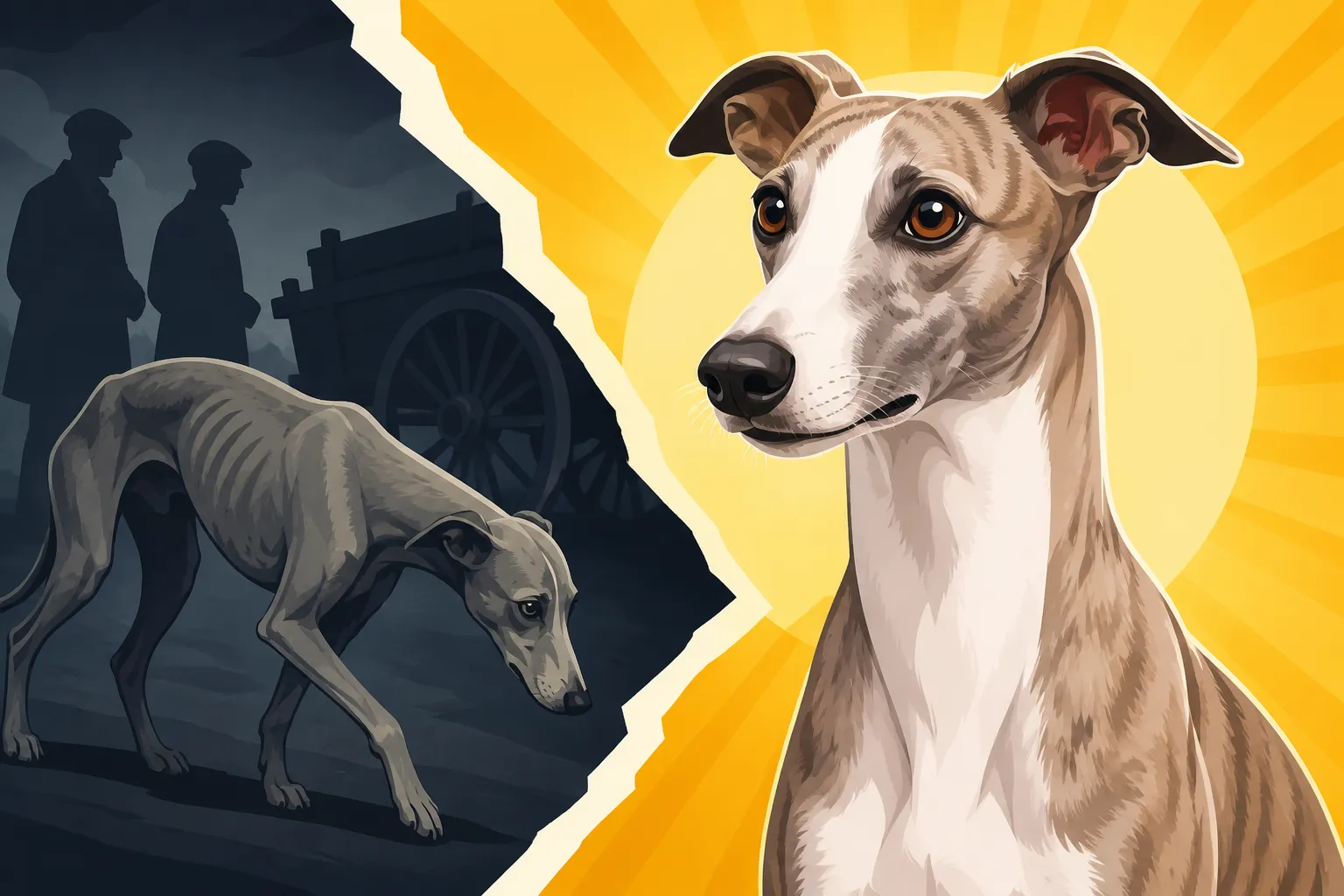
Both world wars placed pressure on ordinary households and the institutions that supported dog breeding. People faced uncertainty, shortages, displacement, and competing demands on time and resources. In such conditions, breeding programs can shrink, planned litters may not happen, and people who once kept dogs may be unable to do so. Whippets were not immune to those pressures.
It is reasonable to say that war and its aftermath created vulnerable periods for the breed. But vulnerability is not the same as documented extinction-level collapse. Without reliable population figures for every period, sweeping claims that the Whippet was on the brink can overstate what the historical record supports. The careful conclusion is that breeding and activity were disrupted, while dedicated owners and breeders helped maintain the dogs that remained.
The story is also not simply that racing stopped and the breed disappeared. Whippet racing changed over time, with organized forms continuing in different places and under different conditions. The history of racing through those disruptions is covered in Whether Whippet Racing Survived the Wars. Likewise, How Greyhound Tracks Replaced Whippet Racing looks at how wider sporting changes affected Whippet traditions.
A short guide to the main periods
The following overview separates a genuine change in the breed’s circumstances from the stronger claim that it nearly vanished. It is a broad historical guide, not a population census.
| Period or change | What shifted for Whippets | Why it mattered |
|---|---|---|
| Early development in northern England | Whippets were valued for hunting, companionship, and local racing | The breed relied on local traditions and practical usefulness |
| Growth of organized breeding and showing | Breed identity and appearance became more formally defined | New communities of enthusiasts supported Whippets beyond their original settings |
| Changes in working-class leisure and racing | Some traditional reasons for keeping a Whippet became less central | The breed needed other roles and a broader base of owners |
| The world wars and their aftermath | Dog breeding and ownership faced wider disruption | Existing breeding lines and committed enthusiasts became especially important |
| Later expansion as a companion and sporting dog | Whippets found homes in shows, racing, and family life | Multiple roles made the breed less dependent on a single tradition |
A key point is that the Whippet’s survival did not rest on one dramatic rescue. It depended on ordinary continuity: people keeping dogs, maintaining lines, taking part in breed activities, and choosing Whippets as companions. That kind of persistence is less cinematic than a near-extinction tale, but it is often how breeds endure.
How the Whippet Endured and What the Story Really Means
Multiple roles made the breed more adaptable
The Whippet’s ability to move between roles is one reason it endured. It could be a family companion, a show dog, or an athletic participant in racing and coursing. These roles do not require every dog to do the same thing. They create several pathways for people to remain interested in the breed, even if one activity becomes less common in a particular place.
This flexibility also helps explain why Whippets are still recognized for both their athleticism and their domestic temperament. A Whippet may run with extraordinary speed in a suitable, secure setting, then spend much of the day curled up at home. That combination is not a modern invention; it echoes the old pattern of a fast dog that lived closely with its people. The broader history of the breed’s development is explored in The Century the Whippet Appeared.
Enthusiasts also helped sustain the breed by maintaining records, breeding with intention, and sharing knowledge across generations. No single club or individual accounts for the Whippet’s survival. It was the accumulated effort of owners and breeders, paired with a breed that could adapt to different settings, that carried it forward.
How to describe the near-extinction claim accurately
If you hear that the Whippet “almost died out,” it is fair to ask what the speaker means. They may be referring to disrupted breeding during wartime, the decline of a traditional use, or the loss of particular local lines. Those are meaningful historical concerns. They are not automatically proof that the entire breed was close to disappearing.
A careful account can acknowledge both sides: the Whippet faced real pressures, especially when its traditional roles changed and when wider events disrupted dog ownership, but it also gained support through formal recognition, organized breeding, sport, and companionship. That is a story of vulnerability and recovery rather than a simple tale of extinction narrowly avoided.
For today’s owners, this history is a reminder that breed preservation is not only about pedigrees. It also involves keeping dogs healthy, supporting responsible breeding, and understanding the different communities that have shaped the breed. Learning how Whippets developed makes it easier to appreciate why the modern dog can be both a relaxed household companion and a capable athlete.
Disclaimer
This article is for general informational purposes only and does not constitute professional advice. Laws, prices and regulations vary by location and change over time. Consult a qualified professional for guidance on your specific situation.