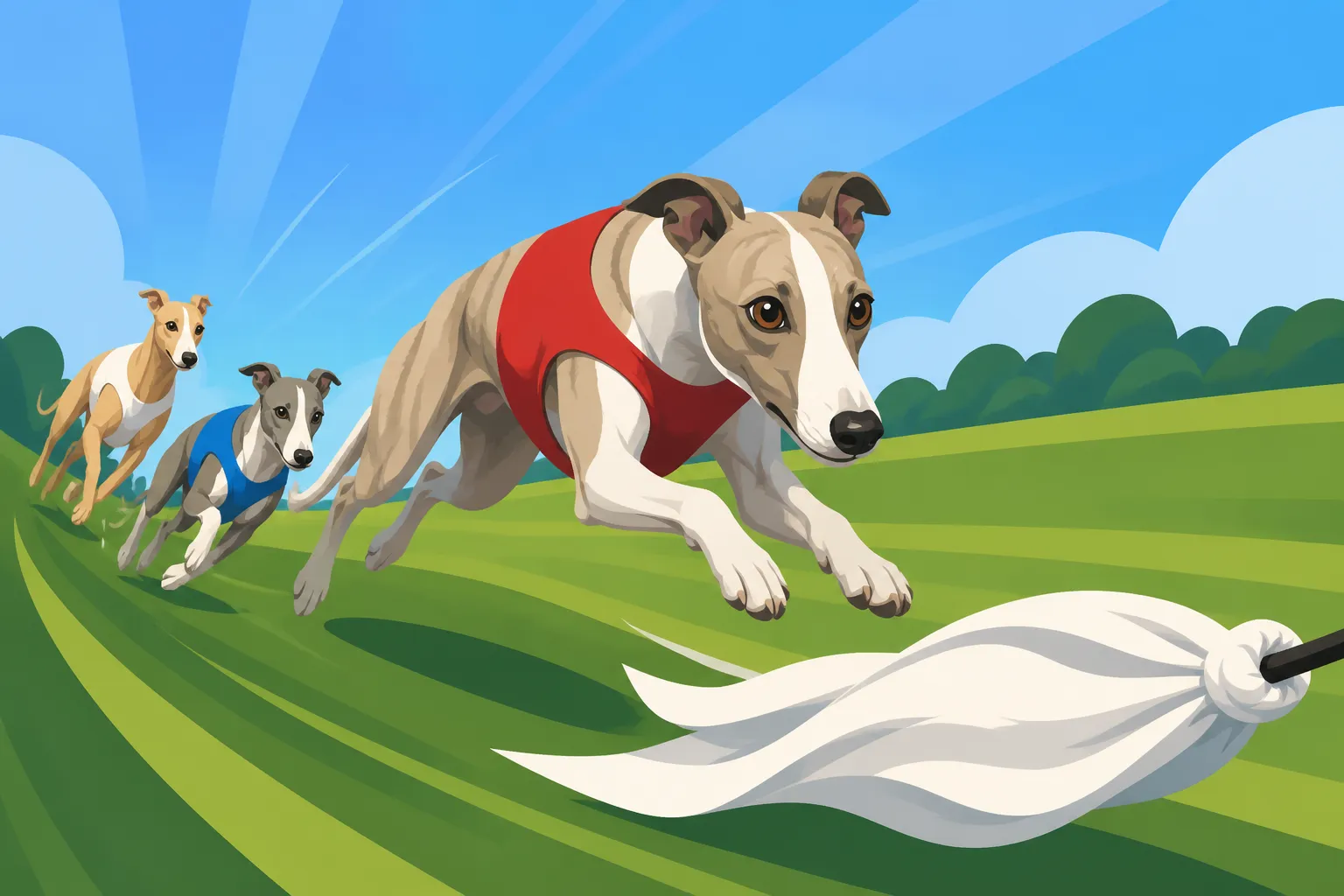
How a Whippet Rag Race Was Run
Many people have heard of "rag racing" when it comes to the history of the Whippet, but what exactly was it? It conjures images of speed and excitement, but the reality was often far grittier and more rooted in the daily lives of working-class families. This guide will take you through the fascinating, often intense, details of how a Whippet rag race was run, from its humble beginnings to the thrill of the finish line.
The Humble Origins of Whippet Rag Racing
Rag racing wasn't born out of aristocratic leisure or grand sporting events. Instead, it was a gritty, grassroots phenomenon that arose from the very fabric of industrial society, especially in England's northern coalfields. It was born of necessity, community spirit, and a deep appreciation for the athletic prowess of these remarkable dogs.
Born from Necessity in Mining Communities
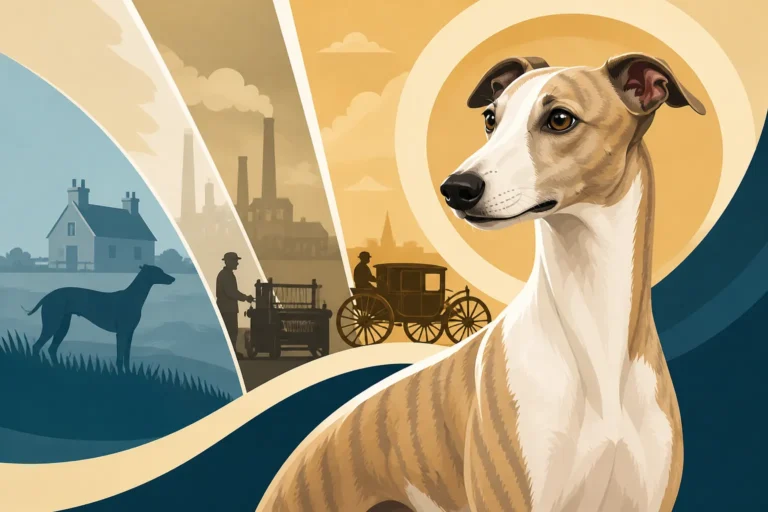
Imagine the bleak, challenging landscape of the 19th-century British coalfields. Life was hard, wages were meager, and entertainment was scarce. In this environment, the Whippet emerged as a beacon of hope and a source of both recreation and vital income. These weren't dogs bred purely for aesthetics; they were working dogs in the truest sense, developed by miners who needed a fast, efficient hunter they could afford and house in small cottages. You can delve deeper into this fascinating history in The Poor Man's Racehorse: Whippets in the Northern Coalfields and understand How Miners Built the Whippet From a Greyhound They Could Afford. They were smaller, easier to keep, and cheaper to feed than a Greyhound, making them the perfect companion for a miner's family. The instinct to chase was already strong, honed over generations, and needed only a simple outlet.
These miners cherished their Whippets, often sharing their meager rations and even their beds with them, seeing them as part of the family rather than mere livestock. This close bond was crucial to the success of rag racing, as the dogs were highly tuned to their owners' commands and motivations. The sport became a way to channel the dog's natural hunting drive into a competitive, community event that brought people together and, importantly, offered a chance at winning a little extra cash.
More Than a Sport: A Source of Income and Community
For many families, the outcome of a Whippet race could mean the difference between a sparse meal and a slightly more comfortable week. The stakes were incredibly high, with entire week's wages, or even more, riding on the speed of a beloved dog. It wasn't just about pride; it was about survival. This economic aspect is explored further in Rag Racing and the Week's Wages Riding on a Whippet. The local pub, the village square, or a quiet stretch of common land would transform into a buzzing arena where fortunes could change in a matter of seconds.
The community aspect of rag racing was equally powerful. These were gatherings that fostered camaraderie, friendly rivalry, and a shared passion. Neighbours, friends, and family would gather, cheering on their local champions. It was a shared experience that offered a much-needed escape from the daily grind of mining life. Beyond the thrill of the race itself, there was the chatter, the shared pints, and the collective hope that their dog would bring home a win. These events weren't just races; they were social hubs, reinforcing bonds within the tight-knit mining communities.
Setting the Stage: The Race Day Atmosphere
A Whippet rag race wasn't an official, organized affair in the way we think of modern sports. There were no grandstands or meticulously maintained tracks. Instead, it was an organic event, steeped in tradition and driven by the passion of the participants.
The Makeshift Track and Its Simple Layout
The beauty of rag racing lay in its simplicity and accessibility. Any relatively flat, open stretch of land could become a race track. Often, this meant a field, a long road, or even a cleared path between cottages. The length of these courses varied, but they were typically quite short, designed for the Whippet's explosive sprint. You can read more about this in How Long a Whippet Rag Race Course Was. These were not endurance events; they were pure tests of acceleration and short-burst speed, perfectly suited to the Whippet's unique physiology.
Markers, if any, were rudimentary – a couple of flags, perhaps a pile of coats, or even just an imagined line in the grass. The focus was on the dogs and their handlers, not elaborate infrastructure. This informal setup meant that races could happen spontaneously, whenever enough participants and spectators gathered. It was this raw, unpolished nature that gave rag racing its authentic charm and underscored its working-class roots. The lack of formal boundaries only added to the excitement, as dogs sometimes veered off course, adding an element of unpredictable drama to the proceedings.
The Thrill of the Crowd and the Stakes Involved
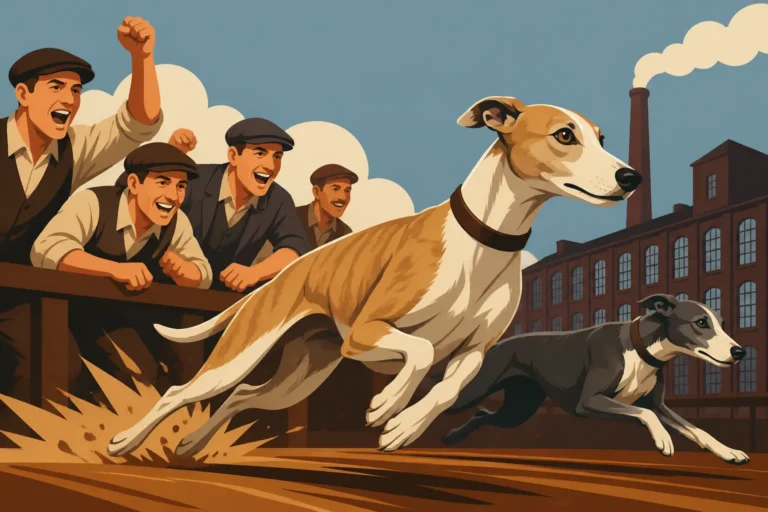
The atmosphere at a rag race was electric. Crowds would gather, sometimes hundreds strong, buzzing with anticipation. Betting was an integral part of the experience, with money changing hands, sometimes quietly, sometimes quite openly. It wasn't uncommon for significant sums to be wagered, making every race a high-stakes drama. The article Whether Miners Bet on Whippet Races delves into this aspect of the sport. The miners, often with limited disposable income, would pool resources, make side bets, and truly invest themselves in the outcome.
The excitement was palpable, a mix of hope, tension, and fierce loyalty to their dogs. Whispers of who had the fastest dog, who had trained the hardest, and who had a "ringer" would circulate through the crowd. Children would scramble for the best vantage points, and women would gather on the sidelines, often with their own small wagers or just to share in the communal excitement. It was a true spectacle, a temporary escape from the daily grind, where all eyes were on the lean, muscular dogs at the starting line.
Preparing the Whippets: Weight and Conditioning
Preparing a Whippet for a rag race was a serious business, a testament to the dedication of their owners. These dogs were kept in peak physical condition, often through careful feeding and regular exercise. A lean, muscled physique was essential for speed, and owners would ensure their Whippets were at their ideal racing weight. This wasn't about making them skinny but ensuring they were agile and powerful. You can learn more about this aspect of care and preparation in How Whippets Were Conditioned Before Racing.
Owners would also monitor their dog's diet meticulously. While commercial dog food as we know it today wasn't readily available, they would ensure their Whippets received enough protein and energy. Many might have supplemented with scraps from their own tables or whatever could be sourced cheaply. Exercise routines would involve short, intense bursts of running, mimicking the demands of the race itself, along with plenty of rest to ensure optimal recovery. They knew their dogs intimately, understanding their strengths and weaknesses, and tailoring their preparation accordingly. This personalized care and attention were crucial, highlighting the deep bond between the miner and his "poor man's racehorse."
The Mechanics of the Race: From Start to Finish
Once the bets were placed and the dogs were ready, the actual mechanics of the race were deceptively simple, yet utterly thrilling. It was a pure test of speed, instinct, and the unique bond between a Whippet and its handler.
The Starting Line: Controlled Chaos
At the starting line, the scene was one of contained energy. Each Whippet would be held by its handler, often cradled or gripped firmly, their muscles coiled, eyes fixed on the distant finish. The dogs were often straining on improvised leashes or simply held by hand, eager to launch themselves forward. There was no starting gun, no electronic gates; just the raw power of the dogs and the anticipation of the crowd.
The start itself was typically a coordinated release, a collective shout, or a simple hand signal. The handlers would release their Whippets simultaneously, attempting to get the best possible launch. It was a moment of immense tension, as a good start could make all the difference in a short sprint race. The dogs would burst forth, a blur of motion, their powerful legs eating up the ground with incredible speed. It was a beautiful, chaotic dance of athleticism and instinct.
The "Rag" or Lure: The Ultimate Motivator
What drove these Whippets to run with such ferocious determination? It wasn't a mechanical lure system like modern lure coursing. Instead, it was something far more personal and primal: a "rag." This could be a piece of cloth, a handkerchief, or even a small animal skin, waved by the dog's owner or a designated "waver" at the finish line. The sight of this moving object, combined with the owner's familiar call, ignited the Whippet's inherent prey drive. This technique is fascinating and you can learn more about it in Why Whippet Owners Waved Cloth at the Finish Line.
The handler at the finish line would wave the rag vigorously, calling out to their dog, creating an irresistible target. The Whippet, with its keen eyesight and powerful instinct, would lock onto this moving lure and charge towards it with every ounce of its being. It was a brilliant, low-tech solution that perfectly leveraged the breed's natural tendencies. The consistency of the lure and the familiar voice of their owner were crucial; these dogs weren't just running for speed, they were running to "catch" their prize, a ritual they understood and craved. This primitive lure system meant that Whippets were running towards something they deeply desired, making their effort completely unforced and genuinely enthusiastic.
The Finish Line Dash: Every Second Counts
As the Whippets thundered down the track, the crowd's roar would swell, urging them on. The finish line was often just another imaginary mark, but the crucial element was the handler with the rag. As their dog approached, the handler would continue to wave the rag, sometimes even running backwards a short distance to keep the dog focused and encourage that final burst of speed.
The finish was often incredibly close, with dogs crossing the line mere inches apart. The winning dog would usually "catch" the rag, pouncing on it with satisfaction, a clear signal of victory. The outcome would be decided by a quick visual judgment from the spectators and handlers, sometimes leading to heated debates, but usually accepted with a handshake or a grumble. The sheer speed and agility displayed by these dogs in their final sprint was breathtaking, a true spectacle of canine athleticism. After the race, the winning Whippet would likely be showered with praise and maybe a well-deserved treat, perhaps even something special from Chewy, for their efforts.
| Race Element | Description in Rag Racing | Description in Modern Lure Coursing |
|---|---|---|
| Track | Improvised, often a field or road | Specially designed, fenced course |
| Lure | Hand-waved rag or cloth by owner | Mechanical lure system on a pulley |
| Start | Manual release by handler | Electronic starting box/gates |
| Finish | Dog "catches" hand-waved rag | Dog crosses a marked finish line |
| Betting | Common, informal, high stakes | Usually not present, focus on titles |
| Community | Strong social gathering, local | Formal club events, competitive |
| Equipment | Minimal: collar, lead, rag | Muzzle, blanket, official equipment |
The Unspoken Rules and Culture of Rag Racing
While lacking formal written rules, rag racing operated within a strong, often unspoken, code of conduct and a rich culture that reflected the values of the communities it served.
Handicapping for Fairness: Not All Whippets Are Equal
To ensure fair competition and keep the races exciting, a system of handicapping was often employed. This acknowledged that not all Whippets were equally fast. Factors like age, previous performance, and even slight differences in build might be taken into account. A slower dog might be given a head start, or a faster dog might have to run a slightly longer distance. The article How a Whippet Was Handicapped by Weight explores one of the key methods.
One common method involved weighing the dogs. A heavier dog might be deemed to need an advantage, or certain weight classes might be established. Why Whippets Were Weighed Before a Race elaborates on this practice. This system aimed to level the playing field, making every race feel like a genuine contest where any dog had a chance to win. It prevented the same few dogs from always dominating and added another layer of strategic depth to the betting and participation. These handicaps were often agreed upon by the handlers and respected members of the community, relying on trust and shared knowledge of the dogs' capabilities.
The Role of the Handler and the Finish Line "Waver"
The handler's role was paramount, extending far beyond simply releasing the dog at the start. They were the Whippet's trainer, companion, and chief motivator. The bond between dog and handler was critical; a Whippet had to trust its handler implicitly and respond instantly to their voice and presence. The finish line "waver," often the owner themselves, played an equally vital role, drawing the dog in with their specific call and the lure.
This personal connection meant that a handler's skill and understanding of their dog could influence the outcome almost as much as the dog's raw speed. They knew precisely when to call, how to wave the rag, and how to encourage that last burst of effort. It was a partnership, a symbiotic relationship built on hours of shared time and mutual understanding. The ability to consistently motivate their Whippet, keeping its focus purely on the rag, was a highly prized skill among rag racing enthusiasts.
The Fixing of Races: A Shadowy Side
Like many sports where significant money is involved, rag racing wasn't entirely immune to less savory practices. The temptation to "fix" a race, to ensure a particular outcome for financial gain, sometimes emerged. This could involve deliberately holding a dog back, interfering with an opponent's lure, or even feeding a competitor's dog something to slow it down. The article The Fixing of Whippet Races gives more insight into these practices.
These instances, though perhaps not widespread, highlight the high stakes and desperation that could accompany the sport. For communities living on the edge, the lure of easy money could sometimes overshadow the spirit of fair play. However, such actions were generally frowned upon and, if discovered, could lead to ostracization within the tight-knit community. The integrity of the race was important to most, and overt cheating could damage reputations and trust.
Beyond the Track: The Whippet's Life and Legacy
While the rag race itself was a fleeting moment of intense action, the Whippet's life stretched far beyond the track. These dogs were integral members of their families, embodying a unique blend of athletic prowess and gentle companionship.
From Racer to Family Pet: A Dual Purpose Dog
One of the most remarkable aspects of the Whippet's history in these communities was its dual role. By day, or perhaps on a Sunday afternoon, they were fierce competitors, lean machines built for speed. But in the home, they transformed into affectionate, calm, and devoted family pets. They often lived indoors, sharing the warmth of the hearth and the comfort of the family bed, a stark contrast to many other working dogs of the era. The article Whether a Whippet Slept in the House and Raced on Sunday beautifully illustrates this aspect of their lives.
This ability to switch seamlessly from high-octane athlete to serene companion is a hallmark of the Whippet breed even today. It speaks to their adaptable temperament and deep bond with humans. They weren't just tools for sport or hunting; they were cherished members of the household, bringing joy, comfort, and sometimes even a little bit of extra food money to their working-class owners. This close domestic integration is something many modern Whippet owners still experience and cherish, whether their dog is curling up on a cozy Chewy bed or enjoying a quiet moment on the sofa.
The Enduring Spirit of the "Lightning Rag Dog"
The nickname "Lightning Rag Dog" perfectly encapsulates the Whippet's essence during this era – incredible speed combined with the simple, humble lure of a rag. This spirit, born from the mining communities, laid the foundation for the breed we know and love today. While formal racing and conformation shows have replaced the informal rag races, the core characteristics of the Whippet remain: speed, elegance, and an affectionate nature.
The legacy of rag racing lives on in the Whippet's conformation and temperament. Their powerful hindquarters, deep chest, and agile build are all remnants of their need to sprint explosively. Their keen eyesight and eagerness to chase a lure are still evident in activities like modern lure coursing and Fast CAT. Even their famously gentle and sensitive nature can be traced back to the close bond they shared with their working-class families. The "Lightning Rag Dog" might be a phrase from the past, but the qualities it describes are timeless and continue to define this wonderful breed.
Disclaimer
This article is for general informational purposes only and does not constitute professional advice. Laws, prices and regulations vary by location and change over time. Consult a qualified professional for guidance on your specific situation.