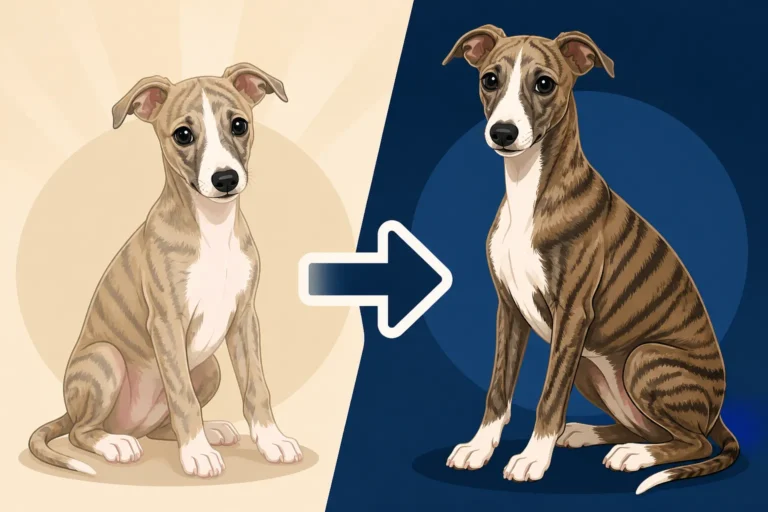
Whether Whippet Owners Would Choose One Again
A Whippet can be a quiet, affectionate couch companion one moment and a fast-moving chaser the next. That contrast is a big part of the breed’s appeal—and a common source of surprise for new owners. This guide explores why many Whippet owners would choose one again, what can make them hesitate, and how to tell whether the breed suits your everyday life.
Why many Whippet owners would choose one again
Affectionate company without constant activity
A Whippet’s reputation as a speedy dog can make people imagine a pet that needs to run for hours every day. In many homes, the reality is more restful: a Whippet gets a chance to stretch its legs, then happily settles close to its people. Owners who enjoy a gentle, affectionate dog often love that combination.
That doesn’t mean every Whippet is a low-effort companion. Puppies and young adults can be lively, and individual dogs vary. But many owners appreciate a dog that can enjoy a brisk walk or a safe sprint, then spend the evening snoozing on a blanket or sofa. If you like companionship without needing to plan a full day of activity around your dog, that rhythm can be a real pleasure.
Whippets also tend to be physically close companions. One may lean against your legs while you work; another may burrow under a blanket as soon as you sit down. People who enjoy a dog that wants to share the room—and often the furniture—may find this especially endearing. Those who prefer a more independent pet might feel crowded by the same habits.
A manageable size and a relatively simple coat
Whippets are athletic, but they’re not giant dogs. Their size can make them easier to accommodate in many homes than a large sighthound, and their short coat is generally straightforward to care for. Regular checks of the skin, nails, ears, and teeth still matter, but coat maintenance is usually less involved than it is for many long-coated breeds.
The short coat has a tradeoff: it offers little protection from cold, hard surfaces, or rough brush. A Whippet may need a warm layer for chilly walks and soft places to rest around the house. Owners who plan for those needs often find them easy to work into daily routines. A padded bed in a favorite room and an appropriate outdoor coat can make a noticeable difference.
For a new owner trying to picture the everyday commitment, Whether a Whippet Suits a First Time Owner can help frame the breed’s needs in practical terms. The question isn’t simply whether Whippets are “easy.” It’s whether their particular mix of sensitivity, speed, warmth-seeking, and closeness suits the way you live.
Their distinctive personality becomes part of the appeal
Many owners grow fond of the very traits that surprised them at first. A Whippet may be sensitive to a raised voice, selective about bad-weather walks, or determined to claim the warmest spot in the room. Once those behaviors make sense as part of the dog’s temperament and physical needs, they can feel less like aggravations and more like familiar quirks.
That fondness often grows through ordinary moments: the dog who refuses to step into a rainy yard without a coat, the one who folds itself into a tiny patch of sunlight, or the one who appears silently beside you when the house finally gets quiet. Whippet owners often value this gentle, slightly theatrical personality as much as the dog’s athletic ability.
If you’re still weighing the decision, What Whippet Owners Wish They Had Known is a useful companion topic. It helps set expectations before the habits become part of your household routine.
The tradeoffs owners need to be comfortable with
Speed and prey drive can complicate off-leash freedom
A Whippet’s running ability is part of its charm, but it can also be the hardest practical adjustment. A dog that appears calm and responsive at home may become intensely focused when it spots a rabbit, squirrel, or other small animal. In that moment, a familiar recall cue may not be enough to stop it.
This is why many owners plan for secure spaces rather than assuming a Whippet can safely run loose in any open area. A properly enclosed field, a secure dog exercise area, or a supervised sport can provide opportunities to run with less risk. A leash and well-fitted equipment remain important in places where wildlife, roads, or open exits are nearby.
People who expect to stroll through unfenced parks with a reliably off-leash dog may find this limitation frustrating. For a fuller look at the breed’s famous contrast between sprinting and lounging, see The Whippet Is a Forty Mile an Hour Couch Potato. And if daily exercise is a major concern, How Much Exercise a Whippet Really Needs can help distinguish a safe, satisfying routine from the idea that the dog must run constantly.
Sensitivity calls for patient handling
Whippets can be responsive to their people, but harsh correction may damage trust rather than improve behavior. Owners who are comfortable rewarding the behavior they want, keeping training sessions manageable, and making the right choice easier for the dog often have a better experience than those who rely on intimidation.
This sensitivity can show up in small situations. A Whippet may hesitate around a noisy visitor, become unsettled by a sudden change in routine, or shut down when repeatedly scolded for a mistake. That doesn’t mean the dog cannot learn. It means a calm, consistent approach is often a better fit than a forceful one.
The breed can also be startlingly quick when a door or gate is left open. House rules such as waiting at doorways, using secure leashes, and checking gates may feel like extra work at first. Owners who build those habits into daily life tend to feel more confident; those who assume the dog will simply stay nearby can be caught off guard.
Comfort needs are part of normal ownership
A Whippet’s slim body and short coat affect daily comfort. Some dogs are eager to curl up under a blanket, while others seek out a heated patch of sun or a padded bed. A cold dog may shiver, but shivering can also have other causes, so it’s wise to consider the setting and the dog’s overall condition rather than assuming every tremble means the same thing.
Owners may also need to protect their Whippet from rough play, sharp edges, or abrasive ground. The breed’s skin can be vulnerable to cuts, and a thin coat offers little cushioning. A dog that races hard in a safe place still needs a quick post-run check for scrapes, sore toes, and other injuries.
Many people are happy to adapt their home around these comfort needs. They may keep a coat near the leash, place soft bedding in several rooms, or bring a blanket for outings. If buying supplies, some owners use retailers such as Chewy to look for basics like coats or padded beds, while checking fit and construction carefully for their dog’s shape. For a wider look at clothing needs, see The Wardrobe a Whippet Needs Because It Has No Body Fat.
What tends to make owners hesitate
The breed is not always suited to an owner’s expectations
Some disappointment comes from choosing a Whippet based on appearance or reputation alone. Someone may expect a tireless running partner because the breed is athletic, only to discover that their dog prefers short bursts of exercise and long naps. Another person may expect easy off-leash walks and struggle with the dog’s instinct to chase.
The reverse mismatch happens too. A prospective owner may assume a Whippet is fragile or demanding because it looks so lean, then find that the dog is playful, sturdy in ordinary life, and easy to live with once sensible precautions are in place. It helps to separate a Whippet’s elegant appearance from its actual needs and temperament.
A good match depends on more than a breed label. Ask whether you can provide safe places for exercise, tolerate a dog that may be unreliable off leash, and accept a companion that might prefer a soft bed to a cold morning walk. If those realities sound manageable rather than disappointing, the breed may be a better fit.
Household details can matter more than people expect
A Whippet’s relationship with cats and other small animals deserves particular thought. Some live peacefully with cats, especially with careful introductions and appropriate management. But individual histories and instincts matter, and no introduction should be treated as a guarantee. A household with a small pet should plan for supervision, separation options, and gradual introductions.
Children and visitors can also shape the experience. A Whippet may enjoy gentle interaction but feel overwhelmed by loud, unpredictable handling. Families can make things easier by teaching children to respect the dog’s resting place, avoid chasing or grabbing, and let the dog approach voluntarily. This is not a breed-specific substitute for supervision; it is good household management.
Time alone is another consideration. Many Whippets are strongly attached to their people, and some struggle when left for long stretches without preparation. A schedule that includes gradual alone-time training, suitable enrichment, and reliable care arrangements may help. Owners who expected a dog to adapt instantly to a full workday can find the transition harder than anticipated.
Costs and care needs are individual, not one-size-fits-all
Whippets may not require extensive grooming, but low-maintenance fur does not mean zero expense or effort. Routine veterinary care, dental attention, injury prevention, bedding, and warm-weather or cold-weather gear can all be part of ownership. A sudden cut or other injury can also mean an unexpected veterinary visit.
Food needs depend on the individual dog’s age, health, activity, and body condition. Some owners find feeding straightforward; others deal with pickiness or need help keeping a dog at a healthy weight. Chewy may be one place owners shop for food or everyday supplies, but the right diet is best chosen with attention to the dog’s needs and veterinary guidance rather than marketing claims.
Health expenses can also vary widely between dogs. It is sensible to think about routine care and possible emergencies before bringing home any breed. Why a Whippet Is Cheap to Feed and Expensive to Insure offers a closer look at how ordinary feeding costs can differ from the broader financial picture of Whippet ownership.
How to decide whether you would choose a Whippet again
Picture an ordinary week, not an idealized one
Before deciding, imagine a rainy Tuesday morning, not only a sunny weekend at the park. Would you be willing to take a reluctant dog outside in bad weather, perhaps with a coat? Could you give the dog safe exercise without relying on open fields? Would you still enjoy its company if it spends a large part of the evening under a blanket rather than joining you on a long outing?
Also consider the less visible parts of the routine: checking gates, managing a leash near wildlife, providing comfortable resting places, and reinforcing calm behavior without harsh corrections. These are not reasons to avoid the breed. They are practical details that help distinguish a realistic match from a wishful one.
A comparison can make the decision clearer:
| What you value in a dog | A Whippet may suit you if | Think carefully if |
|---|---|---|
| Time at home | You enjoy an affectionate companion who often likes to rest nearby | You prefer a dog that is content to spend long periods alone |
| Exercise | You can provide walks and safe opportunities to run | You expect unrestricted off-leash freedom |
| Training | You are patient, consistent, and comfortable using rewards | You rely on sharp corrections or expect instant obedience |
| Comfort and care | You don’t mind arranging soft bedding and weather-appropriate layers | You want a dog that is comfortable outdoors in most conditions |
| Household | You can manage introductions and supervise interactions | You need guaranteed compatibility with small pets without careful planning |
Meet adult Whippets and ask specific questions
Meeting dogs in person can reveal details that breed descriptions cannot. If possible, spend time with adult Whippets in a home setting, not only at an exciting event where everyone is watching them run. Notice how they behave when the room is quiet, when a visitor arrives, and when they are asked to settle.
Ask owners what daily life looks like: how they manage exercise, what their dog does in cold or wet weather, how the dog handles being alone, and what surprised them most. Ask the same questions of more than one person. A single owner’s experience can be shaped by their dog’s age, background, health, and household.
It can also help to speak with a responsible breeder or rescue representative about the individual dog rather than relying only on general breed traits. A good conversation should include both what makes the dog appealing and what may take patience. If you have cats, children, or a busy schedule, explain those details clearly so you can discuss a realistic match.
Look for contentment, not a perfect dog
Owners who would choose a Whippet again are not necessarily those whose dogs never cause trouble. Their dogs may still chase, dislike rain, need help settling alone, or require a warm place to sleep. The difference is that the owners understand those needs and find the relationship rewarding enough to accommodate them.
That is a more useful standard than asking whether Whippets are universally easy or universally difficult. The right question is whether the breed’s everyday habits fit your household—and whether you can accept its limitations without resenting them. If the answer is yes, a Whippet’s tenderness, humor, and calm companionship may make the occasional inconvenience feel like a fair trade.
If the answer is no, that is useful information too. Choosing another breed is not a failure; it is a way to find a dog whose needs and temperament fit your life better. Thoughtful matching helps both the dog and the people who bring it home.
Disclaimer
This article is for general informational purposes only and does not constitute professional advice. Laws, prices and regulations vary by location and change over time. Consult a qualified professional for guidance on your specific situation.