Whether Whippet Racing Survived the Wars
Whippet racing did not disappear because of the two world wars, but it was disrupted, reshaped, and sometimes difficult to trace in local records. The answer depends on what you mean by “racing”: informal rag races, organized club events, and commercial track racing did not all follow the same path. This guide separates those strands and explains how the sport carried on.
What Whippet Racing Looked Like Before the Wars
Rag racing was a local sport, not one national circuit
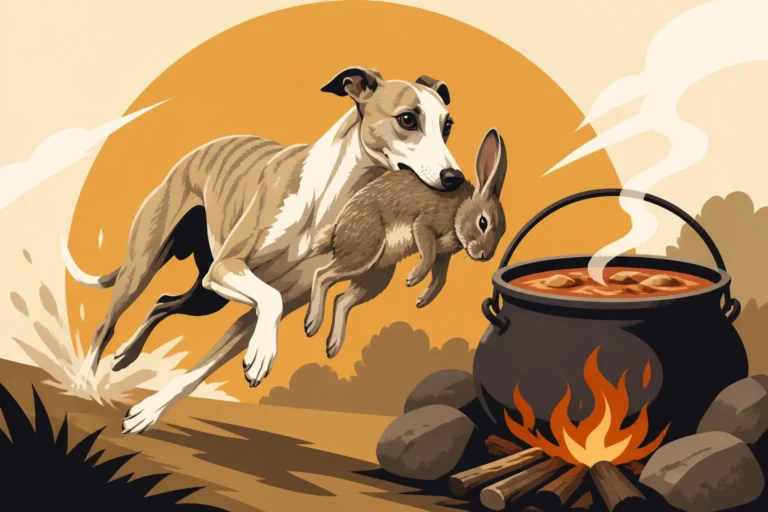
Early whippet racing grew from working communities in northern England, including areas associated with Lancashire, Yorkshire, Durham, and Northumberland. It was often a local pastime rather than a single, centrally managed sport. Owners raced dogs over a short course, with a handler or “rag” waving cloth at the finish to draw the dogs toward them. The finish-line rag is part of why the sport was also called rag racing.
The familiar image of a whippet sprinting after a waving rag can make the sport sound simple, but meets involved organization and competition. Dogs could be matched or handicapped by weight, and owners took pride in a dog’s speed, condition, and reliability. The sport had strong roots in working-class life, with dogs kept at home and raced for recreation, prizes, or sometimes betting. For more on the setting and rules of those races, see How a Whippet Rag Race Was Run and Why the Whippet Was Called the Lightning Rag Dog.
It also helps to distinguish rag racing from other forms of dog racing. A local meet with a short straight course was not necessarily run like a later commercial track event, and a dog that raced in one setting might not have competed in another. When someone says whippet racing “stopped” or “continued,” they may be talking about a particular town, club, or kind of event rather than every form of racing.
Organized racing was developing before the First World War
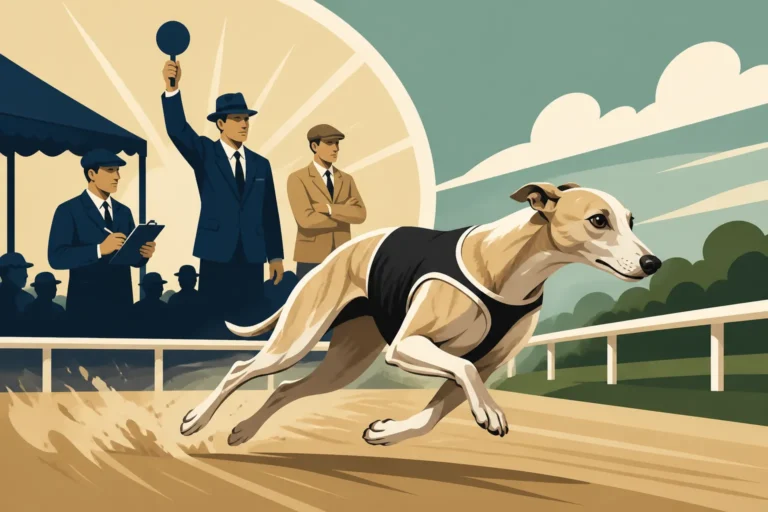
As interest grew, racing became more organized in some places. Clubs and local groups could arrange meets, set rules, and provide a more consistent way to compare dogs. That did not mean every owner belonged to a club, or that every event followed identical rules. Local custom still mattered, and the sport remained closely connected to its communities.
The shift from informal contests to organized events was gradual. It is useful context when considering the wars: there was no single national racing calendar that simply stopped and restarted everywhere in the same way. A local event might be suspended while another community kept racing when circumstances allowed. The broader development is explored in How Whippet Racing Became Organized.
| Period | What was happening | What that means for the question of survival |
|---|---|---|
| Before the First World War | Local rag racing and increasingly organized meets | Racing already existed in both informal and more structured forms |
| First World War | Disruption to ordinary community life and local events | A pause or gap in one area does not show that the sport vanished everywhere |
| Between the wars | Racing could resume, adapt, or become more organized locally | The sport’s continuation was uneven rather than one uninterrupted national story |
| Second World War | Another major disruption to travel, work, and public gatherings | Meets could be curtailed without ending the wider tradition |
| After the wars | Racing continued in some forms and changed alongside other attractions | Survival meant adaptation, not a return to exactly the same prewar scene |
How the First World War Affected Whippet Racing
Wartime disruption made local racing harder to sustain
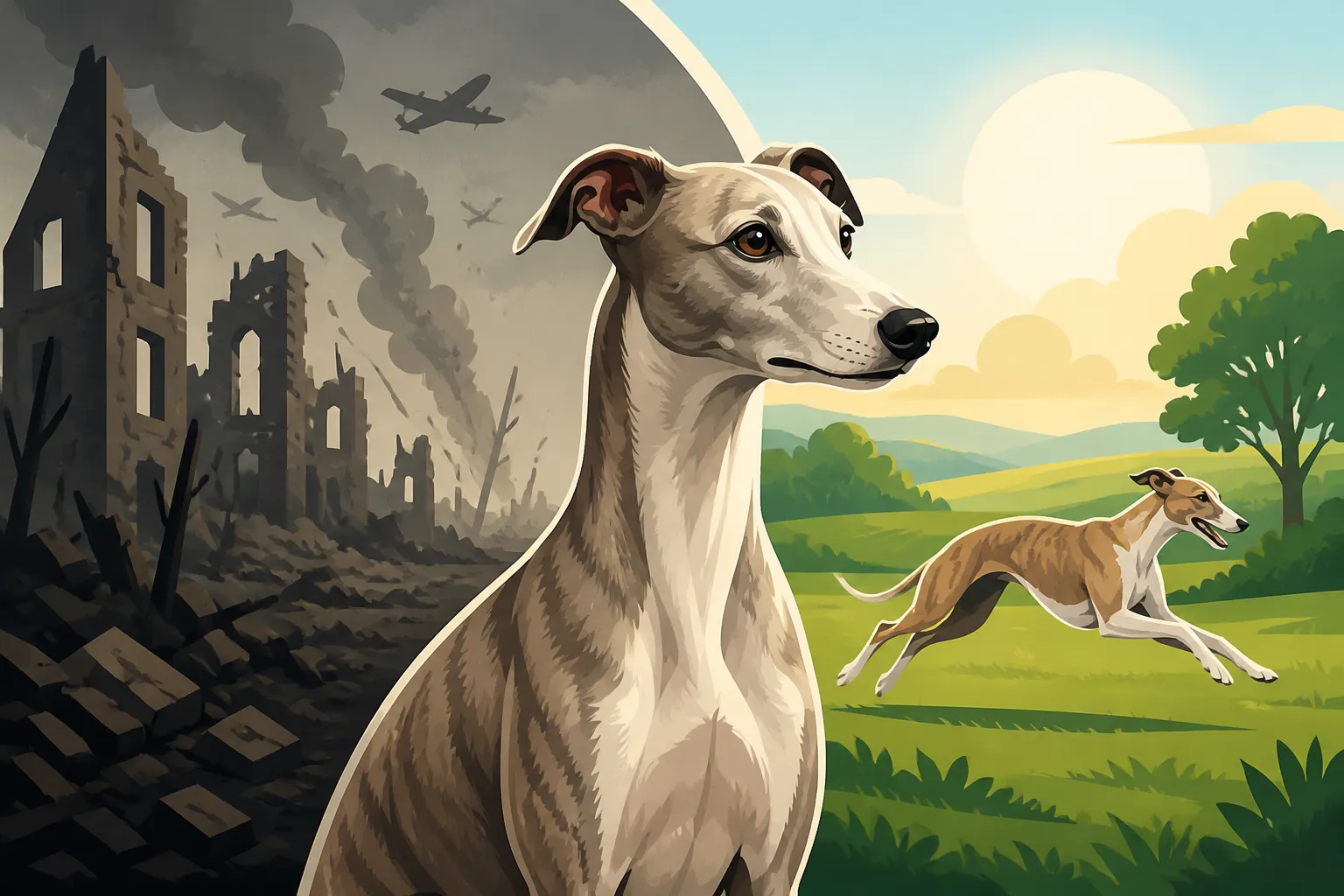
The First World War changed everyday life on a scale that reached well beyond the battlefield. People left home for military service or war-related work, families faced separation and uncertainty, and communities had fewer resources for leisure. Under those conditions, a local racing meet could be postponed, reduced, or stopped for a time without the underlying interest in racing disappearing.
Whippet racing depended on people being able to keep dogs, travel to a meet, gather in a suitable place, and devote time to competition. Each of those things could become difficult during wartime. A town might have no regular event for a period because organizers were away, the venue was unavailable, or the community had other priorities. That kind of interruption is different from a formal decision to end the sport permanently.
This is one reason broad claims about wartime continuity should be treated carefully. A surviving account of a race in one place would not prove that racing continued everywhere; a blank stretch in another town’s records would not prove the opposite. Local histories can show what happened in a particular community, while the larger story is one of disruption and uneven activity.
Between the wars, racing could return without looking exactly the same
When the war ended, communities did not simply rewind to their earlier routines. Some local racing traditions could be revived, while others may have changed in scale, venue, or organization. Owners and clubs had to rebuild participation, and the sport existed alongside other forms of entertainment that were developing around it.
That is why it is more accurate to describe whippet racing as surviving through adaptation than as continuing smoothly without interruption. In one area, a group may have restored its meets; in another, the old local pattern may have faded or shifted into a more structured club format. For background on how the sport developed in later decades, When Whippet Racing Became Organized offers a useful companion topic.
The interwar period also matters because it separates the two world wars. If someone says whippet racing survived “the wars,” that does not necessarily mean events were held continuously through every wartime year. It may mean that racing remained part of local culture, reappeared afterward, and continued in forms that could be organized under changing conditions.
What the Second World War Changed
The second wartime interruption was another break in ordinary life
The Second World War brought another period of disruption. Travel, work, public gatherings, and household routines were affected, and local sporting events had to compete with the urgent demands of wartime life. As during the First World War, the practical ability to hold a meet mattered as much as enthusiasm for racing.
A racing community could be resilient and still have to stop meeting. The dogs needed suitable care, owners needed time and transport, and a race needed a place and people to run it. If those pieces were missing, a local event could not continue in its usual form. This does not necessarily indicate that whippet racing itself was banned or that all racing activity ended across the country; it indicates that wartime conditions could make regular events difficult or impossible in particular places.
The difference between a local pause and a national disappearance is especially important here. Whippet racing was not a single centralized institution with one calendar to preserve. Different towns and groups had their own histories, so a clear account of what happened in one district may not describe the experience of another.
After the war, racing faced changes beyond the war itself
The end of wartime restrictions did not guarantee that every local meet would return. Communities had changed, and leisure habits continued to evolve. In some places, people may have revived earlier forms of racing; elsewhere, interest or organization may have shifted. The growth of other dog-racing attractions, including greyhound tracks, also changed the landscape of public racing and entertainment. The relationship between those sports is covered in How Greyhound Tracks Replaced Whippet Racing.
The important point is that the postwar story is not simply “the war ended, so racing resumed exactly as before.” A local tradition might survive through a club, a group of enthusiasts, or a different style of event. Another might leave only scattered traces in family memories and local records. Both outcomes fit a sport that survived in the wider sense while changing considerably.
This pattern is common in community sports: the name and core activity can persist even when the places, rules, and social setting change. Whippet racing’s continuity is therefore better understood as a series of local revivals and adaptations than as an unbroken chain of identical events.
So, Did Whippet Racing Survive the Wars?
Yes, but survival did not mean uninterrupted racing
The short answer is yes: whippet racing survived the world wars as a tradition and continued in forms that adapted to changing circumstances. But that answer needs a qualification. It does not mean that every club held races throughout both wars, that every town had an uninterrupted calendar, or that postwar racing looked just like the sport before the conflict.
A useful way to phrase it is that the wars disrupted racing without erasing it. The sport’s dependence on local communities made it vulnerable to interruptions, but it also meant that interest could be carried by individuals and groups and re-established when conditions allowed. The distinction between “the sport continued” and “racing took place continuously” resolves much of the apparent contradiction in accounts of the period.
The exact experience could vary by place. To understand a specific claim, look for the town or club involved, the kind of event being described, and whether the source means a wartime race, an interwar revival, or the long-term survival of the tradition. A broad overview of present-day forms can be found in Whether Whippet Racing Still Happens.
The sport’s survival is part of a wider whippet history
Whippet racing was one part of a life with the breed that often combined companionship and sport. The dog was not only a race competitor; it was also kept at home and woven into family and community routines. That background helps explain why racing could be interrupted without the whippet itself disappearing from everyday life. Related stories include The Whippets Miners Carried to Work and Why a Whippet Slept in the Family Bed.
For today’s owners, the history can also clarify why “racing whippet” does not describe one single modern experience. Some whippets take part in organized racing or lure-based activities, while many live as pets without competing. Their care still comes down to ordinary needs such as comfortable bedding, a well-fitted collar, and safe exercise. If you are putting together basic supplies, retailers such as Chewy may be one place owners look for pet essentials; the important thing is to choose equipment that suits the individual dog rather than assuming every whippet has the same routine.
The wars did not preserve an unchanged sport, and they did not erase it. Whippet racing endured through local enthusiasm, pauses, revivals, and changes in how people organized and watched the races. That is a less tidy story than a simple yes or no, but it is the more realistic one.
Disclaimer
This article is for general informational purposes only and does not constitute professional advice. Laws, prices and regulations vary by location and change over time. Consult a qualified professional for guidance on your specific situation.