How Miners Built the Whippet From a Greyhound They Could Afford
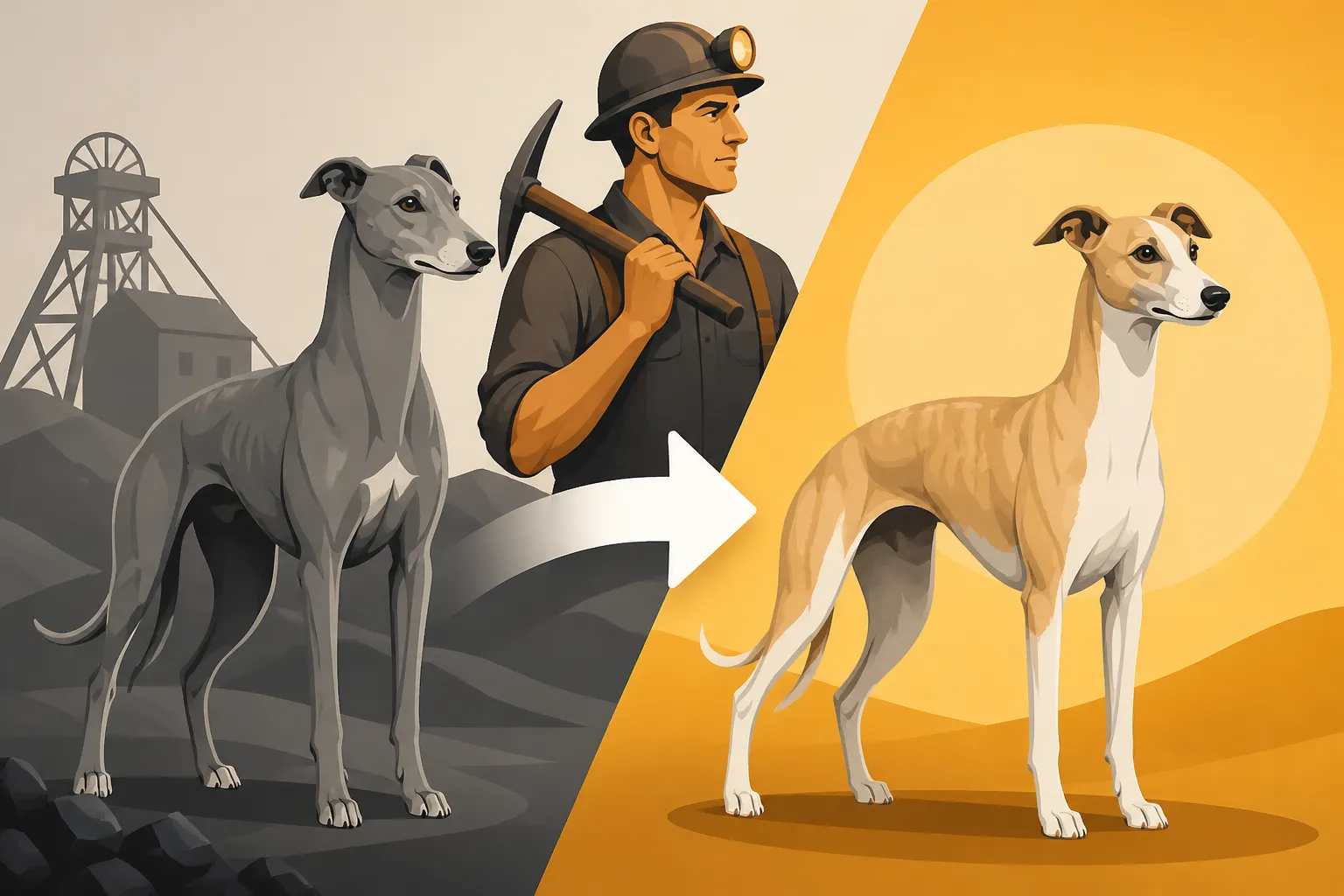
It’s a tale as old as time, or at least as old as the Industrial Revolution: working people needing a loyal companion and a bit of excitement, but without the means to afford the luxuries of the upper classes. For those of us who adore Whippets today, it’s easy to see them as elegant, graceful creatures lounging on sofas, but their origins are far more gritty and fascinating, rooted deeply in the lives of nineteenth-century miners who quite literally built this breed from a dream of speed and affordability. This guide will take you back to those humble beginnings, exploring how the Whippet became the beloved "poor man's racehorse."
The Grimy Roots of Elegance: Life in the Coalfields
Imagine the scene in the industrial heartlands of northern England in the 1800s. Life was hard, physically demanding, and often dangerous. Miners, factory workers, and their families toiled long hours, often in grim conditions, with little to look forward to beyond the next shift. Yet, even in such tough times, the human spirit craves companionship, joy, and a bit of sport to lift the spirits. For many, a dog wasn't just a pet; it was a companion, a worker, and a source of entertainment.
The dogs of the wealthy, like the majestic Greyhounds, were symbols of status and sport, used for hunting and racing by the aristocracy. These elegant hounds were far out of reach for the average working man, both in terms of initial cost and the expense of feeding and housing such a large animal. What was needed was a dog that embodied some of that Greyhound speed and grace, but in a package that was practical for a small cottage and a meager wage. This necessity, born of hard times and a love for sport, was the fertile ground in which the Whippet began to take shape. The working-class communities, particularly those in the coalfields of Northumberland and Durham, became the unlikely cradles of this future champion. It was here, amidst the soot and struggle, that a new kind of sighthound was forged, reflecting the resilience and ingenuity of its creators.
The Miner's Need for a Sporting Outlet
After a long, back-breaking week down the pit, what did a miner do for recreation? There weren't many options, and most involved simple pleasures that could be enjoyed communally and cheaply. Gambling was a common pastime, offering a fleeting escape from the harsh realities of daily life. And what better to gamble on than a fast dog? It wasn't about lavish purses or grand estates; it was about the thrill of the chase, the pride in a well-trained animal, and perhaps, the chance to win a week's wages or more from a friendly wager with a neighbor.
These informal races, often held in fields on Sundays, were a vital part of community life. They provided not just entertainment, but a sense of camaraderie and identity. The dogs themselves became local heroes, their speed and prowess a source of immense pride for their owners. This culture of informal racing drove the desire for a dog that could excel at sprinting, a dog that could outrun the competition, even if that competition was just the neighbor's equally eager hound. It fostered a selective breeding environment focused intensely on speed, agility, and a burning desire to chase, all within the constraints of what a working family could afford to keep.
The Economic Realities of Dog Ownership
Owning a dog, even a small one, came with real financial considerations for a miner. Food was scarce, space was limited, and veterinary care was a luxury rarely afforded. A large Greyhound would simply eat too much, requiring more calories than most families could spare. Imagine trying to feed a powerful 70-pound dog on a diet scraped together from household scraps! This practical constraint was a huge factor in the Whippet's development. Breeders—or rather, the miners who were essentially "breeders"—weren't looking for massive power; they were looking for efficient speed.
A smaller dog meant less food, a smaller footprint in a cramped home, and less overall expense. This economic pressure guided the selection process, favoring smaller, more compact, yet still incredibly athletic dogs. The Whippet's moderate size, combined with its explosive speed, made it the perfect fit for these conditions. It could live comfortably indoors, sharing the family hearth, staying warm and conserving energy, only to unleash incredible bursts of speed when race day came. This duality—a quiet, affectionate house dog that transformed into a lightning-fast competitor—was ingrained in the breed from its earliest days. The Poor Man's Racehorse: Whippets in the Northern Coalfields delves deeper into this fascinating history.
The Dream of a Miniature Greyhound: What Miners Sought
The majestic Greyhound, with its long, elegant lines and incredible speed, was undoubtedly the inspiration. But its size and cost were insurmountable barriers. So, the vision became clear: create a dog that embodied the Greyhound's key attributes – its speed, its grace, its sighthound instincts – but scaled down to a more manageable and affordable size. This wasn't about creating a lesser dog; it was about tailoring excellence to a specific set of circumstances.
Miners observed the Greyhounds with an expert eye, understanding what made them fast: the deep chest for powerful lungs, the flexible spine for incredible reach and propulsion, the powerful hindquarters. They wanted all of that, but in a dog that could be easily housed, fed, and perhaps even carried to the race meets. This desire for a "miniature Greyhound" wasn't a casual whim; it was a deeply practical and passionate pursuit, driving generations of informal breeding efforts in the industrial North. The resulting dog had to be more than just fast; it had to be hardy enough to withstand the rigors of working-class life, yet gentle enough to be a cherished family member.
Scaling Down Speed Without Sacrificing Drive
One of the greatest challenges was to maintain the incredible drive and speed of a larger sighthound in a smaller package. Speed isn't just about leg length; it's about musculature, lung capacity, and an unshakeable instinct to chase. Miners were looking for a dog that, despite its reduced size, possessed an explosive acceleration and a relentless pursuit drive. They needed a dog that could go from zero to full speed in an instant, and then maintain that speed over the short sprint distances of the rag races.
This meant selecting for specific physical traits, like a flexible, arched back (known as a "roach" or "arch over the loin") that allowed for greater extension and flexion during a gallop, much like a cheetah. They also prioritized dogs with deep chests and lean, powerful muscles. The selection was ruthless in its focus on performance; only the fastest and most eager to chase would be bred. This intense focus on function over pure form, at least initially, is why the Whippet is such a finely tuned athlete, a true sprinter capable of astonishing bursts of speed.
The Temperament Conundrum: Fierce Hunter, Gentle Companion
Beyond raw speed, the ideal miner's dog needed a specific temperament. It had to possess the fierce prey drive necessary to chase down a rag or even a rabbit for the pot. Yet, after the race, or after a hunting expedition, this same dog had to transform into a docile, affectionate house pet. In cramped cottages, a dog couldn't be aggressive or unruly; it needed to be calm, clean, and good with children.
This dual nature is still very much a hallmark of the modern Whippet: an absolute powerhouse of speed and focus outdoors, transforming into a cuddly, gentle "40-mile-an-hour couch potato" indoors. This unique combination was a direct result of their living conditions. A dog that couldn't switch off its prey drive would have been a menace in a small home, and one that wasn't affectionate would have offered little comfort. The miners, perhaps inadvertently, bred a dog with incredible emotional intelligence and adaptability, perfectly suited to transition from exhilarating sport to quiet domesticity. The Whippet Is a Forty Mile an Hour Couch Potato elaborates on this endearing trait.
The Recipe for Speed: What Breeds Went Into the Mix
The precise genetic cocktail that created the Whippet is shrouded in the mists of time, as these were informal breeding programs, not documented pedigrees. However, prevailing theories and physical characteristics point to a deliberate, if unsystematic, blend of breeds. The goal was always clear: speed, agility, and a manageable size. The core ingredient was undoubtedly the Greyhound, but other breeds were introduced to "fine-tune" the package.
It's fascinating to consider how these working-class individuals, without formal genetics knowledge, intuitively understood principles of selective breeding. They observed, they tested, and they chose the dogs that best fit their practical needs and sporting desires. This hands-on, results-driven approach, refined over generations, ultimately produced a breed that is a testament to their dedication and keen eye for a good dog. Understanding these ancestral influences helps us appreciate the unique traits of today's Whippets. Which Breeds Went Into the Whippet offers more insights into this genetic puzzle.
The Greyhound Influence: Speed and Sighthound Instinct
The Greyhound was, without a doubt, the foundation. Its incredible speed, its characteristic "double suspension gallop," and its unparalleled sighthound hunting instincts were the desired traits. Miners would have had access to smaller, perhaps "runnier" or less perfect Greyhounds that weren't suitable for aristocratic coursing but still possessed raw speed. These smaller Greyhounds or their crosses would have been the starting point.
The Greyhound brought the deep chest, the long, powerful legs, the flexible back, and the keen eyesight that defines a sighthound. It provided the blueprint for the Whippet's athletic build and its innate desire to chase anything that moves. Without this primary influence, the Whippet simply wouldn't exist as we know it. The focus was on selecting individuals that maintained these critical athletic traits while being on the smaller side of the Greyhound spectrum, making them more practical for the miner's household and less conspicuous for poaching.
The Terrier Twist: Toughness and Tenacity
Here's where it gets really interesting for many dog enthusiasts. To get a smaller dog with such drive, and arguably a harder, more tenacious edge than a pure Greyhound, terrier blood was almost certainly introduced. Specifically, the now-extinct rough-coated terriers common in the north of England, known for their gameness and eagerness to hunt, are thought to have played a role. These terriers were often used for ratting and other vermin control, bringing a certain scrappiness and resilience to the mix.
The terrier contribution likely provided the Whippet with its compact size, its robust nature, and possibly its formidable prey drive, which is less about the long chase of a Greyhound and more about the immediate, explosive pursuit and capture of a smaller animal. This infusion would have helped create a dog that, while elegant, wasn't fragile and had the drive to excel in competitive sprint races. Whether Terrier Blood Is in the Whippet explores this possibility further. The short, smooth coat, however, mostly points back to the sighthound ancestry, ensuring ease of cleaning after a dusty day or a muddy race.
The Italian Greyhound's Role: Refinement and Size Reduction
Some theories suggest the Italian Greyhound, an even smaller sighthound, might have been introduced at some point to further refine the Whippet's size and perhaps add a touch more elegance. While the Italian Greyhound is far more delicate than a Whippet, its genetic contribution could have helped stabilize the smaller stature and fine bone structure desired by the miners.
However, the primary intent wasn't delicacy; it was functional speed and durability. The main purpose of the Italian Greyhound influence, if it occurred, would have been to help achieve a consistent, smaller size without losing the essential sighthound characteristics. It's less likely that it was a dominant influence, as the Whippet retains a more robust build than the truly dainty Italian Greyhound. Regardless of the exact proportions of each breed, the outcome was a dog perfectly adapted to its environment and purpose: a fast, keen, yet affectionate companion for the working man.
Rag Racing: Forging the Breed's Identity Through Sport
Imagine the Sunday afternoons on the open fields, the air thick with anticipation, the miners gathered, their dogs twitching with suppressed energy. This was the arena where the Whippet, as a distinct type of dog, was truly forged. It wasn't about show ring standards or official pedigrees; it was about performance, plain and simple. The fastest dog won the glory and often a significant sum of money, making successful breeding a matter of survival and pride. This informal sport became the crucible in which the Whippet's defining characteristics were hammered out.
The races were simple, often involving two dogs released simultaneously to chase a rag or lure waved by their owner at the finish line. The dogs needed to be incredibly keen, focused, and explosive from a standing start. This natural selective pressure ensured that only dogs with the strongest prey drive, the quickest acceleration, and the most unwavering focus passed on their genes. Rag Racing and the Week's Wages Riding on a Whippet paints a vivid picture of these events and their importance.
The Mechanics of a Rag Race
A typical rag race was a spectacle of raw speed and excitement. Two dogs would be held at a starting line, often by a handler who would then release them simultaneously at the sound of a whistle or a call. Their owners, or "whippers-in," would stand at the finish line, maybe 100 or 200 yards away, waving a piece of cloth—the "rag"—and calling their dog's name with fervent encouragement. The dogs would bolt, their lean bodies straining, focused entirely on that fluttering piece of cloth.
The goal was for the dog to reach its owner and the rag first. This required not just speed, but also an incredible "track sense" – the ability to run a straight line, stay focused on the lure, and ignore distractions. The dogs often wore muzzles during races, not for aggression, but to prevent them from grabbing the rag mid-race and to ensure a fair finish, as the first nose across the line would be the winner. These races were fast, furious, and over in a flash, demanding absolute peak performance from these canine athletes.
The Role of "Snap Dog" Contests
Before rag racing became dominant, another form of sport, the "snap dog" contest, also contributed to the Whippet's early development. These contests were perhaps less about pure racing speed and more about a dog's ability to catch and kill small prey, typically rabbits, quickly and efficiently. Dogs would be released into an enclosed space with rabbits, and the winner was the dog that "snapped" its prey fastest.
This kind of sport further reinforced the selection for strong prey drive, quick reflexes, and powerful jaws, all traits that still exist in the Whippet's DNA. While less common as organized sport today, the memory of these contests lives on in the breed's ability to pursue small, fast-moving objects with incredible intensity. It reminds us that the Whippet, despite its domesticity, is still a very capable hunter, and why that strong prey drive is something owners need to be mindful of, especially around small furry creatures. The Older Name Snap Dog for the Whippet provides more detail on this aspect of their history.
Selection for Desire and Heart
Beyond physical attributes, the informal breeders of the time were keenly aware of "heart" and "desire." A dog might have all the right physical conformation, but if it lacked the innate drive to chase, if it was easily distracted, or if it didn't have that burning passion to reach the lure, it wouldn't be a winner. This meant selecting for a strong "run" – an inherent desire to pursue—and a dog that was courageous and unfaltering under pressure.
This selection for temperament contributed to the Whippet's generally biddable and keen-to-please nature when working with its human, even as it maintains an independent streak characteristic of sighthounds. The dogs that performed best weren't necessarily the most aggressive or dominant, but the most eager and focused. This trait, combined with their affectionate nature, is part of what makes them such wonderful companions today. Even now, if you're looking for dog supplies on Chewy, you'll find countless toys designed to tap into that inherent chase drive, from flirt poles to squeaky lures, all echoing their racing heritage.
From Underground Sport to Recognized Breed: The Whippet's Ascent
As the 19th century drew to a close and the world moved into the 20th, the Whippet's popularity began to spread beyond the coalfields. Its distinctive appearance, combined with its unique blend of speed and gentle temperament, started to catch the eye of people beyond its working-class origins. This shift marked a significant turning point, moving the Whippet from an informally bred "type" of dog to a formally recognized breed with an established standard.
This recognition brought both benefits and challenges. On one hand, it helped preserve the breed and standardize its characteristics. On the other, it introduced new pressures, such as breeding for conformation in the show ring, which could sometimes diverge from the purely functional goals of the rag racers. Nevertheless, the Whippet's essential character, forged in the fires of necessity and speed, remained largely intact, ensuring its enduring appeal.
Kennel Club Recognition and the Establishment of a Standard
The formal recognition of the Whippet by national kennel clubs was a crucial step in its journey. The English Kennel Club recognized the breed in 1891, followed by the American Kennel Club in 1888. This meant that for the first time, there was an official breed standard – a written description of the ideal Whippet's appearance, temperament, and movement. Judges would now assess dogs based on these criteria, rather than solely on their racing prowess.
This standardization helped cement the Whippet's place in the dog world and ensured that breeders had a common goal in mind. It allowed for the development of pedigrees and bloodlines, bringing a new level of organization and predictability to breeding. While some show-bred Whippets might look slightly different from their racing counterparts today, the core elements of the standard still reflect the efficient, elegant athlete desired by those early miners. The emphasis on a deep chest, a flexible topline, and powerful hindquarters remains, even if the primary arena for evaluation shifted from a grassy field to a show ring.
The Rise of the Show Whippet
With official recognition came the show ring, and a new dimension to Whippet breeding. The emphasis moved from pure, unadulterated speed to conformation – how closely a dog matched the breed standard. This meant breeders began to focus on specific aspects like head shape, ear set, angulation, and overall balance, in addition to maintaining athletic ability.
This period saw the Whippet become a popular breed for both show and companionship. Its gentle nature, clean coat, and manageable size made it an attractive option for families and individuals in various settings, not just those involved in racing. While the "poor man's racehorse" kept its nickname, it began to grace the homes of a wider demographic, appreciated for its beauty and character as much as its speed. This diversification helped secure the breed's future, ensuring it was cherished for more than just its working abilities.
Maintaining the Performance Legacy: Lure Coursing and Fast CAT
Even with the rise of the show ring, the Whippet's racing heritage never truly faded. Today, events like lure coursing and Fast CAT (Coursing Ability Test) provide modern outlets for the Whippet's innate sighthound instincts and incredible speed. These sports are designed to simulate the chase of a live lure, often a plastic bag tied to a line, across an open field. For Whippets, it's not just sport; it's a deep dive into their genetic programming, a chance to truly be themselves.
These activities are incredibly popular with Whippet owners, allowing their dogs to engage in the very behaviors that defined their ancestors. It's a joy to watch a Whippet, unleashed and full throttle, chasing the lure with an intensity that harkens back to the rag races of old. Many owners enjoy participating, finding it a wonderful way to bond with their dog and provide essential mental and physical stimulation. The lineage of speed and chase is alive and well, proving that while the settings have changed, the Whippet's heart for the chase remains as strong as ever. What Lure Coursing and Fast CAT Cost a Whippet Owner might be of interest to those considering these activities.
The Enduring Legacy: Why the Whippet is Still a Miner's Dog at Heart
Even today, generations removed from the coalfields and rag races, the Whippet carries the indelible marks of its origins. Its physical characteristics, its unique temperament, and its specific needs are all echoes of the circumstances that brought it into being. Understanding this history isn't just a fascinating anecdote; it's crucial for any Whippet owner to truly appreciate and care for their dog.
When you see your Whippet curled up on the sofa, seemingly lazy and content, remember the miner who wanted a warm, quiet companion after a hard day. When you watch your Whippet explode into a sprint, chasing a squirrel or a toy, remember the week's wages that rode on its speed. The breed's past is not just history; it is its present. It's why they are so perfectly suited to modern home life, and why their quirks make so much sense.
The Indoor Couch Potato: A Nod to Warmth and Economy
The Whippet's famous "couch potato" persona isn't just a cute quirk; it's a deeply ingrained behavioral trait rooted in its history. These dogs were bred to live indoors, close to their families, benefiting from the warmth of the hearth. They conserved energy between bursts of activity, a practical necessity in households where food resources were limited.
This means that a modern Whippet, despite its athletic prowess, is generally quite happy to spend most of its day napping, especially if it has a soft, warm spot to do so. They seek out blankets, sunbeams, and your lap with an intensity that makes perfect sense when you consider their past. Their thin skin and lack of body fat mean they get cold easily, making indoor comfort a priority for them. So, when your Whippet burrows under the covers or claims the prime spot on the sofa, know that they are simply honoring their ancestors' living arrangements. Whether a Whippet Needs a Coat Indoors is a common question, and the answer often links back to this historical need for warmth.
The Outdoor Dynamo: Unleashing the Inner Racer
Despite their indoor tranquility, the moment a Whippet steps outside, especially in a secure, open space, that inner racer awakens. The transformation is remarkable: the languid house dog becomes a coiled spring of muscle and focus, ready to unleash speeds of up to 35 miles an hour. This intense desire to run, to chase, and to sprint is the living legacy of their rag racing heritage.
It's vital for Whippet owners to provide safe opportunities for their dogs to express this natural behavior. A securely fenced yard, a dedicated dog park (with caution), or structured activities like lure coursing are essential. Denying a Whippet the chance to run freely can lead to frustration and boredom. This dual nature—calm indoors, explosive outdoors—is one of the most compelling aspects of the breed and a direct result of how they were bred and lived in those early days. They need that outlet for their intense, but brief, bursts of speed.
Their Affectionate and Gentle Nature
The fact that Whippets are, by and large, incredibly affectionate, gentle, and tolerant dogs is also a direct consequence of their origins. Living in close quarters with families, often with children, meant that aggressive or difficult temperaments would have been quickly culled from the breeding pool. Only the dogs that could integrate seamlessly into family life, while still excelling at their sporting purpose, were truly valued.
This historical selection process has gifted us with a breed that thrives on companionship and human interaction. They are known for being sensitive souls, responding best to positive reinforcement and gentle handling. Their capacity for deep bonding with their owners makes them truly special companions. So, when your Whippet nudges your hand for a pet or leans into you on the sofa, you're experiencing the continuation of a bond forged in the humble homes of miners seeking comfort and joy in their loyal dogs. If you're looking for comforting, soft bedding for your Whippet, checking out options on Chewy could be a good start, as they certainly appreciate a cozy spot!
Dispelling Myths and Understanding the Modern Whippet
With such a rich and unique history, it’s not surprising that some misconceptions about Whippets persist. Understanding their origins helps us to dispel these myths and appreciate the modern Whippet for the incredible companion they are. It’s about seeing beyond the elegant exterior to the hardy, loving, and athletic dog forged by working-class ingenuity.
As a Whippet owner, knowing this history isn't just about trivia; it informs your care, your training, and your understanding of their unique personality. It helps you anticipate their needs and appreciate their quirks, transforming potential frustrations into endearing traits.
The "Fragile" Fallacy
One common misconception is that Whippets are delicate or fragile due to their fine bones and thin skin. While it's true they have less padding and thinner skin than many breeds (which can lead to easy scrapes and tears), they are remarkably tough and resilient animals. Their history as working dogs and racers demanded physical fortitude, not fragility. They are athletes, capable of incredible feats of speed and agility.
The appearance of fragility is often deceiving. They are muscular and compact, built for power. Yes, their skin can tear easily, a constant source of vet visits for many Whippet owners, but their bones are dense, and they are generally sturdy dogs when healthy. The occasional scrape or stitch is a testament to their love of running and playing, not an indication of an inherently weak constitution. It's a good idea to always have a first aid kit ready for those minor bumps and scrapes, and you can easily stock up on essentials at places like Chewy.
More Than Just a "Small Greyhound"
While Greyhounds were instrumental in their development, the Whippet evolved into a distinct breed with its own unique characteristics. They are not merely "small Greyhounds." They possess a different temperament, a slightly different build (the more pronounced arch over the loin being a key example), and a different energy profile. Greyhounds are often described as 45 mph couch potatoes, but Whippets are often 35 mph more active couch potatoes when they get the zoomies.
The Whippet has a greater capacity for sustained high-speed turns and agility than many Greyhounds, a trait honed by the shorter, more dynamic courses of rag racing. Their compact size makes them more suitable for a wider range of activities and homes than their larger cousins. While they share a sighthound heritage, celebrating their distinct identity is important. Whether the Whippet Is Just a Small Greyhound explores these differences in more detail.
Understanding Their Need for Speed (and Comfort)
Perhaps the most important takeaway from their history is the dual nature of the Whippet: the sprinter and the snuggler. Owners must provide both. Regular opportunities for off-leash running in a safe, enclosed area are non-negotiable for their physical and mental well-being. But equally important is providing ample soft bedding, warm coats for chilly weather, and plenty of human companionship.
When you offer both the thrill of the chase and the comfort of a cozy home, you are honoring the legacy of the miners who bred these incredible dogs. You are meeting their innate needs, allowing them to truly flourish as the well-adjusted, happy, and healthy companions they were always meant to be. This balance is key to a harmonious life with a Whippet, ensuring they are both fulfilled athletes and cherished family members.
Here's a quick summary of the key differences in size and purpose during the Whippet's formative years:
| Feature | Original Greyhound (for aristocracy) | Early Whippet (for miners) | Modern Whippet (show/pet) |
|---|---|---|---|
| Size/Weight | Large (60-80 lbs+) | Medium-small (approx. 20-30 lbs) | Medium (25-40 lbs, depending on gender/lines) |
| Primary Use | Coursing large game, track racing (formal) | Rag racing, snap dog contests, poaching (informal) | Companion, lure coursing, Fast CAT, show ring |
| Living Space | Kennels or large estates | Miner's cottage, sharing family hearth | Modern homes, often sofa/bed privileges |
| Diet Needs | Substantial, specialized feeding for large athlete | Scraps, efficient metabolism for smaller size | High-quality kibble, supplements for active breed |
| Temperament | Intense prey drive, aloof or calm indoors | Intense prey drive, highly affectionate & adaptable indoors | Affectionate, adaptable, strong prey drive, "couch potato" |
| Cost to Acquire | High, aristocratic sport | Low, bred by working class for utility & sport | Moderate to high, depending on breeder/pedigree |
Disclaimer
This article is for general informational purposes only and does not constitute professional advice. Laws, prices and regulations vary by location and change over time. Consult a qualified professional for guidance on your specific situation.