How Greyhound Tracks Replaced Whippet Racing
A common misconception is that greyhound tracks simply ended whippet racing. What changed was less absolute: commercial greyhound racing drew crowds, investment, and betting into larger venues, while older rag races lost much of their public attention. This guide explains why the shift happened, what made greyhound tracks different, and why whippet racing did not disappear altogether.
Whippet racing before the greyhound track boom
Rag racing grew from local working-class sport
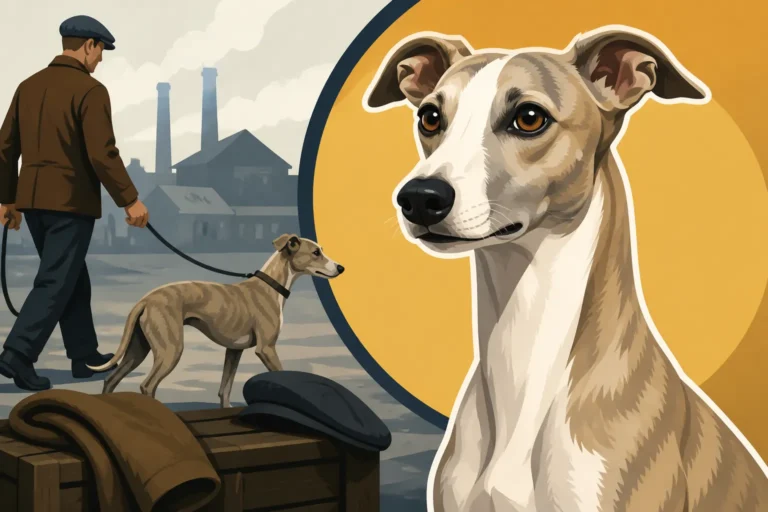
Whippet racing had deep roots in northern England, where working people bred and raced dogs that were fast, compact, and more affordable to keep than a greyhound. The breed’s reputation as a working-class racer is captured in The Poor Man's Racehorse: Whippets in the Northern Coalfields and How Miners Built the Whippet From a Greyhound They Could Afford. Racing could be a neighborhood event as much as a formal sport: dogs competed for pride, small prizes, and sometimes money.
The familiar rag race involved a short sprint toward a handler or “rag man” at the finish, who waved a cloth to attract the dogs. That simple finish helped define the spectacle. A crowd could understand the contest at a glance: the dogs were released, they ran hard toward the visible target, and the first to the finish won. How a Whippet Rag Race Was Run describes the format, while Why Whippet Owners Waved Cloth at the Finish Line explores the role of the rag itself.
These races were often organized around local communities and individual owners rather than a large commercial enterprise. That gave the sport an intimate, accessible character, but it also limited its reach. A local race did not necessarily have a permanent venue, a reliable schedule, or the infrastructure to attract spectators from far beyond the surrounding district.
The appeal and limits of a small-scale sport
Whippet racing suited the dogs and the people who kept them. The dogs were quick over short distances, and owners could train and race them without the scale of an elaborate stadium operation. In places where racing was part of local life, a good dog could become a source of status and excitement. Stories of wagers and close finishes are part of the history explored in Rag Racing and the Week's Wages Riding on a Whippet.
But a sport built around local gatherings had practical constraints. Events could depend on suitable ground, willing organizers, and enough competitors to make a race day worthwhile. Conditions and rules could vary from one place to another. A race might draw an enthusiastic local crowd without producing the steady income needed to maintain a purpose-built venue.
That difference mattered as new forms of racing developed. Greyhound racing did not have to persuade every whippet owner to switch sports. It only had to offer spectators, investors, and bettors a more standardized and expandable event. When a new attraction could provide regular racing at a permanent track, the informal strengths of rag racing were no longer enough to guarantee the same public profile.
Why greyhound tracks attracted attention and investment
Permanent venues changed the scale of racing
The modern greyhound track offered something rag racing generally could not: a fixed venue designed for repeated events and larger crowds. In Britain, the opening of Belle Vue in Manchester in 1926 is widely associated with the launch of commercial greyhound racing on a new scale. The track format gave spectators a clear view of repeated races, and organizers could build a regular program around the venue.
A permanent track also made it easier to promote racing as a scheduled outing. Instead of relying only on a local event, organizers could advertise race meetings, attract visitors, and develop a business around admission and betting. The difference was not merely that the dogs ran on an oval. The venue created a setting where racing could be packaged as a reliable public entertainment.
Greyhound racing’s growth depended on more than the track itself. Promoters, facilities, race scheduling, and betting systems all helped turn it into a commercial spectacle. The sport could draw people who were interested in the competition, the social evening, or the chance to place a wager. This combination gave greyhound racing a broader audience than a neighborhood rag race was likely to reach.
Betting and regular programming widened the audience
Betting was a significant part of the appeal of commercial greyhound racing. A track could offer several races in one visit, creating repeated opportunities for spectators to follow the dogs and place bets. The event had a rhythm: arrive, watch a race, consider the next one, and stay for the evening. That structure encouraged repeat attendance and gave promoters a clearer way to generate revenue.
For whippet racing, wagering and local pride could already be part of the experience, but the scale and organization differed. A small race meet might be exciting without having the infrastructure to support a large betting operation. Greyhound tracks were better positioned to make betting a central feature and to connect racing with a wider leisure industry.
This also changed what people saw as “the big race.” Greyhounds were larger dogs, and their speed and racing spectacle translated well to the grandstand setting. Whippets remained impressive sprinters, but the growth of commercial greyhound racing shifted attention toward a more heavily promoted, repeatable version of the sport. When Whippet Racing Became Organized offers useful background on how whippet racing developed alongside these broader changes.
| Feature | Traditional whippet rag racing | Commercial greyhound track racing |
|---|---|---|
| Typical setting | Local grounds or informal venues | Purpose-built, permanent track |
| Race program | Often tied to a community event | Regularly scheduled meetings |
| Finish attraction | Handler or rag at the finish | Mechanical lure around the track |
| Audience | Primarily local participants and spectators | Wider crowds drawn by racing and betting |
| Organization | Could vary by place and event | More standardized around a venue and program |
| Long-term effect | Continued in some communities and forms | Became the more visible commercial racing spectacle |
How greyhound racing displaced whippet racing in public life
Commercial scale made greyhound racing easier to promote
Greyhound tracks could invest in facilities and marketing in ways that scattered local whippet events generally could not. A permanent venue gave promoters a recognizable destination. It also made it possible to hold events on a regular schedule, rather than relying on a race being assembled wherever suitable ground and local interest happened to align.
That consistency mattered for spectators. People could make plans around a known track and meeting, while organizers could develop a continuing relationship with their audience. A more regular calendar also helped betting become part of the event’s identity. The track was not just a place where dogs ran; it was a place people could return to for a familiar kind of evening entertainment.
The shift was therefore about economics and visibility as much as canine ability. Greyhound racing became easier to package for a mass audience, and commercial operators had a stronger incentive to promote it. As money and publicity gathered around greyhound tracks, whippet racing could remain meaningful to its own participants while becoming less prominent in the wider public imagination.
The transition was gradual, not a clean replacement
It is misleading to picture a single moment when whippet racing stopped and greyhound racing took over. The change unfolded over time and varied by community. Some people continued to race whippets, while others followed the new track sport, attended both kinds of events, or lost interest in racing altogether. A popular commercial alternative could reduce the visibility of an older tradition without eliminating it.
The distinction between the sports also matters. Whippet racing had its own customs, local histories, and appeal. Greyhound track racing did not simply preserve rag racing on a larger oval; it developed a different commercial structure. The whippet’s place in racing culture shifted as greyhound tracks became the more prominent public venue.
There were also wider changes in leisure and working life. Urban entertainment, transport, employment patterns, and the organization of betting all shaped which sports people could attend and how they spent their time. Greyhound racing benefited from a model built for repeated, promoted events. Rag racing’s local character was part of its charm, but also made it harder to compete on the same scale.
What the change meant for whippets and their racing legacy
Whippets remained racers, even as the spotlight moved
The rise of greyhound tracks did not make whippets unsuited to racing. They remained fast, athletic dogs, and organized whippet racing continued in various forms. The change was mainly in public prominence and commercial scale: greyhound racing became more strongly associated with the track-going spectacle, while whippet racing retained a more specialized following.
That distinction helps explain why a historical account can describe whippet racing as displaced without claiming it vanished. The word “replaced” often refers to attention, investment, and cultural visibility rather than a total end to the activity. Whether Whippet Racing Still Happens covers the continued presence of the sport, and The Split Between Racing and Show Whippets helps explain how different breeding and sporting interests shaped the breed’s later identity.
For today’s reader, the key point is that a whippet’s racing heritage is not just a smaller version of greyhound history. The sport grew from particular communities and traditions, including the rag race and the working-class owners who valued a quick, capable dog. Commercial greyhound racing changed the landscape, but it did not erase the whippet’s role in it.
A legacy that still shapes how people understand the breed
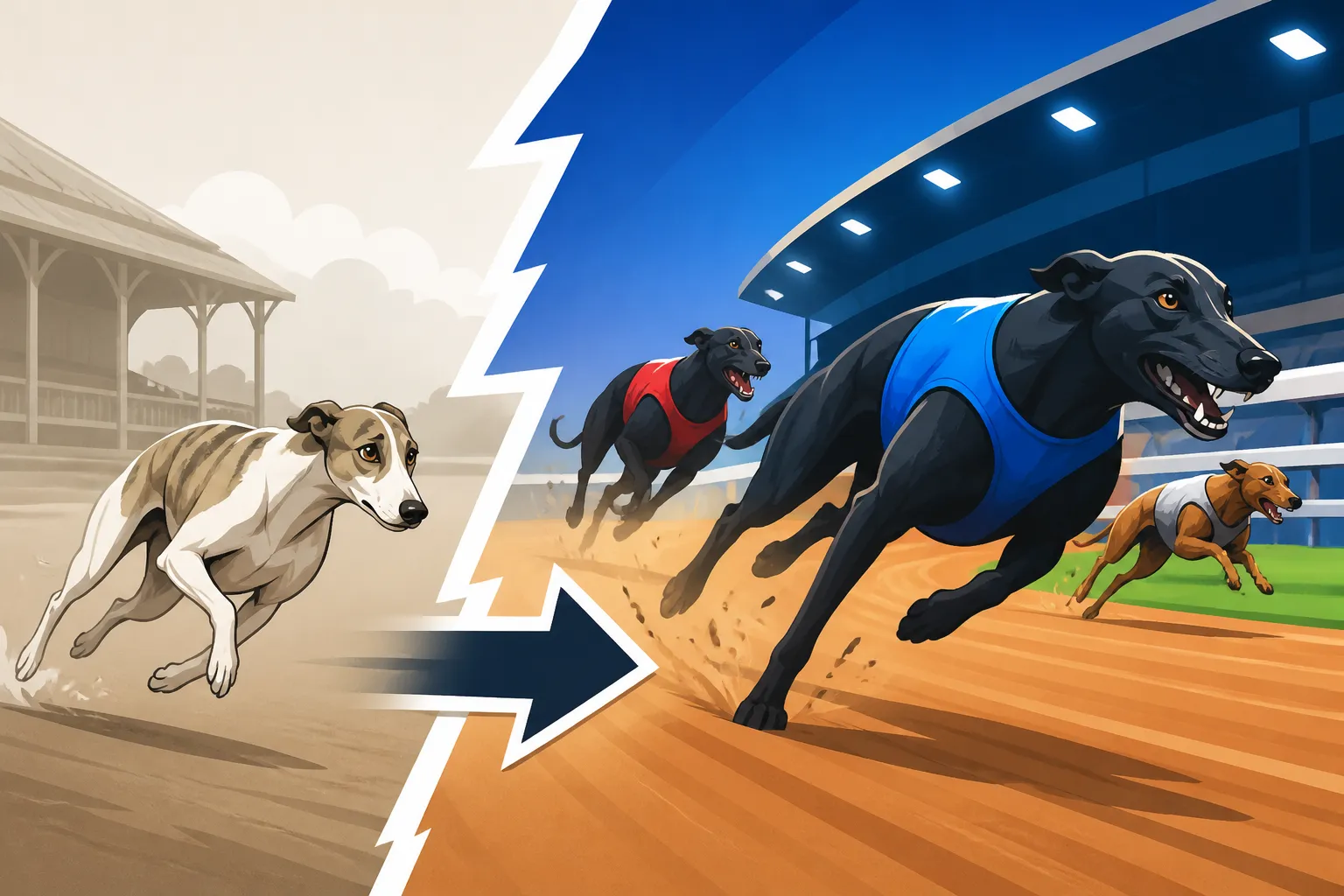
The contrast between the local rag race and the large greyhound stadium reflects two different models of sport. One was rooted in personal ownership and community gatherings; the other relied on purpose-built venues, regular programs, and commercial promotion. Greyhound tracks had the tools to attract larger audiences and establish a more visible national profile, so they came to dominate the public story of dog racing.
Whippets, meanwhile, carried their own history into modern breed life. Their speed remains part of their identity, but they are also companion dogs with needs and temperaments that extend beyond the track. Readers interested in how the breed developed can explore How Greyhound Tracks Replaced Whippet Racing alongside accounts of early racing and the communities that shaped the whippet.
The most accurate way to describe the transition is this: greyhound tracks overtook whippet rag racing as the larger commercial spectacle, especially in Britain, because they offered a standardized venue and a stronger business model. Whippet racing persisted, but it no longer held the same level of public attention. The older sport was overshadowed, not simply switched off.
Disclaimer
This article is for general informational purposes only and does not constitute professional advice. Laws, prices and regulations vary by location and change over time. Consult a qualified professional for guidance on your specific situation.