The Massachusetts Mill Workers Who Raced Whippets
A whippet on a Massachusetts mill worker’s racing team was more than a fast dog: it was a link to working-class traditions brought across the Atlantic and reshaped in New England’s factory towns. This guide explains why mill workers raced whippets, how the contests worked, what the dogs meant to their owners, and how the sport fits into the breed’s wider history.
How Whippet Racing Reached Massachusetts
A British working-class sport crossed the Atlantic
Whippet racing had deep roots in Britain’s industrial communities. The breed was prized for its speed and relatively modest size, and working people found ways to race dogs without the expense of keeping a full-sized Greyhound. In some regions, the whippet became known as a “poor man’s racehorse”—a phrase that captures both the dog’s appeal and the sport’s place in everyday life. The story of The Poor Man's Racehorse: Whippets in the Northern Coalfields offers a related look at that British background.
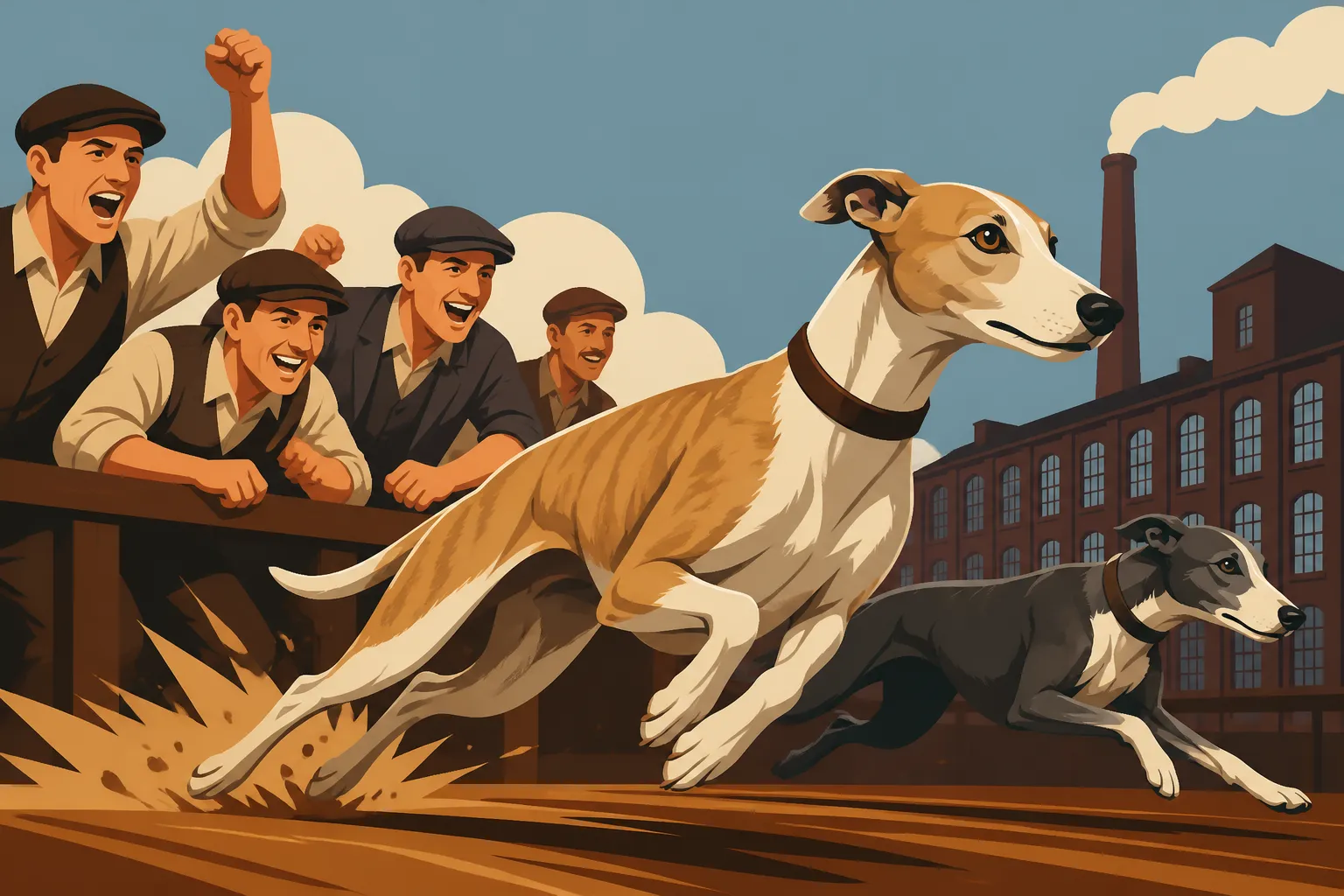
People who moved from Britain to the United States carried familiar pastimes with them, just as they brought recipes, dialects, and community customs. Massachusetts mill towns offered a setting where those traditions could take root. Textile work drew people into dense neighborhoods with shared schedules, social networks, and leisure activities. For workers with connections to British communities, racing whippets could feel like a piece of home.
That does not mean every Massachusetts racer was an immigrant, or that every mill town had the same racing scene. The available historical picture is patchy, and local practices could differ. But the broader connection makes sense: a sport associated with working people in Britain found an audience among workers in American industrial towns. For more on the breed’s earlier development, see Where the Whippet Was Developed.
Why mill towns were a natural setting
Massachusetts had several important textile centers, including Lowell, Lawrence, Fall River, and New Bedford. Mill work shaped the rhythm of life in these places. Workers often lived near one another, and their communities included people with ties to the same trades, regions, or countries of origin. That closeness could help a pastime spread: one person had a dog, another knew how to organize a contest, and a gathering became a regular event.
A whippet also suited the practical constraints of many working households better than a large, costly sporting animal. The dogs were compact, athletic, and capable of impressive bursts of speed. They could be kept as companions and raced for recreation, rather than existing solely as competition animals. Their size did not make them low-maintenance in every respect—food, veterinary care, and safe exercise still mattered—but it made the idea of owning a racing dog more accessible to ordinary families.
The Massachusetts story is therefore about more than a dog breed. It reflects how leisure and identity could develop around work, neighborhood, and migration. A race offered excitement and friendly rivalry away from the mill floor, while a particular dog could become a source of pride for its owner and a familiar character to the people who watched it run.
What a Whippet Race Looked Like
The cloth gave the race its name
Traditional whippet races are often associated with a cloth or rag waved at the finish. A handler or “lure” operator stood at the end of the course, calling or signaling to the dogs while displaying the cloth. The dogs sprinted toward that familiar target. This helps explain why the sport is connected with the name “rag racing,” and why the whippet became known as the Why the Whippet Was Called the Lightning Rag Dog.
The basic idea was simple, but the atmosphere could be lively. Owners prepared their dogs, spectators gathered along the course, and the finish became a test of speed and focus. A dog that hesitated, veered toward a distraction, or lost sight of its target could give up ground in seconds. A clear, open course and an energetic lure mattered; so did the dog’s willingness to chase.
Race arrangements were not necessarily identical from one place or era to another. Course length, starting procedures, and the way entrants were grouped could vary. The sport’s local character is part of its appeal, but it also means that a single description should not be treated as a universal rulebook. How a Whippet Rag Race Was Run explores the format and traditions in greater detail.
| Feature | What it meant in a traditional rag race |
|---|---|
| The course | A straight or otherwise clearly marked stretch where dogs could sprint toward the finish |
| The rag or cloth | A visual target used to attract the dogs toward the person at the finish |
| The contestants | Whippets entered by owners, sometimes grouped or matched according to local rules |
| The crowd | Neighbors, fellow workers, and supporters who came to watch and cheer |
| The result | A short, fast contest in which a strong start and an unwavering chase could matter greatly |
Handicaps and matchups shaped competition
In some whippet-racing traditions, organizers tried to make contests more competitive by accounting for differences between dogs. Weight handicapping is part of the sport’s historical context: a dog’s weight could influence how it was matched or how the contest was arranged. The details depended on the rules in use, so it is better to think of handicapping as a method adopted in some racing settings rather than a fixed procedure followed everywhere.
Matching dogs fairly mattered because the races were not only demonstrations of speed. They were social competitions where owners wanted a meaningful contest, not a foregone conclusion. A well-matched race gave spectators a reason to stay invested until the finish. It also gave an owner a chance to compare a dog’s performance with that of another racer under conditions the community considered reasonably even.
Betting is also associated with historical whippet racing, but it should not be assumed that every race involved wagers. Some gatherings were primarily recreational; others may have included informal stakes or more organized betting. The distinction matters when telling the story: racing could be a sport, a social event, and sometimes a wager, without every contest being all three. For a closer look, read Whether Miners Bet on Whippet Races.
What Racing Meant to Mill Workers
A dog could be both companion and competitor
It is easy to picture the whippet only at full speed, but the dog’s place in a worker’s household was broader than the racecourse. A whippet could be a family companion during the week and a racing dog at a weekend gathering. That dual role helps explain why the breed appealed to people who valued both a close bond with a dog and the thrill of competition.
The relationship also demanded practical care. A racing dog needed a safe place to rest, sensible exercise, and attention to injuries. Whippets are lean, and their short coats offer little protection from cold weather. Their thin skin can be vulnerable to cuts and tears, particularly during fast activity around rough ground or obstacles. Those realities do not make them fragile in every situation, but they do make thoughtful handling important. The history of How a Whippet Rag Race Was Run sits alongside these everyday responsibilities.
The owner’s pride could be personal as well as competitive. A dog that performed well might become locally recognizable, while a dog that simply enjoyed chasing the rag could still bring its owner into the community. For a worker whose days were structured by demanding industrial labor, caring for and training a dog offered a different kind of focus—one built around partnership, routine, and shared excitement.
Racing built community beyond the course
A race was a reason to gather. People could talk about dogs, compare performances, share news, and meet others with a common interest. The event gave a neighborhood something to anticipate, whether the contest was a major local attraction or a modest informal meet. In communities where work and home life often overlapped closely, these social spaces mattered.
The sport also offered a way to carry a cultural tradition into a new setting. British racing customs did not have to remain exactly as they had been overseas; they could be adapted to local schedules, local spaces, and the people who chose to participate. This is one reason it is useful to think of Massachusetts whippet racing as part of a wider history rather than as an isolated curiosity. The development of When Whippet Racing Became Organized and How American Whippet Racing Started helps trace how informal enthusiasm could become more structured over time.
There are limits to what can be reconstructed about every town or individual racer. Local records may be incomplete, and newspaper coverage can favor unusual events over ordinary gatherings. A careful account should avoid inventing a single Massachusetts racing scene with identical rules and participants everywhere. What can be said more confidently is that the sport connected a fast, manageable sighthound with working-class recreation and community life.
The Legacy of Massachusetts Whippet Racing
From informal contests to organized sports
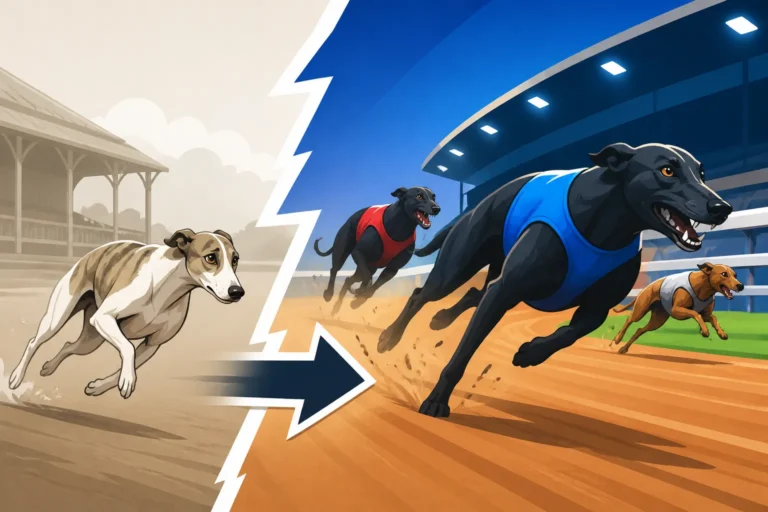
Whippet racing did not remain one single kind of event. Across time, enthusiasts developed more formal clubs, rules, and racing formats. That change did not erase the older appeal of a quick dog chasing a lure; instead, it gave people ways to keep competing with clearer standards and organized events. The transition from informal gatherings to clubs is part of the broader history of the breed in both Britain and the United States.
Modern organized racing should not be confused with every historical rag race. A contemporary event may have formal safety practices, measured courses, and established procedures, while a local working-class contest might have been arranged more simply. The shared thread is the whippet’s instinctive acceleration and eagerness to chase. For context on how the breed’s racing and show identities developed differently, see The Split Between Racing and Show Whippets and How American and British Whippets Differ.
The old mill-town connection remains valuable because it makes the breed’s history feel lived rather than abstract. Whippets were not simply defined by a standard or a list of physical traits. They were dogs people kept, trained, talked about, and raced in the places where they worked and raised families.
What today’s owners can take from the story
The Massachusetts mill workers’ races are a reminder that whippets have long been valued for more than appearance. Their speed is striking, but it comes with a need for safe places to run and responsible supervision. A fenced area is generally a better choice than an open field near roads, because a whippet focused on a moving target may not respond reliably to a recall. The breed’s history of sprinting should not be mistaken for permission to let a dog run wherever it pleases.
Owners also need to plan for comfort and protection. A coat may be useful in cold or wet weather, and soft bedding can help a lean dog rest comfortably. If the historical story has sparked an interest in everyday whippet care, Chewy is one retailer where owners can browse general supplies such as coats and beds. It can be useful to compare fit and materials through Chewy listings, while checking a product’s measurements against the individual dog. For health concerns, a veterinarian—not a retail product page—should guide decisions.
That modern connection is a small echo of the older household role: a whippet may be an athlete outdoors and a cherished companion at home. Reading about the races can make the breed’s speed easier to understand, but the most lasting part of the story may be the partnership between dog and owner. The dogs were not just machines for winning a sprint. They belonged to people who made room for them in the everyday life of a community.
Disclaimer
This article is for general informational purposes only and does not constitute professional advice. Laws, prices and regulations vary by location and change over time. Consult a qualified professional for guidance on your specific situation.