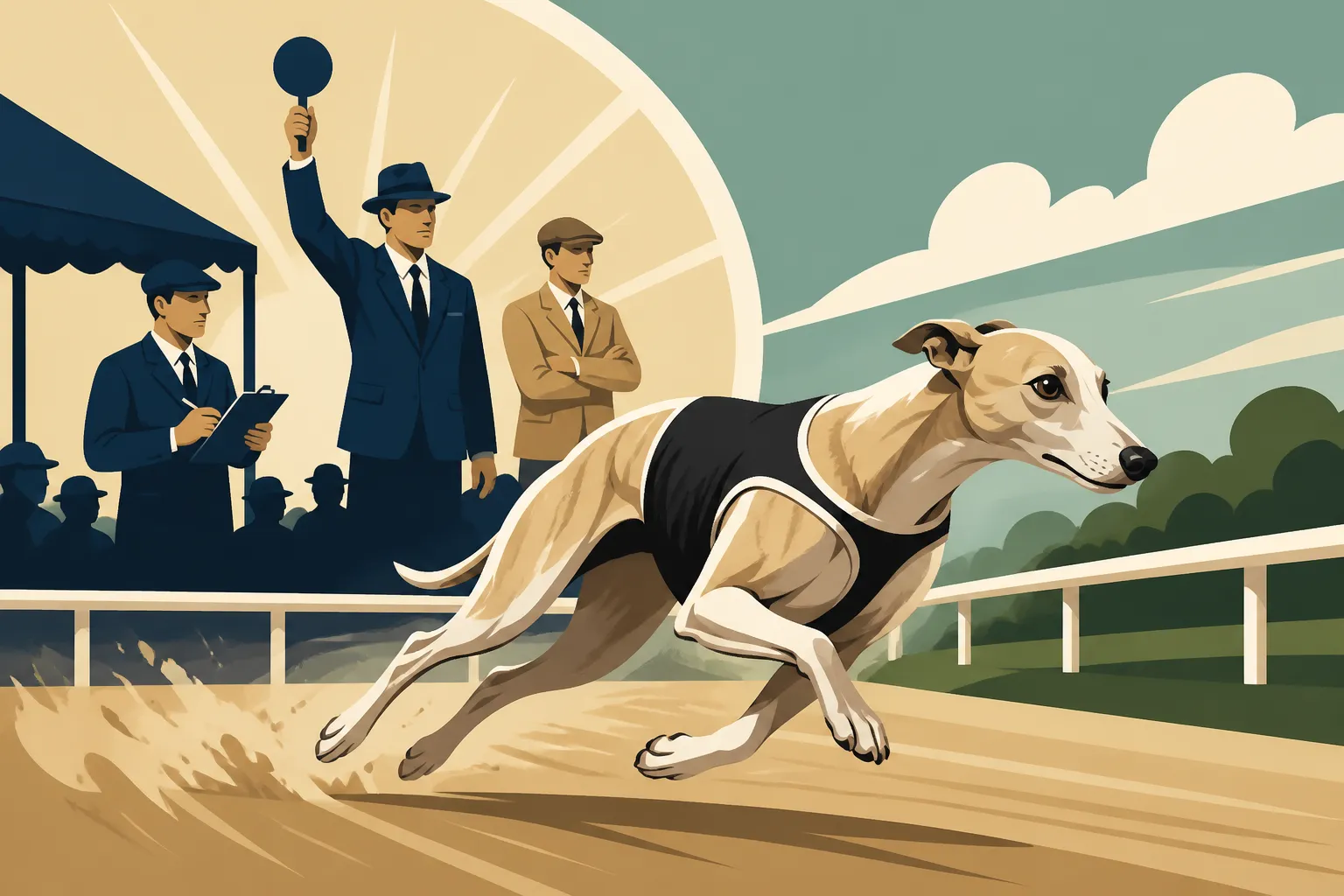
When Whippet Racing Became Organized
For generations, owners of these lithe, lightning-fast sighthounds faced a quandary: how do you truly measure the speed and spirit of your prized Whippet without falling into the chaos of impromptu, often contentious, challenges? This guide dives deep into the fascinating history of Whippet racing, exploring the pivotal moment when the spontaneous sprints of working-class communities transitioned into the structured, recognized sport we know today, complete with rules, clubs, and official events.
From Humble Beginnings: The Informal Era of Whippet Racing
Before the gleaming trophies and official titles, Whippet racing was a grassroots affair, deeply embedded in the lives of working-class communities. It was a sport born out of necessity, entertainment, and a profound appreciation for these incredible dogs. The spirit was there, the speed was undeniable, but the structure? Not so much.
The Miners' Pastime: Rag Racing and Community Events
Imagine the industrial towns of Northern England in the 19th century. Life was hard, and leisure was scarce. For many coal miners and factory workers, their Whippets weren't just pets; they were companions, hunters, and, crucially, a source of pride and entertainment. These communities developed a unique form of racing known as "rag racing." Picture a dusty field or a quiet lane, a group of eager spectators, and two or more Whippets straining at the leash. At one end, their owners or handlers held them back, while at the other, a "caller" waved a rag—often a white handkerchief or a piece of cloth—enticing the dogs to sprint towards them.
There were no starting blocks, no electronic timers, and certainly no official judges in white coats. The rules were simple, often agreed upon by handshake moments before the race. Disputes were settled on the spot, sometimes amicably, sometimes less so. But the excitement was palpable, and small bets, often a week's wages, changed hands. It was a deeply personal, communal event, reflecting the grit and camaraderie of the people who fostered the breed. If you’re curious about the fervor, you might enjoy reading Rag Racing and the Week's Wages Riding on a Whippet. These early races, while informal, laid the crucial groundwork for understanding the Whippet's incredible potential and fueled the desire for a more organized sport.
The "Snap Dog" Tradition and Its Connection to Speed
The Whippet's incredible speed wasn't just for racing; it was also honed for survival and utility. Before they were primarily racers, Whippets were often employed as "snap dogs." This term referred to their uncanny ability to "snap" up small game, particularly rabbits, in confined spaces or during hunting excursions. This wasn't a leisure activity for the gentry; it was often about putting food on the table for working families.
The snap dog tradition demanded not just speed, but agility, keen eyesight, and an explosive burst from a standstill. These are the very traits that make a Whippet such a formidable racer. The instinct to chase and capture a moving target, whether a rabbit or a fluttering rag, is deeply ingrained in their DNA. For more on this fascinating heritage, explore The Older Name Snap Dog for the Whippet. This practical application of their speed meant that the drive for the chase was consistently reinforced, making them naturally adept at any form of racing, even the most unorganized. The informal races were simply an extension of this innate drive, a way to channel their incredible athleticism into friendly, albeit intense, competition within the community.
The Push for Formalization: Why Whippet Racing Needed Rules
As the popularity of Whippet racing grew, even in its informal guises, it became clear that the lack of structure posed significant challenges. While the raw passion was there, the inconsistencies and potential for unfairness began to overshadow the pure joy of the sport. The desire to elevate Whippet racing beyond mere local wagers started to take hold.
Addressing Disputes and Ensuring Fair Play
Without clear, universally accepted rules, disputes were an inevitable part of every race day. Was the start fair? Did a dog cut another off? Whose dog actually crossed the finish line first in a cloud of dust and flying paws? These questions, when left to subjective interpretation or local custom, often led to heated arguments, accusations of cheating, and general frustration. It undermined the integrity of the sport, even at its most casual level.
Imagine a close finish where two dogs arrive almost simultaneously. In an informal setting, the "winner" might be declared by the loudest cheer, or by whoever had the most persuasive argument, rather than an objective measure. This lack of clear adjudication meant that the sport couldn't grow or gain wider acceptance. People wanted to know that their efforts in training and conditioning their dogs would be recognized fairly. The absence of impartial judges, standardized starting procedures, and defined finish lines became increasingly problematic, hindering the sport's potential to become a respected pursuit. These early challenges highlight The Legality of Early Whippet Racing, demonstrating the precarious position informal racing held without a formal framework.
Elevating the Sport: From Local Wagering to Respected Competition
Beyond just settling arguments, there was a growing ambition to see Whippet racing recognized as a legitimate sport, similar to horse racing or even Greyhound racing, which was beginning to gain traction. To achieve this, it needed to shed its image as a provincial pastime primarily associated with betting in obscure fields. Respectability required standardization, transparency, and a framework that could be understood and trusted by a wider audience.
This aspiration wasn't just about prestige; it was also about fostering the breed and its athletic capabilities. If Whippet racing could become an organized sport, it would attract more participants, potentially lead to better breeding practices focused on performance, and provide a clear pathway for dogs to compete and earn recognition. Moving from informal sprints to formal competitions meant establishing credible organizations, creating official titles, and drawing spectators and participants from beyond the immediate community. This shift was about proving that the Whippet was not just a working dog or a backyard racer, but a serious athlete deserving of a dedicated, well-regulated sport.
The First Steps Towards Structure: Early Clubs and Rules
The momentum for organizing Whippet racing began to build, driven by enthusiasts who saw the potential for a more refined and respected sport. These pioneers understood that consistency and clear guidelines were paramount.
Local Club Formations and Their Initial Charters
The journey towards organized Whippet racing often began at the local level. Enthusiasts, tired of the ambiguity and disputes of rag racing, started forming small clubs. These early clubs, often meeting in community halls or local pubs, were the crucible where the first formal rules were hammered out. Their initial charters were usually quite basic, focusing on fundamental aspects like defining race lengths, establishing clear starting and finishing lines, and appointing neutral officials to oversee races.
These local groups acted as laboratories for developing best practices. They experimented with different methods of starting—perhaps a drop-start with a flag instead of a shouted command—and tried various types of lures, moving beyond just a flapping rag to something more consistent like a rope-pulled rabbit skin. They also began to think about how to ensure fair competition between dogs of different sizes or experience levels, leading to rudimentary handicapping systems. For instance, dogs might be weighed to categorize them, or new dogs might start with a slight head start. This early, hands-on approach by local clubs was crucial, as it allowed for adaptation and refinement of rules before they were adopted on a broader scale. Understanding How a Whippet Was Handicapped by Weight gives insight into these early attempts at evening the playing field.
Standardizing Distances and Race Formats
One of the most critical steps in organizing Whippet racing was the standardization of race distances and formats. In the informal era, a "race" might be whatever length the field allowed, or whatever distance the caller could run while waving a rag. This made direct comparison between dogs, or even between races, impossible. To create a legitimate competitive sport, consistency was essential.
Early organizers began to establish specific race lengths, often ranging from 100 to 200 yards (or meters, depending on the region). These distances were chosen to highlight the Whippet's incredible acceleration and sprint capabilities without demanding endurance that wasn't their primary strength. They also formalized the "lure"—the object the dogs chased. Instead of a person waving a rag, mechanical lures, often a piece of cloth or a fake rabbit skin attached to a line pulled by a motor, began to appear. This ensured that the lure moved at a consistent speed and path, making the chase fair and predictable for all competitors. The mechanical lure system was a huge leap forward, providing a uniform challenge that allowed true athletic ability to shine. These foundational decisions were vital in moving Whippet racing from a chaotic hobby to a structured sport.
Key Milestones: The Rise of National Organizations
The burgeoning interest and the successes of local clubs paved the way for larger, more influential organizations to step in. These national bodies were instrumental in legitimizing Whippet racing and integrating it into the broader dog sport world.
The Kennel Club and Breed Recognition
In the UK, a significant turning point for the Whippet came with its recognition by The Kennel Club. While primarily focused on breed standards and conformation showing, this recognition bestowed a new level of legitimacy upon the Whippet. It meant that the breed had an official place in the canine world, complete with a defined appearance, temperament, and, implicitly, a set of expected abilities. When The Year the Kennel Club Recognized the Whippet arrived, it wasn't just about show dogs; it indirectly validated the Whippet's historical role and natural athleticism, including its racing prowess.
Breed recognition, though not directly about organizing races, created a framework for responsible breeding and ownership. Breeders could now aim for dogs that not only met the physical standard but also possessed the inherent drive and speed for which Whippets were renowned. This elevation in status helped to move Whippets out of the shadows of informal wagering and into a spotlight that encouraged organized activity. It meant that a Whippet wasn't just a "miner's dog" but a recognized purebred animal, worthy of dedicated sporting events.
American Recognition and the Spread of Organized Racing
Across the Atlantic, a similar wave of organization took hold. As Whippets gained popularity in the United States, enthusiasts sought to establish their own formal racing and breed clubs. The American Kennel Club (AKC), the premier dog registry in the US, eventually recognized the Whippet. This was a critical step in providing a national platform for the breed and its various activities, including racing. If you want to dive deeper into this, research The Year the AKC Recognized the Whippet.
With AKC recognition, Whippets could compete in a wider array of events, and their racing activities gained a much-needed umbrella organization for national coordination. This led to the formation of specialized sighthound racing clubs, ensuring that standards, safety protocols, and competition rules were consistent across different states and regions. The American Whippet Club, for example, played a crucial role in promoting the breed and supporting both conformation and performance events. This national infrastructure helped solidify Whippet racing as a respected sport, encouraging participation and fostering a strong community of owners and breeders.
NOTRA and ASFA: Modern Racing Bodies
Today, organized Whippet racing in North America is primarily governed by two major organizations: the National Oval Track Racing Association (NOTRA) and the American Sighthound Field Association (ASFA). These bodies have been pivotal in establishing comprehensive rule sets, sanctioning events, and maintaining records, providing a clear path for Whippet owners to participate in competitive racing.
NOTRA focuses on oval track racing, where dogs chase a mechanical lure around a circular or oval track, often replicating the setup of Greyhound racing. This format emphasizes pure speed and efficient running. ASFA, on the other hand, specializes in lure coursing, which simulates the historical open-field chase of live prey. Dogs follow a plastic lure over a natural, irregular course, testing their agility, endurance, and sighthound instincts. Both organizations provide structured events, titles, and a community for owners who want to engage their Whippets in their natural pursuit. If you're considering getting involved, looking into What NOTRA Racing Costs a Whippet Owner or What Lure Coursing and Fast CAT Cost a Whippet Owner can give you an idea of the commitment. You can often find specialized equipment, like racing blankets and muzzles, as well as high-quality performance food, through online retailers like Chewy, who cater to the needs of active dog owners. These modern organizations embody the culmination of centuries of informal racing evolving into a sophisticated and well-regulated sport.
The Evolution of Racing Disciplines: Beyond the Rag
As organized Whippet racing developed, it naturally branched out into different disciplines, each designed to test various aspects of the Whippet's athleticism and sighthound instincts. These evolutions moved far beyond the simple rag chase, offering diverse competitive opportunities.
Oval Track Racing: Mimicking the Greyhounds
One of the most significant developments in organized Whippet racing was the adoption of oval track racing, heavily influenced by the established format of Greyhound racing. This discipline involves dogs competing on a specially designed track, typically an oval or figure-eight shape, chasing a mechanical lure. The lure, often a rabbit pelt or plastic bag, is pulled along a rail at a consistent speed, ensuring a fair and uniform chase for all competitors.
Oval track racing emphasizes the Whippet's incredible acceleration, top-end speed, and ability to hold a line around curves. Races are usually short, reflecting the Whippet's sprint capabilities, and are run in heats with multiple dogs. Starting boxes are used to ensure an even break for all competitors, and photo finishes help determine winners in close contests. This structured environment, complete with regulated distances and consistent lure action, provided a professional feel that appealed to many. It moved the sport squarely into the realm of legitimate athletic competition, allowing for precise measurement of speed and performance. Many owners source specialized gear for track racing, like muzzles, from online pet supply stores like Chewy.
Lure Coursing: Simulating the Chase
While oval track racing focused on speed, lure coursing emerged as a discipline that aimed to simulate the traditional open-field hunt, tapping into the Whippet's natural sighthound instincts more comprehensively. Instead of a rigid oval, lure coursing takes place in a large, open field with an irregularly shaped course designed to mimic the unpredictable zig-zags of a fleeing rabbit. The mechanical lure is pulled by a series of pulleys and a motor, allowing the course director to change its direction and speed, challenging the dogs' agility, keen eyesight, and instinct to "course" (chase by sight).
Lure coursing is a beautiful display of the Whippet's natural predatory sequence – the intense focus, the burst of speed, the agile turns, and the sheer joy of the chase. Unlike track racing, dogs typically run in pairs or trios, judged not just on speed but on their ability to follow the lure, their enthusiasm, agility, and endurance over the varied terrain. It's less about raw speed over a fixed distance and more about the holistic expression of their sighthound nature. This discipline has proven incredibly popular, as it allows Whippets to fully engage their innate abilities in a safe, controlled, and competitive environment, providing a thrilling spectacle for both participants and spectators.
The Enduring Impact of Organized Whippet Racing
The journey from impromptu rag races to nationally recognized competitions has had a profound and lasting impact on the Whippet breed, its enthusiasts, and the wider world of dog sports. It's a testament to the dedication of countless individuals who saw the potential in these magnificent animals.
Preserving Breed Traits and Athleticism
Organized Whippet racing has played a crucial role in preserving the very traits that define the breed: speed, agility, and that incredible sighthound drive. In a world where many breeds are increasingly bred solely for conformation or companionship, the existence of a vibrant racing circuit ensures that the Whippet's athletic heritage remains strong. Breeders who participate in racing often prioritize health, structural soundness, and natural instinct, alongside aesthetic appeal.
This focus on performance means that Whippets continue to be robust, healthy athletes. The demands of racing—whether on the track or in the field—highlight the importance of sound conformation and temperament suitable for high-energy activity. Without organized racing, there would be less incentive to maintain these vital working characteristics, potentially leading to a dilution of the breed's essence over time. It provides a tangible measure of a Whippet's abilities, helping to guide breeding decisions and ensuring that future generations continue to embody the "lightning rag dog" spirit. For anyone considering breeding, understanding The Health Tests Both Whippet Parents Should Have is vital, ensuring these athletic traits are passed on responsibly.
Community and Camaraderie Among Owners
Perhaps one of the most beautiful outcomes of organized Whippet racing is the strong, supportive community it has fostered. These events bring together people from all walks of life who share a common passion for Whippets and their incredible athleticism. Race meets and lure coursing trials are often weekend-long affairs, filled with camaraderie, shared meals, and spirited discussions about dogs, training, and the nuances of sighthound behavior.
It's a place where experienced owners mentor newcomers, where friendships are forged over shared successes and setbacks, and where the welfare of the Whippet is always paramount. This sense of belonging is invaluable, offering a network of like-minded individuals who understand the unique joys and challenges of owning these sensitive and speedy dogs. Whether you're celebrating a win or commiserating over a slow run, the shared experience builds bonds that often last a lifetime. This robust community, driven by the structured environment of organized racing, is a cornerstone of the Whippet world, ensuring that the breed continues to thrive both on and off the field.
| Feature | Informal Rag Racing | Organized Whippet Racing |
|---|---|---|
| Era | 19th – early 20th Century | Mid-20th Century to Present |
| Location | Local fields, village lanes, impromptu spaces | Dedicated tracks, large open fields, sanctioned venues |
| Lure | Hand-waved rag, handkerchief, person | Mechanical lure (pelt, plastic bag) on a consistent line |
| Rules | Unwritten, locally agreed, often disputed | Standardized, published, enforced by governing bodies |
| Officials | Spectators, community members, dog owners | Trained judges, course directors, timers, safety stewards |
| Goal | Entertainment, local betting, community pride | Competitive sport, titles, breed preservation, community |
| Dog Safety | Variable, dependent on informal agreements | Strict safety protocols for dogs and handlers |
| Consistency | Low (variable course, lure speed, officiating) | High (standardized tracks, lures, judging, rules) |
| Accessibility | Limited to local participants | Open to registered dogs/owners nationwide/internationally |
Disclaimer
This article is for general informational purposes only and does not constitute professional advice. Laws, prices and regulations vary by location and change over time. Consult a qualified professional for guidance on your specific situation.