Why a Whippet Has So Little Body Fat
If you have ever walked down a suburban street with a healthy Whippet, you have almost certainly felt the uncomfortable glare of a passerby or listened to a well-meaning stranger ask why you do not feed your dog. Seeing prominent ribs, a tucked abdomen, and exposed hip points makes many dog lovers assume the animal is neglected. This guide explores the biological, evolutionary, and practical reasons behind why Whippets possess so little body fat, helping you navigate their unique physiology, metabolism, and daily care needs with confidence.
The Evolutionary Blueprint of the Ultra-Lean Sighthound
To understand why your Whippet looks like an Olympic sprinter rather than a well-padded retriever, you have to look back at how this breed was painstakingly constructed. Whippets were built by crossing greyhounds with smaller local terriers and sighthounds in northern England to create a compact, explosive coursing dog. Every single physical trait was selected for maximum velocity, rapid acceleration, and minimal resistance against gravity.
Fat is heavy, buoyant, and thermally insulating. While insulation keeps a Arctic working dog alive, it acts as dead weight and an unwanted heat trap for a dog designed to sprint at speeds exceeding thirty miles per hour. When a dog accelerates rapidly, excess adipose tissue demands more kinetic energy to move and holds in dangerous metabolic heat. Consequently, centuries of functional breeding purged excess fat stores from the breed’s standard genetic template.
Fast-Twitch Muscle Fibers and Energy Storage
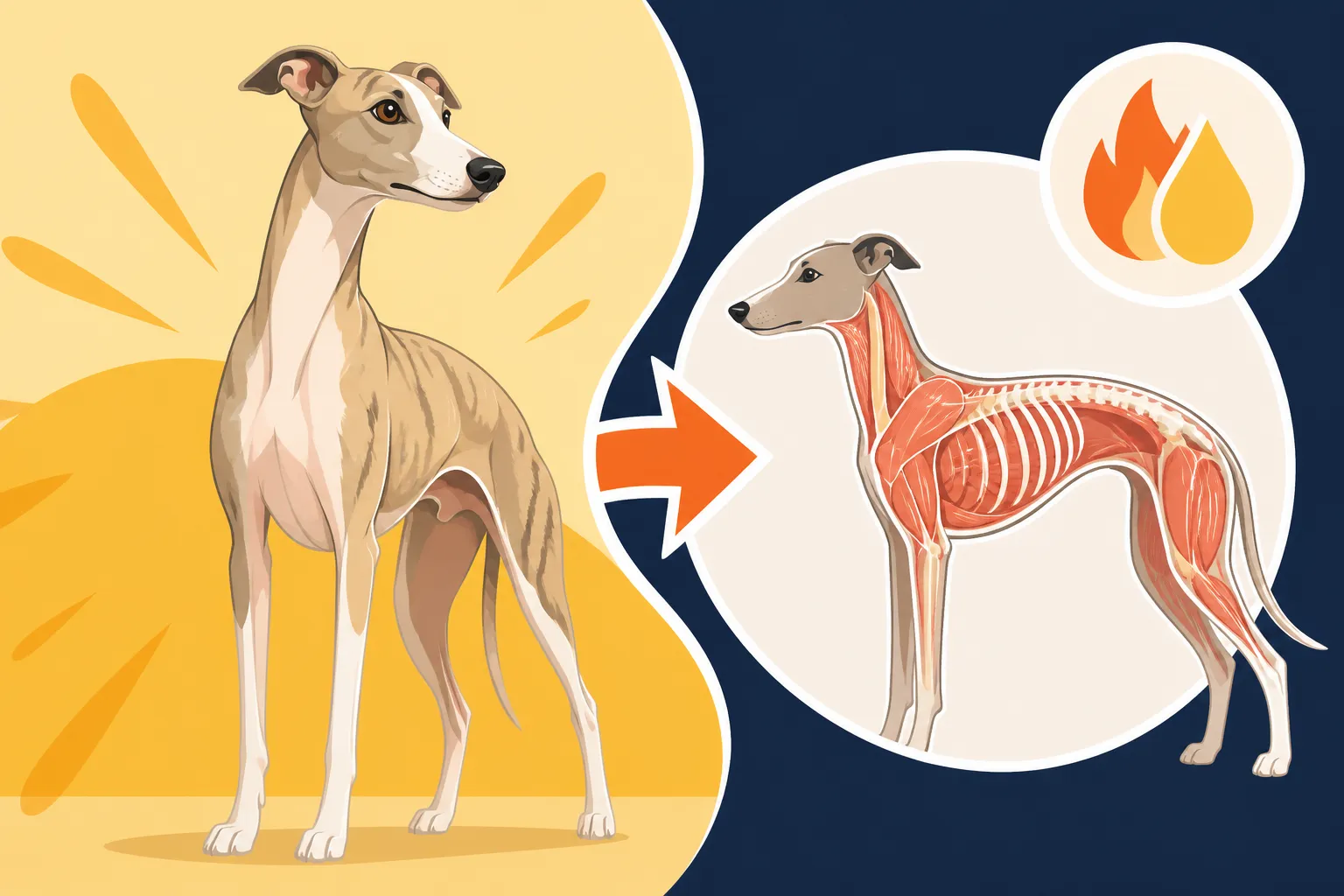
Underneath that paper-thin hide lies a musculoskeletal system designed almost entirely around explosive power. Whippets possess a remarkably high proportion of Type II, or fast-twitch, muscle fibers. These muscle units contract with incredible force and speed, relying primarily on glycogen—stored carbohydrates within the muscle tissue—rather than aerobic fat oxidation for immediate energy bursts.
Because their physiological focus is short-distance sprinting rather than endurance trotting, Whippets do not require large visceral or subcutaneous fat reserves to sustain exertion. Instead of storing excess calories as a soft layer of adipose tissue across the ribs and loins, their bodies prefer to burn surplus energy off as heat or store it directly as intracellular muscle glycogen. This unique physiological preference leaves the skin clinging tightly to the underlying musculature, creating the sleek, defined silhouette characteristic of the breed.
When evaluating your dog’s physical condition, understanding this muscular density is essential. When you look at Feeling a Whippet’s Ribs and Hip Bones, you are touching tissue that sits directly over firm muscle with almost no intermediate lipid barrier. This minimal fat layer means that every contraction, rippling muscle bundle, and bone contour is clearly visible through the coat, which can alarm owners used to heavier, rounder breeds.
Selective Breeding for Aerobic Efficiency and Aerodynamic Speed
The physical structure of a sighthound is a masterpiece of natural physics. The streamlined wedge-shaped head, the long neck, the deep chest accommodating a massive heart and lung capacity, and the sharp waistline all serve to minimize aerodynamic drag. Subcutaneous fat alters this aerodynamic shape, filling in the elegant “tuck-up” under the flank and widening the narrow front silhouette.
Breeders historically culled or bypassed dogs that developed heavier, squarer frames because extra bulk directly correlated with slower track times and faster exhaustion during field trials. Over dozens of generations, the genetic markers governing lipid storage were down-regulated. The breed standard evolved to cherish the deep thoracic cavity and dramatic arch, both of which only manifest fully when the dog maintains an ultra-lean body composition.
This relentless drive for functional speed created a canine athlete whose margin for weight variance is remarkably slim. A single pound of fat on a medium-sized Whippet is proportionally equivalent to ten or fifteen pounds on a human sprinter. It drastically shifts their center of gravity, puts unnecessary stress on delicate pasterns and hocks, and degrades their fluid gait.
The Genetic Differences Between Sighthounds and Other Canines
The genetic code of a sighthound sets it apart from almost all other canine lineage groups. Studies investigating canine metabolic traits have shown that sighthounds display unique variations in hormones that regulate appetite, fat storage, and metabolic rate, including leptin and adiponectin. These chemical messengers dictate how efficiently the body extracts nutrients from food and whether those nutrients are diverted to fat cells or expended through basal metabolism.
In standard domestic breeds, the body is naturally programmed to preserve a cushion of body fat as a protective survival buffer against famine. In the Whippet, this evolutionary conservation mechanism is noticeably muted. Their bodies act like high-performance combustion engines, converting food directly into heat and kinetic activity rather than storing it away for a rainy day.
Understanding this genetic reality helps alleviate the guilt many owners feel when neighbors comment on their dog’s frame. Knowing How Thin a Whippet Should Look gives you the confidence to recognize that your dog’s anatomical visibility is not a sign of poor husbandry, but rather the visible signature of their distinct evolutionary lineage.
| Physical Characteristic | Typical Canine Breed | Whippet / Sighthound |
|---|---|---|
| Average Body Fat % | 15% – 25% | 7% – 12% |
| Predominant Fiber Type | Mixed / Slow-Twitch | High Fast-Twitch |
| Subcutaneous Fat Layer | Moderate to Thick | Minimal to Absent |
| Resting Metabolic Rate | Standard | Elevated |
| Thermal Tolerance | Moderate to High Cold | High Cold Sensitivity |
How Low Body Fat Shapes Sighthound Metabolism and Thermal Regulation
Because body fat serves several critical physiological functions—acting as a thermal blanket, an energy repository, and a protective cushion for internal organs—living without it changes how a dog operates on a day-to-day basis. A Whippet’s high metabolic throughput means they consume food quickly, burn energy rapidly, and possess almost no internal buffers when environmental temperatures drop or medical issues arise.
Owners often find themselves constantly balancing caloric intake against exercise levels. A cold afternoon spent shivering in the backyard can burn through a Whippet’s daily caloric surplus just as quickly as a twenty-minute high-speed run across an open field.
The Burning Flame: Caloric Turnover and Resting Metabolic Rate
A Whippet’s basal metabolic rate (BMR) is surprisingly high compared to non-sighthound breeds of similar weight. Their large heart-to-body-weight ratio and substantial mass of active skeletal muscle require a constant supply of oxygen and glucose even when resting flat on their side on the living room sofa. Muscle tissue is metabolically active and burns calories simply to maintain itself, whereas fat tissue requires very little metabolic upkeep.
Because a Whippet is composed almost entirely of lean muscle mass, their resting engine idles high. They require a significantly higher caloric intake per pound of body weight than a squarer, heavier-boned breed like a Bulldog or Cocker Spaniel. This metabolic quirk explains why a dog that spends eighteen hours a day sleeping can still devour large portions of food without gaining an ounce of soft tissue.
When feeding these active dogs, relying on standard dog food bag recommendations often leads to underfeeding. Many owners discover that commercial kibble formulas lack the caloric density needed to maintain optimal weight, prompting them to search specialty retailers like Chewy for high-protein, high-fat formulas or fresh food subscriptions such as Ollie that offer calorie-dense, highly digestible recipes designed for high-performance canines.
Extreme Vulnerability to Cold and Thermal Loss
Body fat is the primary natural insulator for mammals, trapping body heat deep within the core and shielding internal organs from freezing ambient air. Lacking both a thick layer of subcutaneous adipose tissue and a dense double coat, a Whippet loses thermal energy to the surrounding environment at an alarming rate.
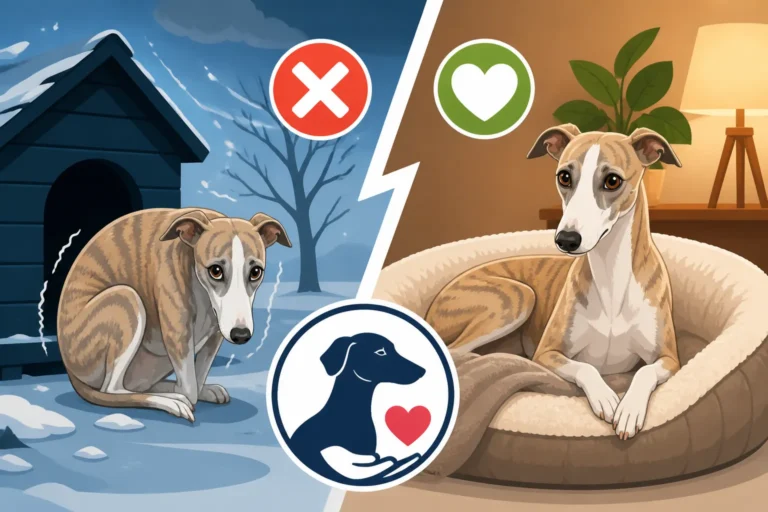
When exposed to temperatures below fifty degrees Fahrenheit, a Whippet’s skin temperature drops almost immediately. Their small amount of body surface area relative to their muscle volume causes heat to radiate away rapidly. This physiological reality explains why Why a Whippet Cannot Live Outdoors is a fundamental truth of the breed; they simply lack the natural bodily thermal barriers to survive prolonged exposure to wet or cold weather.
When temperatures fall, the dog’s body attempts to generate heat through involuntary muscular contractions, leading to severe shivering. This shivering further drains their precious glycogen reserves, creating a metabolic feedback loop where the dog burns through calories simply trying to stay warm. To manage this thermal drop, owners must rely heavily on human intervention, supplying winter coats, fleeces, and heated environments to preserve the dog’s internal heat.
Anesthesia and Drug Metabolism Risks
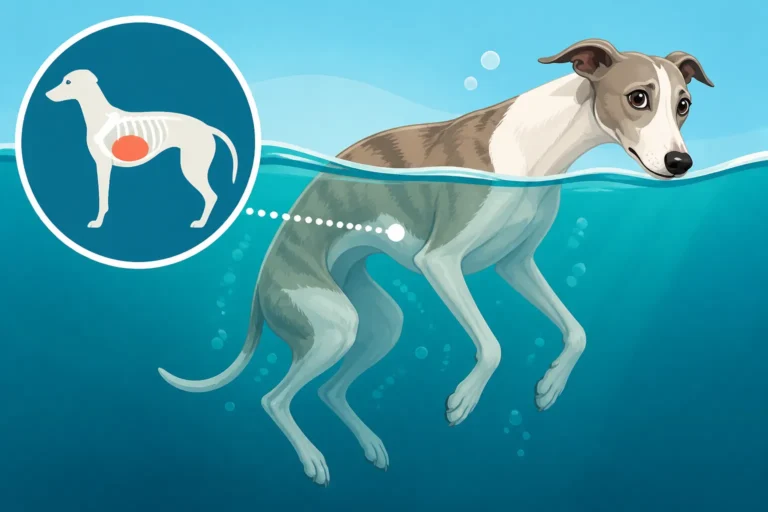
Perhaps the most critical health consequence of a low body fat percentage involves how a Whippet metabolizes medications, particularly veterinary anesthetics. Many common anesthetic agents, such as traditional thiobarbiturates, are lipophilic—meaning they rapidly redistribute into body fat stores after administration, which effectively lowers the concentration of the drug circulating in the bloodstream and allows the animal to wake up smoothly.
Because a Whippet lacks those fat stores, lipophilic drugs remain in high concentrations in the bloodstream and brain for far longer than intended. The liver is suddenly forced to process the entirety of the dose without the safety buffer normally provided by fat absorption. This can result in dangerously prolonged recoveries, profound respiratory depression, or toxic overdoses from standard dosage rates calculated strictly by body weight.
Veterinarians unfamiliar with sighthound protocols must be gently reminded of these physiological realities. Understanding Why Anesthesia Is Riskier in a Whippet and Why a Lean Whippet Loses Body Heat Under Anesthesia is vital knowledge for every owner before agreeing to routine dental cleanings or surgical procedures. Modern clinics routinely use safer, rapidly cleared agents like propofol and isoflurane, alongside active warming blankets, to protect lean patients throughout surgery.
Assessing Whippet Body Condition Without Getting Fooled
Because standard canine body condition scoring (BCS) charts are created with average breeds like Labradors or Golden Retrievers in mind, applying those general guidelines to a Whippet can lead to misdiagnosis. On a standard 1-to-9 canine BCS scale, a perfectly healthy, classically conditioned Whippet often registers as an underweight 3, leading inexperienced owners to overfeed their pets in a misguided attempt to hide their structural framework.
Accurately evaluating a sighthound requires adjusting your visual and tactile expectations. You must learn to read the subtle lines of their ribs, vertebrae, and hip points through a sighthound-specific lens rather than relying on generic body condition criteria.
The Visual Benchmarks: Ribs, Spine, and Hip Bones
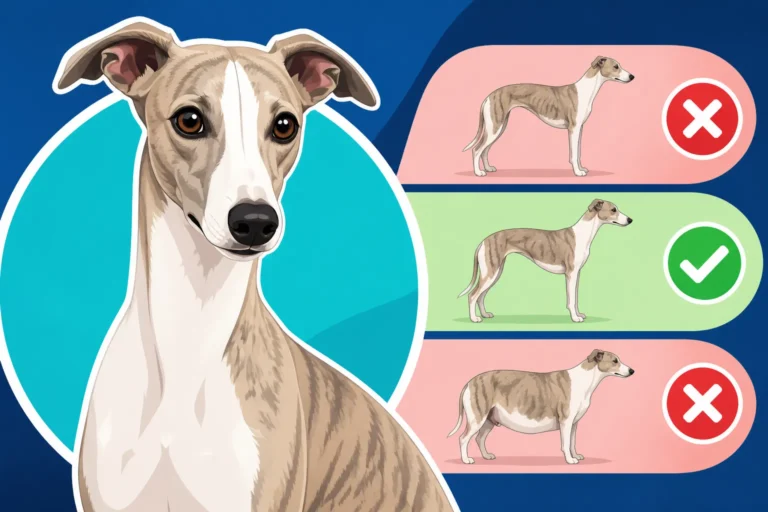
A correctly conditioned adult Whippet should display a clean, athletic outline where structural points are visible but softened by smooth muscle underlying the skin. When observing your dog standing naturally on a flat surface, you should easily spot the faint outline of the last two to three ribs. If all ribs are standing out starkly like a washboard, the dog is likely underconditioned; if no ribs are visible at all, the dog is carrying excess weight.
The spine should show a soft, muscular arch over the loin without sharp, bony vertebrae protruding like stones along the topline. The hip bones (iliac crests) should be detectable as smooth, rounded contours under the hide rather than sharp, dangerous points sticking out dramatically.
To refine your visual assessment, refer to our detailed guides on How Many Ribs Should Show on a Whippet and When a Whippet Is Genuinely Too Thin. These resources provide clear visual reference points that help you distinguish between an elite canine athlete in peak physical condition and a dog that urgently requires nutritional support.
Differentiating Between Athletic Lean and Malnourished Thin
Telling the difference between an intentionally lean Whippet and an emaciated one comes down to muscle mass, energy levels, and coat condition rather than fat accumulation. A healthy, lean Whippet exhibits dense, firm muscle thighs, a broad muscular loin, a bright shiny coat, and vibrant, explosive energy.
Conversely, a malnourished dog loses muscle tissue alongside fat—a process known as muscle wasting. In an undernourished animal, the temporal muscles on top of the head sink inward, the muscle shoulders look hollow, the thigh muscles shrink away, and the tailhead appears stark and sunken. The dog may appear lethargic, cold, and disinterested in movement, and their skin loses its natural elasticity.
| Visual Marker | Healthy Athletic Whippet | Malnourished / Underweight |
|---|---|---|
| Rib Visibility | Last 2-3 ribs faintly visible | All ribs starkly visible |
| Spinal Column | Muscular arch, smooth ridges | Sharp, prominent vertebrae |
| Hip Points (Iliac Crest) | Softly outlined by muscle | Sharp, hollowed out bone points |
| Thigh / Hindquarter | Full, rounded, firm muscle | Flat, hollow, visible muscle gap |
| Energy & Demeanor | Explosive energy, alert, shiny | Dull coat, lethargic, shivering |
Comparative Body Fat Across Popular Breeds
To put the Whippet’s ultra-low body fat into perspective, it helps to analyze how they compare to other popular dog breeds across different functional groups. While average companion breeds carry significant fat stores for buoyancy, warmth, or energy storage, sighthounds maintain body fat levels that mirror human track-and-field athletes.
A Labrador Retriever, for instance, maintains a healthy fat layer to stay warm while swimming in freezing water to retrieve waterfowl. A Working German Shepherd carries moderate subcutaneous fat to cushion joints during long, grueling hours of trotting and patrolling. The Whippet, by contrast, drops all non-essential weight to maximize output per pound of muscle.
Understanding these structural differences ensures that you do not evaluate your Whippet against the physical proportions of the neighborhood Beagles or Boxers. Their thin skin and low fat stores are working features of their design, not health defects requiring correction through overfeeding.
Practical Care Strategies for Managing a Low-Fat Canine
Living with a dog that has virtually no insulation or impact padding requires specific adjustments to your daily routine, home environment, and feeding schedules. Simple everyday events—like sleeping on a hardwood floor, going out to potty in a chilly spring rain, or riding in the back of an SUV—present unique comfort and health challenges for a low-fat breed.
By proactively addressing their caloric, environmental, and physical needs, you can easily protect your dog from the discomforts and injuries that commonly affect unpadded, thin-skinned sighthounds.
Caloric Density and High-Performance Nutrition
Feeding a low-fat dog requires prioritizing caloric quality over shear volume. Because a Whippet’s stomach capacity is relatively compact compared to their high caloric requirements, filling them up with low-energy, fiber-heavy kibble can cause gastrointestinal distress and loose stools without supplying sufficient usable energy.
To maintain an ideal weight, select nutrient-rich foods featuring high-quality animal proteins and easily digestible healthy fats, such as chicken fat, salmon oil, or flaxseed. Many owners choose to order specialized formulas on Chewy or utilize fresh food subscriptions through Ollie, which deliver balanced, moisture-rich meals packed with bioavailable nutrients that help maintain lean muscle mass without overloading the digestive tract.
If your dog goes through an intense training phase—such as lure coursing, agility, or open sprinting—you will need to scale their daily food intake upward to keep pace with their metabolic rate. Adding small, calorie-dense toppers like cooked eggs, plain canned sardine, or muscle-building fat supplements can help keep their body condition steady without expanding meal volume to uncomfortable levels.
Cushioning and Bedding to Prevent Pressure Calluses and Joint Pain
Because a Whippet lacks natural fat padding over their bony prominences, sitting or sleeping on hard surfaces causes direct, friction-filled contact between bone and floor. Without soft bedding, a Whippet quickly develops raw spots, hair loss, and thickened skin calluses on their elbows, hocks, and sternum.
To keep your dog comfortable and skin intact, soft surfaces are mandatory in every room the dog frequents. Reviewing Why a Whippet Needs Soft Bedding Everywhere will clarify why orthopedic foam and deeply padded nests are necessary investments for this breed.
When choosing beds, look for high-density orthopedic memory foam options on Amazon that distribute body weight evenly and prevent bony points from bottoming out against the cold floor. If your dog prefers to curl up tight, bolster-style beds with raised edges offer both structural support and a sense of physical security.
Left unprotected on hard tile or hardwood floors, a dog may develop chronic joint inflammation and skin lesions. Understanding Where a Whippet Develops Pressure Calluses and Why a Whippet’s Elbows Go Bald helps you catch early signs of tissue wear before they turn into open sores or costly veterinary skin infections.
Wardrobe Essentials: Layering Against the Elements
When ambient temperatures fall below fifty degrees Fahrenheit, a coat transitions from an aesthetic accessory into a daily care necessity. Because body fat is absent, clothing serves as the thermal barrier that your dog’s genetics failed to provide. Building a functional, multi-season wardrobe is one of the most practical ways to support a Whippet’s health throughout autumn and winter.
A complete wardrobe should include lightweight fleece pajamas for lounging around cool indoor spaces, a windproof and water-resistant jacket for brisk daily walks, and an insulated, deep-chest winter coat for freezing days. Pay close attention to chest cuts; because Whippets possess an unusually deep ribcage and narrow waist, standard off-the-rack dog coats sold at big-box pet stores often fit poorly, leaving the sensitive chest exposed or rubbing the thin skin in the armpits raw.
Before shopping for seasonal gear, review The Temperature at Which a Whippet Needs a Coat to build an appropriate temperature-based dressing schedule. High-quality sighthound clothing suppliers design gear specifically tailored to fit deep chests and dramatic tuck-ups, ensuring your pet stays warm, dry, and comfortable no matter what nature throws your way.
By respecting their ultra-lean physiology and providing proper nutrition, cushioned resting areas, warm outer layers, and sighthound-conscious medical care, you ensure that your Whippet lives a vibrant, active, and comfortable life as the remarkable athlete they were born to be.
Disclaimer
This article is for general informational purposes only and does not constitute professional advice. Laws, prices and regulations vary by location and change over time. Consult a qualified professional for guidance on your specific situation.