Whether a Whippet Is the Fastest Dog for Its Size
Many Whippet owners find themselves explaining to curious onlookers that, despite their delicate appearance, these dogs are absolute rockets. But the question often arises: are they truly the fastest dog for their size, or is that just a common misconception? This comprehensive guide dives deep into the physiology, history, and incredible athletic prowess of the Whippet to answer that very question and help you understand what makes your swift companion so special.
The Whippet's Need for Speed: Built for the Chase
When you watch a Whippet stretch out into a full gallop, it's like witnessing poetry in motion. Their bodies are masterpieces of engineering, designed over centuries for pure speed and agility. This isn't just a happy accident; every aspect of their anatomy contributes to their remarkable ability to accelerate and cover ground with incredible efficiency. It’s no wonder they earned nicknames like the "poor man's racehorse" in their early days in the Northern English coalfields, where Rag Racing and the Week's Wages Riding on a Whippet was a common pastime.
Understanding the Whippet's Unique Physique
A Whippet's speed isn't a singular trait but a symphony of interconnected physical attributes. From their deep chest to their flexible spine, each part plays a crucial role in delivering that explosive burst of speed. They are, in essence, compact versions of their larger sighthound cousins, distilled to an optimal size for quick turns and rapid acceleration.
They possess an incredibly deep chest, which houses a surprisingly large and efficient heart and lungs, allowing for maximum oxygen intake and delivery to their powerful muscles. This ample lung capacity is vital for sustained bursts of speed. Think of it like a finely tuned engine with a huge fuel tank – ready to deliver power when needed. Their long, powerful hind legs act like coiled springs, providing the immense propulsion needed to launch them forward, while their strong, muscular thighs contribute to that powerful push-off.
Their lean, athletic build means they carry very little excess weight. This isn't just about aesthetics; it's about pure performance. Less weight means less energy expended to move, allowing for quicker acceleration and higher top speeds. This is why you can often Feeling a Whippet's Ribs and Hip Bones and see a couple of ribs without your dog being considered underweight. It's simply their natural, athletic conformation.
The Role of the Double Suspension Gallop
The true secret to a Whippet's incredible speed, like all sighthounds, lies in its unique gait: the double suspension gallop. This isn't just running; it's a series of controlled leaps that maximize ground coverage. In this gait, there are two distinct moments when all four feet are off the ground.
First, after the hind legs push off, the body stretches out, and all four feet are suspended in the air. Then, the front legs land, and as they prepare to push off, the body contracts, bringing the hind legs far forward underneath the body, sometimes even ahead of the front legs. In this contracted phase, there's another moment of suspension where all four feet are again off the ground before the hind legs begin their powerful push. This "double suspension" allows for an astonishing reach and retraction, effectively lengthening their stride far beyond what their size might suggest. It’s like their body is built to telescope in and out, covering immense distances with each bound. This unique gait, combined with their flexible spine, allows them to achieve incredible speeds, making them truly special athletes in the canine world.
Comparing Whippet Speed to Other Breeds
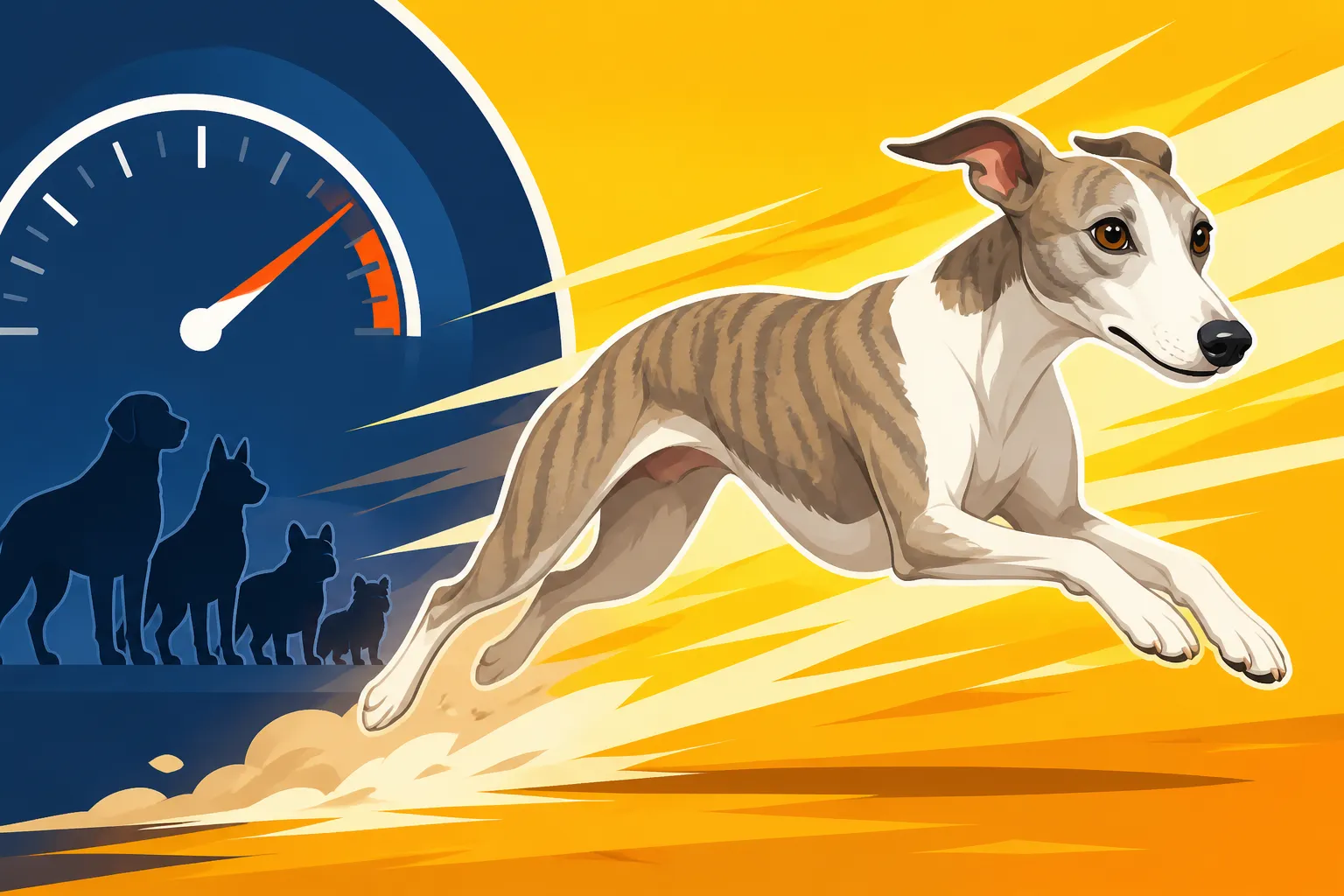
When we talk about "fastest for its size," it's crucial to put the Whippet's speed into perspective, especially when compared to other breeds, both large and small. While a Greyhound might be faster in an absolute sprint, the Whippet's ratio of speed to body mass is truly exceptional. It’s a bit like comparing a sports car to a superbike – both incredibly fast, but designed for different scales and maneuvers.
Whippets Versus Larger Sighthounds
Let's address the elephant in the room – or rather, the Greyhound on the track. Greyhounds are the undisputed kings of absolute speed in the canine world, capable of reaching speeds well over 40 miles per hour. A Whippet typically maxes out in the mid-30s, say around How Fast a Whippet Actually Runs which is nothing to sneeze at! However, consider the weight difference. A Greyhound can weigh anywhere from 60 to 80 pounds, while a Whippet is usually in the 20-40 pound range.
When you factor in their size, the Whippet's performance is astounding. They are achieving speeds remarkably close to Greyhounds, but with significantly less body mass to propel. This efficiency is precisely why they are often considered the fastest for their size. They possess the same sighthound mechanics – the deep chest, flexible spine, and double suspension gallop – but packed into a more compact, agile frame. This allows them to accelerate incredibly quickly and make sharp turns, which is a hallmark of their original "snap dog" hunting style. If you've ever seen a Whippet on a lure coursing field, you'll witness this agility in action. You can learn more about Whether a Whippet Outruns a Greyhound Over a Short Distance.
Whippets Versus Smaller Breeds and Terriers
Comparing Whippets to smaller breeds or non-sighthound breeds truly highlights their unique speed. While a Jack Russell Terrier might be quick over a short burst, it simply doesn't possess the body structure or gait to achieve sustained speeds anywhere near a Whippet's. A Whippet can easily outrun most other breeds in a straight sprint, often leaving them in the dust with its effortless, ground-eating stride.
Terriers, for instance, are often bred for endurance and digging, with a more compact, muscular build and a different type of gait. They excel at tenacity and going to ground, but not outright speed. Even some of the "faster" working breeds like Border Collies, while incredibly agile and quick over obstacles, typically don't have the sheer straight-line speed of a Whippet. This comparison really underscores how specialized the Whippet's design is for speed, making them a marvel of canine athleticism within their weight class.
To illustrate this point, here's a simplified comparison of approximate top speeds and weights for a few popular breeds:
| Breed | Average Weight (lbs) | Approximate Top Speed (mph) | Speed per Pound (mph/lb) | Primary Function |
|---|---|---|---|---|
| Greyhound | 65 | 45 | 0.69 | Racing, Lure Coursing |
| Whippet | 30 | 35 | 1.17 | Racing, Lure Coursing |
| Saluki | 50 | 40 | 0.80 | Hunting, Lure Coursing |
| Border Collie | 40 | 25 | 0.63 | Herding, Agility |
| Jack Russell T. | 15 | 15 | 1.00 | Hunting, Earthdog |
Note: These are average figures and individual speeds can vary based on fitness, age, and genetics.
As you can see, the Whippet's speed per pound ratio is exceptionally high, making a strong case for its claim as the fastest dog for its size.
Living with a Lightning-Fast Companion
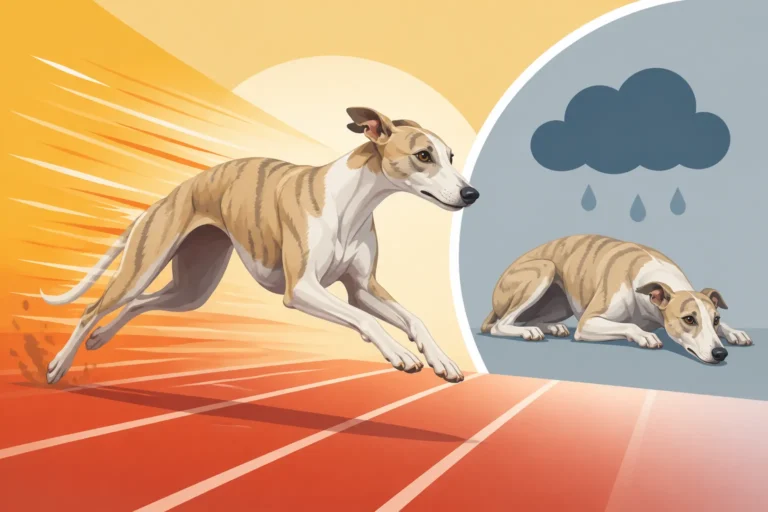
Owning a Whippet means understanding and respecting their incredible speed. It’s not just a parlor trick; it's a fundamental aspect of their being that dictates their exercise needs, safety requirements, and even their training approach. You can't simply ignore their instinct to run, because The Whippet That Will Not Toilet in the Rain and then explodes with energy the moment the sun comes out.
Exercise Needs and Safe Running Spaces
Despite their reputation as "40-mile-an-hour couch potatoes," Whippets absolutely need opportunities to stretch their legs and sprint. This isn't about endurance; it's about those intense, short bursts of speed. A quick sprint session is far more satisfying for a Whippet than a long, slow jog, though they can certainly enjoy both. For more on this, check out How Far a Whippet Can Sprint Before It Tires.
The challenge for owners is finding safe spaces for them to unleash this speed. An open field without a secure fence is a huge risk because Why a Whippet Cannot Be Let Off Leash in an Open Field. Their chase instinct is incredibly powerful, and a squirrel or rabbit can trigger an instantaneous, unstoppable sprint that overrides even the most polished recall. This is why many Whippet owners rely on securely fenced yards, private dog parks, or dedicated sighthound-friendly spaces. When you're out and about, a long line can be a godsend, allowing them to run and explore safely without the risk of a bolt. You can find excellent quality long lines and other training gear on platforms like Amazon, offering a wide variety of options for every budget and need.
It's also crucial to remember that their speed comes with delicate bodies. They have thin skin and very little padding, making them prone to injuries, especially when running on uneven or slippery surfaces. Warming Up a Whippet Before It Runs is essential, just like any athlete, to prevent muscle pulls and tears.
The Challenge of Recall and Prey Drive
Their speed is intrinsically linked to their prey drive, a primal instinct that makes them incredible hunters. This means that a Whippet's recall, while trainable, can be incredibly fragile in the face of a perceived chase opportunity. Imagine trying to stop a bullet once it's fired – that's often what it feels like when your Whippet locks onto something that moves. Why a Whippet's Chase Instinct Overrides Its Recall is a constant struggle for owners.
Effective training, therefore, focuses heavily on building a rock-solid emergency recall in a variety of environments, starting in low-distraction areas and gradually increasing the challenge. Positive reinforcement methods work best with these sensitive dogs, as harsh corrections can easily shut them down. Resources like BAXTER & Bella's online puppy training school can be invaluable for new Whippet owners, providing structured programs and expert guidance to build a strong foundation of obedience, including that all-important recall, before those instincts fully mature. They can help you understand how to motivate your Whippet with treats and toys, rather than relying on punitive measures.
Early socialization is also key, not just for good manners but for helping them understand appropriate interactions with other dogs and, if you have them, small pets at home. While a Whippet might coexist peacefully with your family cat, its instinct to chase anything small and furry outside the home remains incredibly strong. Teaching an Adult Whippet to Live With Cats requires patience and careful management.
The Importance of Early Training and Socialization
Bringing home a Whippet puppy means starting early with training that considers their unique temperament and future speed potential. Because they are so sensitive, consistency and positive reinforcement are paramount. How a Whippet Learns When It Bruises From Pressure means that harsh methods are not only ineffective but can be damaging to their confidence and willingness to engage with you.
Focus on building a strong bond and making training fun. Short, engaging sessions are far more effective than long, repetitive drills, as Whippets can get bored easily. Enrolling in puppy classes, either in person or through online platforms like BAXTER & Bella, can provide a structured environment for socialization and basic obedience. These early experiences help shape a well-adjusted dog that understands boundaries, even as their natural speed and prey drive develop. Remember, a well-trained Whippet is a joy to live with, but one whose instincts are left unchecked can be a handful, especially when that 35 mph kick-in happens unexpectedly. Understanding The First Year With a Whippet Puppy will set you and your dog up for a lifetime of happy companionship.
Conclusion: A Tiny Speed Demon with a Huge Heart
So, is a Whippet the fastest dog for its size? All signs point to a resounding yes. Their incredible physiology, the efficiency of their double suspension gallop, and their remarkable performance relative to their modest weight solidify their status as true canine athletes, unparalleled in their size class. They are indeed tiny speed demons, capable of breathtaking bursts of acceleration that consistently awe and impress.
But beyond the pure physics of their speed, Whippets are also known for their gentle, affectionate nature and their remarkable ability to transform from an outdoor blur to an indoor cuddle bug. This combination of athletic prowess and loving companionship makes them truly special. Understanding their need for speed, providing safe outlets for running, and employing positive, consistent training will ensure a happy, healthy life for both you and your swift, sensitive companion.
Disclaimer
This article is for general informational purposes only and does not constitute professional advice. Laws, prices and regulations vary by location and change over time. Consult a qualified professional for guidance on your specific situation.