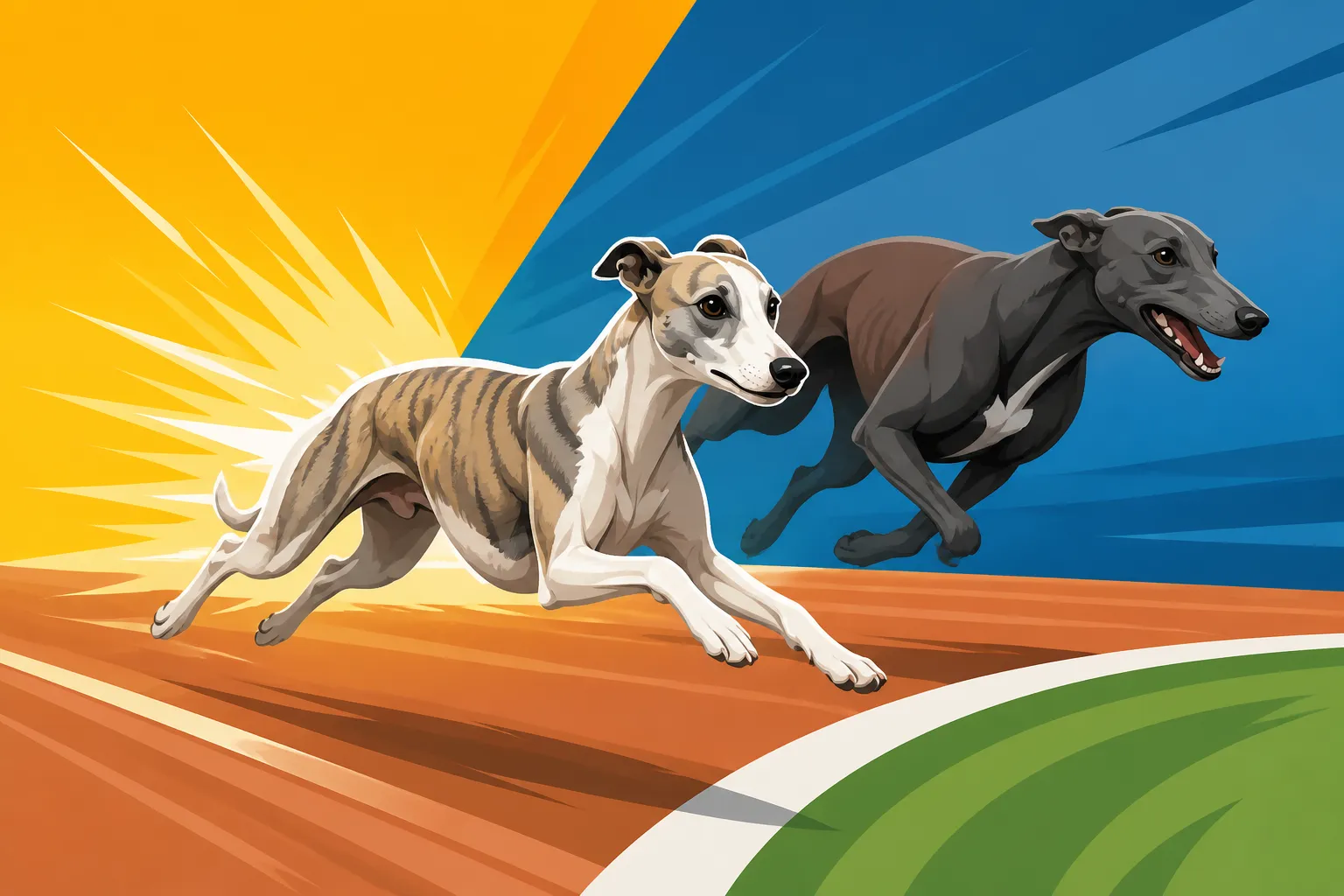
Whether a Whippet Outruns a Greyhound Over a Short Distance
It's a question that often sparks debate among sighthound enthusiasts: can a Whippet, with its incredible acceleration, actually outrun a Greyhound, the undisputed king of canine speed, over a short distance? Many assume the smaller Whippet might just have the edge in an initial burst, but the reality is a bit more nuanced than a simple yes or no. This guide will delve into the physiological differences, racing specializations, and the very definition of "short distance" to help you understand just how these magnificent athletes stack up against each other.
The Mechanics of Sighthound Speed: Whippet vs. Greyhound
When we talk about sighthound speed, we're discussing some of the most specialized athletes in the animal kingdom. Both Whippets and Greyhounds are marvels of evolutionary engineering, but they've been refined for slightly different expressions of that speed. Understanding these fundamental differences is key to appreciating their individual prowess.
Built for Different Kinds of Speed
Imagine a Formula 1 race car versus a powerful drag racer. Both are incredibly fast, but for different purposes. The Greyhound is the endurance racer of the sprint world, built for incredible sustained speed over a meaningful distance. Their long legs, deep chests, and powerful rear musculature allow for an immense double-suspension gallop, where all four feet are off the ground twice in each stride. This stride length is a major factor in their top-end velocity.
The Whippet, on the other hand, is like a finely tuned sports car, known for its blistering acceleration and agility. While smaller, their build is still incredibly athletic, with a well-arched back that acts like a coiled spring, powerful hindquarters, and a lean, aerodynamic body. They excel at quick changes of pace and direction, and that explosive initial burst from a standstill. They might not have the sheer mass of a Greyhound, but their power-to-weight ratio is phenomenal. It’s truly a sight to behold when a Whippet just rockets away.
Maximum Velocity and Acceleration
When considering maximum velocity, Greyhounds generally hold the crown. They can reach speeds that are truly astounding, often considered among the fastest dogs on the planet. Their ability to maintain this speed over several hundred yards is what makes them legendary on the race track.
However, the Whippet's claim to fame lies in its acceleration. For the very first few strides, from a standing start, a Whippet can often match or even momentarily outpace a Greyhound. This isn't about top speed over a track; it's about pure, unadulterated explosive power in those opening moments. Think of it as hitting the accelerator pedal – a Whippet gets to its top speed remarkably quickly. But once both dogs are fully extended and running, the Greyhound's longer stride and larger engine typically allow it to reach a higher ultimate speed and pull away. If you're curious about their general speed, you can learn more in How Fast a Whippet Actually Runs.
Defining "Short Distance" in a Sighthound Race
The term "short distance" can be relative, and its interpretation is crucial when comparing the speeds of a Whippet and a Greyhound. What might be a short sprint for one breed could be almost a marathon for another, comparatively speaking.
Track Lengths and Breed Specializations
In the world of sighthound racing, track lengths are typically tailored to suit the breeds' natural strengths. Professional Greyhound racing often involves distances ranging from 300 to 700 yards, with many common races around the 400-550 yard mark. These distances allow the Greyhound to hit its top speed and maintain it, showcasing its incredible stamina and power.
Whippet racing, especially in straight-track sprint events, often features shorter distances, typically in the range of 150 to 200 yards. This is where a Whippet truly shines, combining its rapid acceleration with enough distance to fully extend into its characteristic double-suspension gallop. Historically, forms of Whippet racing like "rag racing" involved courses that were often quite short, highlighting their quick burst capabilities, as explored in How Long a Whippet Rag Race Course Was. Therefore, even the designated "short distance" for a Greyhound is usually longer than a Whippet's optimal competitive range.
The Burst Versus the Sustained Sprint
This is where the heart of the debate lies. If "short distance" means literally the first few seconds or the first 10-20 yards from a dead stop, a Whippet's explosive acceleration can make it appear incredibly competitive, potentially even gaining a fleeting lead. Their powerful hindquarters are designed to propel them forward with immense force in those initial moments.
However, once the distance extends beyond this initial burst—say, to 50 yards or more, which is still a very short sprint for a dog—the Greyhound's superior stride length and sheer power begin to dominate. They cover more ground with each powerful bound, quickly closing any initial gap and then steadily pulling ahead. So, while a Whippet might win the "who gets off the line first" contest, it's unlikely to win a race of any significant length against a fit, competitive Greyhound. The question of The Whippet Against a Greyhound is really about matching their specialized strengths.
Physical Traits That Influence the Outcome
Beyond just raw speed, several physical characteristics contribute to how a Whippet and a Greyhound perform in a sprint, each playing to their breed's design strengths.
Weight, Stride, and Power Output
A Greyhound's greater body mass and height translate into a longer stride and more raw power output with each push-off. Their longer legs cover significantly more ground in a single stride, meaning they take fewer strides to cover the same distance at top speed. This is pure physics in action – more mass combined with explosive muscle power creates greater momentum.
Whippets, being smaller and lighter, have a different advantage. Their lower body weight means less mass to accelerate, which is why their initial burst is so phenomenal. They can change speed and direction with incredible agility, making them dynamic on the field. However, this lighter frame and shorter stride length mean that while they accelerate quickly, they can't quite match the ground-covering capability of a Greyhound once both are in full flight. In some rare cases, specific genetic mutations, such as those discussed in Bully Whippet Syndrome and the Myostatin Gene Behind It, can give some Whippets unusually large muscle mass, which might affect their power, but this is an exception rather than the norm and doesn't typically bridge the gap with a Greyhound's natural build for speed. Even when considering how Why a Carrier Whippet Runs Faster, it still doesn't quite put them ahead of a Greyhound in a sprint race.
Endurance and Recovery in a Sprint
Even in a "short distance" race, the ability to sustain peak speed and recover quickly matters. Greyhounds are not just fast; they are built for sustained bursts of high-intensity running. While their races are sprints, they demand a certain level of endurance to maintain maximum velocity from start to finish.
Whippets, while incredibly fast, tend to burn out quicker at their absolute top speed. They can unleash a phenomenal burst, but maintaining that intensity for extended periods is more taxing on their smaller bodies. Think of it as a maximum effort explosion versus a slightly longer, still explosive, but more sustained effort. If the "short distance" is long enough to require more than a few seconds of top-end speed, the Greyhound's inherent endurance for that specific type of effort will give it a distinct advantage. Understanding How Far a Whippet Can Sprint Before It Tires highlights this aspect of their athletic profile.
Training and Genetics: The Edge They Seek
While natural ability is paramount, dedicated training and careful genetic selection play enormous roles in maximizing the speed potential of both Whippets and Greyhounds. Every competitive sighthound owner understands that a dog is not just born fast; it is also made fast through careful rearing and conditioning.
Conditioning for Peak Performance
For both breeds, conditioning programs are meticulously designed to enhance their natural abilities and prevent injury. For Greyhounds, training focuses on building explosive power, stamina for sustained high speeds, and efficient mechanics over longer sprint distances. This involves a regimen that gradually builds strength, speed, and cardiovascular fitness, often utilizing specialized tracks and equipment.
Whippets are similarly conditioned, with an emphasis on honing their rapid acceleration, agility, and quick turnover. Their training might include shorter bursts, lure coursing, or Fast CAT events that capitalize on their incredible reactivity and sprint capacity. Many owners utilize tools like long lines for safe running in open areas or specific types of lure machines to develop their chase drive. You can find excellent quality long lines and other training aids on platforms like Amazon, ensuring your Whippet gets safe and effective exercise. Beyond physical conditioning, positive reinforcement is vital for these sensitive dogs. Programs like BAXTER & Bella, while not race-specific, offer comprehensive online training resources that can certainly help build a strong foundation of obedience and focus in a high-drive dog, preparing them for any activity you choose.
The Role of Genetics
Breeders of both Whippets and Greyhounds are intensely focused on genetics. They carefully select breeding pairs to produce offspring with the desired physical traits for speed, sound structure, and the keen sighthound drive. This isn't just about speed; it's also about health and temperament. In some Whippet lines, for instance, there's particular attention paid to the myostatin gene, which, in a single copy, can enhance muscle mass and speed. This is why Whether Racing Whippets Are Selected for the Carrier Gene is a topic of discussion among enthusiasts.
The genetic heritage of both breeds has been honed over centuries, primarily for their speed and hunting prowess. Greyhounds were developed for hunting fast game and later for track racing, where consistent, high-speed performance was key. Whippets emerged from a similar need, but with a focus on smaller, quicker prey and a racing style that emphasized explosive bursts over slightly shorter courses. The combined legacy of selective breeding ensures that when you see either a Whippet or a Greyhound run, you are witnessing generations of careful genetic planning in action, creating the ultimate canine athletes.
Here’s a quick comparison of how these two magnificent breeds stack up in a sprint:
| Feature | Whippet | Greyhound |
|---|---|---|
| Primary Speed Type | Explosive Acceleration, Quick Burst | Sustained High Speed, Longer Stride |
| Optimal Sprint Distance | 150-200 yards | 400-550 yards |
| Initial Acceleration | Excellent, can be momentarily faster | Very good, but takes a few strides to full power |
| Top Speed | High, often near 35 mph | Extremely high, often over 40 mph |
| Stride Length | Shorter, quicker turnover | Very long, covers significant ground |
| Power-to-Weight Ratio | Exceptionally high, very agile | High, built for powerful, sustained output |
| Typical Size | Medium (approx. 25-45 lbs) | Large (approx. 60-85 lbs) |
Ultimately, while a Whippet's initial burst is truly astonishing, making them formidable competitors in their own right, a Greyhound's sheer power, longer stride, and capacity for sustained top-end speed mean it will almost always outrun a Whippet over any "short distance" that moves beyond a mere handful of yards. Both are incredible athletes, each perfectly adapted for their unique expressions of speed.
Disclaimer
This article is for general informational purposes only and does not constitute professional advice. Laws, prices and regulations vary by location and change over time. Consult a qualified professional for guidance on your specific situation.