How Far a Whippet Can Sprint Before It Tires
It’s a common sight to witness the sheer explosion of speed that is a Whippet in full sprint, a breathtaking blur across a field. Many new owners, and even experienced ones, often wonder just how long that incredible burst of energy can last before their sleek athlete needs to slow down. The truth is, while Whippets are undeniably fast, their incredible speed is designed for short, intense bursts, not long-distance endurance. This guide will delve into the remarkable mechanics of a Whippet's sprint and help you understand the realistic limits of their powerful, yet brief, high-speed runs.
The Whippet's Design: Built for Explosive Power, Not Marathon Runs
When you look at a Whippet, every aspect of their physical form screams speed. From their deep chest and flexible spine to their powerful hindquarters and lean musculature, they are honed for one thing: acceleration and short, sharp bursts. But this very design, while making them incredibly swift, also sets the natural limits on how far they can maintain that top speed. It's a marvel of canine engineering, but it's important to understand what it's not built for.
Fast-Twitch Muscles and the Energy System
Whippets, like their larger sighthound cousins, are predominantly packed with fast-twitch muscle fibers. These are the muscles responsible for powerful, explosive movements – think jumping, sprinting, and quick turns. They generate a lot of power very quickly, but they also fatigue rapidly. This is in contrast to slow-twitch fibers, which are built for endurance and sustained activity. Imagine a sprinter versus a marathon runner; the Whippet is definitively the sprinter. Their bodies are optimized for anaerobic exercise, meaning they produce energy without relying heavily on oxygen for sustained periods. This system is fantastic for a sudden chase, but it has a built-in timer.
When your Whippet launches into a sprint, they're tapping into these powerful fast-twitch muscles, fueled by readily available energy stores. However, these stores deplete quickly, and the byproducts of this anaerobic energy production (like lactic acid) accumulate, leading to muscle fatigue. This isn't a flaw; it's simply how their magnificent bodies are designed to function most efficiently for their natural hunting style, which involved short, high-speed pursuits.
The Role of Their Large Heart and High Red Blood Cell Count
You might have heard that Whippets have big hearts – and it's true! In fact, many sighthounds have larger hearts relative to their body size compared to other breeds. This isn't usually a sign of heart disease, but rather an adaptation for athletic performance, allowing them to pump a greater volume of blood and oxygen to their muscles during exertion. Similarly, Whippets often have a higher packed cell volume (PCV), meaning more red blood cells in their blood. Red blood cells carry oxygen, so a higher count means more efficient oxygen delivery.
While these adaptations sound like they'd be great for endurance, for a Whippet, they're part of the system that allows for maximal output in a minimal timeframe. The larger heart can handle the sudden surge of blood flow needed for a sprint, and the extra red blood cells ensure that even during that intense, oxygen-demanding burst, their muscles get what they need as quickly as possible. It's about peak performance in a brief window, making every ounce of that incredible speed count. You can learn more about this in Why a Whippet's Big Heart Is Not a Diagnosis or Why a Whippet's Red Cell Count Runs High.
The Reality of a Whippet's Sprint Duration
It’s easy to get caught up in the image of a Whippet as a miniature racehorse, but in reality, their true top-speed sprint is remarkably short-lived. They are masters of the dash, not the marathon. This understanding is key to providing them with appropriate exercise and managing expectations.
How Long Can They Actually Go All Out?
For most healthy adult Whippets, a full-throttle sprint, the kind where they're truly pouring everything into it, typically lasts only about 200 to 400 yards (roughly 180 to 365 meters). Think of it as a drag race, not a cross-country run. They reach their maximum speed incredibly quickly – often within a few strides – and can maintain it for this short distance before their muscles start to feel the burn and their body signals a need to slow down. This is the physiological limit of their anaerobic system at peak exertion.
While they might continue to run at a fast pace for a longer distance, it won't be at their absolute top speed. The difference is like a human runner doing a 100-meter dash versus a mile run. Both are running, but the intensity and duration are vastly different. After that initial explosive sprint, their pace will naturally decrease as their aerobic system kicks in to support less intense, sustained running.
The Myth of Endless Speed and the "Forty-Mile-An-Hour Couch Potato"
The phrase "forty-mile-an-hour couch potato" perfectly encapsulates the Whippet's exercise needs. It's a descriptor often used by sighthound enthusiasts, and for good reason! They possess phenomenal speed, capable of reaching those impressive speeds in a blink, but they are equally content to spend the vast majority of their day curled up on the sofa or a plush bed. The idea that a Whippet needs hours of continuous high-speed running is a misconception that can lead to injury and an overtired dog. You can read more about this in The Whippet Is a Forty Mile an Hour Couch Potato.
A Whippet's psychological and physical well-being benefits from these short bursts, followed by long periods of rest. They need an opportunity to stretch their legs and satisfy that innate chase drive, but then they are usually quite happy to settle down. Trying to push them beyond their natural sprint limits can lead to exhaustion, frustration, and even muscle strains.
Recovery Time and Subsequent Bursts
One of the fascinating aspects of the Whippet's physiology is their incredibly fast recovery time. After a blistering sprint, they might pant for a few moments, maybe do a few "zoomies" to shake it off, and then they'll often be ready for another burst of speed after a relatively short break – sometimes just a minute or two. This isn't to say they can repeat the exact same peak intensity indefinitely, but they can certainly enjoy several high-energy sprints in a single outing, interspersed with periods of sniffing, trotting, or resting.
It’s important to distinguish between "recovery from a sprint" and "being ready for another full-intensity sprint." While they recover quickly enough to play and trot, truly hitting top speed again might require a slightly longer rest for their muscle energy stores to replenish. This quick turnaround is another testament to their efficient athletic design, allowing them to repeatedly engage in short, intense hunting sequences or play sessions.
Factors Influencing a Whippet's Sprint Endurance
While the general rule of short, explosive sprints holds true for most Whippets, several factors can influence just how far and how effectively an individual Whippet can run before tiring. Understanding these nuances helps you tailor exercise routines to your specific dog.
Age and Fitness Level
Just like humans, a Whippet's age and overall fitness play a huge role in their sprinting capabilities. A young, fit adult Whippet, regularly exercised in appropriate ways, will naturally have greater stamina for short bursts and quicker recovery than a sedentary pet. A Whippet puppy, for instance, has developing bones and muscles, and intense, prolonged sprinting should be limited to protect their growing joints. Raising a Whippet Puppy Without Wrecking Its Joints delves into this further.
Conversely, an older Whippet might still enjoy a good scamper, but their top speed might be slightly reduced, and their recovery time could be longer. They might tire more quickly or be more prone to minor aches and stiffness afterward. Caring for an Old Whippet That Feels the Cold discusses general care for senior Whippets. Maintaining a healthy weight and a consistent, appropriate exercise routine throughout their life helps keep them in good sprinting form for as long as possible, but respect their changing capabilities as they age.
Terrain and Surface Conditions
The ground your Whippet is running on significantly impacts their sprint distance and effort. Ideal conditions for a Whippet to really stretch out are soft, forgiving surfaces like grass or sandy beaches. These surfaces cushion their joints and allow their paws to get good traction without excessive strain. A well-maintained, large, securely fenced park or field with soft grass is often a Whippet's paradise.
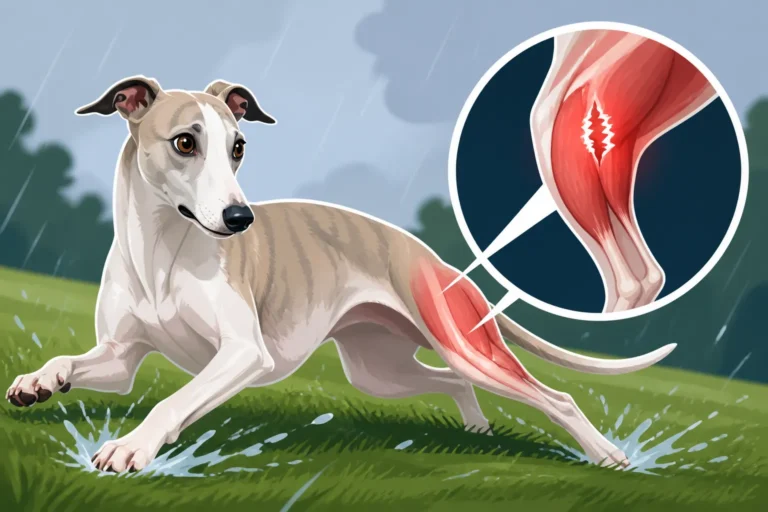
Running on hard surfaces like pavement or concrete puts much more stress on their joints, tendons, and paw pads. Not only does this increase the risk of injury, but it also makes their sprints less efficient and more tiring. Imagine trying to sprint barefoot on a hard road versus a soft track – the difference in impact is immense. Wet, slick grass can also be hazardous, increasing the risk of slips and muscle pulls. The Muscle a Whippet Tears Sliding on Wet Grass explains some of these risks. Always choose safe, appropriate surfaces for off-leash running.
Weather Conditions and Temperature
Whippets are not equipped for extreme weather, and temperature plays a critical role in their energy levels and how quickly they tire. Due to their thin skin and lack of body fat, they are very susceptible to cold. In chilly weather, they will tire more quickly as their body expends energy just trying to stay warm. A good coat is essential for winter runs. A Whippet Has No Insulation and No Padding highlights this breed trait.
In hot weather, the risk of overheating is very real. Whippets, while typically not as prone to heatstroke as brachycephalic breeds, can still suffer if pushed too hard in high temperatures. Their lean bodies can heat up, and while they cool off somewhat by panting, their general tolerance for heat is lower than breeds with more insulation. It's crucial to exercise them during cooler parts of the day and ensure plenty of water breaks. Always prioritize your Whippet's comfort and safety over pushing them for an extra sprint in unfavorable conditions.
Mental Stimulation and Excitement
Sometimes, a Whippet’s "endurance" isn't just about physical limits but also mental drive. A highly excited Whippet, perhaps at a lure coursing event or chasing a squirrel, might push past what they would typically do on a casual run. The adrenaline and sheer joy of the chase can give them an extra burst of energy. This is where their prey drive truly shines, and it’s why activities like Lure Coursing and Fast CAT Cost a Whippet Owner are so fulfilling for them, allowing them to tap into that instinct safely and without limits.
However, this doesn't mean they've suddenly developed endless stamina. It simply means their motivation is higher, temporarily overriding some of the early fatigue signals. It’s still important for owners to monitor their dog, ensure they don’t overdo it, and provide plenty of rest afterward. The mental satisfaction of a good chase is a powerful motivator, but physical limits still apply.
Safe Sprinting Practices for Your Whippet
Allowing your Whippet to express their natural athleticism is one of the great joys of owning this breed. However, it's paramount to do so safely to prevent injuries and ensure their long-term health. Whippets, for all their speed, are not invincible.
The Importance of Warm-Ups and Cool-Downs
Think of your Whippet as an elite athlete – because they are! Just like a human runner wouldn't launch into a full sprint without preparing their body, your Whippet needs a proper warm-up. A good warm-up involves a brisk walk or a gentle trot for 5-10 minutes, allowing their muscles to gradually get ready for more intense activity. This increases blood flow, warms up the muscles, and improves flexibility, significantly reducing the risk of strains or tears. You can explore this further in Warming Up a Whippet Before It Runs.
Equally important is a cool-down. After a vigorous sprint session, don't just put them straight into the car or crate. A leisurely walk for another 5-10 minutes helps their heart rate return to normal, allows their breathing to stabilize, and aids in flushing out metabolic byproducts like lactic acid from their muscles. This practice can help prevent stiffness and soreness later on. Cooling a Whippet Down After a Sprint provides more details.
Choosing Safe and Secure Running Areas
This is arguably the most critical aspect of safe Whippet sprinting. A Whippet's chase instinct is incredibly powerful, and their recall, no matter how well-trained, can be overridden by the sight of something interesting to chase. Their speed means they can cover vast distances in seconds, making an escape incredibly dangerous, especially near roads. You absolutely cannot reliably let a Whippet off-leash in an unfenced or unsecured area. Why a Whippet Cannot Be Let Off Leash in an Open Field explains the inherent risks.
The best places for a Whippet to sprint are:
- Securely fenced private yards: Ensure the fence is tall enough (many Whippets can clear surprisingly high fences, so consider a minimum of 5-6 feet) and there are no gaps.
- Designated off-leash dog parks: Only if they are very large, securely double-gated, and you are confident in your dog's temperament around other dogs. Always assess the park's safety and the other dogs present.
- Lure coursing or Fast CAT events: These are designed specifically for sighthounds, providing a safe, controlled environment to chase a "lure" and run at top speed without risk of escape. This is a fantastic outlet for their natural drives.
For areas that aren't securely fenced, a long line (a very long leash, often 20-50 feet) can provide a measure of safety and control, allowing for some running room while still keeping your Whippet physically connected to you. You can find excellent long lines on platforms like Amazon, offering different lengths and materials to suit your needs.
Recognizing Signs of Fatigue and Overexertion
Learning to read your Whippet's body language is essential. After a good sprint, they will naturally be panting and might take a moment to catch their breath. However, watch out for signs of overexertion, which could indicate they've had enough or are becoming too hot:
- Excessive, prolonged panting: Panting that doesn't subside quickly after a rest.
- Dark red gums: A sign of overheating.
- Stumbling or reluctance to move: Could indicate muscle fatigue or pain.
- Dragging behind you: They've lost their usual enthusiasm for moving forward.
- Intense thirst beyond normal: While drinking is good, excessive, desperate thirst might signal they're truly dehydrated or overheated.
If you observe these signs, stop the activity immediately. Find a cool, shady spot, offer water, and allow them to rest. Pushing a dog through these signals can lead to serious health issues, including heatstroke or severe muscle injury. Always err on the side of caution.
Training for Controlled Sprinting and Recall
Even within a safe, fenced area, having a solid recall and understanding how to manage your Whippet's energy is vital. Their powerful prey drive means training is not just a suggestion, but a necessity for their safety and your peace of mind.
Building a Bulletproof Recall
Despite their strong chase instinct, a reliable recall is achievable with consistent, positive reinforcement training. The key is to make coming back to you the most rewarding thing in the world. Start recall training in a low-distraction environment, like your home or a very secure yard, and gradually increase distractions. Use high-value treats and enthusiastic praise every single time they come. Consider using a training program like those offered by BAXTER & Bella, which focus on positive, reward-based methods that work wonderfully with sensitive breeds like Whippets.
Practice different types of recall, including emergency recalls, where you use a distinct word or sound that always means "come back right now!" and is only used for true emergencies, ensuring it has maximum impact. Never punish your Whippet for coming back, even if it took a while or they were distracted; this only teaches them that coming to you is unpleasant. Always make it a happy, rewarding experience. Why a Whippet's Recall Fails Mid Chase discusses the challenges and importance of this training.
Using Lure Coursing and Fast CAT as Safe Outlets
For many Whippet owners, the best way to satisfy their dog's instinct to sprint and chase is through organized sighthound sports like Lure Coursing and Fast CAT. These events are specifically designed for breeds like Whippets, providing a safe, fenced environment where they can run full out after an artificial lure, engaging their natural prey drive without risking real animals or running into danger.
- Lure Coursing: Simulates the chase of a live lure, with the dog following a plastic bag attached to a line over a varying course. It's a fantastic workout and incredibly mentally stimulating.
- Fast CAT: A timed 100-yard dash where dogs chase a lure straight down a track. It’s pure, unadulterated speed and exhilaration for your Whippet.
These activities not only provide an excellent physical outlet but also strengthen the bond between you and your dog. They understand these are their special times to run, which can even help manage their prey drive in everyday situations. Always check with event organizers for age and health requirements before participating.
Avoiding Over-Arousing Your Whippet
While it's wonderful to see your Whippet joyful and energetic, it's also important to manage their arousal levels, especially before and during sprints. An overly aroused or excited Whippet can be less responsive to commands and more prone to accidental injury. For example, if they're wound up and then make a sudden, sharp turn, they're at a higher risk for muscle strains.
Try to keep play sessions varied, with periods of high-energy sprinting interspersed with calmer activities like sniffing or a gentle walk. Use toys that encourage retrieval rather than just endless chasing, and practice "settle" commands. A well-balanced Whippet is one who gets to run, but also knows how to relax and be calm, making them a joy to live with both on and off the "track."
| Activity Type | Typical Duration for Whippet (Full Intensity) | Key Benefits | Risks |
|---|---|---|---|
| Full Sprint | 200-400 yards (short burst) | Peak speed, explosive power | Muscle strain, impact injury, escape risk |
| Casual Trot/Run | 20-30 minutes | Cardiovascular health, muscle maintenance | Joint stress (hard surfaces), overheating |
| Walk (Leashed) | 30-60 minutes | Mental stimulation, light exercise, bonding | Limited physical exertion |
| Lure Coursing/Fast CAT | Multiple short runs (event dependent) | Safe outlet for prey drive, controlled speed | Overexertion if not monitored |
| Hiking (Leashed) | 1-2 hours (moderate pace, suitable terrain) | Endurance, varied stimulation | Paw pad injury, joint strain (uneven ground) |
Disclaimer
This article is for general informational purposes only and does not constitute professional advice. Laws, prices and regulations vary by location and change over time. Consult a qualified professional for guidance on your specific situation.