Whether a Whippet Is Safe With a Rabbit in the House
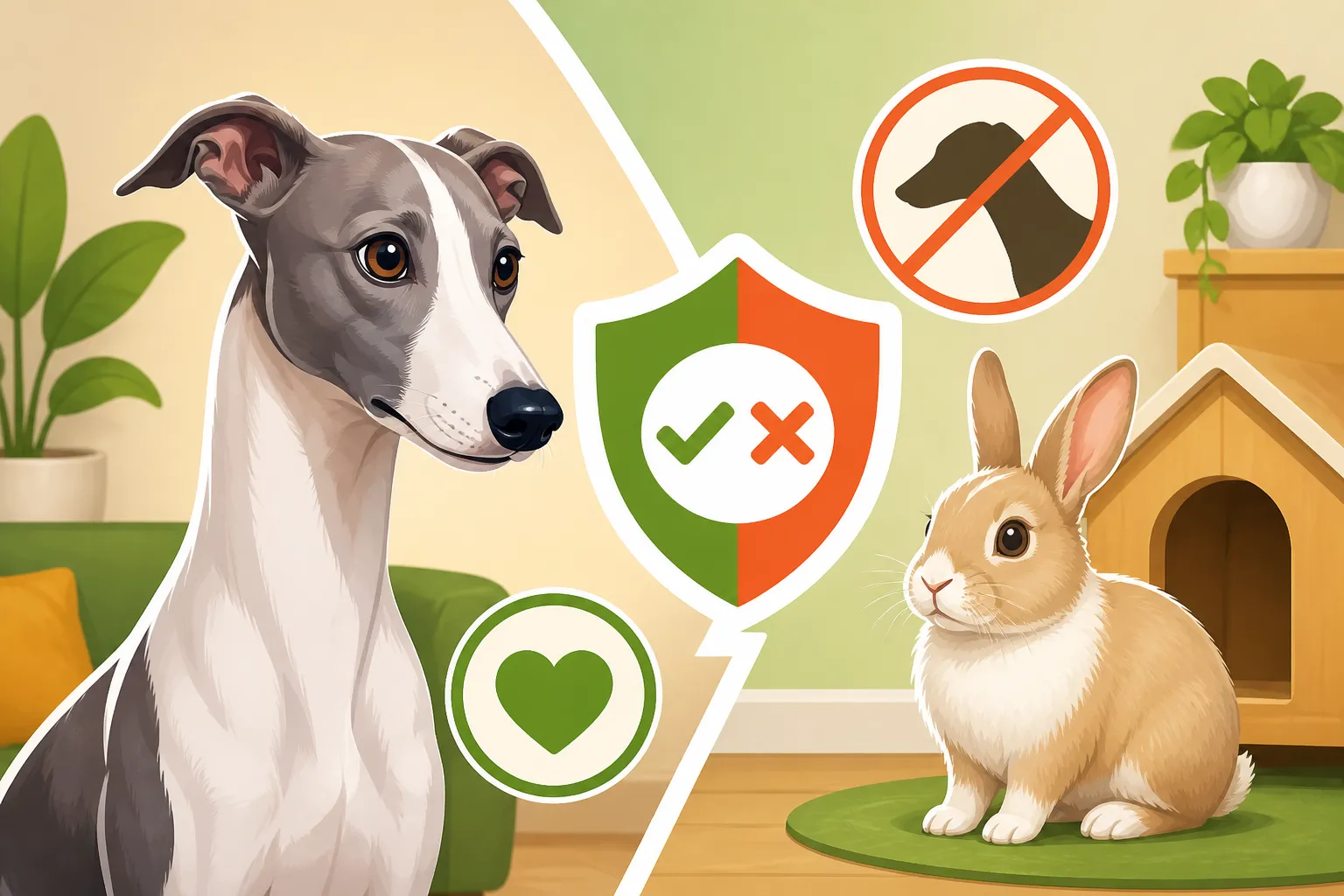
Bringing a Whippet into a home with a beloved pet rabbit often sparks a deep concern in owners: can these two very different animals truly live together safely? It’s a completely valid worry, as the Whippet’s natural instincts, honed over generations, can seem directly at odds with the delicate nature of a rabbit. This guide will delve into the complexities of this relationship, helping you understand the inherent risks and the stringent measures required if you're considering such a household.
The Whippet's Deep-Seated Prey Drive
Understanding a Whippet means understanding its heritage. These dogs were bred for speed and for chasing small, fast-moving prey. It’s not a behavior they learn; it’s hardwired into their very being, a powerful instinct that can be incredibly difficult to suppress, even with the best training in the world.
An Unbreakable Instinct for the Chase
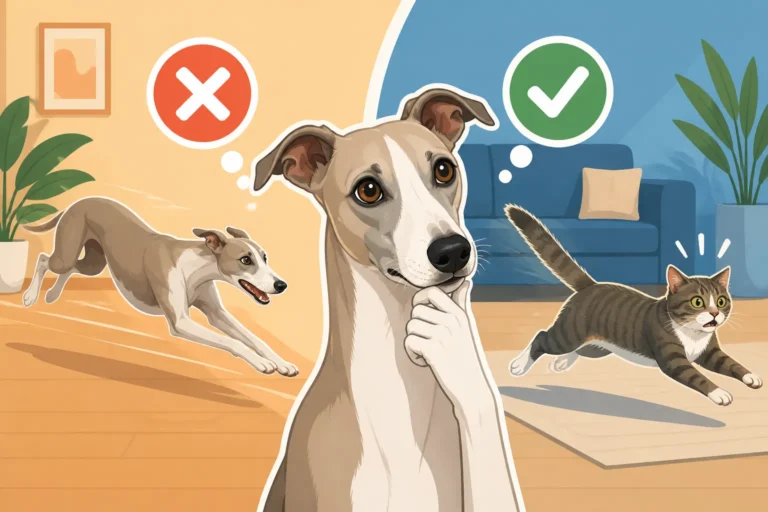
A Whippet isn't just a fast dog; it's a sighthound, meaning its primary hunting tool is its eyes, followed by incredible speed. They are built for spotting movement and giving chase, and a darting rabbit, with its sudden movements and small size, is a perfect trigger for this ancient drive. You might have the sweetest, cuddliest Whippet on your lap, but the moment a small animal bolts, that primal switch can flip. This isn't a sign of a "bad" dog; it's simply a testament to thousands of years of selective breeding. Owners often describe the feeling of their Whippet "locking on" when they see something moving, a focus so intense that nothing else seems to exist. Why a Whippet's Recall Fails Mid Chase is a stark reminder of this power.
Built for Speed and the Catch
Think about the Whippet's physique: lean, muscular, with powerful hindquarters and a flexible spine. Every aspect of their body is optimized for a sudden burst of speed and agility. They accelerate incredibly quickly from a standstill, and can achieve astounding speeds over short distances. This makes them incredibly efficient at what they were bred to do – catch small game. When a Whippet engages its full speed and focus, a rabbit stands little chance. It’s a sobering thought, but one that must be faced head-on when considering the safety of your rabbit. The gentle nature they show indoors with their humans is a stark contrast to the intensity of their chase instinct outdoors. What a Whippet Does When It Catches Something further illustrates this reality.
The Inherent Dangers of Whippet-Rabbit Coexistence
The core truth is that putting a Whippet and a rabbit together in an unsupervised or inadequately managed environment carries extreme and often fatal risks for the rabbit. It’s not about if your Whippet wants to hurt the rabbit, but if its instincts could take over, with devastating consequences.
The "Just One Incident" Reality
Many owners hope that with careful introductions, their Whippet will learn to distinguish their pet rabbit from prey animals outside. While some dogs might show indifference, relying on this is a gamble with incredibly high stakes. It only takes one moment, one sudden movement from the rabbit, one lapse in supervision, for tragedy to strike. Whippets, with their speed and powerful jaws, can inflict severe or fatal injuries in literally seconds. Even if the intention isn't to kill, a Whippet's instinct to grab and shake could easily break a rabbit's delicate spine or cause internal trauma. It’s not like a larger dog playing too rough; a Whippet's interaction, even if initially playful from the dog's perspective, can be lethal for a rabbit.
Unpredictable Triggers and Slippery Slopes
The problem with prey drive is its unpredictability. A Whippet might seem completely comfortable with the rabbit for weeks, months, or even years. Then, one day, a trigger could occur: the rabbit suddenly bolts, a toy squeaks nearby, the Whippet is startled, or simply a shift in their hormonal state. These moments are impossible to foresee or completely control. Furthermore, even seemingly minor incidents, like a Whippet persistently barking at the rabbit's hutch, can cause immense stress to a rabbit, leading to health issues. The continuous presence of a predator, even a contained one, can elevate a rabbit's baseline stress levels, impacting its immune system and overall well-being.
Mitigating Risks Through Strict Management
If you are absolutely committed to having both a Whippet and a rabbit, the only truly responsible approach is one of strict, unwavering management and separation. This isn't about training your Whippet to "like" the rabbit; it's about training your Whippet to tolerate its presence from a distance, and, more importantly, establishing an iron-clad barrier between them at all times.
Absolute Separation is Non-Negotiable
This is the golden rule. Your Whippet and your rabbit should live in entirely separate spaces where physical contact is impossible. This means a secure rabbit hutch that the Whippet cannot access, tip over, or break into. Ideally, the rabbit's hutch should be in a room that the Whippet is never allowed into, or at least on an elevated surface that is completely out of reach. For the Whippet, this means understanding boundaries. A sturdy crate can be a valuable tool for confinement when you cannot supervise, but it must be a safe, comfortable space for your Whippet, not a punishment. Whether a Whippet Can Be Crate Trained speaks to the benefits of proper crate training. You might consider an online resource like BAXTER & Bella for guidance on positive reinforcement crate training to make this a safe haven for your dog. For rabbit enclosures, look for heavy-duty, chew-proof designs on Amazon, ensuring latches are secure and bars are spaced too narrowly for a Whippet's nose or paws to fit through.
Supervised Interactions (With Extreme Caution)
I generally advise against direct, unsupervised interactions. If you choose to attempt any level of interaction, it must be under absolute, minute-by-minute, vigilant supervision, and it should always be done with the Whippet on a leash and, preferably, wearing a comfortable but secure basket muzzle. A properly fitted sighthound muzzle allows the dog to pant, drink, and even take treats, but prevents biting. You must be prepared to instantly intervene at the slightest sign of tension or heightened interest from the Whippet. Keep these sessions extremely short and always end on a positive, calm note. Remember, the goal isn't for them to be best friends, but for your Whippet to remain calm in the rabbit's presence. Teaching an Adult Whippet to Live With Cats offers some parallel insights into careful introduction techniques, though rabbits are often perceived as even higher prey.
Training and Desensitization with Realistic Expectations
While you cannot train away a Whippet's prey drive, you can work on impulse control and obedience. A rock-solid "leave it" command is essential. Practice this with high-value treats, gradually increasing distractions. A strong recall, even if it primarily works outside of a chase scenario, is also beneficial in a general safety context. Focus on teaching your Whippet to look at you for direction, rather than fixating on the rabbit. Positive reinforcement training is key for Whippets, as they are incredibly sensitive dogs. How a Whippet Learns When It Bruises From Pressure highlights their delicate nature. Resources like BAXTER & Bella's online training programs can provide structured guidance on impulse control exercises, helping your Whippet learn to disengage from tempting distractions. However, it is crucial to temper your expectations; these tools manage behavior, they do not erase instinct.
Creating a Secure Rabbit-Safe Environment
Beyond the main hutch, consider the entire environment. If the rabbit ever has free-roaming time, it must be in a completely separate, Whippet-proofed room. This means no gaps under doors, secure windows, and no shared access points. Elevated spaces or tunnels can also provide a sense of security for your rabbit, even if the Whippet is never in the same room. Think about how to enrich the rabbit's environment without creating opportunities for your Whippet to practice unwanted behaviors, such as staring intently at the hutch. Products available on Amazon, such as heavy-duty pet gates or even childproof locks for cabinets where rabbit supplies are kept, can help reinforce barriers.
Deciding If Coexistence Is Truly Possible for Your Household
Ultimately, the decision to house a Whippet and a rabbit together rests on your shoulders, but it requires a brutally honest assessment of your dog, your living situation, and your own capacity for vigilance.
Assessing Your Whippet's Individual Temperament
Every Whippet is an individual, even within the breed's general characteristics. Some Whippets might have a naturally lower prey drive than others. If your Whippet has a history of chasing or showing intense interest in small animals (squirrels, birds, neighborhood cats), then the risk to a pet rabbit is significantly higher. If your Whippet lives for the chase, finding joy and fulfillment in activities like lure coursing, that instinct is a powerful force. While How Lure Coursing Channels a Whippet's Drive can redirect some energy, it doesn't eliminate the underlying drive. Be honest about your Whippet's past behaviors and natural inclinations.
Your Capacity for Constant Vigilance
Living with both a Whippet and a rabbit safely demands an extraordinary level of commitment to separation and supervision. Can you honestly maintain this vigilance 100% of the time, for the entire lifespan of both animals? Are you prepared for the possibility of modifying your home extensively to create completely separate and secure living areas? For many busy households, the sheer demands of this constant management are simply not realistic. It might be a heartbreaking truth, but for the safety and well-being of both your Whippet and your rabbit, sometimes the kindest decision is to recognize when a multi-species household simply isn't a safe fit.
| Safety Measure | Description | Efficacy for Whippet-Rabbit Coexistence | Notes |
|---|---|---|---|
| Absolute Separation | Keeping animals in different rooms or securely caged/penned, with no shared access. | High | This is the foundation of safety. Ensure enclosures are escape-proof for the rabbit and intruder-proof for the Whippet. No exceptions for unsupervised time. |
| Supervised Interactions | Direct contact only with human present, Whippet leashed and muzzled. | Low to Moderate | Even with a muzzle, the stress on the rabbit can be high. Requires extreme vigilance. Never leave them alone, not even for a second. Consider if this is truly necessary for either animal's well-being. |
| Impulse Control Training | Commands like "leave it" and strong recall practiced regularly. | Moderate | Manages behavior but does not eliminate prey drive. Crucial for general obedience, but not a guarantee against instinct in a critical moment. Best used as a supplement to separation, not a replacement. Teaching a Whippet an Emergency Recall is vital here. |
| Enrichment for Whippet | Providing outlets for chase drive (e.g., lure coursing, flirt pole) away from the rabbit. | Moderate | Helps fulfill natural instincts but won't "cure" the prey drive. The rabbit will still be a trigger. |
| Rabbit-Proofing | Secure hutches, elevated spaces, escape-proof rooms for the rabbit. | High | Prevents accidental encounters and gives the rabbit a safe haven. Consider materials that can withstand a determined Whippet. |
Disclaimer
This article is for general informational purposes only and does not constitute professional advice. Laws, prices and regulations vary by location and change over time. Consult a qualified professional for guidance on your specific situation.