Why a Whippet Chases Every Cat but Its Own
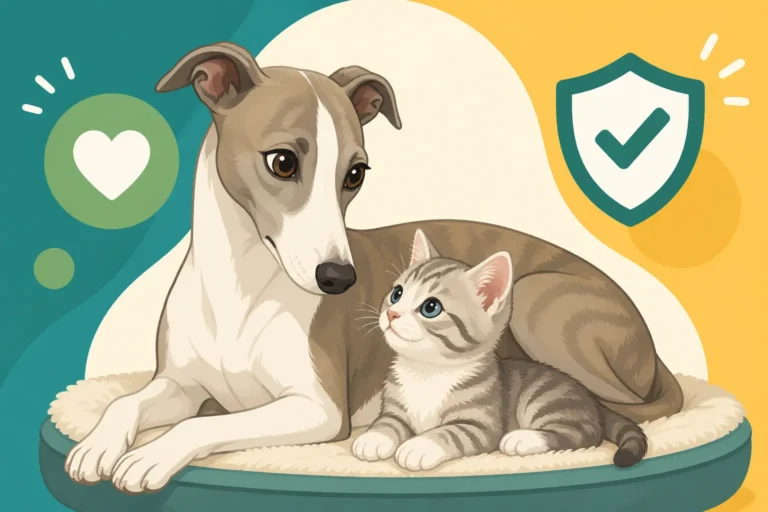
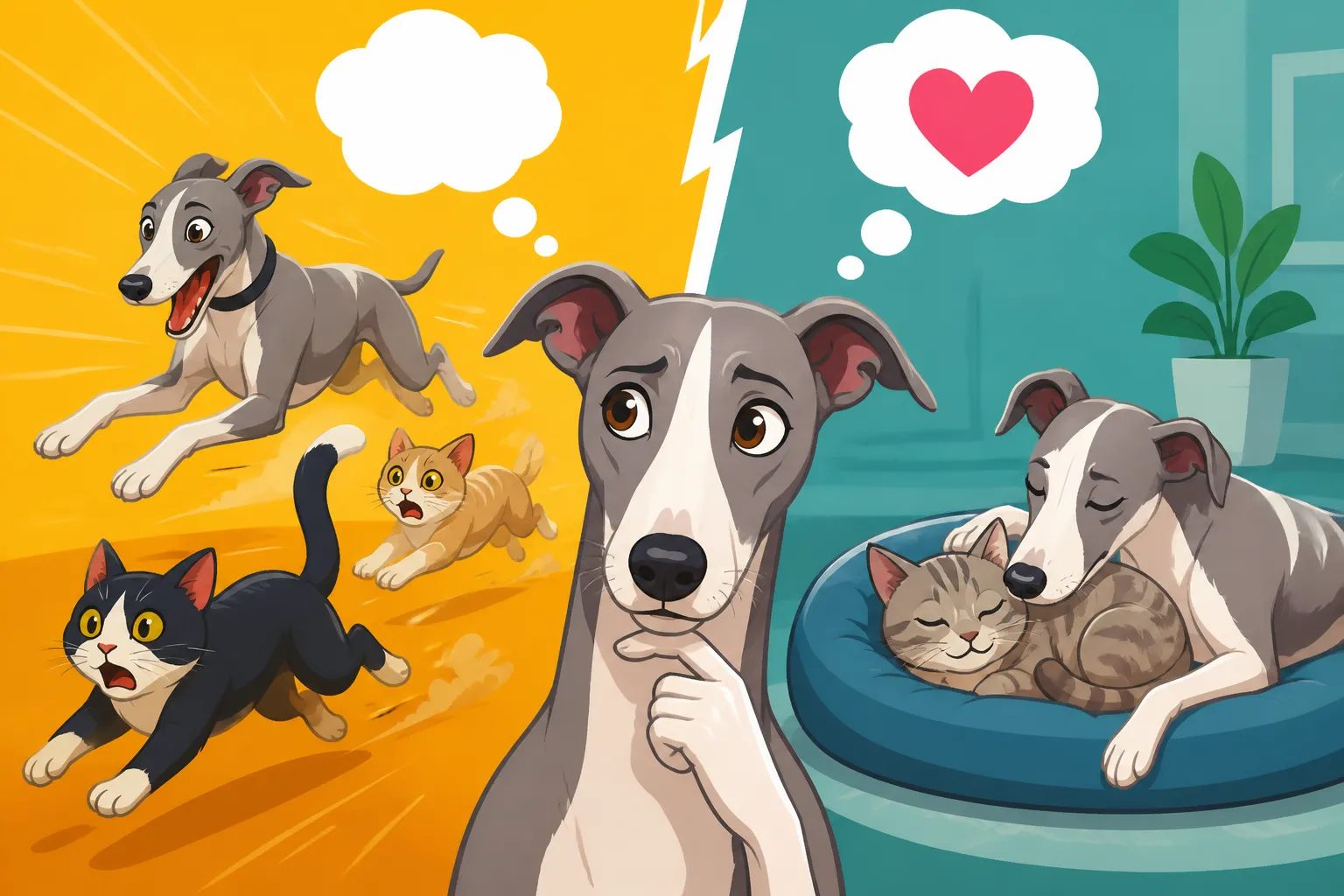
It's a perplexing and often frustrating reality for many whippet owners: your beloved sighthound lives in perfect harmony with your resident feline, perhaps even curling up together for naps, only to transform into a relentless predator the moment it spies a neighborhood cat outside. This isn't just a quirk; it's a deeply ingrained instinct that can cause a lot of stress and even danger. This guide will delve into why this dual personality exists, how whippets differentiate between "their" cat and "other" cats, and practical strategies to manage their powerful prey drive in the big, wide world.
Understanding the Whippet's Instinctual Drive
To truly grasp why your whippet might be a purring cat's best friend indoors and a sprinting terror outdoors, we need to understand the very essence of what makes a sighthound tick. It's not malice; it's millennia of selective breeding for a specific purpose.
The Sighthound's Prey Drive
Whippets, like all sighthounds, were bred to hunt by sight. Their entire physique—sleek build, deep chest, long legs, and incredible acceleration—is designed for a lightning-fast pursuit of moving objects. This isn't about aggression; it's about a hardwired chase response. When something small and furry moves quickly across their field of vision, particularly if it's darting or attempting to flee, it triggers an irresistible urge to pursue. This prey drive is a powerful, primal instinct, a genetic blueprint that's incredibly difficult, if not impossible, to erase completely. It's the same instinct that makes them excel at activities like lure coursing and Fast CAT, where they can safely channel this natural urge. Why a Whippet's Chase Instinct Overrides Its Recall
For an outdoor cat, especially one that's not your own, every darting movement, every dash across the yard, every leap over a fence, screams "prey!" to a whippet. It's a game of chase that they're genetically programmed to win, and the thrill of the pursuit can be all-consuming. This instinct is often what makes their recall so unreliable when a real-life trigger appears.
"My Cat" vs. "That Cat" – A Different Perception
So, if whippets have such a strong prey drive, how do so many of them live peacefully with their own household cats? The key lies in perception and learned behavior within a controlled environment. A whippet learns early on, through consistent exposure and careful management, that the resident cat is part of the "family group" and not prey.
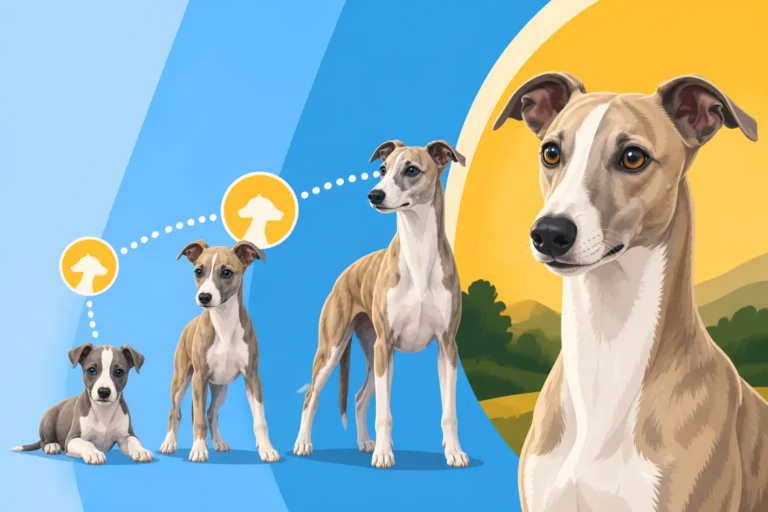
This distinction usually begins when the whippet is a puppy. They learn the cat's smell, its body language, and, crucially, that chasing the house cat leads to negative consequences (like being interrupted by you, or perhaps the cat delivering a well-deserved, harmless swipe). They learn that the cat isn't a "moving target" in the same way an outdoor creature is. The house cat might not dart away suddenly in fear, or if it does, it quickly reaches a safe perch where the chase ends abruptly. This teaches the whippet that "this cat" is off-limits and not worth the effort or the potential scolding. It's a form of desensitization and counter-conditioning, where the presence of the family cat is associated with calm behavior and positive reinforcement, rather than the thrill of the chase. Introducing a Whippet Puppy to a Resident Cat
The Dynamics of Coexistence: Raising a Whippet with Cats
Successfully integrating a whippet with a feline housemate, and then managing its interactions with the outside world, requires intentional effort and understanding of their unique nature.
Early Introduction and Management
The golden rule for whippets and cats living together is early, supervised introduction. Ideally, a whippet puppy should be introduced to a calm, cat-savvy adult cat. This allows the puppy to learn appropriate behavior from a young age, before its prey drive fully matures. Supervision is paramount during these initial stages. Think leashes, baby gates, and plenty of safe, elevated spaces for your cat to escape to. You want to set up scenarios where the whippet can observe the cat calmly, perhaps from a distance, and be rewarded for not chasing. Positive reinforcement is key – lots of praise and tasty treats for ignoring the cat or for gentle interactions.
It's about creating a foundation of respect. A program like BAXTER & Bella offers online puppy training that can help you establish these foundational commands and positive associations, which are crucial for teaching a whippet appropriate behavior around all members of the household, furry or otherwise. Remember, a whippet that learns impulse control indoors has a better chance of generalizing some of that learning to other situations, even if the outdoor world presents different challenges.
Establishing Boundaries and Safe Zones
Even with the best introductions, every cat needs a safe haven, a place where it can truly escape the dog. This is non-negotiable for a peaceful multi-species household. Consider cat trees that reach the ceiling, shelves mounted high on walls, or even an entire room blocked off with a pet gate that has a small cat-sized door. These safe zones allow your cat to relax without constantly being on high alert, which in turn can prevent them from displaying fear-based behaviors that might inadvertently trigger your whippet's chase instinct.
You can find excellent multi-level cat trees and wall-mounted shelves on Amazon that provide these vertical escapes. The goal is to empower your cat, ensuring they never feel trapped or excessively stressed. A confident cat is less likely to bolt in a way that ignites a whippet's chase drive. Teach your whippet to respect these cat-only areas, possibly by rewarding them for staying out of them.
Training for Impulse Control
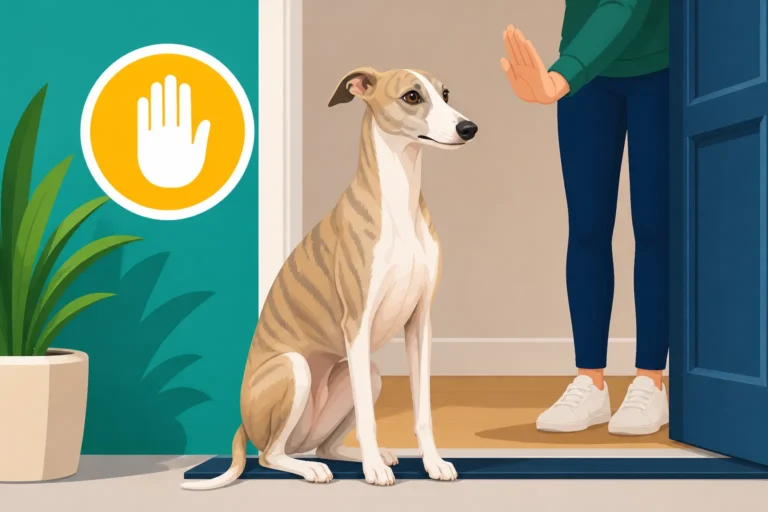
Beyond simply not chasing the house cat, specific training for impulse control is incredibly valuable. Commands like "Leave It" and "Look at Me" are essential tools in your training arsenal. Practice "Leave It" with tempting objects on the floor, gradually increasing distractions. When you practice this around your indoor cat, you are reinforcing the idea that ignoring the cat in motion brings rewards from you. "Look at Me" helps you redirect your whippet's attention away from a potential trigger and back to you, which is a vital skill.
The challenge, however, is that while a whippet might master these commands perfectly in the calm, predictable environment of your home with your cat, the outdoor world presents a far more chaotic and stimulating scenario. The heightened excitement and novelty of an unknown cat fleeing across a wide-open space often override even the most well-practiced commands. This isn't a failure of your training, but rather a testament to the immense power of their ingrained drive.
Managing the Outdoor Challenge: Protecting Roaming Cats
The leap from peaceful indoor cohabitation to safe outdoor encounters is where many whippet owners face their biggest hurdles. It's a different game entirely.
Why the Indoor Rules Don't Apply Outdoors
The moment your whippet steps outside, the rules change. The familiar scents, sounds, and boundaries of your home are gone, replaced by a vast, dynamic environment teeming with new stimuli. An outdoor cat is perceived entirely differently. It's often an unknown entity, moving with different body language, perhaps fleeing immediately, and the chase often occurs over a greater distance. There's no immediate human intervention, no familiar safe space for the cat to vanish into, and the ground offers endless possibilities for an exhilarating sprint.
This isn't your whippet being "naughty"; it's their sighthound genetics taking over in a classic hunting scenario. The chemical rush of the chase, the pure joy of the sprint, is incredibly reinforcing. It's like asking a fish not to swim when it sees water. Their instinct to chase is far more powerful when there are no pre-existing social rules or boundaries established with that specific cat. Why a Whippet's Recall Fails Mid Chase
Strategies for Safe Outdoor Walks
Given the intensity of their prey drive, the most important rule for walking a whippet where there might be other cats is this: always keep them on a leash. No exceptions. Even if your yard is fenced, a whippet's incredible athleticism means they can clear surprising heights if motivated enough. How High a Whippet Clears a Fence A secure, well-fitting harness or a martingale collar is essential to prevent them from slipping out if they suddenly lunge. Whether a Whippet Needs a Martingale
When walking, be vigilant. Scan ahead for potential triggers – not just cats, but squirrels, rabbits, or even blowing leaves that might mimic a small animal. Being proactive means you can often intervene before your whippet spots something, either by changing direction, using your "Look at Me" command, or providing a high-value treat to redirect their attention. If you have access to a fully enclosed, double-fenced private area, a long line can allow your whippet to stretch their legs and sprint safely, but never trust them off-leash in an unfenced or insecure area where cats might roam.
Addressing the "Other Cat" Syndrome
It's critical to accept that you may never completely eliminate your whippet's desire to chase an unfamiliar cat outdoors. The goal shifts from eradication to management and prevention. Continue to work on impulse control commands, especially "Leave It" and "Focus" (or "Look at Me"), in increasingly distracting environments. If you spot a cat, immediately engage your whippet with a game or a treat, breaking their focus before they lock onto the feline.
It's our responsibility as whippet owners to protect other animals from our dogs' natural instincts. This means keeping them securely contained, always leashed outside, and being proactive in preventing chase scenarios. While it might feel limiting, it ensures the safety and well-being of both your whippet and the community's cats.
When Prevention Isn't Enough: What to Do
Even with the best intentions and training, situations can arise where your whippet's prey drive takes over. Knowing how to react is crucial.
Emergency Recall and Deterrents
The most vital tool for any whippet owner is an absolutely bombproof emergency recall. This isn't just a regular "come" command; it's a command reserved only for life-or-death situations, always associated with the highest value rewards imaginable – think cooked chicken, cheese, or hot dogs. Practice it diligently in a safe, enclosed area, and never overuse it. The idea is that when you use it, your whippet drops everything and races back to you because the reward is so irresistible. Teaching a Whippet an Emergency Recall
In a moment of high prey drive, shouting or punishing your whippet will likely be ineffective and can even damage your bond. Instead, focus on redirection. If they are about to chase, a loud, unexpected noise (like clapping your hands sharply) might briefly break their focus, giving you a split second to leash them or redirect their attention. However, relying on this is risky; prevention is always the best course of action.
Professional Guidance
If you find yourself consistently struggling with your whippet's prey drive, especially if it's causing significant stress or safety concerns, don't hesitate to seek professional help. A certified professional dog trainer or a veterinary behaviorist experienced with sighthounds can provide tailored strategies and support. They can assess your specific situation, offer advanced training techniques, and help you understand how to manage your whippet's instincts in the most humane and effective way possible.
It's important to choose a trainer who uses positive, force-free methods. Whippets are incredibly sensitive dogs; harsh corrections or punitive training methods can easily shut them down, making the problem worse and potentially leading to fear-based behaviors. Why Harsh Handling Ruins a Whippet A good professional will help you work with your whippet's instincts, not against them, ensuring a happier and safer life for everyone involved.
Indoor vs. Outdoor Cat Interaction
Here’s a quick overview of how a whippet’s interaction with cats typically differs between inside your home and outside.
| Feature | Indoor Cat (Resident) | Outdoor Cat (Stranger) |
|---|---|---|
| Relationship | Part of the "pack," familiar, often desensitized | Unknown, perceived as potential prey |
| Trigger Response | Learned inhibition, controlled chase (if any), redirected | Strong, instinctive prey drive, full-speed pursuit |
| Environmental Context | Familiar, structured, human-controlled boundaries | Unpredictable, open space, high stimulation |
| Human Intervention | Easier to manage, consistent redirection/reward | More challenging, often requires immediate, strong intervention |
| Cat Behavior | May stand its ground, use safe spaces, familiar movements | Likely to flee, dart, hide; erratic movements |
| Safety Risk | Low, with proper management | High, for both whippet (traffic) and cat |
Disclaimer
This article is for general informational purposes only and does not constitute professional advice. Laws, prices and regulations vary by location and change over time. Consult a qualified professional for guidance on your specific situation.