How Fast a Whippet Actually Runs
Anyone who has ever seen a Whippet in full flight understands the sheer poetry of motion. These dogs are built for speed, a blur of muscle and grace, leaving you wondering if you actually saw them, or if it was just a trick of the light. But beyond the impressive visual, many of us wonder: how fast do they actually run? This guide will dive deep into the incredible athleticism of the Whippet, exploring not just their top speeds, but also what makes them so quick, and the practical implications this has for living with these magnificent, speedy companions.
The Raw Numbers Behind Whippet Speed
When we talk about a Whippet's speed, it's easy to conjure images of them rocketing across a field. And honestly, those images aren't far from the truth! But there's a difference between a burst of incredible acceleration and sustained speed, and understanding these nuances is key to appreciating just what these dogs are capable of.
Top Speed vs. Average Running Speed: The Difference in a Sprint
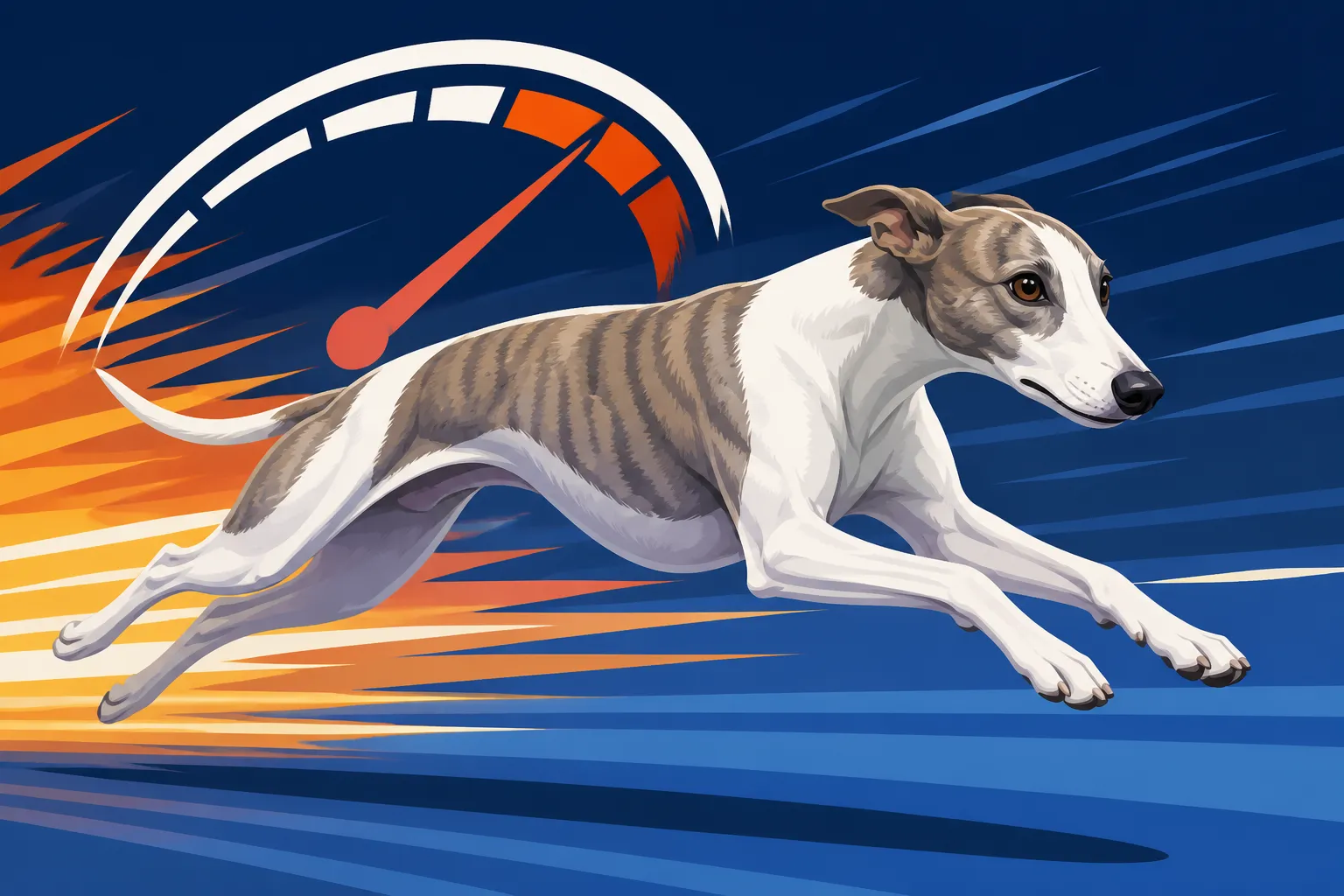
Let's get straight to it: a fit, motivated Whippet can hit speeds that will absolutely astound you. We're talking about a top speed easily reaching 35 miles per hour (around 56 kilometers per hour) in a full-out sprint. Some have even clocked in closer to the 40 mph mark under optimal conditions, like on a perfectly groomed lure coursing track with a strong prey drive fueling their run. Imagine that for a moment – a dog roughly the size of a medium terrier, hitting highway speeds! It's less like watching a dog run and more like watching a greyhound-shaped missile launch itself across the landscape.
However, it’s crucial to understand that these impressive figures represent a sprint. This isn't their cruising speed for a leisurely jog around the block. Just like an Olympic sprinter can hit incredible speeds for 100 meters but wouldn't sustain that pace for a marathon, a Whippet's top speed is reserved for short, explosive bursts. They are masters of acceleration, reaching their peak speed incredibly quickly, but they aren't built for long-distance endurance at those velocities. Their typical playful zoomies in the yard might see them hitting 20-25 mph in bursts, which is still incredibly fast, but not their absolute maximum.
Comparing Whippet Speed to Other Breeds
When you put a Whippet's speed into context with other breeds, their athleticism truly shines. Of course, the Greyhound is the undisputed king of canine speed, often exceeding 40-45 mph. But the Whippet, often referred to as the "poor man's racehorse" or a "miniature Greyhound," holds its own incredibly well, especially over shorter distances. You might be surprised to learn that Whether a Whippet Outruns a Greyhound Over a Short Distance can sometimes be a real debate, with the Whippet's explosive start giving them an edge in very short dashes.
Compared to other sighthounds like the Saluki or Afghan Hound, Whippets are generally quicker in the initial burst, though those breeds might have slightly more stamina over longer distances. Non-sighthound breeds, even those considered "fast" like Border Collies or German Shepherds, simply can't compete with a Whippet's pure straight-line speed. It’s a different kind of fast. Those breeds are often built for agility, endurance, and herding, requiring rapid changes in direction and sustained effort, while the Whippet is engineered for pure, unadulterated velocity in a straight line, like a finely tuned racing machine.
Here's a quick look at general speed comparisons (these are estimates and can vary greatly by individual dog):
| Breed | Typical Top Speed (MPH) | Primary Running Style | Noteworthy Trait |
|---|---|---|---|
| Greyhound | 40-45+ | Sprint, distance runner | World's fastest dog |
| Whippet | 35-40 | Explosive sprint | Incredible acceleration, compact size |
| Saluki | 30-35 | Endurance, long distance | Elegant, desert runner |
| Afghan Hound | 30-35 | Endurance, agile | Powerful, good stamina |
| German Shorthaired Pt | 30-35 | Field work, agile | Athletic, high energy |
| Labrador Retriever | 25-30 | Strong swimmer, decent runner | All-around athlete |
This table really highlights the Whippet's exceptional sprint ability. They're not just fast for their size; they're genuinely one of the fastest dog breeds on the planet, full stop.
The Anatomy of a Whippet Built for Speed
It’s no accident that Whippets are so incredibly fast. Every aspect of their physical design, from their skeletal structure to their powerful musculature, has been honed over generations for one primary purpose: speed. They are a triumph of canine engineering, a living example of form meeting function in the most spectacular way.
The Sleek, Aerodynamic Body
Look at a Whippet, and you're looking at a masterpiece of aerodynamic design. Their entire body is built to cut through the air with minimal resistance. They possess a deep chest that houses powerful lungs and a large heart, vital for oxygenating their muscles during intense bursts of activity. This deep chest then tapers dramatically into a finely tucked abdomen, often referred to as a "wasp waist." This not only contributes to their lightweight build but also allows for an incredible range of motion in their back, which is crucial for their distinctive running style.
Their elegant, muscular neck flows seamlessly into a long, flexible back that arches gracefully over the loin, creating what is known as a "roach" or "arch" over the back. This arch is not just for aesthetics; it's a spring-like mechanism that coils and extends, propelling them forward with immense power. Why the Whippet Standard Cares So Much About the Topline isn't just about appearance in the show ring; it's about preserving the functional attributes that make a Whippet a true athlete. Their long, lean legs are perfectly straight, ending in compact, hare-like feet that provide excellent traction and shock absorption. There's no excess bulk, no wasted energy – just pure, streamlined efficiency.
Powerful Musculature and Unique Gait
Beneath that thin, velvety skin lies a dense network of powerful, yet incredibly flexible, muscles. Whippets are known for their well-defined musculature, especially across their thighs and hindquarters. This is where a huge amount of their propulsive power comes from. The genetics of the Whippet also play a fascinating role in their muscle development. While not all Whippets carry the "bully" gene mutation, the myostatin gene in general is critically important for muscle growth and development. What Myostatin Does in a Whippet is to regulate muscle mass, and even in Whippets without the specific "bully" mutation, their natural myostatin expression contributes to their lean, powerful build.
The way a Whippet runs is called a "double suspension gallop." This is the fastest gait for any dog, and it's what allows them to reach such incredible speeds. In a double suspension gallop, there are two points during each stride where all four feet are off the ground. First, when their legs are gathered beneath their body in full flexion (like a coiled spring), and second, when their legs are fully extended, reaching both forward and backward, stretching their body to its absolute maximum length. This incredible extension and flexion, combined with the powerful thrust from their hind legs, allows them to cover an enormous amount of ground with each stride, essentially flying for brief moments. It's a breathtaking display of biomechanical efficiency, turning their lean frame into a spring-loaded catapult.
The Whippet's Instinctual Drive to Chase
A Whippet's speed isn't just about their physical build; it's deeply intertwined with their inherent instincts. These dogs were bred for centuries to hunt by sight, and that strong prey drive is a fundamental part of who they are, influencing every aspect of their behavior when something catches their eye.
Prey Drive and the Lure of Movement
Sighthounds, by definition, hunt primarily using their vision. For a Whippet, a small, fast-moving object — be it a squirrel, a rabbit, a blowing leaf, or even a plastic bag tumbling across a field — triggers an almost irresistible urge to chase. This isn't naughtiness; it's instinct, hardwired into their genetic code. They see it, they lock on, and the chase is on. Their exceptional acceleration means that by the time you've even registered what they're chasing, they can be a significant distance away, rapidly gaining speed.
This powerful prey drive is precisely Why a Whippet's Chase Instinct Overrides Its Recall. In the heat of the moment, with that exhilarating pursuit instinct taking over, even the most perfectly trained recall can fall apart. The world narrows to that single, fleeing object, and the sound of your voice, the thought of a treat, or anything else you've taught them simply fades into the background. It's not that they don't love you or respect your commands; it's that this ancient, deeply ingrained instinct is a force of nature that can be incredibly difficult, if not impossible, to overcome in certain situations. This is why managing a Whippet in an open, unfenced area is such a high-stakes endeavor.
Training for a Safe Outlet: Lure Coursing and Fast CAT
Understanding this powerful prey drive isn't about trying to extinguish it – which is largely futile and unkind to the dog – but about channeling it into safe, appropriate outlets. This is where sighthound sports like lure coursing and Fast CAT truly shine. These activities are designed to mimic the chase of live prey, using an artificial lure (often a plastic bag) that is pulled across a field at high speeds.
Lure coursing events, for instance, allow Whippets to run full-out, exercising both their bodies and their minds in a controlled environment. They get to engage that deep-seated instinct to chase, sprint, and corner, all without the risk of encountering real wildlife or running into danger. It's pure joy for them, and watching them participate is equally exhilarating for their owners. How Lure Coursing Channels a Whippet's Drive is a fantastic way to satisfy their natural desires and ensure they remain happy and well-adjusted pets.
Fast CAT (Coursing Ability Test) is another popular option, offering a simpler straight-line sprint of 100 yards, again after a lure. Many Whippets absolutely adore it. Whether Fast CAT Suits a Whippet is often a resounding yes, as it plays directly to their strengths: blistering acceleration over a short distance. To get involved, you might find equipment like long lines or training aids for these sports on platforms like Amazon, helping you prepare your dog or participate in local events. These organized activities are more than just hobbies; they're essential for the well-being of a breed so genetically predisposed to the thrill of the chase.
Real-World Implications of Whippet Speed
Living with a dog capable of reaching such incredible speeds comes with a unique set of responsibilities and considerations. What’s an exhilarating burst of speed for them can become a terrifying emergency for you if not properly managed. This isn't a breed you can casually let off-leash just anywhere.
The Critical Need for a Secure Running Space
Because of their speed and prey drive, a safe, securely fenced area is absolutely non-negotiable for a Whippet to run off-leash. This means a fence that is tall enough to deter jumping (Whippets aren't typically jumpers, but never say never when motivation is high!) and secure enough to prevent squeezing under or through. A small gap can become an escape route in a split second when a squirrel darts by.
The moment a Whippet hits top speed, they cover ground with astonishing rapidity. If they spot something to chase in an unfenced park, a seemingly vast open field can shrink to nothing in mere seconds, putting them in the path of roads, other hazards, or simply out of your reach. This is precisely Why a Whippet Cannot Be Let Off Leash in an Open Field unless it is specifically designated and proven to be safe for sighthounds. Even then, constant vigilance is required. Many Whippet owners seek out private, rented dog fields or participate in organized sighthound events to give their dogs the freedom to stretch their legs without putting them at risk. Their speed is a gift, but it also means their boundaries need to be much clearer and more robust than many other breeds.
The Challenge of Recall and Long Line Training
Given the powerful instinct to chase, achieving a 100% reliable off-leash recall in an environment with distractions is an ongoing challenge for many Whippet owners. While positive reinforcement and consistent training are vital, it's realistic to acknowledge that their prey drive can, and often will, override even the best-practiced commands when a strong enough stimulus appears. This isn't a failure of training; it's a testament to their inherent nature.
Therefore, for times when your Whippet needs more freedom than a standard leash allows but isn't in a fully secure area, a long line (or long leash) becomes an invaluable tool. These can be 20, 30, or even 50 feet long, allowing your Whippet to gallop and explore a wider radius while still giving you the ability to intervene. You can find excellent quality long lines on Amazon, suitable for different terrains and weather. Training with a long line takes practice for both you and your dog, ensuring they learn to respond to the pressure and the sound of your voice even at a distance. It's a continuous process, and understanding How Far a Whippet's Recall Can Be Trusted realistically means acknowledging its limitations in high-distraction scenarios. Training platforms like BAXTER & Bella often emphasize positive, consistent reinforcement techniques that are particularly effective for sensitive breeds like Whippets, building a strong bond and a foundation of responsiveness, even if the prey drive remains powerful.
Managing Energy and Preventing Injury
Despite their incredible speed, Whippets aren't endurance athletes in the same vein as many sporting breeds. They are sprinters, and their exercise needs reflect this. Understanding how to properly channel their energy and prevent common injuries is crucial for their long-term health and happiness.
Sprinting vs. Endurance: Understanding Their Exercise Needs
It's a common misconception that because a Whippet can run so fast, they need hours upon hours of high-intensity exercise every day. The truth is, they're often referred to as "40-mile-an-hour couch potatoes" for a reason! They thrive on short, explosive bursts of speed, followed by long periods of rest and relaxation. A couple of good sprints in a safe, enclosed area, or a spirited game of fetch where they can truly open up, might be all the high-intensity exercise they need for the day.
After these intense sessions, you'll often find them curled up on the sofa or in their bed, conserving energy. They are not dogs that typically enjoy or even tolerate long-distance running companions, especially at a human's jogging pace. That type of sustained, moderate-intensity exercise isn't what their bodies are built for and can actually be more taxing on their joints and muscles than short, fast bursts. How Much Exercise a Whippet Really Needs is often less about duration and more about intensity and quality, allowing them to express their natural athleticism without overdoing it. A typical day for many Whippets involves a few brisk walks and one or two opportunities for a proper sprint.
Safety Considerations for High-Speed Activities
Given their speed and delicate frame, preventing injuries is paramount. Whippets have thin skin and very little body fat, which makes them prone to skin tears and other injuries, especially when running at high speeds or over rough terrain. They are not built for crashing through dense brush or navigating rocky trails at full tilt.
Before allowing your Whippet to engage in any high-speed activity, a proper warm-up is essential. Just like human athletes, a Whippet's muscles need to be warm and supple to prevent strains and pulls. A brisk walk or a gentle jog for 5-10 minutes can significantly reduce the risk of injury. Warming Up a Whippet Before It Runs should be a non-negotiable part of their exercise routine. Similarly, a cool-down period of walking is important to help their muscles recover.
Surfaces also matter enormously. Running on slick surfaces, like wet grass or icy patches, can lead to serious injuries. The Muscle a Whippet Tears Sliding on Wet Grass is often the gracilis or other soft tissue in the hind leg, which can be a painful and lengthy recovery. Hard surfaces like asphalt or concrete can be hard on their joints over time, especially during sprints. Soft, even ground, like a well-maintained grass field or a sandy area, is ideal for allowing them to run safely. Always inspect the running area for hidden hazards like holes, sharp objects, or uneven terrain. Their incredible speed, while beautiful, requires vigilant management to keep them safe.
Disclaimer
This article is for general informational purposes only and does not constitute professional advice. Laws, prices and regulations vary by location and change over time. Consult a qualified professional for guidance on your specific situation.