How a Whippet’s Roach Affects Its Speed
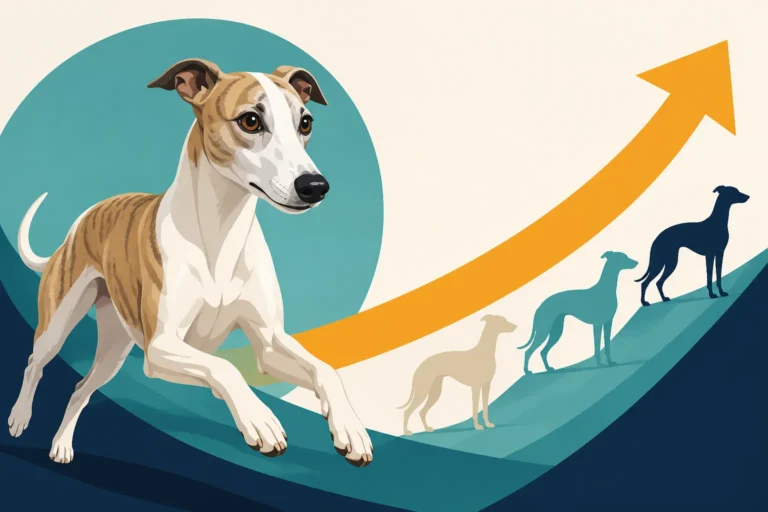
A Whippet’s arched loin can look like a built-in speed advantage, but the curve alone does not make a dog fast. The more useful question is how the topline works with the spine, muscles, stride, and gallop. This guide explains what a Whippet’s roach means, what it can and cannot tell you about speed, and when a change in your dog’s back deserves attention.
What a Whippet’s roach actually means
The normal arch over the loin
People often call a Whippet’s curved back a “roach,” but that word can mean different things. Some owners use it casually for the characteristic arch over the loin—the part of the back between the last ribs and the pelvis. Others use it to describe a pronounced hump or a topline that looks unusual. Those are not necessarily the same thing.
A Whippet is not meant to have a completely level topline. The breed’s outline includes a slight rise over the loin, with a strong, flexible back and well-developed muscles. The arch should be understood as part of the whole body, not as a raised bump that works independently of the rest of the dog.
That distinction matters because a Whippet can look distinctly curved while standing still without having an abnormal back. Conversely, a dramatic-looking outline does not automatically mean the dog has a better or faster-running structure. The What the Whippet Standard Says About the Arch and Why the Whippet Standard Cares So Much About the Topline explore how the breed’s outline is assessed.
A useful arch is not an exaggerated hump
A fit Whippet may show a visible curve over the loin, especially when standing alert or stretching into a gallop. The shape can look more or less pronounced depending on the dog’s posture, muscle, body condition, and angle of view. A photograph taken mid-stride can make the arch appear stronger than it does when the dog is relaxed.
An exaggerated hump, a sudden change in the back’s shape, or a dog that seems stiff or uncomfortable is a different matter. A topline that has changed over time may reflect pain, injury, muscle loss, or another health concern rather than a breed feature. Look at how the dog moves and behaves, not just the silhouette.
The terms “arched,” “roached,” and “humped” are sometimes used loosely in conversation, which can make it hard to compare observations. If you are trying to understand your own dog’s shape, a veterinarian or experienced Whippet breeder can assess the dog standing and moving. The discussion in Whether a Whippet's Back Should Be Roached may also help clarify what people mean by the term.
How posture changes what you see
A Whippet’s topline can look different from one moment to the next. When standing naturally, the dog may carry the back in a relaxed line with a gentle rise over the loin. When alert, turning, or gathering itself to run, it may tighten its abdominal and back muscles, making the curve more noticeable.
A still image can also be misleading. A dog captured as its hindquarters push off may show a compressed, rounded outline; a dog at full extension may look much longer and flatter. Neither frame, by itself, tells you whether the dog has a useful topline or how fast it can run.
For a fair assessment, observe the dog from the side at a walk and trot, then watch its movement at a safe, self-chosen run. Do not try to judge speed or structure from one posed photo. Even experienced observers need to consider the whole dog, including its balance, limbs, muscle, and comfort.
How the arch relates to a Whippet’s speed
The spine contributes to the gallop
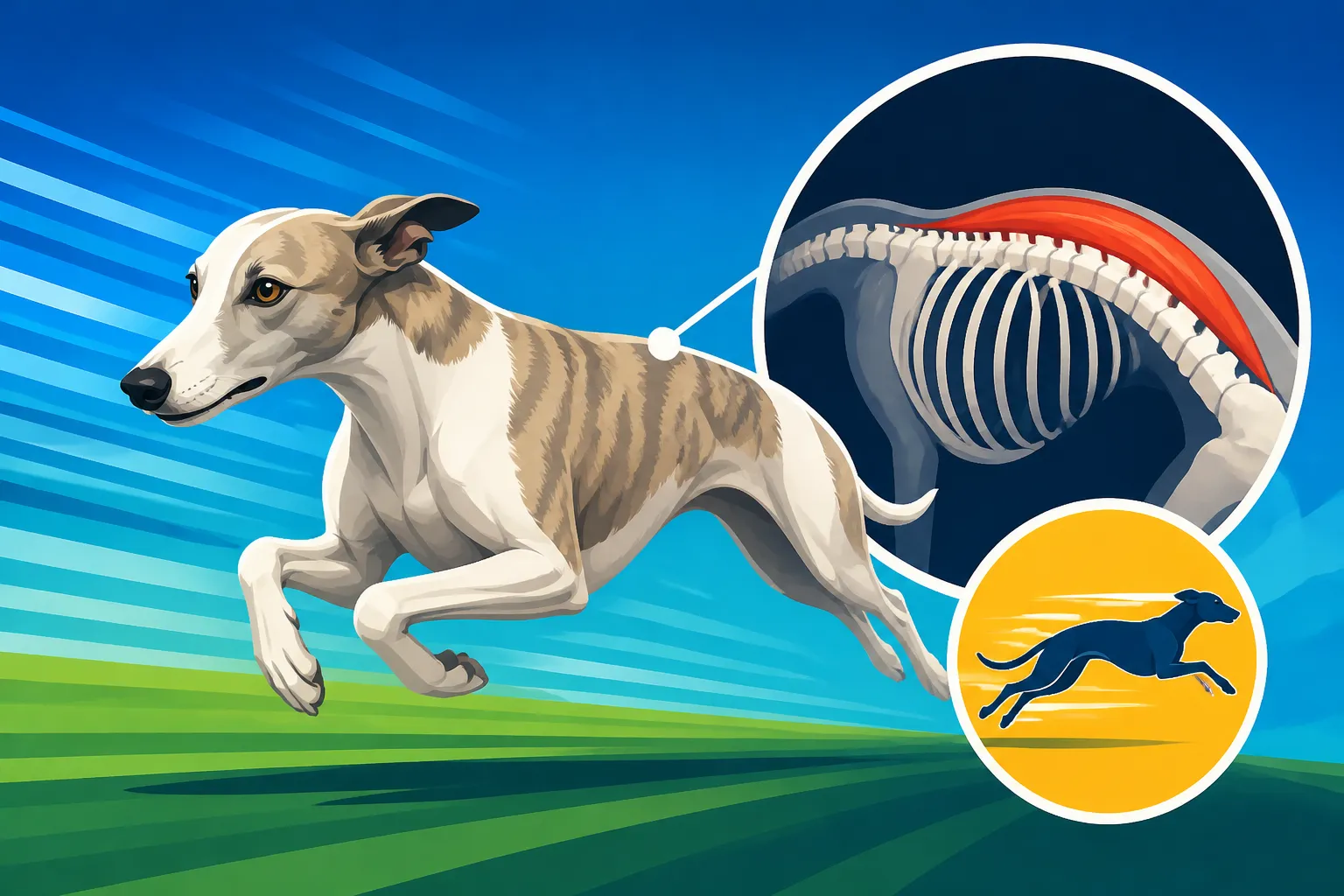
A Whippet’s speed comes from coordinated movement across the whole body. During a gallop, the spine flexes and extends as the legs gather beneath the body and then reach forward and backward. The back and loin muscles help stabilize the trunk and transfer force between the forequarters and hindquarters.
That movement can help a running dog lengthen its stride. But it is not as simple as “more arch equals more speed.” A visible arch while standing is not a direct measurement of spinal flexibility, stride length, strength, or athletic ability. The dog’s speed depends on many interacting factors, including limb structure, muscle condition, coordination, motivation, health, and the surface underfoot.
A Whippet with a balanced, functional body may run very differently from another dog with a similar-looking topline. One might accelerate smoothly and maintain good coordination; the other might be less fit, less interested in chasing, or recovering from an old injury. The How Fast a Whippet Actually Runs guide looks at speed as a performance question rather than a feature you can predict from one body shape.
Flexibility matters more than appearance alone
The spine needs enough mobility for an efficient gallop, but it also needs strength and control. A back that moves smoothly as part of coordinated running is different from a back that looks unusually curved because the dog is tense, sore, or shifting weight away from a painful limb.
When a Whippet runs freely, the body may visibly compress and extend. This is normal athletic movement, not proof that the dog has a “better roach.” If the dog appears uneven, shortens its stride, repeatedly changes gait, or is reluctant to run, stop the activity and consider whether discomfort or fatigue may be involved.
Do not use forced sprinting to test a dog’s back. A safe, enclosed area gives a Whippet room to move without the danger of traffic, while a gradual warm-up helps prepare muscles and joints. For more on preparing for activity, see Warming Up a Whippet Before It Runs. Running on a slippery or uneven surface can also alter the dog’s movement and increase the risk of a strain; The Muscle a Whippet Tears Sliding on Wet Grass explains why footing deserves attention.
Speed is not a body-shape contest
It is tempting to compare Whippets by eye, especially when watching a race or a lure-coursing run. But the dog with the most dramatic curve is not automatically the fastest. A sleek outline can make a dog look aerodynamic, yet performance depends on far more than appearance.
A Whippet’s willingness to chase, conditioning, and experience can make a substantial difference in what you see. A fit dog that enjoys the activity may run with commitment, while a similarly built dog may choose not to pursue the lure or may be distracted by its surroundings. Age, rest, weather, and footing can affect a run, too.
If you are comparing dogs, focus on healthy movement and suitability for the activity, not on choosing a dog because one feature looks extreme. The Whether a Flat Backed Whippet Is Faulted discussion can help separate a natural variation in outline from the mistaken idea that every dog must have the same visibly pronounced arch.
What the topline can and cannot tell you
A topline is one clue among many
A Whippet’s back can tell you something about its outline and overall balance, but it cannot tell you its exact speed. A single visual feature does not reveal whether the dog has good cardiovascular fitness, strong muscles, sound joints, or the desire to run. It also cannot show how the dog moves through the full gallop cycle.
When watching a Whippet move, look for smooth, coordinated action. Does the dog appear comfortable turning and accelerating? Does it use both sides of its body evenly? Does it recover normally after activity? These observations are more useful than trying to rank dogs by how much their backs curve while standing.
A dog’s body condition matters as well. Very low body weight can reduce muscle and resilience, while excess weight can make fast movement harder on the body. The ideal outline is not a goal of making the dog look as angular or arched as possible. If you are unsure whether your Whippet is at a healthy weight, ask your veterinarian to assess its body condition.
Watch for changes, not just breed traits
A Whippet that has always had a gentle arch and moves comfortably is different from a dog whose back suddenly looks hunched. Take notice if your dog develops stiffness, has trouble rising, resists being touched, starts avoiding stairs, or changes its gait. A new curve accompanied by pain or reduced activity deserves veterinary advice.
Likewise, do not assume that every reluctance to run is stubbornness or a loss of enthusiasm. Dogs may slow down because of heat, fatigue, sore paws, a muscle strain, or another issue. Give your Whippet the chance to rest, check for obvious problems such as a cut or tender paw, and contact a veterinarian when symptoms persist or are severe.
For active dogs, basic preparation can prevent small problems from becoming bigger ones. Keep a secure lead and well-fitting walking gear for getting to and from a run area; retailers such as Chewy can be one place owners look for routine supplies. If your Whippet runs in cold weather, a suitable coat may help it stay comfortable before and after exercise. Chewy is another possible source for browsing coats, but fit and the dog’s comfort matter more than the brand or label.
Use the right kind of support
If a dog is injured, avoid trying to correct its back shape with stretching exercises, massage, supplements, or altered exercise plans without professional guidance. A veterinarian can examine the dog and decide whether further assessment is needed. If rehabilitation is appropriate, a qualified veterinary rehabilitation professional can suggest exercises based on the actual problem.
For routine first-aid preparation, keep supplies for minor issues and know when a wound or limp needs veterinary attention. Chewy may be a convenient retailer to check for general pet-care supplies, but do not use a home kit as a substitute for care when a Whippet is bleeding heavily, cannot bear weight, seems very painful, or has a deep wound.
| What you notice | What it may mean | A sensible next step |
|---|---|---|
| A gentle arch that has always been present | Often part of the Whippet’s natural outline | Consider the whole dog and observe comfortable movement |
| A more pronounced curve in a running photo | The dog’s posture and gallop phase may affect its appearance | Avoid judging structure or speed from one image |
| A sudden hunched posture or change in topline | Possible discomfort or another health issue | Pause strenuous activity and contact a veterinarian |
| A dog that runs smoothly and recovers comfortably | Movement appears coordinated in that situation | Continue age- and fitness-appropriate activity |
| Limping, stiffness, reluctance to run, or pain | Possible injury or illness | Stop the activity and seek veterinary advice |
Helping a Whippet run comfortably
Build fitness gradually
A Whippet may be built for short, fast bursts, but that does not mean every dog is ready to sprint at full speed whenever it reaches an open space. Puppies, older dogs, dogs returning after a break, and dogs with health conditions all need activity suited to their stage of life and physical condition.
Start with controlled, comfortable movement before allowing fast running. Give your dog time to walk, sniff, and warm up, then let it choose whether to accelerate in a secure area. Afterward, allow a gradual cool-down and provide access to water. If the dog is panting heavily, seems weak, or does not recover as expected, end the session and seek veterinary advice when appropriate.
A gradual approach also makes it easier to notice changes. If a Whippet that normally runs freely begins to shorten its stride or avoid turning, you are more likely to catch that shift when you have a familiar routine to compare against. The aim is healthy, enjoyable movement—not proving that a particular topline produces a particular speed.
Protect footing and avoid unsafe tests
A Whippet’s speed can make a small loss of traction consequential. Choose a fenced area with predictable footing rather than a roadside verge, crowded dog park, or slick patch of grass. Avoid encouraging full-speed turns on wet ground or rough terrain, especially when the dog is cold or has not warmed up.
Do not chase your Whippet in a car, bicycle, or other moving vehicle to measure its speed. That creates avoidable risks from traffic, uneven footing, overheating, and sudden stops. Organized activities with appropriate safety rules can be a better way to channel a dog’s chase instinct, provided your veterinarian agrees that the dog is fit to participate.
If you enjoy tracking your dog’s activity, focus on patterns rather than a single top-speed figure. Note whether the dog seems comfortable, how quickly it settles afterward, and whether its enthusiasm or movement has changed. Those observations are more useful for everyday care than trying to connect a particular curve in the back with a number on a speed estimate.
Keep the question in perspective
The Whippet’s arched loin is part of a body designed for flexible, athletic movement. It contributes to the overall structure that supports the gallop, but it is not a speed switch. A pronounced arch does not guarantee a fast dog, and a less dramatic outline does not prove that a Whippet cannot run well.
For owners, the practical priorities are straightforward: keep the dog fit without forcing it, choose safe places to run, pay attention to changes in movement, and seek veterinary advice when the back or gait looks newly abnormal. A healthy Whippet’s movement is a much better guide than the shape of its topline in a single still photograph.
Disclaimer
This article is for general informational purposes only and does not constitute professional advice. Laws, prices and regulations vary by location and change over time. Consult a qualified professional for guidance on your specific situation.