Whether a Whippet’s Back Should Be Roached
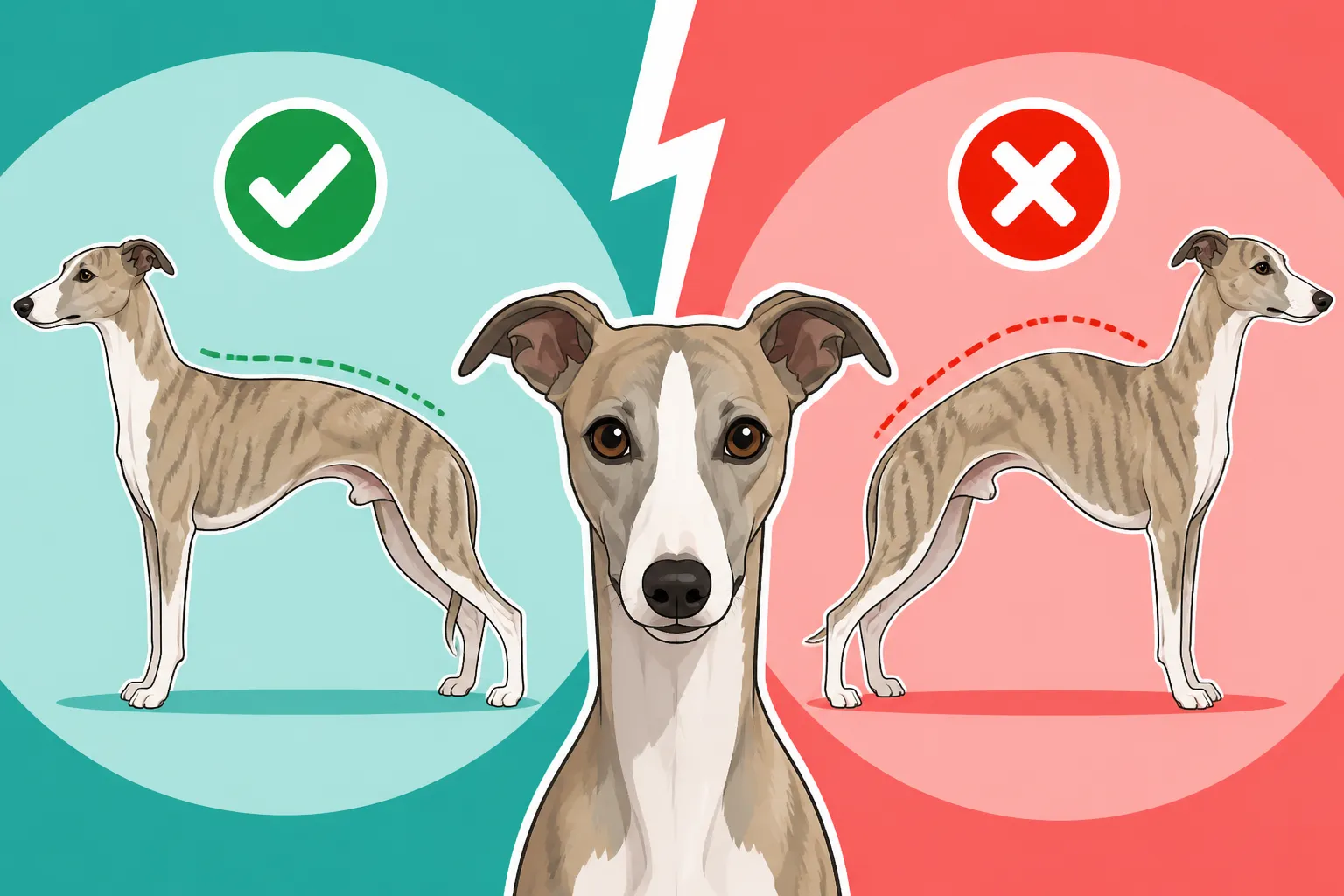
It's quite common for new Whippet owners, and even some seasoned enthusiasts, to look at their dog's back and wonder, "Is that normal?" The unique silhouette of a Whippet, often described as having a "roach" or arch over its loin, is one of its most defining features, yet it frequently sparks confusion and concern. This guide will unravel the mystery of the Whippet's back, explaining what a proper arch looks like, why it's essential for their athletic prowess, and how to distinguish a healthy, functional curve from a structural issue.
Understanding the Whippet's Signature Arch: The Topline
The Whippet's topline is a characteristic that sets it apart, and frankly, it can be a bit of a head-scratcher if you're used to dogs with flat backs. We often hear terms like "roach back" or "arched loin," and for some breeds, these phrases would signal a significant fault. But for a Whippet, this distinctive curve is not only normal but celebrated – it's crucial to their incredible speed and agility. It's truly a marvel of natural engineering, designed for explosive power and graceful movement.
When we talk about the Whippet's topline, we're focusing on the line from behind the shoulders all the way to the tail. It should rise gradually over the loin, peaking over the last ribs, and then gracefully curve down towards the tail. This isn't just an aesthetic choice; it’s a functional adaptation. This arch provides a kind of spring or lever, allowing for that powerful rear drive so characteristic of a sighthound.
It's easy to misunderstand this feature, especially if you're more familiar with breeds like Labradors or German Shepherds, which have very different topline requirements. A Whippet with a completely flat back would actually be considered incorrect by breed standards and would lack the athletic efficiency expected of them. So, instead of a "roach" being a flaw, it's a badge of honor, a testament to their heritage as a lightning-fast hunter. You can learn more about this in What the Whippet Standard Says About the Arch.
What the Breed Standard Says About the Topline
The official breed standard, which is essentially the blueprint for what a Whippet should be, is very clear about the topline. It describes a "graceful arch over the loin." It doesn't use the word "roach" directly, but the meaning is the same: there should be a distinct, fluid curve. This curve should begin subtly after the shoulder blades and gradually ascend, reaching its highest point over the muscular loin area, just before the pelvis. From there, it gently slopes down to the tail set.
This nuanced description means we're not looking for a sudden, sharp hump, nor a perpetually flat line. Think of it more as a perfectly tensioned bow, ready to release energy. The emphasis is on graceful and gradual. A topline that looks abrupt or broken is typically considered a fault. It's a balance of form and function, where the ideal shape directly contributes to the dog's ability to perform.
Understanding this subtlety is key, whether you're evaluating a show dog, a racing prospect, or simply appreciating your companion animal. This specific curve helps the Whippet gather its body efficiently, extending its reach and drive during a sprint. It's a dynamic structure, not a static one, and it truly comes alive when the dog is in motion, embodying the very essence of a sighthound's athleticism.
Differentiating an Arch from a Hump
This is where many people get confused. An arch is a smooth, continuous curve; a hump is often more abrupt, almost like a localized bump. A healthy Whippet arch is strong and elastic, moving fluidly with the dog. It allows the spine to flex and extend like a spring, absorbing impact and propelling the dog forward. When you run your hand along a correctly structured Whippet's back, it should feel like a firm, resilient curve, not a rigid, bony protrusion.
A true "hump" or a sharp, localized curve that doesn't flow smoothly can indicate a structural problem. This might be a sign of poor conformation, a spinal issue, or even pain. It's not uncommon to see dogs with an incorrect topline struggling with certain movements or appearing stiff. This is where a critical eye, perhaps from a knowledgeable breeder or veterinarian, becomes invaluable. They can help discern if what you're seeing is that desirable, graceful arch or something that warrants further investigation. If you have concerns, especially if your dog shows any discomfort or change in posture, a vet visit is always the best course of action.
The Anatomy Behind the Arch: Spinal Structure and Musculature
To truly appreciate the Whippet's arched back, we need to take a quick dive into the skeletal and muscular mechanics. It's not just a superficial curve; it's a testament to evolutionary design, perfectly adapted for explosive bursts of speed. The spine itself isn't bent; rather, it's the arrangement of the vertebrae and the powerful musculature surrounding them that creates this distinct silhouette. This intricate design is precisely Why a Whippet's Arch Actually Does so much for their movement.
The Whippet's spine is divided into several regions: cervical (neck), thoracic (chest), lumbar (loin), and caudal (tail). It's primarily the lumbar region, often referred to as the loin, where this celebrated arch truly manifests. The lumbar vertebrae are larger and have broader processes, providing ample surface area for the attachment of incredibly strong muscles. These muscles, such as the longissimus dorsi and iliocostalis, are like powerful springs and levers, crucial for both flexibility and propulsion.
When a Whippet gallops, these muscles contract and relax in rapid succession, enabling the back to arch and straighten, gathering the hind legs beneath the body and then extending them fully for maximum reach. Without this flexibility and muscular strength in the lumbar region, the dog simply couldn't achieve its signature double suspension gallop.
Thoracic vs. Lumbar Arch
It's important to understand that not all curves are created equal, and where the arch originates and peaks makes a big difference. The Whippet standard specifically calls for the arch to rise over the loin, which corresponds to the lumbar spine.
- Thoracic Arch: This would be a curve starting much further forward, in the chest area (thoracic spine). While some slight curvature might be natural, a pronounced arch in this region is generally undesirable. It can restrict lung capacity and affect overall balance and gait. Imagine trying to run a sprint with your upper back hunched; it’s inefficient and limiting. A thoracic arch might make the dog look "short-backed" or give a false impression of roachiness.
- Lumbar Arch: This is the characteristic Whippet arch. It starts gracefully behind the withers and shoulder, rising over the strong muscles of the loin. This is the powerhouse area. This lumbar curve, along with the deep tuck-up of the abdomen, creates a spring-like action that allows the hind legs to swing far forward under the body, pushing off with immense force. It's the critical component for that legendary Whippet acceleration and speed. It defines Where a Whippet's Arch Should Begin for optimal performance.
When you're observing a Whippet, try to feel where the arch begins. If it starts too far forward, near the ribcage, that's often a thoracic curve, which isn't ideal. The prime location for the arch is further back, over the loin, creating that elegant yet powerful sweep.
The Role of Muscles and Ligaments
The arch isn't just about bones; it's hugely dependent on a finely tuned system of muscles and ligaments. The deep, powerful muscles along the back and loins, such as the longissimus group, are incredibly strong and elastic. They allow the spine to flex and extend with astonishing speed and power. Think of them as the engine that drives the Whippet's gait. These muscles work in conjunction with robust ligaments that stabilize the spine, preventing excessive movement while still allowing for that crucial flexibility.
A Whippet in good condition, with proper muscle tone, will exhibit a much more pronounced and healthy arch. Conversely, a Whippet that is out of condition, or perhaps has an underlying health issue, might have a less defined or even "saggy" back due to muscle weakness. This isn't necessarily a structural fault of the bones but a condition of the musculature. Regular, appropriate exercise, which you can read about in Raising a Whippet Puppy Without Wrecking Its Joints for younger dogs, is vital for developing and maintaining these powerful back muscles throughout their life. Just like a human athlete needs core strength, a Whippet needs a strong back to perform at its best and remain healthy.
Distinguishing a Healthy Arch from a Structural Fault
One of the biggest anxieties for new Whippet owners is figuring out if their dog's unique back is truly correct or if it indicates a problem. It’s easy to second-guess yourself, especially when well-meaning but uninformed people comment that your Whippet looks "skinny" or "has a bad back." Let me assure you, a correctly arched back is a sign of health and function in a Whippet. The key is knowing what to look for and what to look out for.
A healthy arch is smooth, continuous, and dynamic. It should flow elegantly from the slight rise behind the shoulders, peak over the loin, and then gently descend to the tail. There should be no abrupt angles, sharp kinks, or flat spots in the curve. When the dog moves, this arch should work in harmony with its stride, allowing for full extension and collection. It's a hallmark of the breed's functional design.
On the other hand, several structural issues can manifest as an incorrect topline, which can indeed be detrimental to the dog's health and ability to move. These include a "wheel back," a "sway back," or a completely flat topline. Each has different implications, and recognizing them is important for your dog's well-being. This is an area where attending dog shows or talking to experienced Whippet breeders can be incredibly educational, helping you train your eye to see the nuances.
What a "Wheel Back" Looks Like
A "wheel back" describes an arch that is too extreme, too rounded, and often starts too far forward. Instead of a graceful, elongated curve, it looks more like a segment of a wheel or a pronounced hump. This excessive arch often restricts the spine's flexibility, making it harder for the dog to fully extend its stride. Imagine trying to run with your back perpetually hunched; it limits your reach.
This kind of severe curve can also put undue stress on the spinal column and surrounding soft tissues. While a Whippet's spine is designed for flexibility, a wheel back pushes this beyond healthy limits, potentially leading to discomfort or even injury over time. It can be caused by genetics or, in rare cases, a compensatory posture due to pain elsewhere in the body. If your Whippet's back looks dramatically rounded, more like a tightly coiled spring than a graceful bow, it's worth discussing with your veterinarian or a reputable Whippet breeder. They can help assess whether it’s a genetic conformation issue or something else.
The Problem with a "Sway Back"
In contrast to the wheel back, a "sway back," also known as a "roached back" in some other breeds (confusing, I know!), means the back dips in the middle. For a Whippet, this is a significant fault. Instead of that beautiful, powerful arch over the loin, you see a concave dip, making the dog look long and weak through the midsection.
A sway back indicates a lack of muscle tone, weak ligaments, or an incorrect skeletal structure. It can severely impact a Whippet's ability to generate power from its hindquarters and can lead to instability in the spine. Dogs with sway backs often have less efficient gaits and may be more prone to back problems as they age. This isn't just about looks; it compromises their core strength and athleticism. For a Whippet, whose entire design is based on speed and explosive movement, a sway back is a serious structural deficiency.
While sometimes a senior Whippet might develop a slight sway as muscle mass naturally declines, particularly in older dogs, a pronounced sway back in a young or adult dog is a clear deviation from the breed standard and can signal potential issues. Ensuring your Whippet maintains good muscle condition through appropriate exercise can help support the back, but if the issue is structural, it’s often present from a young age.
When a "Flat Back" Is a Fault
Given that the Whippet is known for its arch, it stands to reason that a completely flat back is a fault. While Whether a Flat Backed Whippet Is Faulted might seem obvious, some people mistakenly believe a flat back is more "normal" or healthier, perhaps comparing them to other breeds. However, a Whippet without a distinctive arch over the loin loses its athletic advantage.
A flat back limits the flexibility and spring action needed for the Whippet's unique gallop. It hinders their ability to collect their body and then explode forward. Without that crucial elasticity, their gait becomes less efficient, and their speed and agility are compromised. They might look "long" in the back and lack the characteristic powerful rear drive.
If you look at historical images of Whippets, or even early depictions of sighthounds, that arched loin is consistently present. It’s part of their genetic blueprint for speed. So, while a slightly less pronounced arch might be seen, a truly flat back is considered incorrect and detracts from the breed's functional purpose. It's a reminder that beauty in a Whippet is truly in the function, and that elegant curve is key.
How the Arch Contributes to Speed and Agility
Let's get to the exciting part: how this magnificent arch makes your Whippet a blur of motion. The Whippet's entire body is a finely tuned machine built for speed, and the topline is absolutely integral to that design. It's not just there to look pretty; it's a dynamic component that enables their legendary acceleration and agility. This is all about physics and biomechanics working in perfect harmony, allowing for incredible feats of athleticism.
When you watch a Whippet run at full tilt, especially during events like lure coursing or Fast CAT, you see their back doing an incredible dance. It flexes and extends, acting like a giant spring. This isn't a rigid structure; it's a powerful lever system that literally throws the dog forward. The arch is what allows them to coil up and then release that stored energy with maximum efficiency. It's a truly spectacular sight to behold, and it’s why they’re often called the "poor man's racehorse."
Without this characteristic arch and the underlying muscle strength, a Whippet simply wouldn't be able to achieve the speeds they're known for. It would be like trying to drive a sports car with square wheels – it just wouldn't work. The arch is a fundamental aspect of their athletic identity and a key factor in How a Whippet's Roach Affects Its Speed.
The Spring-Like Action of the Topline
Imagine a powerful spring. When compressed, it stores energy, and when released, it propels something forward with force. That's essentially what the Whippet's arched loin does during a gallop. In the "collection" phase of the double suspension gallop, as the hind legs swing far forward under the body, the back intensely arches and flexes. This action compresses the "spring" of the spine and its powerful muscles.
Then, as the dog extends its body, pushing off with its hindquarters, this stored energy is explosively released, propelling the Whippet forward. The arch straightens and then reforms, ready for the next powerful stride. This continuous coiling and uncoiling is what allows for the incredible elasticity and power in their gait. It maximizes both stride length and frequency, translating directly into higher speeds. It's a natural shock absorber and a propulsion system all in one, demonstrating brilliant biomechanical efficiency.
This spring-like action also helps protect the spine from the impact of rapid movement. The flexibility allows forces to be distributed rather than concentrated in one rigid area. So, it's not just about going fast; it's also about doing it safely and efficiently.
Whippets' Signature Double Suspension Gallop
The double suspension gallop is the quintessential sighthound gait, and it's where the Whippet's arched back truly shines. This unique gait involves two moments when all four feet are off the ground: once when the body is fully stretched out (extension), and again when the legs are gathered underneath the body (collection).
It's in this collected phase, with the hind legs tucked far forward, that the arch of the loin becomes most pronounced. This extreme flexion allows the hind legs to swing further forward than in any other canine gait, setting up a longer, more powerful push-off. The muscles across the back and loin contract with immense force to facilitate this. Then, as the dog extends, the back flattens out temporarily, allowing for maximum reach and airtime.
This rhythmic arching and flattening is what makes the Whippet's gallop so efficient and breathtaking to watch. Without that crucial arch, the degree of spinal flexion would be limited, the collection phase would be less effective, and the powerful push-off would be diminished. It's a perfect example of how form and function are inextricably linked in this remarkable breed.
Common Misconceptions and Visual Cues
It's amazing how many misconceptions surround the Whippet's distinctive physical traits, and the arched back is right up there. People who aren't familiar with the breed often misinterpret its lean physique and curved topline. I've heard it all: "Your dog looks starved," "Is its back broken?", "That can't be good for it." It can be frustrating, but it largely stems from a lack of understanding about sighthound anatomy.
One of the biggest misconceptions is that any arch is a "roach back" and therefore a fault. We've clarified that for Whippets, a graceful arch is correct and functional. The challenge is often distinguishing between a correct arch and one that is genuinely problematic, like an overly exaggerated "wheel back" or a "sway back" that signals weakness. Learning to "read" your Whippet's body, both standing still and in motion, is a skill that comes with experience and observation.
How to "Read" a Whippet's Topline
Learning to assess your Whippet's topline is a fantastic way to understand its structure and overall condition. Here’s what to look for:
- Stance: Ask your Whippet to stand naturally, not stacked. The arch should be visible but not exaggerated. It should be a smooth, continuous curve.
- Palpation: Gently run your hand along their spine from neck to tail. You should feel muscle definition, not prominent vertebrae that feel sharp or bony. The arch should feel resilient and firm over the loin.
- Movement: Watch your Whippet walk, trot, and gallop from the side. The arch should be dynamic, flexing and extending fluidly with their stride. A rigid or unmoving back, or one that sways excessively, can be a red flag.
- Proportion: The arch should be in proportion to the rest of the dog. It shouldn't make the dog look short-backed or too long. The overall impression should be one of elegance and balance.
It’s also important to remember that a Whippet's topline can look slightly different depending on their mood, temperature, or even muscle tension. A nervous Whippet might tuck its tail and round its back more, while a cold Whippet might hunch up. Always observe your dog in a relaxed, natural state to get the most accurate assessment.
When Body Condition Affects the Appearance of the Back
A Whippet's body condition plays a significant role in how its back appears, and this is another area where misinformation abounds. Whippets are naturally lean and muscular, with very little body fat. This means you should be able to see a couple of ribs, feel their hip bones easily, and observe a deep tuck-up. How Thin a Whippet Should Look is a common concern for new owners, but their leanness is normal.
If a Whippet is underweight, its vertebrae might become more prominent, making the back look bony or even appear more sharply arched than it naturally is. Conversely, an overweight Whippet might have a less defined arch, as layers of fat obscure the muscle and bone structure. Their natural tuck-up might also disappear, making them look less athletic.
Maintaining the correct body condition score is vital not just for appearance but for overall health and athletic performance. A healthy Whippet will have a visible arch that is supported by strong, supple muscles, not just protruding bones. If you're concerned about your Whippet's weight or the appearance of its back, consult with your vet. They can help you determine the ideal body condition for your individual dog and ensure they’re getting the right nutrition, perhaps even exploring options available from retailers like Chewy for specialized diets.
Caring for a Whippet's Back Through Life
Caring for your Whippet's back is an ongoing commitment, much like looking after their joints and overall health. While their arched topline is a marvel of natural engineering, it still benefits from thoughtful care throughout their life, from their boisterous puppy days to their golden years. Proper care helps maintain the integrity of their spinal structure, supports strong musculature, and ensures they remain comfortable and agile.
It's not just about avoiding injury; it's about providing the right environment and routine that allows their back to function optimally. This includes everything from appropriate exercise to suitable bedding and even awareness of how they move around your home. Being proactive in their care can prevent many common issues and help them live a full, active life.
Supporting a Growing Whippet Puppy's Spine
Puppyhood is a critical time for skeletal development. While Whippet puppies are bundles of energy, it's crucial to manage their exercise to protect their developing joints and spine. Over-exercising a puppy, especially with high-impact activities or repetitive jumping, can put undue stress on their growth plates and developing vertebrae. Raising a Whippet Puppy Without Wrecking Its Joints is paramount.
Instead of long, forced runs, focus on short, frequent play sessions on soft surfaces. Allow them plenty of free play in a safe, enclosed yard where they can self-regulate their activity. Avoid letting them jump off high furniture repeatedly. While their playful leaps are endearing, constant jarring can be detrimental. Provide them with supportive, comfortable bedding to rest on, which can easily be found on sites like Chewy, ensuring their growing spine is well-supported during their many hours of sleep. Gradual, controlled exercise is the key to building strong muscles and a healthy skeletal structure that will support that characteristic arch for life.
Maintaining Back Health in Adult Whippets
For adult Whippets, maintaining a healthy back revolves around consistent, appropriate exercise and good management. Their strong lumbar muscles need regular work to stay supple and robust. This doesn't mean they need to sprint for miles every day, but regular opportunities for varied movement – walks, short sprints in a safe, fenced area, and play with other dogs – are beneficial.
Keep an eye on their weight; an overweight Whippet puts extra strain on its spine and joints, potentially exacerbating any underlying issues or creating new ones. Ensure they have comfortable, supportive beds in all their favorite resting spots. Whippets love soft surfaces, and good quality bedding helps prevent pressure points and supports their natural spinal alignment while they rest. Companies like Chewy offer a wide range of orthopedic and memory foam beds that can be particularly beneficial.
Also, be mindful of activities that could cause sudden twists or impacts, especially if your Whippet is prone to exuberance in play. While they're generally tough, they are still sleek sighthounds, and proper care helps keep them sound and agile.
Addressing Spinal Changes in Senior Whippets
As Whippets enter their senior years, typically around eight to ten years old, you might notice some natural changes in their back and posture. Just like in humans, muscles can lose some mass and tone, and joints can become a bit stiffer. Caring for an Old Whippet That Feels the Cold also applies to their comfort and joint health.
A senior Whippet might develop a slightly less pronounced arch or even a very subtle dip in their topline due to muscle atrophy or the natural aging process of ligaments and discs. This isn't necessarily a fault if it's a gradual, age-related change and not causing pain. However, any sudden changes in posture, signs of discomfort, difficulty moving, or reluctance to jump are clear indicators that it's time for a veterinary check-up.
Supportive care for senior Whippets includes:
- Orthopedic Bedding: Absolutely essential. A high-quality orthopedic bed provides cushioning and support for aging joints and spine.
- Gentle Exercise: Continue with regular, gentle walks to maintain muscle tone and flexibility. Avoid high-impact activities.
- Weight Management: Keep them at a healthy, lean weight to minimize strain on their back and joints.
- Supplements: Discuss joint supplements with your vet. Ingredients like glucosamine, chondroitin, and Omega-3 fatty acids can support joint health.
- Warmth: Older Whippets often feel the cold more acutely. Keep them warm with soft blankets and coats to prevent muscles from stiffening.
Regular vet visits are crucial to monitor their overall health and address any age-related spinal issues proactively. While their youthful spring might lessen, with proper care, senior Whippets can still enjoy a comfortable and active life.
Disclaimer
This article is for general informational purposes only and does not constitute professional advice. Laws, prices and regulations vary by location and change over time. Consult a qualified professional for guidance on your specific situation.