How Much a Female Whippet Weighs
A female Whippet can look startlingly lean beside other dogs, so it’s easy to wonder whether she weighs too little—or whether extra pounds are hiding beneath that deep chest and narrow waist. Most adult females fall within a broad range, but the number on the scale is only part of the picture. This guide explains what to expect and how to judge her condition.
Typical weight for a female Whippet
The usual adult range
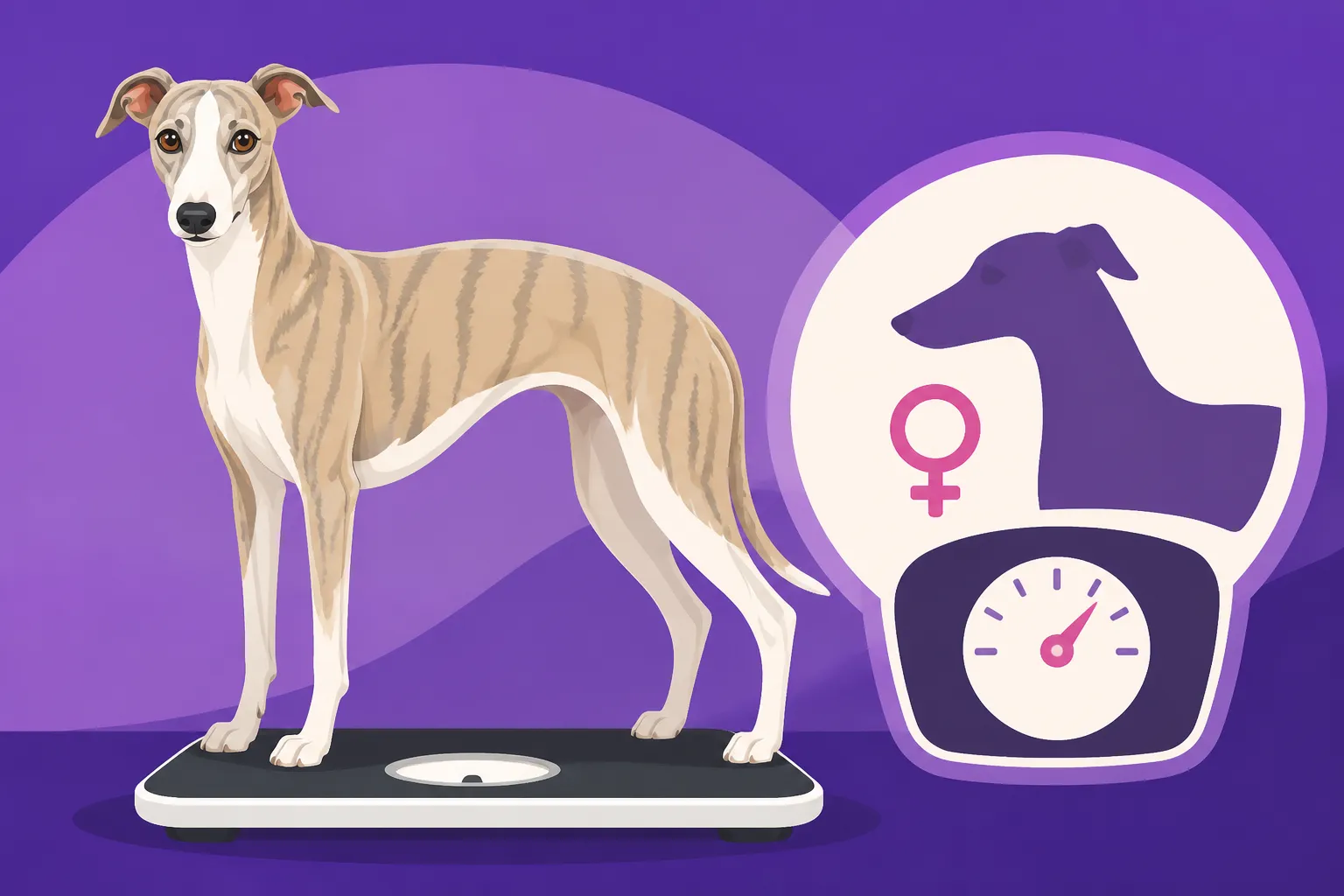
A healthy adult female Whippet commonly weighs about 25 to 40 pounds, or roughly 11 to 18 kilograms. That range is a practical guide, not a target every dog should reach. Two fit females of similar height can weigh differently because of differences in bone structure, muscle, age, and overall build.
Some females fall just outside the usual range and are still healthy. A smaller-framed dog may be in good condition at a lower weight, while a taller, more strongly muscled female may weigh more without carrying excess fat. Her shape, muscle tone, and weight trend matter more than whether she matches a single number.
For a broader look at the breed’s size, see What a Whippet Actually Weighs. A female is often lighter and shorter than a male, but the difference is not always dramatic; there is plenty of overlap between the sexes. Whether a Female Whippet Is Much Smaller covers why sex alone doesn’t tell you exactly what an individual dog should weigh.
Why one female may weigh more than another
Whippets are built for speed. Their long legs, deep chests, narrow waists, and relatively fine frames can make them look lighter than dogs of the same height. But dogs with different lifestyles may have different body compositions: a dog that regularly sprints or participates in lure coursing may carry more visible muscle than a mostly sedentary companion.
Age also matters. A young adult may still be developing muscle, while an older dog may gradually lose muscle even if her scale weight changes very little. Neutering, a change in activity, illness, medication, or a shift in feeding routine can also affect weight. These factors don’t mean a particular weight is automatically healthy or unhealthy; they’re clues to consider alongside her body condition and health history.
A quick reference table
| What you’re looking at | What it can tell you | What to keep in mind |
|---|---|---|
| Scale weight | Whether her weight is changing over time | A single reading can’t confirm whether she is at an ideal weight |
| Ribs and waist | Whether she appears lean, overweight, or possibly too thin | Whippets naturally have a pronounced waist and visible body outline |
| Muscle over hips and thighs | Whether she is maintaining strength and condition | Low muscle can affect appearance even when weight seems stable |
| Appetite and energy | Whether her daily routine seems normal for her | A sudden change deserves attention, especially with weight loss |
| Vet assessment | A fuller review of body condition and health | Ask for guidance based on her age, frame, and medical history |
How to tell whether her weight is healthy
Look at body condition, not just the scale
A scale can tell you that your Whippet weighs 30 pounds, but it can’t tell you how that weight is distributed. Body condition assessment considers how easily you can feel her ribs, how much padding sits over them, and whether she has a visible waist and abdominal tuck. Many veterinarians use a body-condition scale to make this assessment; What Body Condition Score a Whippet Should Be explains the general idea.
A fit Whippet usually has a clearly defined waist when viewed from above and an abdominal tuck when viewed from the side. Her ribs may be visible, particularly when she is standing in bright light or after exercise. That can be normal for the breed. It is more useful to gently feel the ribs than to judge her by appearance alone: they should be easy to feel under a light covering of tissue, not buried under a thick layer of fat.
You can also feel along her spine and hips. The bones may be noticeable, but they should not feel sharply prominent with little tissue or muscle around them. If you’re unsure, ask your veterinarian to show you what a healthy body condition looks and feels like on your own dog. A hands-on demonstration is much easier to remember than trying to compare her with pictures of other Whippets online.
For a practical guide to checking those landmarks, read Feeling a Whippet's Ribs and Hip Bones. It can also help to take a photo from above and from the side every so often, in similar lighting and posture. Photos aren’t a replacement for an exam, but they can make gradual changes easier to spot.
Why a lean Whippet can look too thin
Whippets are naturally lean, and people who are used to stockier breeds may mistake a healthy outline for underfeeding. A visible last rib or a narrow waist does not automatically mean something is wrong. The breed’s shape can look especially striking when a dog is wet, standing in a particular light, or photographed from an angle that emphasizes the ribs.
Still, there is a difference between a naturally lean dog and a dog who is losing too much condition. Be concerned if her ribs, spine, or hip bones become sharply prominent, if the muscles over her thighs and shoulders seem to shrink, or if her weight is falling without a clear reason. A sudden decline in appetite, vomiting, diarrhea, unusual tiredness, or a change in drinking or urination makes a veterinary check more important.
How Thin a Whippet Should Look discusses the breed’s normal outline, while When a Whippet Is Genuinely Too Thin is useful when you’re trying to distinguish a naturally slim dog from one who needs further evaluation. If your female looks different from her usual self, compare her current condition with her own past—not with the body of another Whippet.
Tracking weight through different life stages
Puppies and growing females
A Whippet puppy’s weight changes quickly as she grows, and there is no single puppy weight that suits every age or litter. Puppies differ in birth size, growth rate, frame, and activity. A puppy who is small but steadily growing and bright-eyed may be doing well, while a puppy who stops gaining, loses weight, or seems unwell needs attention regardless of her size.
Rather than trying to match a generic weight chart exactly, weigh her consistently and keep a record. Use the same scale when possible, and note the date, her age, and any changes to meals or activity. Your veterinarian can interpret her growth in light of her individual build and development. If she is still growing, ask before making a major food or portion change based on a number you found online.
Adult and senior females
For an adult female, the most useful number is often her own stable, healthy baseline. If she has been maintaining good condition at a particular weight, a gradual rise or fall from that point may be more informative than whether she falls near the middle of the typical range. Weigh her periodically under similar conditions—for example, at the same time of day and before a meal when practical.
Older dogs can lose muscle or become less active, and those changes may not show up clearly on the scale at first. A senior female who weighs about the same as before may still have less muscle and more body fat. Regular veterinary checkups can help identify these changes and provide a sensible plan for food, exercise, and any needed tests.
Routine changes can matter too. If she has been spayed, becomes less active after an injury, or starts receiving more treats, her calorie needs may shift. How Easily a Whippet Gains Weight explains why small changes can add up, and Weight Gain in a Neutered Whippet is relevant if her weight starts creeping upward after surgery.
What to do if her weight changes
If she seems to be gaining weight
Start with observation rather than a sudden diet overhaul. Write down her meals, treats, chews, table scraps, and any food used for training. It’s easy to count the bowl but forget the handful of treats shared during a long afternoon. Check portions with a measuring cup or kitchen scale, and compare the current routine with what she was eating when her condition was stable.
If you buy her food through Chewy or another retailer, keep the package information handy so you can tell your veterinarian the exact food and feeding amount. The calorie content and serving suggestions differ between foods, and label recommendations are only a starting point—not a personalized prescription. Avoid cutting her food sharply without veterinary guidance, especially if she is very young, elderly, ill, or highly active.
Movement should be adjusted thoughtfully, too. A fit, healthy Whippet may enjoy safe opportunities to walk and run, but avoid trying to “exercise off” weight with sudden, intense activity. If she has been sedentary, is recovering from an injury, or has a health condition, ask your veterinarian what kind of activity is appropriate.
If she seems to be losing weight
First, check whether the loss is real and ongoing. Weigh her on the same scale if you can, and note the dates rather than relying on memory. A small fluctuation may be due to timing, a recent meal, or normal variation; a steady downward trend deserves more attention.
Review whether anything has changed: her appetite, food, treats, household routine, exercise, or access to food if she lives with other pets. Make sure she is actually eating her meals rather than leaving part of them behind. If you order food through Chewy, for example, check that the food in the bowl is the same formula and amount you intended to serve; a change in product or measuring routine can make a feeding log confusing.
Do not assume that weight loss simply means she needs richer food. Dental discomfort, digestive problems, parasites, and other health issues can affect appetite or weight. Contact your veterinarian if the loss is unexplained, continues, or comes with other changes such as low energy, vomiting, diarrhea, coughing, or increased thirst. A vet can assess her condition and decide whether further examination or testing is needed.
Making the number useful at a vet visit
Bring a short record rather than trying to remember every detail in the exam room. Note her recent weights, what she eats, approximate portions, treats, activity changes, and any symptoms. If you have the food packaging information—whether you bought it at a local shop or through Chewy—that can help make the conversation more specific.
Ask your veterinarian to show you how they assess her body condition and what changes they want you to watch for. You can also ask what weight range makes sense for her particular frame, whether her current muscle condition is appropriate, and when they would like to recheck her. These questions turn a vague worry about “looking too skinny” or “getting a little heavy” into a practical plan.
Disclaimer
This article is for general informational purposes only and does not constitute professional advice. Laws, prices and regulations vary by location and change over time. Consult a qualified professional for guidance on your specific situation.