The Age a Whippet Stops Growing
A Whippet puppy can look nearly adult before its growth is truly finished, which makes it easy to wonder whether the dog is too small, too lanky, or growing too quickly. Most Whippets reach close to their adult height around a year old, but muscle and body shape may keep developing for longer. This guide explains what to expect and when a growth concern deserves a vet’s attention.
When a Whippet Reaches Adult Height
Most Whippets are close to their full height by one year
Whippets generally do most of their upward growing during puppyhood, and many are close to their adult height by about 12 months. That does not mean every puppy follows the same calendar. Genetics, sex, nutrition, health, and individual variation all influence how quickly a dog grows. One puppy may look leggy and nearly adult at ten months, while another is still gradually filling out.
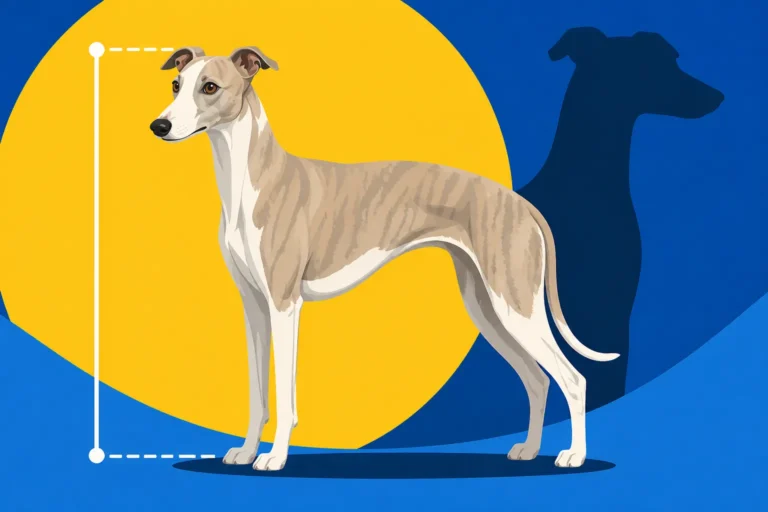
Breed standards provide a useful frame of reference, not a prediction of exactly how tall your dog will be. In the American standard, adult females are generally expected to stand about 18.5 to 21.5 inches at the shoulder, and males about 19 to 22.5 inches. A dog outside those ranges is not automatically unhealthy or not a Whippet; a veterinarian or knowledgeable breeder can help put the measurement in context. For a closer look at measurements, see How Tall a Whippet Stands.
It is also worth measuring consistently. Have your Whippet stand naturally on a level surface, with the front legs straight and the head in a neutral position. Measure from the floor to the top of the shoulder blades, rather than to the top of the head. A relaxed dog is much easier to measure than one leaning toward a treat or bouncing around the room.
Height and overall maturity are not the same thing
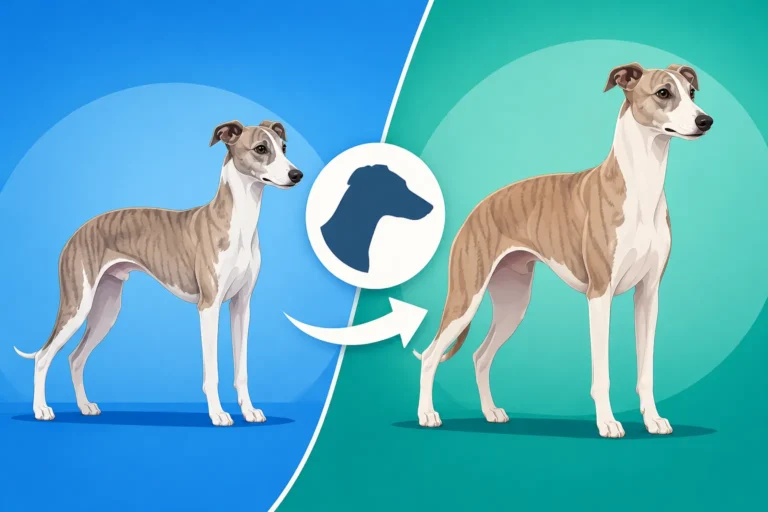
A Whippet can stop getting taller while still looking like a teenager. The chest may deepen, the shoulders and hindquarters may gain muscle, and the body may become more balanced over the next several months. This change is often most noticeable in a young dog that has suddenly grown long legs and seems a little awkward in its proportions.
That later development does not mean a puppy should be pushed to gain weight or exercise harder. A young Whippet may naturally look lean and unfinished, especially beside a mature adult. The important question is whether the puppy is growing steadily, eating and behaving normally, and maintaining an appropriate body condition—not whether it already has the outline of a fully developed show or racing dog.
If your dog is still noticeably growing after its first birthday, that can be normal, particularly if the change is gradual. A sudden change in growth, a marked difference between the two sides of the body, or an apparent slowdown alongside poor appetite or low energy is a different matter. Those are reasons to ask your vet rather than trying to diagnose the cause from height alone.
How a Whippet’s Body Changes After Height Growth
Muscle and chest development can continue into young adulthood
Many Whippets continue to gain muscle and adult shape after their height has mostly stabilized. Their chest may become deeper, the topline may look more settled, and the hindquarters may become more defined as the dog matures. It is common for owners to look at photographs taken several months apart and realize the dog has changed substantially without becoming much taller.
The pace varies. A Whippet that is lightly exercised and still growing may look less muscular than a fit adult, while a dog from working or racing lines may develop a visibly athletic build. Exercise should still be appropriate for the dog’s age and physical condition. Regular walks, play, and age-appropriate activity are different from repetitive high-impact sprinting or forced running while a puppy is still developing.
There is no need to compare your puppy’s physique with every Whippet you see online. Photos can be misleading: posture, camera angle, coat, conditioning, and the dog’s age all affect how mature it appears. For more on how body shape changes after adolescence, read Whether a Whippet Fills Out After Two and Whether a Racing Whippet Is Leaner Than a Show One.
Weight is not a simple measure of whether growth is finished
Whippets vary in weight, and the breed standard emphasizes a balanced, athletic outline rather than setting one universal target weight for every dog. Two healthy adults of the same height can weigh differently because of frame, sex, muscle, and individual build. A scale can show that a dog is gaining, but it cannot tell you on its own whether the gain is healthy.
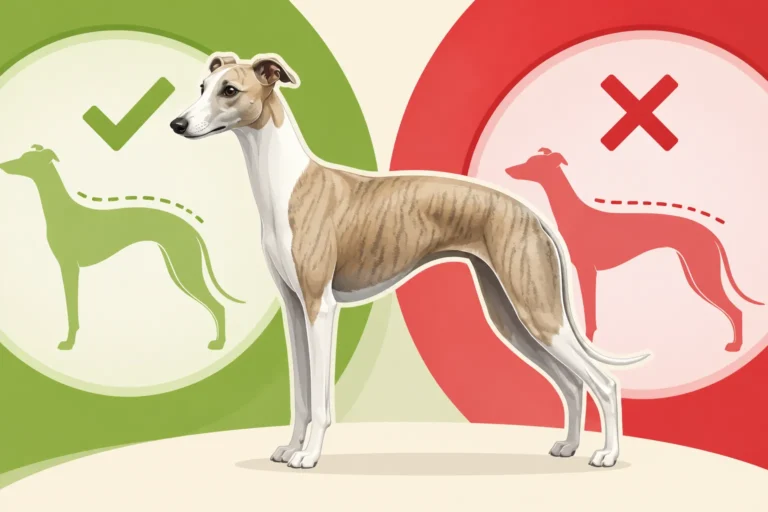
Instead, look at body condition alongside the number. You should generally be able to feel the ribs without pressing hard, and the dog should have a visible waist when viewed from above and an abdominal tuck from the side. A Whippet’s ribs and hip points may be visible to some degree, which can alarm people who are used to stockier breeds. If you are unsure, ask your veterinarian to assess body condition rather than relying on comments from passersby.
| What you notice | What it may mean | A sensible next step |
|---|---|---|
| Height changes have slowed, but the chest and muscles are developing | Normal transition toward adult shape | Keep tracking growth and body condition |
| Weight changes, but the dog remains energetic and has a healthy outline | Individual variation or normal development | Discuss the trend at routine vet visits |
| Ribs are difficult to feel, or the waist is disappearing | Possible excess weight | Review feeding and activity with your vet |
| Persistent weight loss, poor appetite, or low energy | A health concern may be present | Arrange a veterinary assessment |
| A sudden halt in growth or clear asymmetry | Needs individual assessment | Contact your veterinarian |
For guidance on interpreting the scale and body shape together, see What an Adult Male Whippet Weighs, What an Adult Female Whippet Weighs, and What Body Condition Score a Whippet Should Be.
Feeding and Caring for a Growing Whippet
Feed for steady development, not maximum size
A puppy needs a complete, balanced diet suited to growth, but extra food does not make a dog reach its genetically determined adult height. Overfeeding can add excess fat and put unnecessary strain on growing joints. Underfeeding can also be harmful, so the goal is neither to keep a puppy as lean as possible nor to make it grow faster: aim for steady development and check the dog’s condition regularly.
Follow the feeding guidance on the food label as a starting point, then adjust with your veterinarian’s advice based on your puppy’s age, activity, and body condition. If you order puppy food through Chewy, compare the life-stage statement and feeding directions on the specific product label rather than assuming that every bag with a similar name is intended for growing dogs. Chewy can also be useful for keeping the food consistent when you need to reorder, but your vet is the better person to consult if growth or weight is a concern.
Many owners transition from puppy food to an adult formula around the time their dog approaches maturity, but there is no single date that suits every Whippet. Ask your veterinarian when to make the change and how to do it gradually. If you use Chewy for repeat deliveries, check the shipment before switching food so you can avoid an abrupt change in the puppy’s meals. For more on appropriate feeding, read Whether a Whippet Puppy Should Grow Slowly and Whether a Whippet Puppy Needs Large Breed Food.
Keep exercise age-appropriate while your puppy develops
Whippets are built to run, but a puppy’s enthusiasm can exceed its growing body’s readiness for sustained or repetitive hard exercise. Let young dogs play at their own pace, take walks suited to their age, and provide safe opportunities to explore. Avoid trying to build muscle by forcing long runs, repeated sprints, or intense jumping. If your puppy takes part in organized activities, ask the relevant instructor and your vet what is suitable for its age and physical development.
A fenced space is especially important for a sighthound. A Whippet may accelerate after movement before it has time to respond to a call, so a secure area is safer than relying on recall in an open field. Keep sessions short enough that your puppy can rest, and be cautious about slippery ground, sharp turns, and collisions with larger dogs. Signs such as limping, reluctance to move, or persistent soreness call for rest and veterinary advice rather than another exercise session.
If you are planning activities as your dog matures, The Age a Whippet Can Start Lure Coursing can help you think through timing, while Whether a Whippet Puppy Should Sprint covers the specific question of speed work. Growth is not just about the height on a measuring tape; protecting joints and allowing gradual development matter too.
Tracking Growth and Knowing When to Ask for Help
Keep a simple record instead of guessing from memory
A short growth record can make routine checkups more useful. Note your puppy’s age, weight, and any changes you notice in appetite, energy, or body shape. You do not need to weigh the dog every day. Occasional measurements taken in similar conditions are more helpful than frequent readings that fluctuate with meals, bathroom breaks, or the scale’s position.
At home, take a photo from the side and above every few weeks, with your dog standing naturally in the same spot if possible. This can make gradual changes easier to see. If using a household scale is awkward, weigh yourself holding the dog and subtract your own weight, or ask the veterinary clinic to help you get a reliable measurement. Chewy may offer household pet scales among its supplies, but you do not need special equipment to monitor a puppy if your current method is consistent and safe.
Bring your notes to checkups, especially if you are worried that growth has stalled or the dog is gaining weight quickly. The veterinarian can assess body condition, review diet, and check whether there are other signs that need attention. A single number is rarely enough to explain what is happening.
Contact your veterinarian for concerning changes
Normal growth includes variation, but some patterns deserve a professional look. Contact your vet if your puppy is losing weight, consistently refusing meals, unusually tired, showing ongoing digestive problems, or experiencing lameness. Also ask for advice if your dog’s growth appears to stop abruptly or you see an obvious difference between limbs or sides of the body. These signs do not point to one specific diagnosis, but they are worth assessing.
Try not to compare one puppy’s growth chart with another’s as though every Whippet should match it. Littermates can mature at different rates, and an online photo rarely tells you the dog’s age, health, or body condition. A vet who sees your dog over time can make a much more meaningful assessment than a comparison with a stranger’s dog or an isolated weight figure.
In general, expect a Whippet to approach adult height around its first birthday, with further physical maturity continuing after that. If your dog is healthy, steadily developing, and maintaining an appropriate condition, a lanky adolescent phase is usually not a reason to panic. When something seems genuinely off, a checkup is the most reassuring way to get an answer tailored to your individual Whippet.
Disclaimer
This article is for general informational purposes only and does not constitute professional advice. Laws, prices and regulations vary by location and change over time. Consult a qualified professional for guidance on your specific situation.