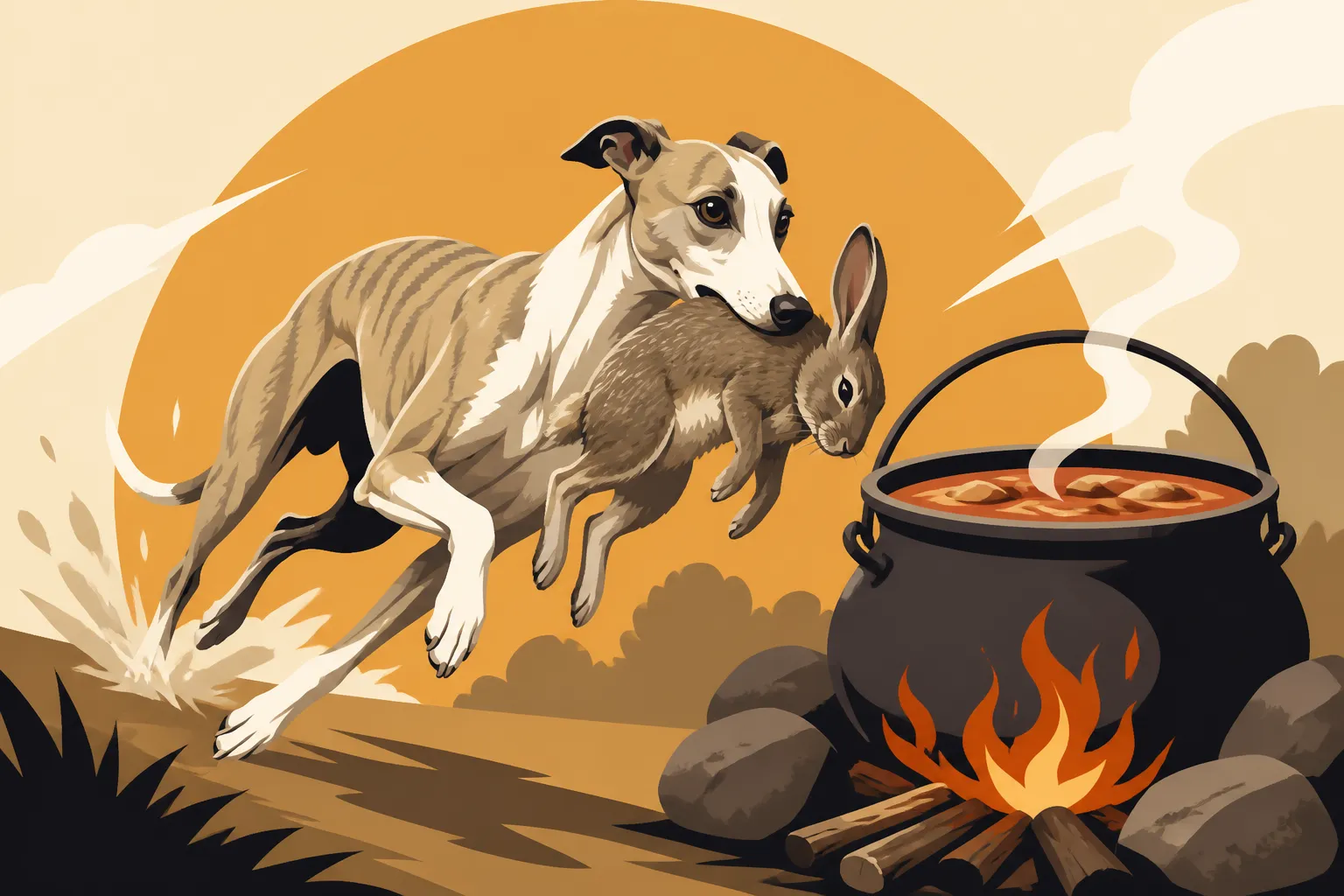
How Whippets Killed Rabbits for the Pot
It's easy to look at our sleek, elegant Whippets today, curled up on the sofa or gracefully prancing around the dog park, and forget their gritty, working-class origins. Many people wonder if these gentle souls ever had a more robust past, and the truth is, they absolutely did. For generations, before they were esteemed show dogs or beloved family pets, Whippets played a vital, often life-saving role: they were expert rabbit hunters, providing much-needed food for the table in impoverished communities. This guide will take you back in time to explore how these remarkable dogs honed their skills to bring home supper.
The Whippet's Humble Origins as a Poacher's Best Friend
To truly understand how Whippets came to hunt rabbits for sustenance, we need to step back into the industrial heartlands of England, particularly during the 19th century. Life was incredibly hard for miners, mill workers, and factory laborers. Wages were meager, food was scarce, and every little bit counted.
Necessity and the Working Class Household
Imagine a small, soot-stained cottage in a bustling mining town. The air is thick with the smell of coal smoke, and the days are long and arduous. For families living on the breadline, putting food on the table wasn't a given; it was a daily struggle. A dog wasn't just a companion; it was a critical tool for survival. These families couldn't afford large, expensive hounds, nor could they keep animals that didn't pull their weight. What they needed was a compact, quiet, incredibly fast dog that could catch small game.
This is where the Whippet, often lovingly referred to as the "poor man's racehorse," truly shone. They were small enough to live comfortably in tiny homes, often sleeping right in bed with their families to keep warm, yet possessed an extraordinary ability to hunt. They were truly part of the family, and their contribution to the larder was invaluable. This deep connection to their owners and their working-class roots is a defining part of their history, as highlighted in Why the Whippet Was a Working Class Dog.
The Instinct to Hunt: A Natural Drive
Whippets weren't just fast; they were born with an innate drive that perfectly suited them for rabbit hunting. As sighthounds, their entire being is geared towards spotting movement and giving chase. Their keen eyesight, aerodynamic build, and explosive speed are not just for show; they are evolutionary adaptations for hunting prey. Unlike scent hounds, which follow a trail, a Whippet hunts by sight. A flicker of movement, a twitch of an ear in the tall grass, and their focus locks on.
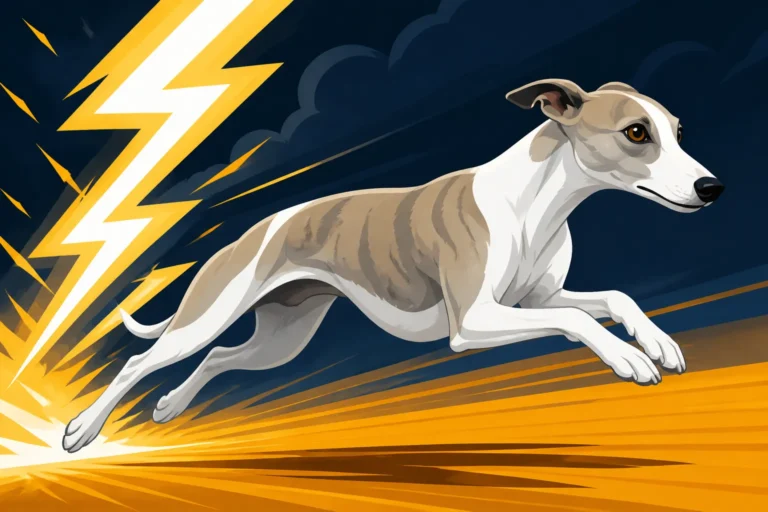
This powerful visual tracking, combined with their incredible acceleration, made them incredibly effective at pursuing rabbits. They could go from a standstill to full sprint in mere seconds, easily outmaneuvering their prey across open fields. It’s this profound natural ability that makes the Whippet a true sighthound, a concept explored further in Why the Whippet Is a True Sighthound. Their silent pursuit meant rabbits often had little warning until it was too late.
The Mechanics of the Rabbit Chase
The act of a Whippet hunting a rabbit wasn't a chaotic frenzy; it was often a finely tuned, instinctual ballet of speed and precision, honed over generations.
Spotting the Quarry
The hunt would often begin with a quiet walk through fields or along the edges of hedgerows, where rabbits were known to frequent. The Whippet, usually off-leash in these specific, safe hunting areas, would be scanning the horizon, head held high, ears swiveling to catch any sound. Their owners would be doing the same, sometimes even pointing out potential spots.
Once a rabbit was sighted, perhaps bolting from a clump of gorse or a patch of clover, the Whippet's world would narrow. Its focus would be absolute, its muscles coiling for the launch. The dog wouldn't bark or make a sound, preferring a silent, stealthy approach before unleashing its astonishing speed. A rabbit's primary defense is its speed and erratic zigzagging, but a well-bred and conditioned Whippet could often match and anticipate these evasions, cutting corners and maintaining relentless pursuit.
The Catch and the "Snap Dog" Legacy
When the Whippet finally closed the distance, the catch itself was swift and decisive. The goal was to dispatch the rabbit quickly and humanely. This brutal efficiency earned Whippets an old, telling nickname: "Snap Dogs." This moniker wasn't just descriptive; it reflected the expectation that the dog would literally "snap" the rabbit's neck with a quick, powerful bite, minimizing suffering and ensuring the meat remained untainted.
This aspect of their history might sound harsh to modern pet owners, but it was born of necessity. The families relying on these dogs couldn't afford wasted food or prolonged struggle. The ability to make a clean kill was prized and often demonstrated in contests that tested a dog's hunting prowess. You can read more about this fascinating, if sometimes grim, aspect of their past in The Older Name Snap Dog for the Whippet and discover What Snap Dog Contests Asked of a Whippet.
Retrieval and the Miner's Pot
After the catch, the Whippet was expected to retrieve the rabbit undamaged. This wasn't about fetching a toy; it was about bringing back a valuable food source. A good hunting Whippet would carry the rabbit gently back to its owner, a testament to its training and temperament. The last thing a struggling family needed was a mangled meal.
The retrieved rabbit would then become the centerpiece of the evening meal, augmenting a diet often heavy in potatoes or bread. This direct line from hunt to hearth underscores the profound practical role these dogs played in their communities. For many, this was the primary way How a Whippet Fed a Family. There was no room for sentimentality in this equation; it was a matter of putting food on the table.
Training and Conditioning for the Hunt
While instinct played a huge role, a successful hunting Whippet wasn't simply born; it was also carefully trained and conditioned. The environment of the coalfields and mill towns provided a natural, if rugged, training ground.
Early Training and Socialization (with purpose)
Whippet puppies from proven hunting lines would often be introduced to the concept of prey at a young age. This might involve playing with rabbit skins or being exposed to the scent of freshly caught game. The goal wasn't just to encourage their natural prey drive, but to channel it effectively and safely. Obedience was paramount; a dog that wouldn't come back or that damaged the quarry was useless. Therefore, strict recall and a gentle mouth were key components of their early education.
This wasn't the kind of formal, structured obedience training we often see today, but rather practical, hands-on learning reinforced by the daily realities of survival. Puppies learned quickly what was expected of them, observing their elders and responding to their owner's subtle cues. While modern Whippets are typically socialized for domestic life, their ancestors were socialized to their specific working role.
Maintaining Peak Performance
Hunting rabbits, especially for extended periods, demanded incredible physical fitness. These dogs weren't just sprinting once; they might be out for hours, covering miles. This meant their owners, despite their own hardships, understood the importance of keeping their Whippets in prime condition. While specialized performance foods like those you might find on Chewy today were far from available, care was taken with the dog's diet, often sharing whatever meager rations the family had.
Regular exercise, often alongside their owners during long walks to and from work, kept their muscles toned and their cardiovascular systems robust. A fit Whippet was a successful hunter, and a successful hunter meant a better chance of eating. This need for optimal physical condition continued when the focus shifted to racing, as detailed in How Whippets Were Conditioned Before Racing. Even today, a racing Whippet still requires careful dietary management, and you might consider specialized options, whether you find them at a local pet store or through a convenient online retailer like Chewy, to ensure Whether a Racing Whippet Needs a Performance Food.
The Evolution of the Whippet's Role
The Whippet's legacy as a rabbit hunter didn't disappear overnight; rather, it transformed, adapting to changing societal conditions and finding new expressions for its inherent speed and prey drive.
From Sustenance to Sport
As economic conditions slowly improved and the need for daily sustenance hunting lessened, the Whippet's talents found a new outlet: organized racing. The same drive and speed that made them excellent rabbit hunters translated perfectly to the racetrack. "Rag racing," where owners would wave a rag or handkerchief to entice their dogs to an invisible finish line, became incredibly popular. These races were often community events, with spectators placing bets on their favorite dogs.
The stakes were still high, with a week's wages often riding on a fast Whippet, as described in Rag Racing and the Week's Wages Riding on a Whippet. The method of racing was simple but effective, creating thrilling spectacles for the mining communities, which you can learn more about in How a Whippet Rag Race Was Run. This transition marked a shift from hunting purely for food to competitive sport, where the dog's speed and drive were celebrated in a new way.
Modern Whippets and Their Instincts
Today, very few Whippets are actively hunted for the pot. Our modern understanding of animal welfare and the availability of food has relegated that practice to history. However, the powerful instincts that made them such effective hunters still run deep in the breed. That intense prey drive, the keen eyesight, and the desire to chase are very much alive in the Whippet curled up on your sofa.
For contemporary Whippet owners, understanding and channeling these instincts responsibly is key. Activities like lure coursing, where dogs chase an artificial lure across a field, and Fast CAT, which tests their straight-line speed, provide fantastic outlets for this natural drive. These sports allow Whippets to engage their ancient instincts in a safe, controlled, and fun environment, proving that The Job a Whippet Actually Needs today is still very much about running. When your Whippet chases that lure with unbridled joy, it's a direct connection to its ancestors who chased rabbits through the fields, ensuring their families had food. Learning How Lure Coursing Channels a Whippet's Drive can be incredibly rewarding for both dog and owner. For these activities, you might even look on Chewy for specialized training leads or conditioning treats to give your Whippet an edge.
It's important to remember that while their ancestors would instinctively make a quick catch, as discussed in What a Whippet Does When It Catches Something, modern Whippets are not typically trained for this final act. Instead, the focus is on the chase and the joy of the run.
Table: Historical vs. Modern Use of Whippet Instincts
| Aspect of Instinct | Historical Role (19th Century) | Modern Role (Today) |
|---|---|---|
| Primary Goal | Procuring food for sustenance | Exercise, mental enrichment, sport, companionship |
| Prey Drive | Directed at live rabbits for food | Channeled into artificial lures, toys, or safe play |
| Speed | Essential for survival and catching prey | Highlighted in lure coursing, Fast CAT, racing |
| Training Focus | Obedience, clean kill, gentle retrieve | Recall, focus on lure, safe interaction with others |
| Environment | Open fields, rural areas (often illicitly) | Fenced off-leash areas, designated sports fields |
| Social Status | Working-class tool, vital family member | Cherished pet, respected athlete, family companion |
Disclaimer
This article is for general informational purposes only and does not constitute professional advice. Laws, prices and regulations vary by location and change over time. Consult a qualified professional for guidance on your specific situation.