Why the Whippet Is a True Sighthound
A Whippet’s speed is easy to notice, but speed alone does not make a dog a sighthound. The breed’s history, body, senses, and chase behavior all point to the same specialized job: spotting movement and pursuing it at speed. This guide explains what “true sighthound” means, how Whippets fit that definition, and what their hunting heritage means for everyday life with one.
What makes a dog a sighthound
Sighthounds hunt by spotting movement
Sighthounds are dogs shaped by a particular way of hunting: they locate prey primarily with their eyes, then chase it across open ground. That is different from the work of scent hounds, which follow an odor trail, often over a longer distance and through varied terrain. Both kinds of dogs can use more than one sense, but the sense that leads the hunt is the key distinction.
A Whippet may sniff a hedge or investigate a patch of grass, just like any dog. But when something small darts across a field, the change in movement can capture the dog’s attention instantly. The response may look almost automatic: eyes fix on the target, the body tightens, and the Whippet is ready to run before its person has processed what happened.
That quick visual response is part of what people mean when they call the Whippet a true sighthound. The breed was not simply made to run fast for its own sake. Its speed is paired with the ability to notice moving prey and accelerate into pursuit.
A sighthound’s body is built for a chase
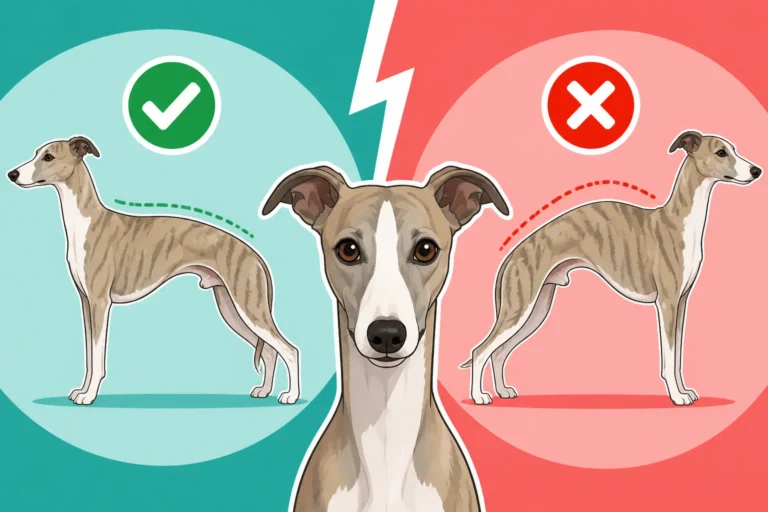
The Whippet’s outline reflects the demands of short, fast pursuit. Long limbs help cover ground, a flexible spine contributes to an extended running stride, and a deep chest provides room for the heart and lungs. Its lean shape helps it move efficiently rather than carry unnecessary bulk.
That physique is often misunderstood. A healthy Whippet can look very slim compared with many companion breeds, and ribs may be visible when the dog moves or stretches. Body condition still matters, of course, but a tucked abdomen and defined waist are normal parts of the breed’s outline. For more on what that shape should look like, see What a Whippet Actually Weighs and How Thin a Whippet Should Look.
The Whippet’s build does not mean it needs to sprint all day. Sighthound bodies are made for speed, but a household Whippet can also be a devoted napper. Many are happiest with a chance to move safely, followed by a warm, comfortable place to rest.
“True sighthound” describes function, not just appearance
A long-legged, narrow-bodied dog is not automatically a sighthound. The label describes a way of working and a history of selection, not merely a silhouette. The Whippet’s purpose and behavior connect it to the wider sighthound group, alongside breeds such as the Greyhound and Saluki.
That relationship does not mean every sighthound has identical instincts or needs. Breed size, individual temperament, early experience, and training all matter. A Whippet raised in a home may never hunt, but the instinct to notice and chase fast-moving animals can still show up during an ordinary walk.
The phrase “true sighthound” is useful because it helps explain why some familiar dog-training assumptions do not always apply. A Whippet may be affectionate and responsive at home, yet find it extremely difficult to disengage from a rabbit or squirrel in motion. Understanding the breed’s original work makes that contrast less puzzling.
How the Whippet sees and pursues movement
Vision helps identify the target
A Whippet’s eyes are not magic, and the breed does not rely on sight to the exclusion of every other sense. Instead, vision is especially important when the dog is scanning open space for movement. A still object may draw little interest; a sudden dart across the field can be much more compelling.
This is why a Whippet can appear to “switch on” when something runs. The trigger may be a rabbit, a cat, a bird, or even a plastic bag skittering across the pavement. The dog is not necessarily making a considered decision about whether the chase is safe. It is responding to a powerful cue that has been meaningful to the breed for generations.
That response can be startling for a new owner. A Whippet who walks calmly on a quiet street may lunge toward a moving animal with strength and speed. Planning for the moment before it happens is more effective than expecting the dog to make a perfect choice once it is already focused on a target.
Speed is only one part of the sequence
A chase involves noticing, orienting, accelerating, and pursuing. Whippets are known for speed, but the first part of the sequence—spotting motion and becoming intensely focused—is just as important to understand. By the time a person calls the dog, the Whippet may already be locked onto the movement.
That does not make training pointless. It means training should be realistic about what competes with the dog’s attention. Recall can be practiced and strengthened, but it is not a reliable substitute for secure management in an open area where wildlife or traffic may be present. A fenced field, a suitable enclosed exercise space, or a long line used thoughtfully can offer safer opportunities to move.
Owners looking for a deeper explanation of the training challenge can read Why a Whippet's Chase Instinct Overrides Its Recall and How Far a Whippet's Recall Can Be Trusted. A Whippet’s behavior during a chase is not proof that the dog is stubborn or unbonded; it reflects the strength of an instinctive response.
A Whippet’s chase instinct needs safe outlets
A secure place to run can give a Whippet room to stretch out without relying on an uncertain recall. This may mean a properly enclosed private area, a carefully managed dog-sport setting, or another safe option available to the owner. Fencing matters: Whippets can be quick to cross a space, and a dog who sees something beyond the boundary may test it.
Some Whippets enjoy organized activities that let them follow a moving lure or run in a controlled setting. These activities should be introduced with attention to age, fitness, footing, warm-up, and the dog’s individual health. Not every Whippet needs to compete, and not every dog will enjoy the same activity.
If you are exploring structured outlets, How Lure Coursing Channels a Whippet's Drive explains why a controlled chase can appeal to the breed. For everyday planning, Where a Whippet Can Safely Run Off Leash is a useful companion topic.
What sighthound heritage means at home
Calm indoors and intense outdoors can coexist
Whippet owners often describe a striking contrast: a dog who curls up quietly on the sofa at home and becomes intensely athletic in an open space. These traits are not contradictory. A breed adapted for bursts of speed may be content to rest for long stretches between opportunities to move.
It is a mistake to assume that a Whippet must be constantly exercised because it is fast. Regular walks, play, mental engagement, and safe chances to run can support a good routine, but the right amount varies by age, health, and temperament. For many Whippets, comfort and rest are as important as activity.
That home life is one reason the breed can fit a range of households, including some smaller homes, when its needs are understood. The dog still needs secure handling outdoors and a comfortable place to lie down indoors. The broader picture is explored in The Household a Whippet Was Built For.
Secure handling is part of responsible sighthound care
A Whippet’s narrow head and smooth coat can make ordinary flat collars less secure than owners expect. Many people use a well-fitted martingale collar for walks, taking care that it is adjusted correctly and used under supervision. A properly fitted harness may suit some dogs, though individual Whippets can differ in how readily they back out of a design.
A collar or harness is not a substitute for a leash in an unsecured area. The combination of speed and chase instinct means a sudden escape can become dangerous quickly, especially near roads. Practice door routines, use gates where helpful, and make sure everyone in the household understands not to open an exterior door while the Whippet is waiting nearby.
When shopping, fit and function matter more than appearance. A retailer such as Chewy may be one place owners compare collar and harness options, but check measurements and return policies carefully; a deep chest and slim neck can make fit less straightforward than with a more squarely built dog.
Comfort supports the Whippet’s everyday routine
A lean dog with a short coat may feel cold sooner than a heavily coated breed. A coat for chilly or wet walks, soft bedding, and a warm resting spot can make daily life more comfortable. The goal is not to dress the dog by habit in every condition, but to notice whether it is shivering, reluctant to stay outside, or seeking warmth.
A coat should allow free movement and avoid rubbing, especially around the chest, armpits, and thin-skinned areas. Chewy may offer a convenient way to compare coat styles, but measuring the dog and checking how the garment sits while walking are more useful than choosing by breed label alone. A Whippet’s proportions can vary, so a size chart is only a starting point.
For many owners, the easiest setup is a small rotation: a light layer for cool weather, a more weather-resistant option for rain, and comfortable bedding indoors. If you are figuring out what belongs in that routine, The Colors a Whippet Comes In is about appearance, while A Whippet Has No Insulation and No Padding covers the practical side of the breed’s lean build.
Whippet compared with other dog types
Sighthound versus scent hound
The contrast between sighthounds and scent hounds is a helpful way to understand Whippet behavior, though no dog uses only one sense. A scent hound may work with its nose close to the ground and follow an odor over distance. A Whippet is more likely to respond to a visible target moving through the landscape.
That difference affects the kind of challenge an owner may encounter. A scent hound might become absorbed in a smell trail and seem not to hear a call. A Whippet may become absorbed in motion and be difficult to interrupt once pursuit begins. In either case, good management recognizes the dog’s natural strengths rather than treating instinct as disobedience.
| Trait | Whippet as a sighthound | Typical scent-hound pattern |
|---|---|---|
| Primary hunting cue | Visible movement at a distance | Odor trail or scent source |
| Typical response | Orient, accelerate, and pursue | Lower the nose and follow a trail |
| Main outdoor management concern | Chasing moving animals or objects | Following scents away from the handler |
| Useful exercise planning | Secure running opportunities and controlled activities | Sniffing opportunities and scent-based enrichment |
| Training consideration | Recall may be challenged by a moving target | Recall may be challenged by an absorbing scent |
The table describes general tendencies, not a rule for every dog. Individual history, training, and environment can change how a particular Whippet or scent hound behaves.
Whippet versus Greyhound
Whippets and Greyhounds share a recognizable sighthound pattern, but they are distinct breeds rather than different sizes of the same dog. Their scale, history, and individual energy levels may differ, even though both are built for fast pursuit and may have a strong response to movement.
A person choosing between them should consider more than speed. Space, household routine, the dog’s age and background, and access to safe exercise all matter. Neither breed should be expected to roam freely in an unsecured area simply because it has been trained or seems calm at home.
For a fuller comparison, see The Whippet Against a Greyhound and How Closely the Whippet Descends From the Greyhound. Those distinctions help put the Whippet’s identity in context without reducing the breed to a smaller version of another.
Whippet versus a general-purpose companion dog
Many companion dogs are selected for a broad range of household jobs and may be less specifically shaped around high-speed visual pursuit. A Whippet can certainly be a companion, but its ancestry remains relevant. People sometimes expect a dog who is affectionate indoors to be equally easy to recall outdoors; with a sighthound, those are separate skills and situations.
That does not make the Whippet unsuitable as a pet. It means the best fit is a home prepared to provide secure outdoor routines and accept that the dog may have limits around off-leash freedom. A family can still enjoy walks, training, play, and quiet companionship while managing the chase instinct thoughtfully.
If you are considering the breed, Whether a Whippet Suits a First Time Owner offers another perspective on matching expectations to daily life. The Whippet’s sighthound nature is not a flaw to correct; it is an important part of the dog you are welcoming home.
Reading the Whippet as a whole dog
Calling the Whippet a true sighthound is not just a statement about its athletic body. It recognizes a connected set of traits: a history of visual pursuit, a build suited to rapid running, and a tendency to respond strongly when something moves. Those traits can explain both the thrilling speed and the practical challenges owners encounter.
The best approach is to plan around what the dog is good at. Offer safe chances to move, build training in manageable settings, use secure equipment, and make the home comfortable for a lean, short-coated dog. That way, a Whippet’s heritage becomes something to understand and accommodate—not a surprise that appears only when a rabbit crosses the path.
Disclaimer
This article is for general informational purposes only and does not constitute professional advice. Laws, prices and regulations vary by location and change over time. Consult a qualified professional for guidance on your specific situation.