How Far a Whippet’s Recall Can Be Trusted
It’s a dream many Whippet owners share: letting their elegant, lightning-fast companion off-leash in a wide-open space, watching them fly, and knowing with absolute certainty that they’ll come rocketing back the moment they’re called. But the reality often brings a gut-wrenching fear that a flash of movement in the distance will send your beloved hound into an instant, deaf sprint towards the horizon, completely deaf to your frantic cries. This guide will delve into the often-misunderstood nature of a Whippet's recall, exploring just how far you can realistically trust it, the instincts you're up against, and practical strategies to keep your speedy friend safe.
The Whippet's Hardwired Chase Instinct
Let’s be honest, trying to instill a "perfect" recall in a Whippet often feels like trying to teach a fish to climb a tree. It’s not that they’re untrainable or stupid; quite the opposite. It’s that their very essence, their genetic blueprint, is screaming at them to do something else entirely. Understanding this fundamental truth is the first step toward managing your expectations and, more importantly, keeping your Whippet safe.
Understanding the Sighthound Drive
Whippets are sighthounds, through and through. This isn't just a breed classification; it's a profound statement about their physiological and psychological makeup. They were bred for centuries to spot movement over vast distances, lock onto it, and pursue it with incredible speed and single-minded focus. When a Whippet sees something move – a squirrel, a rabbit, a blowing leaf, or even another dog playing – it's not merely a visual stimulus; it's an irresistible trigger that ignites an ancient, primal instinct. Their brains are hardwired for the chase, and in that moment, the world narrows to just two things: them and the object of their pursuit.
This deep-seated drive means that even the most well-behaved Whippet, one who comes reliably when called in your backyard, can instantly "switch off" its learned behaviors when that prey drive kicks in. It’s not disobedience in the way a terrier might ignore you because it's found a scent; it's a complete physiological takeover. They're not being stubborn; they're fulfilling their deepest instinct, and that instinct is incredibly powerful, often overriding months or even years of consistent training. You might call their name, offer their favorite treat, or even throw their most cherished toy, and it will all fall on deaf ears. They literally cannot hear you over the roar of their chase instinct.
The Unbeatable Thrill of the Chase
Think about the sheer joy and exhilaration your Whippet experiences when they finally get to run. Now imagine that amplified tenfold when they're running with purpose, driven by their prey instinct. For a Whippet, chasing is the ultimate reward. It releases a potent cocktail of neurochemicals – adrenaline, dopamine, endorphins – that flood their system, creating an intensely pleasurable experience. This internal reward is so incredibly strong that it far outweighs any external reward you could offer, whether it's the tastiest piece of chicken or the most enthusiastic praise.
This is why, no matter how much you've worked on recall with treats, once a Whippet is in full chase mode, those treats become utterly irrelevant. The intrinsic reward of the chase itself is unbeatable. It's like asking a human to stop mid-rollercoaster ride for a cookie. Not going to happen. They’re simply too wired into the moment. This biological imperative is a crucial aspect of Why a Whippet's Chase Instinct Overrides Its Recall and something every Whippet owner must respectfully acknowledge and plan for. It's not a flaw in your training; it's a testament to the powerful genetics of the breed.
How Far a Whippet Can See and Sprint
Whippets possess remarkable eyesight, specifically adapted for detecting movement across vast distances. Unlike many breeds that rely heavily on scent, a Whippet's world is largely defined by what it can see. This means that a tiny movement, barely perceptible to the human eye, perhaps a rabbit on the far side of a sprawling field, can register as a crystal-clear invitation to your Whippet. Their visual acuity is truly impressive, allowing them to spot potential "prey" much further away than you might expect, giving them a significant head start on their pursuit.
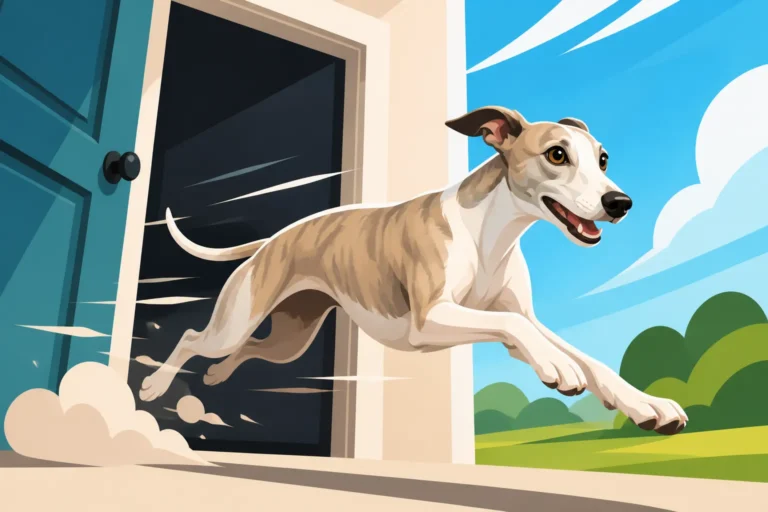
Once they spot something, their acceleration is explosive. These dogs can reach their top speeds of up to 35 miles per hour in just a few strides. This combination of superior long-distance vision and incredible acceleration means that a Whippet can be out of sight, and potentially out of reach, in a matter of seconds. Imagine standing in a park, seeing your Whippet a hundred yards away, and then a squirrel dashes. Before you can even finish shouting their name, they're halfway across the park, gaining speed. This speed, while breathtaking to watch, also presents immense dangers, particularly in areas near roads or other hazards. A Whippet running at full tilt has very little control and can easily put themselves in harm's way, making the question of Why a Loose Whippet Runs Into Traffic a constant, terrifying consideration for owners.
The Reliability Scale: Where Whippets Rank for Recall
When we talk about recall, it's not a one-size-fits-all concept. For some breeds, a "reliable" recall means they'll drop everything and come every single time, no matter what. For Whippets, the definition is a little more nuanced, and often, more conditional. It's vital to understand these distinctions to set realistic expectations and ensure your dog's safety.
The "Bomb-Proof" Recall Myth for Sighthounds
The idea of a "bomb-proof" recall – one that holds true under any and all circumstances – is largely a myth for many sighthounds, including Whippets. While some individual Whippets, through extraordinary training and careful management, might achieve an impressive level of recall, it's never something you can take for granted in the same way you might with, say, a Labrador Retriever or a Border Collie. Those breeds were developed with strong human-centric drives, often working closely with handlers and valuing human praise above almost all else. A Whippet's primary drive, however, is independent pursuit.
This means that while your Whippet might have an excellent recall in your fenced yard, or even on a long line in an open field with no distractions, that reliability often diminishes drastically the moment a high-value stimulus (like a rabbit or another dog chasing a ball) enters the picture. It's not a failing of your dog's intelligence or your training efforts; it's a fundamental difference in how their brains are wired. Expecting a "bomb-proof" recall from a Whippet in a highly stimulating environment is often setting both yourself and your dog up for disappointment and potential danger. Instead, it’s more productive to aim for a "highly managed" or "contextually reliable" recall.
Factors Influencing a Whippet's Recall Success
Several factors can significantly impact how reliable your Whippet's recall will be in any given situation. Firstly, the environment plays a massive role. A quiet, familiar park at a non-peak hour, far from roads and other animals, offers a much higher chance of success than a bustling trail at dusk when squirrels are most active. Secondly, your Whippet's emotional state matters. Is your dog calm and focused, or are they already agitated by something in the distance? An overstimulated Whippet is far less likely to respond.
Age is another consideration; while puppies can be trained for recall, their impulsivity and lack of experience mean they're inherently less reliable. Adult Whippets can develop good habits, but their instincts remain. Finally, individual personality is key. Some Whippets are naturally more biddable and handler-focused, while others are more independent and driven by their environment. Even the most compliant Whippet will have a breaking point when their prey drive is fully activated. It's crucial to honestly assess these variables every time you consider letting your Whippet off-leash.
The "Context-Specific" Nature of Whippet Recall
Because of these influencing factors, a Whippet's recall is almost always context-specific. This means they might have a fantastic recall in one specific scenario, but it completely falls apart in another. For example, your Whippet might come when called 99% of the time when you're in a completely enclosed, familiar dog park with no other dogs present. However, introduce a new dog that likes to chase, or even just a plastic bag blowing in the wind, and that reliability can plummet.
This isn't to say training is futile; it's about understanding its limitations for this breed. You can achieve a very strong recall in specific, controlled environments where the risk of triggering their prey drive is low. But the moment you step outside those parameters, the recall becomes a gamble. This is why for Whippets, it's often more about management and prevention than relying solely on a command. Knowing Where a Whippet Can Safely Run Off Leash is paramount, and these safe spaces are almost always securely fenced and free from unexpected wildlife.
Building a Strong (But Realistic) Whippet Recall
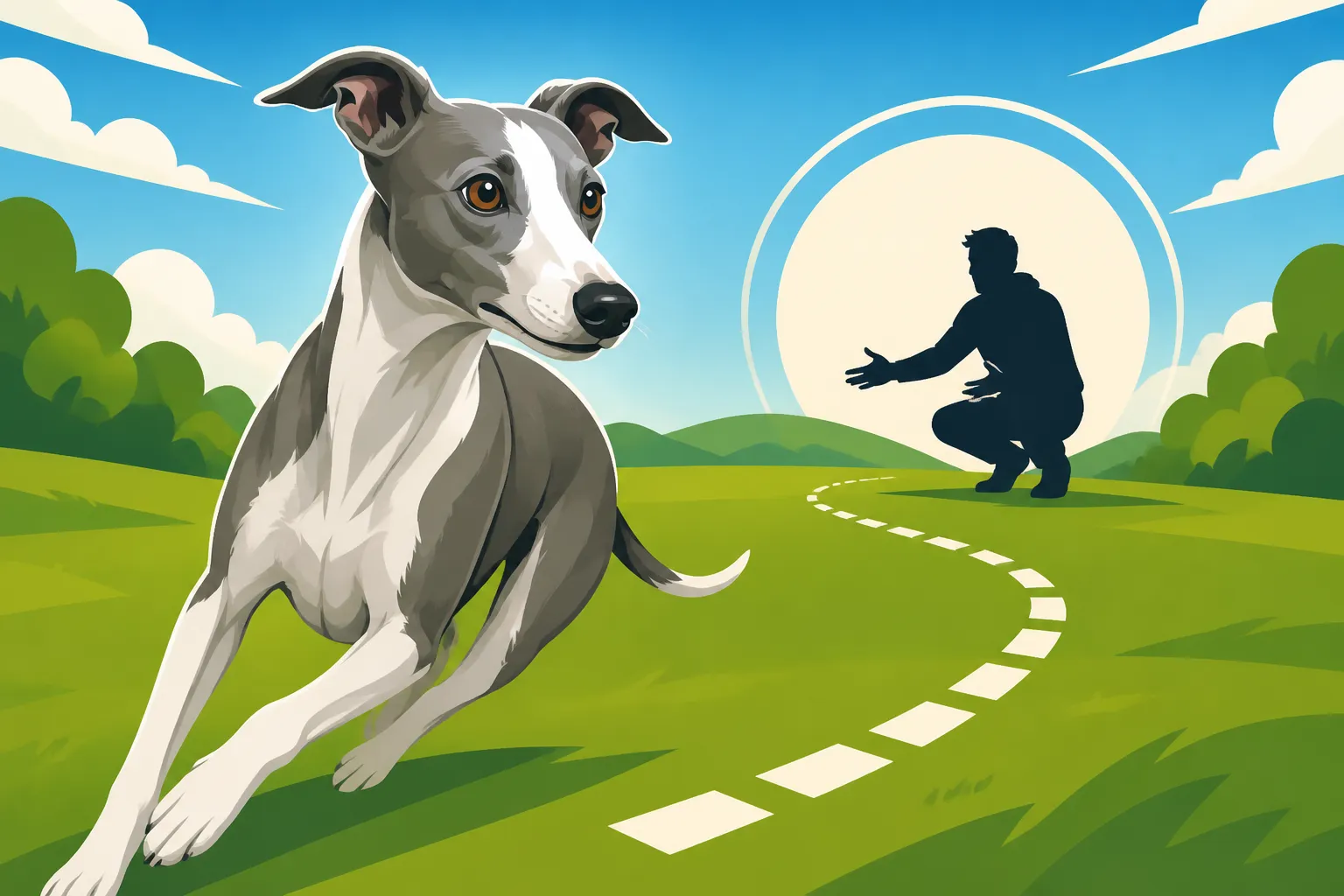
While a "bomb-proof" recall might be an elusive dream for a Whippet, building the strongest possible recall for your individual dog is still incredibly important. It’s a vital safety tool, even if it’s only 80% reliable, because that 80% could save their life. The key is consistent, positive training that respects their natural instincts.
The Foundation: Positive Reinforcement and High-Value Rewards
For any dog, but especially a sensitive sighthound like a Whippet, positive reinforcement is the only way to build a truly willing and enthusiastic recall. Harsh corrections or punishment will only teach your Whippet to be fearful of coming back to you, especially if they associate being caught with something unpleasant. Instead, make coming to you the most wonderful thing in the world!
This means using high-value rewards. Kibble or a simple "good dog" might work for some breeds, but for a Whippet, you need something truly irresistible. Think small pieces of cooked chicken, cheese, hot dogs, or specially formulated soft training treats. The moment they turn and come towards you, even a step, mark it with a clear word like "Yes!" or a clicker, and then deliver that amazing reward. Make it a party! Many owners find that using a dedicated online training program, like those offered by BAXTER & Bella, can provide structured guidance and support in mastering these foundational positive reinforcement techniques, ensuring you're building a strong, joyful association with coming when called.
Starting in a Controlled Environment
Never, ever start recall training in an open, unfenced area. This is setting your Whippet up to fail and teaching them that ignoring you is an option. Begin your recall journey in a completely secure, distraction-free environment. This means indoors, or a securely fenced yard where you are absolutely certain no squirrels, rabbits, or other enticing movements can enter.
Start by simply getting their attention and calling their name with excitement, then immediately rewarding them when they look at you or take a step towards you. Gradually increase the distance, always making sure they succeed. If they don't come, you've asked for too much too soon. Go back a step. The goal in these early stages is to build a massive history of successful recalls, so your Whippet learns that "come" always means something fantastic happens when they return to you. Avoid situations where they have the opportunity to ignore you, as each successful evasion strengthens the habit of not coming.
Gradually Increasing Distractions and Distance
Once your Whippet is reliably coming to you in your secure, distraction-free space, it's time to slowly and incrementally introduce distractions. This is where a long line becomes an invaluable tool. A long line, usually 15-30 feet, allows your Whippet to feel the freedom of movement while still giving you control. You can find durable long lines made from various materials, like biothane or nylon, on Amazon, ensuring you have the right tool for safe outdoor training. Use it in a park that's relatively quiet, or a large open field away from roads.
Start with minimal distractions: perhaps just you and your Whippet, or one calm friend in the distance. Call your Whippet, and if they hesitate, give a gentle tug on the long line to remind them you're there. Reward heavily the instant they respond. Over time, you can gradually increase the level of distraction – maybe another person, a distant dog on a leash, or a few toys scattered around. Never allow your Whippet to drag the long line unmonitored; it can snag and injure them. Remember, the long line is a safety net and a training aid, not a substitute for a reliable recall in a truly stimulating environment. The idea is to teach them that coming to you is always worth it, no matter what else is happening around them, but always with the understanding that their deep-seated prey drive can still overrule everything. Whether a Long Line Suits a Whippet is an important question to consider, as it's a vital tool for sighthound owners.
When Recall Isn't Enough: Managing a Whippet Off-Leash
For many Whippet owners, the harsh reality is that a truly reliable off-leash recall, especially in unpredictable environments, will never be 100%. This isn't a failure, but rather an acknowledgment of the breed's intrinsic nature. Instead of endlessly chasing an impossible ideal, responsible ownership shifts to proactive management and providing safe outlets for their natural desires.
The Role of Secure Fencing and Designated Off-Leash Areas
Given a Whippet's incredible speed and visual prey drive, secure containment is non-negotiable. Your backyard absolutely must have a fence that is tall enough and secure enough to prevent escape. A standard four-foot picket fence might be fine for some breeds, but a determined Whippet can clear it or find a weak spot in seconds. They are surprisingly agile and can use any leverage to their advantage. For peace of mind and safety, a six-foot solid fence is often recommended, and even then, regular checks for dig sites or loose panels are essential. The question of How Tall a Fence a Whippet Needs is more critical for this breed than many others.
Beyond your home, the safest places for your Whippet to experience true off-leash freedom are designated, securely fenced dog parks or, even better, sighthound-specific playgroups. These environments are designed to minimize escape risks and often provide large, open spaces for galloping. However, even in dog parks, always remain vigilant. Unpredictable interactions with other dogs or unexpected external distractions (like a person walking by the fence with a treat) can still lead to a quick escape or conflict. Always be present, observing, and ready to intervene.
Long Lines and Their Safe Use
As mentioned earlier, long lines are indispensable tools for Whippet owners. They bridge the gap between full freedom and absolute restraint. For example, a 30-foot long line allows your Whippet to run in sweeping arcs, getting up to a decent speed without the risk of bolting completely. They offer a taste of freedom without the inherent dangers of an uncontrolled off-leash situation.
However, safety is paramount. Always use a harness, not a collar, with a long line. If your Whippet hits the end of the line at a sprint, the impact on their neck could cause serious injury. Ensure the line is made of a material that won't cause rope burns if it slides through your hands (biothane is often favored). Check for snags, particularly around trees or bushes, which could trip your dog or you. Never wrap the line around your hand or arm, as a sudden surge from your Whippet could lead to severe injury. Instead, wear gloves and let the line slide through your grasp, always ready to drop it if necessary to prevent being pulled over. A long line isn't a hands-free solution; it requires constant attention and active handling.
Embracing Activities That Channel Prey Drive Safely
One of the most effective ways to manage a Whippet's prey drive is to give them appropriate, safe outlets for it. Trying to suppress this instinct entirely is unfair and often leads to frustrated behavior. Instead, lean into what they love! Lure coursing is an excellent sport designed specifically for sighthounds. Dogs chase an artificial lure (often a plastic bag) across a field, simulating the chase of live prey but in a completely controlled and safe environment. This allows them to run at full speed, engage their predatory instincts, and burn off immense amounts of energy, all without the risk of them disappearing after a real rabbit. How Lure Coursing Channels a Whippet's Drive is key to their physical and mental well-being.
Similarly, Fast CAT (Coursing Ability Test) is another fantastic option. This AKC event involves a straight, 100-yard dash where dogs chase a lure, timed for speed. It's exhilarating for Whippets and a great way for them to express their natural athleticism. Participating in activities like these not only satisfies their deep-seated urges but also strengthens your bond with your dog as you engage in something they truly love. Many owners find that after a good lure coursing session, their Whippet is far more relaxed and less inclined to eye every passing squirrel with such intense focus during regular walks. For more details on this, you might explore Whether Fast CAT Suits a Whippet.
Why Off-Leash is Often Not Worth the Risk
It’s tempting to want your Whippet to run free, to see that magnificent double suspension gallop in its full glory. But for all the joy it might bring, the risks of off-leash freedom for a Whippet in uncontrolled environments far too often outweigh the benefits. It's a conversation every Whippet owner has to have with themselves, often leading to the conclusion that restraint is the truest form of care.
The Unseen Dangers: Traffic, Other Animals, and Injury
The moment a Whippet bolts, a myriad of dangers suddenly becomes very real. Traffic is, without a doubt, the most terrifying. A Whippet can cover immense distances in seconds, making a dash across a road a very real and often fatal possibility. Their focus on the chase means they are oblivious to cars, bikes, or any other moving vehicles. This is precisely Why a Loose Whippet Runs Into Traffic – they simply don't register the danger until it's too late.
Beyond traffic, there's the risk of encounters with other animals. While your Whippet might be the sweetest dog at home, that prey drive can flip a switch, leading them to chase or even harm wildlife. Conversely, they could encounter larger, aggressive dogs or become tangled in a fight. Then there's the landscape itself. Whippets have incredibly thin, delicate skin, and a tumble or brush with sharp undergrowth can result in nasty lacerations. The Thin Skin That Sends a Whippet to the Vet for Stitches is a common reality for owners of this breed. Their fine bone structure, while enabling their speed, also makes them susceptible to injuries from awkward landings or collisions. A misplaced step at full speed could lead to a sprain, a fracture, or a muscle tear.
The Emotional Toll of a Whippet Gone Chasing
Anyone who has experienced their Whippet bolting will tell you it's one of the most terrifying, heart-stopping moments of dog ownership. The sheer panic, the frantic shouting, the desperate searching – it's an intense emotional roller coaster. Your stomach drops, your heart races, and every second they're out of sight feels like an eternity. The thoughts that race through your mind are horrific: "Did they get hit by a car?" "Are they lost?" "Are they hurt?"
Even when they eventually return, often oblivious to the distress they've caused, the relief is mixed with a profound sense of exhaustion and, often, anger at oneself for having taken the risk. This emotional toll is not something to be underestimated. It can sour future walks, making you constantly anxious even when your dog is on a leash. For many, the mental anguish simply isn't worth the brief moment of perceived freedom. This is why the advice is so often repeated: Why a Whippet Cannot Be Let Off Leash in an Open Field is for their safety and your peace of mind.
A Responsible Whippet Owner's Mindset
Ultimately, responsible Whippet ownership often means adjusting your mindset. Instead of asking, "How far can I trust my Whippet's recall?" it's more productive to ask, "Is it fair or safe to expect my Whippet to resist its most powerful, instinctual urges?" The answer, more often than not, is no. It places an immense burden on a dog to override thousands of years of selective breeding.
A truly loving and responsible owner understands that sometimes, the greatest act of love is setting boundaries and managing risks. This might mean accepting that your Whippet will live a largely on-leash life outside of securely fenced areas. It means prioritizing their safety over the romanticized ideal of a dog running wild. It means understanding that prevention – through secure leashes, harnesses, and fenced environments – is always better than the agonizing hope that your recall will hold when instinct calls.
Practical Tools and Strategies for Off-Leash Safety (When Appropriate)
Even with the most cautious approach, there will be times when your Whippet is off-leash in a controlled environment, or you want to have every tool available for that rare, unavoidable moment of instinct. While no tool replaces vigilance and responsible management, some can offer additional layers of security or aid in training.
GPS Trackers and Their Limitations
In an age of technology, GPS trackers have become a popular tool for dog owners, offering a glimmer of hope if a dog were to slip its lead or escape a yard. For a fast-moving breed like a Whippet, a GPS tracker can provide crucial minutes in locating a dog that has bolted. Many brands offer lightweight, waterproof devices that attach to a collar, providing real-time location tracking via a smartphone app. You can find various models of GPS trackers suitable for dogs on Amazon, offering features like activity monitoring and geofencing.
However, it's essential to understand their limitations. Firstly, battery life can be an issue; a tracker needs to be regularly charged. Secondly, signal strength can vary, especially in dense forests or remote areas. Thirdly, a tracker helps you find your dog, but it doesn't stop them from getting into danger in the first place. If your Whippet runs into traffic, the tracker won't prevent that. It's a fantastic backup tool for peace of mind, but it should never be seen as a replacement for physical containment or robust training. It's an extra layer of security, not a free pass for risky off-leash adventures.
Whistle Training and Hand Signals
Sometimes, a verbal "come" simply gets lost in the excitement of the moment. Voice commands can be easily overridden by high-pitched squeals of other dogs, distant human chatter, or the rustling of leaves. This is where a whistle can be incredibly effective. A whistle produces a consistent sound that cuts through ambient noise, and it doesn't carry the emotional inflection that your voice might (e.g., sounding panicked).
Start whistle training in the same way you would a verbal recall: in a distraction-free environment, pairing the sound of the whistle with immediate high-value rewards. Blow the whistle, reward. Blow the whistle, reward. Soon, the whistle will become a powerful positive association. Similarly, hand signals can be very useful. Whippets are visual learners, so a distinct hand signal paired with your verbal or whistle recall can sometimes bypass auditory distractions. Ensure your hand signal is unique, clear, and always associated with the same positive outcome. Learning to combine these signals offers you more avenues to reach your Whippet when their attention is divided.
The "Look At Me" Command and Emergency Stops
Beyond a standard recall, teaching a solid "look at me" or an "emergency stop" command can be incredibly valuable. A "look at me" command teaches your Whippet to make eye contact with you, breaking their focus on whatever else they might be interested in. This can be a vital circuit breaker, giving you a chance to issue a recall or simply walk them away from a potential distraction. Practice this consistently, starting in quiet areas and gradually adding distractions, always rewarding heavily for sustained eye contact.
An "emergency stop" or "down" from a distance is another advanced recall strategy. This means teaching your Whippet to immediately drop into a down position, wherever they are, when you give the command. This can be a literal lifesaver if you see them heading for danger. This command takes immense practice and proofing in various environments and under different levels of distraction. It requires incredible consistency and extremely high-value rewards, as it’s asking your Whippet to override its natural inclination to keep moving. Working with a professional trainer can be highly beneficial for teaching and proofing such critical commands, as detailed in programs like those found at BAXTER & Bella.
Here's a quick comparison of recall reliability across different Whippet scenarios:
| Scenario | Recall Reliability (General) | Key Factors | Recommended Action |
|---|---|---|---|
| Indoors/Fenced Yard | High | Familiar environment, low distractions, strong positive associations. | Consistent positive reinforcement, high-value treats. |
| Quiet Park (on long line) | Moderate-High | Reduced distractions, controlled freedom, owner intervention possible. | Use a harness and secure long line, practice recall frequently, use high-value rewards. |
| Busy Park/Trail | Low-Moderate | High distractions (wildlife, other dogs, people), unpredictable movements, noise. | Keep on leash or very short line; avoid off-leash. Consider muzzle for busy areas. |
| Near Roads/Traffic | Very Low | Extreme danger, high-speed distractions, Whippet oblivious to cars. | NEVER off-leash. Use double leash, secure harness. |
| Lure Coursing/Fast CAT | N/A (Controlled Chase) | Designed for prey drive, safe, enclosed, natural instinct satisfied. | Participate in organized events; this is an alternative to recall, not a test of it. |
| Encountering Prey | Extremely Low | Primal instinct overrides all training, high dopamine rush from chase. | Maintain physical control (leash, long line) at all times in prey-rich areas. |
Disclaimer
This article is for general informational purposes only and does not constitute professional advice. Laws, prices and regulations vary by location and change over time. Consult a qualified professional for guidance on your specific situation.