Whether Two Whippets Are Easier Than One
It’s a question many Whippet owners eventually ponder: would two Whippets truly be easier than one? You adore your current sighthound, but maybe you've noticed they seem a little lonely when you're gone, or perhaps you dream of a coordinated pair zooming around the yard. It's easy to imagine a second Whippet becoming an instant playmate and companion, solving all those solo-dog dilemmas. But the reality isn't always that straightforward; while there are undeniable joys to a multi-Whippet household, it also comes with its own set of unique considerations. This guide will walk you through the real-world implications of bringing a second Whippet into your home, helping you decide if doubling your Whippet joy is the right move for you.
The Allure of the Second Whippet: Why We Even Ask This Question
There's something incredibly appealing about the idea of a pair of Whippets. For many of us, our first Whippet quickly steals our hearts with their gentle nature, goofy antics, and lightning-fast sprints. It’s natural to think, "If one is this good, two must be even better, right?" This line of thinking often stems from a desire to enrich our dog’s life, address perceived behavioral gaps, or simply indulge in more of what we love.
The 'Easier' Myth vs. Reality
Let's be honest, the idea that a second dog makes things "easier" is a bit of a siren song. We picture them endlessly entertaining each other, curled up together for naps, and generally requiring less direct human intervention. In some ways, this can be true – they do provide each other with companionship and play that we simply can't always replicate. They have a shared language, a mutual understanding that only another dog can provide.
However, it's crucial to understand that "easier" doesn't mean "less work." You're adding another living, breathing creature with its own needs, personality, and potential quirks. While some aspects of their lives might become more self-sufficient, like playtime, other areas, such as training, feeding, and veterinary care, will absolutely double, if not more than double. Think of it less as dividing the work and more as shifting where the work needs to be done.
Companion for Life: The Pack Instinct
Whippets, like most dogs, are inherently social animals. They thrive on companionship, and while we, their human families, provide a great deal of that, there's a unique bond that forms between two dogs. It's a primal connection that manifests in shared naps, wrestling matches, mutual grooming, and simply the quiet presence of another canine. This can be especially true for a breed like the Whippet, which often forms deep attachments to its family members.
Having a second Whippet can tap into this pack instinct, providing a constant source of comfort and security. This is often particularly noticeable when you're not home. Instead of one dog waiting anxiously by the door, you have two who can snuggle, play a little, and generally keep each other company, potentially reducing feelings of loneliness. This can be a huge benefit for a Whippet prone to Separation Anxiety in a Whippet.
Addressing Specific Behavioral Issues
Sometimes, the thought of a second Whippet arises from a specific challenge with the first. Perhaps your current Whippet struggles with being left alone, or seems to lack confidence, or maybe they just have boundless energy you struggle to manage single-handedly. It's tempting to think that a canine companion will magically resolve these issues.
While a second dog can absolutely help with some behavioral aspects, it’s not a guaranteed fix and can sometimes even exacerbate existing problems. For instance, if your Whippet is reactive towards other dogs on walks, bringing a second dog into the home won't necessarily fix that and might even create new dynamics to manage. It's vital to address any significant behavioral issues with your first Whippet before adding a second, ensuring a stable foundation for the new arrival. A well-adjusted first dog makes integrating a second one infinitely smoother.
The Wonderful World of Two Whippets: Where It Does Get Easier (or at Least More Joyful)
While the "easier" factor isn't universal, there are certainly aspects of life with two Whippets that bring undeniable joy and, in some cases, simplify certain routines. The sheer delight of watching them interact can be a reward in itself, and some practical benefits do emerge.
Built-in Playmates
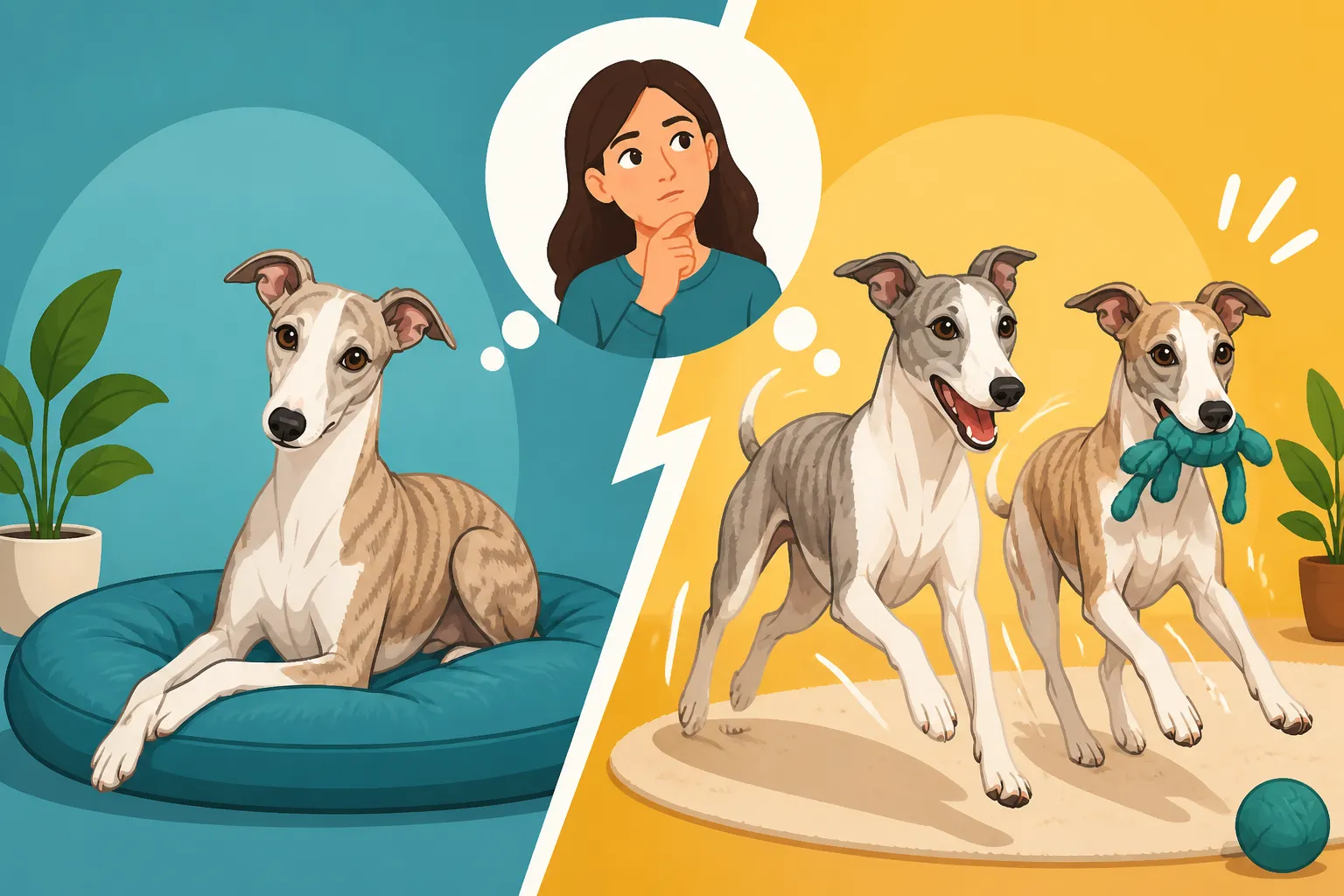
This is perhaps the biggest and most obvious benefit. Whippets are renowned for their explosive bursts of speed and playful wrestling. With two, you get to witness the famous "Whippet zoomies" in stereo! They can chase each other in the yard, engage in endless games of tug, or simply tumble around the living room. This mutual entertainment can significantly reduce your direct responsibility for exercise and mental stimulation, especially on those days when you're tired or the weather isn't cooperating for a long walk.
Having a playmate means less boredom for both dogs, which often translates into less destructive behavior. Instead of chewing your shoes, they might be wrestling with each other or chasing a favorite toy. This internal source of entertainment is invaluable, particularly for a breed that, despite its speed, also spends a significant portion of its day napping. Why a Whippet Sleeps More Than Most Breeds highlights their natural tendency towards downtime, making a companion even more beneficial for those active bursts.
Mutual Comfort and Reduced Anxiety
As mentioned earlier, the presence of another dog can be profoundly comforting. If your Whippet struggles with being home alone, a second Whippet can provide a constant, warm body to snuggle with. They learn to rely on each other for reassurance, whether it's during a thunderstorm, when the doorbell rings, or simply when you leave for work. This can genuinely reduce anxiety levels for both dogs and, by extension, for you.
The silent communication, the shared space, the way they curl into an impossibly tangled pile on the sofa – these are all testaments to the deep bond that can form. This kind of mutual support can alleviate the pressure on you to be their sole source of comfort and entertainment, allowing for a more balanced household dynamic. Sometimes, just having a friend to share the sunbeam with is all a Whippet needs.
Observed Learning: The "Monkey See, Monkey Do" Effect
If you bring a puppy or a less experienced dog into a home with a well-trained, confident adult Whippet, you'll often observe a phenomenon called "observed learning." The younger or newer dog picks up on cues and routines from the resident dog. Potty training can be faster if the new arrival simply follows the older dog outside. House manners, understanding boundaries, and even subtle communication signals can be absorbed more quickly when there's a good canine role model.
This isn't to say you don't need to train the second dog – far from it! But having an established routine and a stable, calm influence can certainly smooth the integration process. Just be mindful, this works both ways: if your first Whippet has any undesirable habits, the second might pick those up too! This is why having a solid foundation with your first Whippet is so important before considering a second. For new puppy owners, a resource like BAXTER & Bella's online puppy training courses can be incredibly helpful to get that first foundation right, making any future additions much smoother.
The Double-Edged Sword: When Two Whippets Mean Double the Work (or More)
While the idea of two Whippets sounds idyllic, it's crucial to approach it with a realistic understanding of the increased responsibilities. It's not just "one more bowl of food"; it's a compounding effect that touches almost every aspect of dog ownership.
Financial Realities: The Cost Multiplier
Let's talk about the elephant in the room: money. Everything from food to vet care doubles, and in some cases, certain costs increase disproportionately. You're looking at:
- Food: Twice the kibble, twice the treats. Even though Whippets are relatively Whether a Whippet Is Cheap to Feed, two mouths to feed still adds up significantly over The Twelve to Fifteen Years a Whippet Lives.
- Vet Bills: Annual check-ups, vaccinations, parasite prevention, and unexpected emergencies all come in pairs. If one gets sick, the other might too. What a Sighthound Vet Costs Over a Whippet's Life can be substantial, and having two definitely multiplies this.
- Insurance: Premiums double. You'll need to decide if you want separate policies or a multi-pet discount, but either way, it's a significant monthly outgoing.
- Gear: Two collars, two leashes, two beds (or more!), and double the coats for chilly weather. Whippets, with their thin skin and lack of body fat, need a good The Wardrobe a Whippet Needs Because It Has No Body Fat, and buying for two can be a substantial initial outlay. You'll likely be browsing Amazon for extra beds, blankets, and toys more often.
- Training and Activities: Group classes, entry fees for Fast CAT or lure coursing, or even just special outings all incur double the cost.
- Pet Sitting/Boarding: Finding someone comfortable caring for two dogs can be harder, and costs will naturally be higher.
Before you commit, truly sit down and calculate the financial impact. A new Whippet puppy, for instance, comes with its own set of significant initial costs, as outlined in What a Whippet Puppy Costs in 2026.
Training Two Personalities
While observed learning can help, you still need to train each Whippet individually. Each dog has its own unique personality, learning style, and motivations. What works for one might not work for the other. You’ll need to dedicate time to one-on-one training sessions with each dog, ensuring they both understand basic commands, have good leash manners, and respond to their names.
For example, perfecting a reliable recall is paramount for a Whippet, as their chase instinct is incredibly strong. Thirty Five Miles an Hour and No Brakes on a Whippet's Recall isn't an exaggeration. Training two Whippets for this critical skill, especially if they are distracting each other, can be a significant undertaking. Online resources, like those offered by BAXTER & Bella, can be invaluable for consistent training guidance that you can apply to each dog. You're not just teaching "a dog" to sit; you're teaching Whippet A to sit and Whippet B to sit, often in the presence of the other, which adds a layer of complexity.
Logistics of Life with Two: Double Everything Else
Beyond the direct financial and training aspects, daily life logistics become more intricate:
- Walks: Walking two Whippets who each pull in different directions, or who are easily distracted by squirrels, can be a challenge. You might need to walk them separately at first or invest in specialized equipment like couplers or hands-free leashes.
- Grooming: Double the nail trims, double the baths (though Whippets generally don't need frequent bathing), and double the teeth brushing. Teeth Are the Whippet Problem That Sneaks Up, and maintaining dental hygiene for two can be time-consuming.
- Vet Visits: Scheduling, transportation, and managing two potentially anxious dogs at the vet's office.
- Space: While Whippets are often called "40-mph couch potatoes," they still need their own personal space, especially for eating and sleeping. You'll need enough beds, crates, and quiet corners to prevent resource guarding or territorial disputes. You might find yourself ordering multiple orthopedic beds from Amazon.
- Travel: Traveling with two dogs, whether for a short trip or a longer vacation, requires more planning and often larger vehicles or accommodations.
Potential for Conflict
Even the best-intentioned multi-dog households can experience conflict. Sibling rivalry is a real thing, even among dogs. This could manifest as:
- Resource Guarding: One Whippet might guard food, toys, beds, or even human attention from the other.
- Play Style Mismatches: One might be more rambunctious, the other more sensitive, leading to frustration or fear.
- Dominance Issues: While Whippets are generally not prone to overt aggression, subtle dominance dynamics can emerge, requiring careful management from you.
- Attention Seeking: Both dogs vying for your affection can sometimes lead to pushy behavior or even mild squabbles.
It's crucial to be vigilant and manage these situations promptly and fairly. Providing ample individual attention, separate feeding areas, and distinct resting spots can help mitigate potential issues. Understanding Sighthound Manners: A Whippet Meeting Other Dogs is a good baseline, but living together is a different dynamic entirely.
Navigating the Transition: Making "Two" Work for You
Deciding to bring a second Whippet into your life is a big step, but with careful planning and realistic expectations, it can be an incredibly rewarding experience. It’s about thoughtful preparation and understanding that success lies in the details.
Careful Pairing: Temperament Matters
The key to a harmonious multi-Whippet home often lies in the pairing. Don't just pick any Whippet; consider how their personality, age, and energy level will blend with your current dog's.
- Age: Bringing a puppy into a home with an older, calm Whippet can sometimes be a good match, as the older dog can set boundaries and teach manners. However, a very old Whippet might find a bouncy puppy too overwhelming. Two energetic young Whippets might be a handful, while two seniors might simply enjoy quiet companionship.
- Sex: Some owners find same-sex pairings, particularly two females, can sometimes lead to more dominance struggles, but this is highly individual. A male-female pairing often works well, but again, it’s about personalities first.
- Energy Levels: Try to match energy levels. If your current Whippet is a true couch potato, bringing in a highly energetic youngster might lead to frustration for both dogs.
- Past Experiences: If adopting a rescue, ask about their history with other dogs. A dog that has lived well with others is a safer bet.
Think about Whether a Whippet Needs a Second Dog in terms of personality fit, rather than just companionship.
Setting Up for Success: Space and Resources
Before the new Whippet even steps paw inside, ensure your home is ready. This means having enough of everything:
- Sleeping Areas: Each Whippet should ideally have its own bed or designated sleeping spot. This prevents resource guarding and gives them a safe retreat. You might want to buy some extra soft, deep beds from Amazon, as Whippets really appreciate comfort.
- Feeding Stations: Feed them separately, perhaps in different rooms or crates, to avoid competition and allow them to eat at their own pace without stress.
- Water Bowls: Multiple water bowls around the house can be helpful, ensuring easy access for both.
- Toys: Have plenty of toys, including duplicates of favorites, to reduce squabbles. Rotate them to keep interest high.
- Gates/Crates: Baby gates can be invaluable for managing initial introductions, creating safe zones, or providing separation when you can't actively supervise. Crates can also offer individual safe spaces.
Training Foundation: Strong Basics First
I cannot stress this enough: your first Whippet should have a solid grasp of basic obedience before you introduce a second. A well-trained first dog makes everything easier. They should reliably respond to their name, "sit," "stay," and have a decent recall. If you're struggling with these basics with your current Whippet, seek professional help before adding another layer of complexity.
If you're bringing a puppy into the home, commit to consistent training from day one. BAXTER & Bella offers fantastic online resources for puppy training that can be done at home, which is ideal for multi-dog households. Remember, you're not just training the new dog; you're maintaining the training of the first, and teaching them both how to coexist respectfully. The First Year With a Whippet Puppy is demanding enough with one; double that for two.
Managing Introductions and Integration
The initial introduction is critical. Don't just throw them together in the living room.
- Neutral Territory: Ideally, introduce them on neutral ground, like a park, on leashes. Keep it short and positive.
- Separate but Together: For the first few days or weeks, allow them to be in the same room, but supervised and with the option for separation (e.g., one crated, one loose). Feed them separately.
- Supervised Play: Allow short, supervised play sessions, watching closely for signs of stress or aggression. Interrupt before things escalate.
- Equal Attention: Make sure both Whippets receive equal attention, affection, and training time. Avoid favoritism.
- Patience is Key: Some dogs bond instantly, others take weeks or even months. Be patient and understand that a strong relationship takes time to build.
Introducing a new dog into an existing home dynamic requires careful thought and a commitment to managing expectations and potential challenges. While two Whippets can certainly bring double the love and laughter, they also demand double the responsibility and resources. Weigh the pros and cons honestly, and if you decide to take the plunge, prepare for a wonderful, albeit busier, life with your incredible sighthound duo.
Here's a quick comparison to help you visualize the differences:
| Aspect | One Whippet | Two Whippets |
|---|---|---|
| Companionship | Relies solely on human interaction for company | Provides mutual canine companionship, reduces loneliness |
| Play & Exercise | Primarily relies on owner for engagement | Often self-entertaining, burns energy together, built-in playmates |
| Training | Focus on one personality and learning style | Requires individual training for each, managing group dynamics |
| Financial Cost | Moderate for food, vet, gear | Significantly higher for food, vet, insurance, gear (x2 or more) |
| Time Commitment | Daily walks, playtime, individual attention | Double the walks (or more complex ones), double the individual attention |
| Travel & Logistics | Easier to find sitters, less space needed | More challenging for sitters, larger accommodations/vehicles needed |
| Potential Conflicts | Less internal competition, focus on external | Resource guarding, play style clashes, sibling rivalry possible |
| Household Impact | Generally calmer, less "dog chaos" | Can be more chaotic, but also more entertaining and comforting |
Disclaimer
This article is for general informational purposes only and does not constitute professional advice. Laws, prices and regulations vary by location and change over time. Consult a qualified professional for guidance on your specific situation.