Separation Anxiety in a Whippet
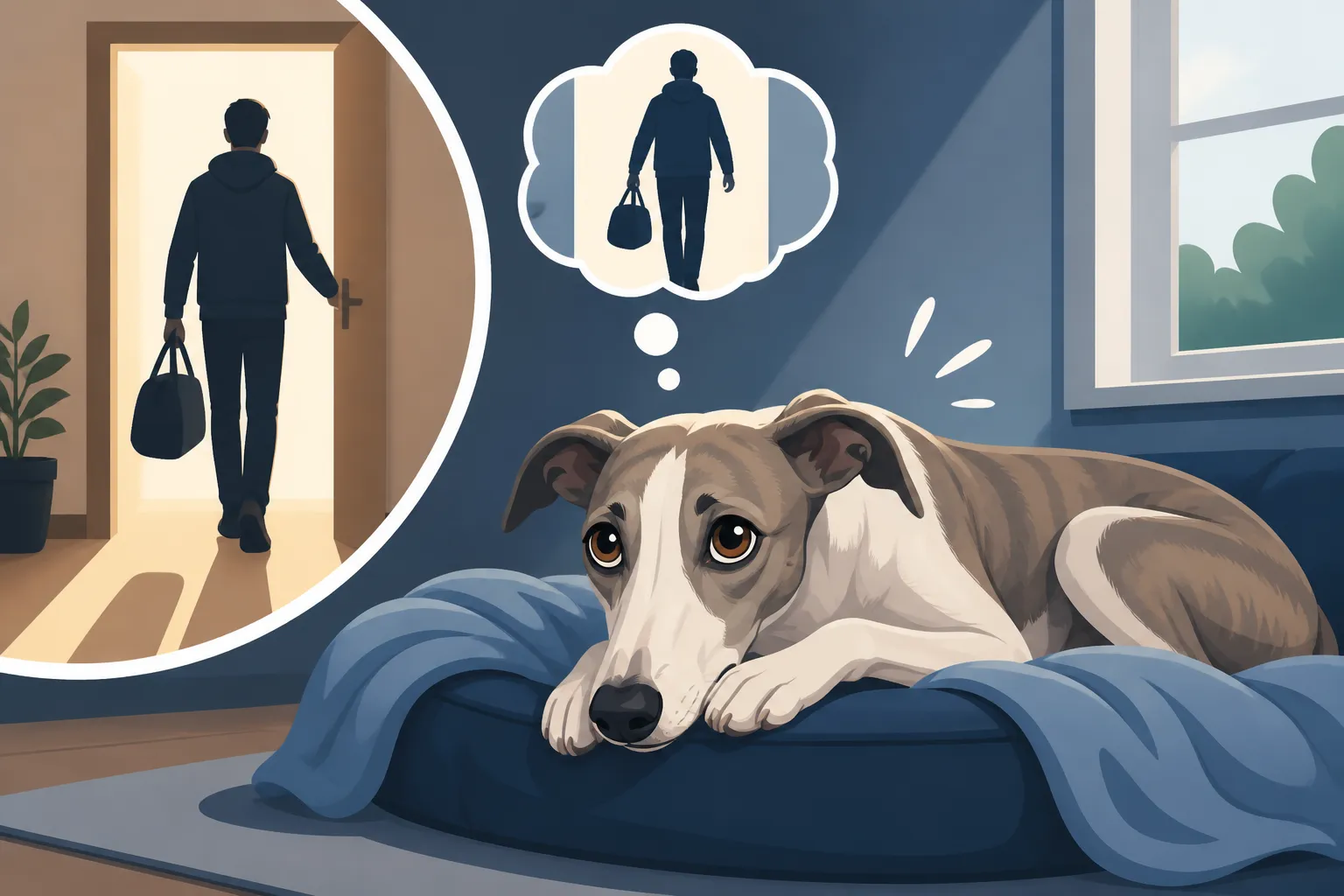
It’s heartbreaking to watch your Whippet go from a joyful, cuddly companion to a nervous wreck the moment you grab your keys. Many Whippet owners experience the silent dread of leaving their beloved dog home alone, knowing that they might return to anxious pacing, destructive chewing, or even frantic barking. This isn't just "bad behavior"; it's a genuine distress signal. This guide will help you understand the nuances of separation anxiety in Whippets, why it happens, and how to implement effective, empathetic strategies to help your sensitive companion feel secure, even when you're not there.
What Separation Anxiety Actually Looks Like in a Whippet
Separation anxiety isn't just about a dog being bored or "misbehaving" out of spite; it's a profound panic response to being left alone. For a Whippet, whose nature is often deeply attached and sensitive, this anxiety can manifest in several ways, some obvious and some much more subtle. Recognizing these signs early is crucial for effective intervention.
Obvious Destructive Behaviors
When you walk in the door to find your home in disarray, it's easy to assume your Whippet was just being naughty. However, if this destruction happens only when you're gone, it's a strong indicator of separation anxiety. This isn't random chewing; it's often focused on escape routes or items carrying your scent. For instance, you might find door frames gnawed, window sills scratched, or even carpets torn up near entryways, as your Whippet desperately tries to get to you.
Imagine coming home to find your carefully arranged pillows shredded into a flurry of stuffing, not scattered from play, but distinctly torn near the door where you exited. Or perhaps the delicate lace curtains by the window are pulled down and chewed, as if your Whippet was trying to see or reach you as you left. Sometimes, it’s even more extreme, with desperate attempts to dig through drywall or chew at their crate bars, leading to injuries like broken nails or chipped teeth. These aren't acts of defiance, but rather outward expressions of an internal panic attack.
Subtler Signs of Distress
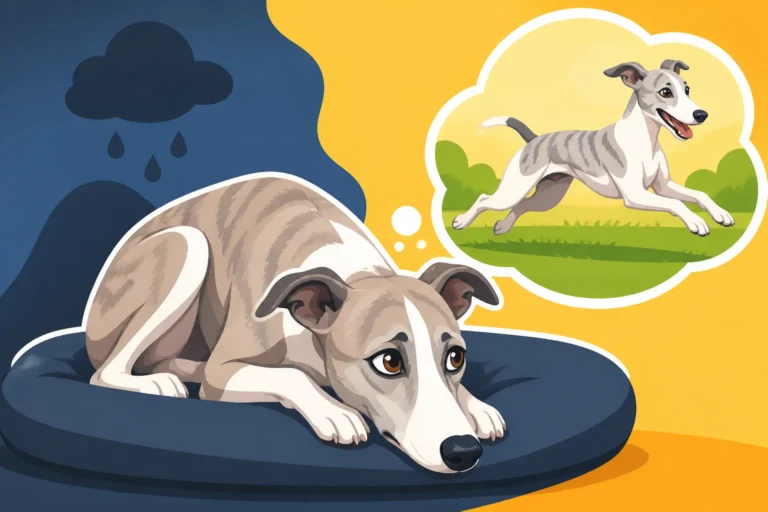
Not all Whippets will trash the house. Some manifest their anxiety in quieter, but equally concerning, ways. Excessive drooling, often found on their bed or near the door, is a common physiological response to stress. Pacing, observable if you set up a camera, involves repetitive walking back and forth, unable to settle. They might whine or howl continuously, a mournful sound that speaks volumes about their loneliness.
Think about setting up a home camera while you're out. Instead of seeing your Whippet curled up sleeping, you might observe them restlessly circling their bed, nose sniffing under the door, then retreating to a window, only to return to the door. This isn't a brief moment of anticipation; it's sustained, frantic movement, sometimes lasting for hours. They might not make a sound until you're just outside the door, but their body language clearly communicates deep-seated unease and a desperate longing for your return. This quiet suffering can sometimes be harder to spot than destructive acts, making a pet camera an invaluable tool for understanding your dog's true state when left alone.
Physiological Responses
Beyond behavior, separation anxiety can trigger physical responses in your Whippet, impacting their overall health and well-being. Excessive panting, even in a cool room, is a sign of stress, not just being warm. Loss of appetite when left alone, even if they're usually food motivated, can occur. Some Whippets may also have "accidents" in the house, despite being perfectly house-trained. This isn't a lapse in training but an involuntary response to extreme stress, much like a person having a nervous stomach.
Consider a Whippet who normally devours their meals but leaves a full bowl untouched the entire time you're out, only to eat it greedily the moment you return. Or perhaps you notice small puddles of urine, not a large quantity, near the exit door, and know your dog was given ample opportunity to relieve themselves before you left. These aren't intentional acts; they are direct, physiological manifestations of intense fear and anxiety. They demonstrate just how deeply their emotional state affects their physical body. You might notice unusual lethargy or, conversely, hyper-vigilance upon your return, indicating they've been on high alert.
Why Whippets Are Prone to Separation Anxiety
Understanding why Whippets might be more susceptible to separation anxiety can help you approach the problem with more empathy and effective strategies. Their unique blend of history, temperament, and physical characteristics plays a significant role.
Their Affectionate Nature and Pack Mentality
Whippets are renowned for their loving, gentle dispositions. They are "velcro dogs" that thrive on close companionship and physical touch. Historically, they were bred as companions to miners, often sharing beds and living in close quarters with their human families. This deep-seated need for connection means they form incredibly strong bonds with their owners. When that bond is suddenly broken, even temporarily, it can trigger intense feelings of abandonment and loneliness.
Imagine a breed specifically developed to be your shadow, to share your warmth and every quiet moment. Their very essence is intertwined with human presence. This inherent drive for connection makes them incredibly sensitive to absence. For a Whippet, being alone isn't just about missing you; it can feel like a fundamental disruption to their entire world order, an unnatural state that goes against their deepest instincts. This profound attachment, while endearing, can unfortunately be a double-edged sword when it comes to being left on their own.
Sensitivity to Change and Routine
Whippets often appreciate routine and predictability. They are creatures of habit, and sudden changes to their schedule, environment, or the presence of their primary caregiver can be incredibly unsettling. A new job with different hours, a move to a new house, or even a sudden shift in your daily routine can trigger anxiety. Their sensitive nature means they pick up on subtle cues and can be easily thrown off balance.
Think about the way your Whippet anticipates your morning coffee ritual or your evening walk. They live for these predictable moments. If you suddenly start leaving at a different time, or if someone else is caring for them, it can cause immense confusion and stress. Their fine-tuned senses pick up on the slightest shift in the household atmosphere. A sudden silence when there's usually activity, or the absence of familiar sounds, can amplify their feelings of unease. For a Whippet, consistency provides comfort, and its disruption can easily lead to a cascade of anxious behaviors. This sensitivity is also why positive reinforcement, as emphasized in programs like those from BAXTER & Bella, is so effective; consistency in training methods builds trust and reduces confusion.
Early Life Experiences and Genetics
Just like humans, a Whippet's early life experiences can shape their resilience to stress. Puppies removed from their litter too early, those from puppy mills with inadequate socialization, or even those who experienced trauma or neglect, may be predisposed to anxiety. While there's no specific "separation anxiety gene," general anxiety traits can be inherited, and a history of insecure attachment in a dog's lineage could contribute. A breeder who carefully socializes their puppies and prioritizes stable temperaments helps set their dogs up for success.
Consider a Whippet puppy who spent its formative weeks in a bustling, nurturing environment with its littermates and mother, constantly learning to self-soothe and handle short periods of separation from its canine family. This puppy is likely to develop a stronger sense of independence compared to a puppy snatched away too soon, or one raised in isolation. Moreover, if a parent dog exhibited nervous tendencies or overt separation distress, their offspring might inherit a lower threshold for anxiety, making them more susceptible to panic when left alone. The foundation laid in those critical early weeks, combined with potential genetic predispositions, forms the bedrock of a Whippet's emotional resilience. Providing a stable and predictable environment from the moment they join your family is crucial for helping them adapt. If you're bringing home a new Whippet puppy, remember the importance of The First Year With a Whippet Puppy in shaping their future temperament.
Setting Up Your Whippet for Success (Prevention & Early Intervention)
It's always easier to prevent separation anxiety or address it in its early stages than to tackle a deeply ingrained problem. Proactive steps, especially during puppyhood, can make a world of difference for your Whippet.
Crate Training with Care
For many dogs, a crate can be a safe, den-like space, but for a Whippet with burgeoning separation anxiety, it can become a prison. The goal of crate training for a Whippet is to create a positive association, not to force confinement. It should be a place they choose to go for comfort, not where they're locked away in distress. Introduce the crate gradually, making it inviting with soft bedding, favorite toys, and high-value treats. Never use the crate as punishment, and never leave them in it for too long, especially initially.
Imagine making your Whippet's crate a truly luxurious retreat. Line it with a thick, orthopedic bed, perhaps even a soft blanket for burrowing, since A Whippet Has No Insulation and No Padding. Feed them special treats or their meals exclusively inside, with the door open. Let them wander in and out at will. The moment they show any signs of panic – persistent whining, desperate scratching, or heavy panting – they've been in there too long for that stage of training. You want them to view it as their personal sanctuary, a place of peace, rather than a place associated with your departure. For more insights, consider how Whether a Whippet Can Be Crate Trained often highlights the careful approach needed.
Building Independence from Puppyhood
Even though Whippets are prone to being velcro dogs, fostering a healthy sense of independence from a young age is vital. This doesn't mean ignoring them, but rather teaching them that being alone can be a calm, positive experience. Practice short departures, leaving for just a few seconds and returning before they get anxious, gradually increasing the time. Don't make a big fuss when you leave or return; this signals that your departure is no big deal.
Think about starting with those tiny, almost imperceptible absences: stepping out of the room for thirty seconds, then returning. Gradually, you might extend this to a minute, then five minutes, always returning while they are calm. Give them a special, engaging toy – like a puzzle filled with frozen peanut butter – just as you step out, creating a positive association with your absence. Avoid dramatic goodbyes where you heap affection on them, as this can inadvertently heighten their awareness of your leaving and the impending "event" of your absence. The key is to teach them that your coming and going is a normal, uneventful part of life, not a dramatic departure. This gradual desensitization builds resilience and security.
Graduated Departures
Once your Whippet is comfortable with short, calm absences, you can begin to extend the time you're away in a structured way. Start with intervals of just a few minutes, gradually working up to longer periods. Crucially, vary the length of your absences and the cues you give (e.g., sometimes grabbing your keys, sometimes not) to prevent your dog from anticipating your departure and spiraling into anxiety. The goal is for them to feel secure, whether you're gone for five minutes or an hour.
This process requires patience and consistency. You might leave for five minutes, then ten, then back to seven, then fifteen. The unpredictability of the duration helps them generalize the idea that you will return, regardless of how long you're gone. Provide a safe, comfortable space for them – maybe their crate, or a designated quiet room – with access to water and a long-lasting chew or puzzle toy. Never rush the process; if your Whippet shows any signs of anxiety, you've gone too far too fast, and need to dial back to a shorter, more successful duration. This step-by-step approach reinforces calm behavior, making "alone time" a non-event.
Strategies for Managing and Reducing Separation Anxiety
If your Whippet is already exhibiting signs of separation anxiety, don't despair. There are many strategies you can implement to help them cope and eventually feel more secure when you're away.
Desensitization and Counter-Conditioning
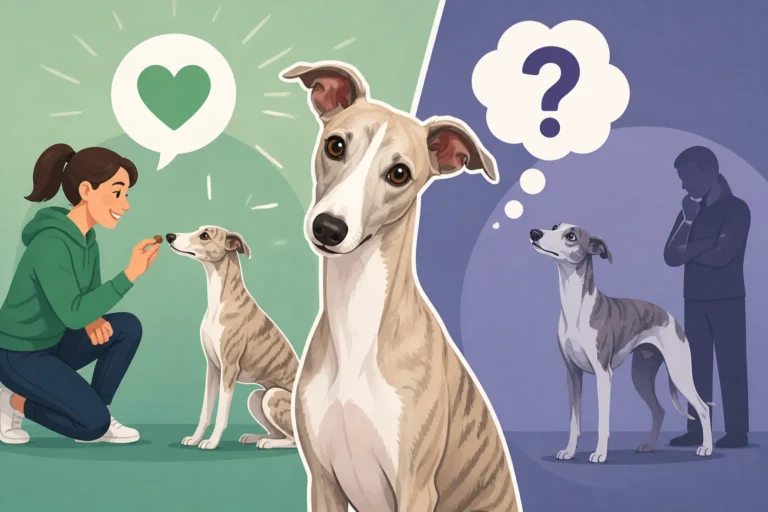
These are the cornerstones of addressing separation anxiety. Desensitization involves gradually exposing your Whippet to the triggers of your departure (keys jingling, putting on shoes) without actually leaving. Counter-conditioning means changing their emotional response to these triggers from anxious to positive. For example, every time you pick up your keys, immediately give them a high-value treat, then put the keys back down and don't leave. This breaks the negative association.
Imagine a "fake departure" drill: you put on your coat, pick up your bag, jingle your keys – all the things that normally send your Whippet into a panic – but then you simply sit back down on the couch and offer them a delicious chew. Repeat this multiple times a day, without ever leaving, until these cues elicit a calm, expectant response (for the treat) rather than a distressed one. Then, slowly introduce very brief departures, literally stepping out the door for a second and immediately returning, again rewarding calm behavior. The idea is to systematically dismantle the anxiety step by step, replacing fear with positive anticipation. Online training platforms, like BAXTER & Bella, often provide structured lessons for these techniques, guiding owners through the process.
Enrichment and Exercise Routines
A tired Whippet is often a less anxious Whippet. While they are couch potatoes, they also need bursts of intense exercise to satisfy their sighthound instincts. A good run in a secure area or a spirited game of fetch before you leave can help burn off nervous energy. Mental enrichment is equally important; puzzle toys, scent games, or chew toys filled with treats can keep their minds occupied and prevent boredom from escalating into anxiety. Remember, What a Whippet Needs Every Day includes both physical and mental stimulation.
Think about your daily routine: are you providing enough outlets for your Whippet's natural drives? A brisk twenty-minute run in a safe, enclosed yard or a vigorous game of chase can make a huge difference. Then, before you leave, offer a KONG filled with frozen pumpkin or peanut butter, or a durable chew that will take them a good while to get through. This provides a positive distraction, a task to focus on, and helps them associate your departure with something enjoyable. A mentally and physically satisfied Whippet is far better equipped to handle alone time than one bursting with pent-up energy.
Calming Aids and Supplements
For some Whippets, a little extra help can make a big difference, especially during the initial stages of training. Calming pheromone diffusers or collars, like those found on Amazon, can help create a more serene environment. Supplements containing L-theanine, CBD, or other natural calming ingredients may also be recommended by your vet. Always consult your veterinarian before introducing any supplements to ensure they are safe and appropriate for your Whippet.
Consider a pheromone diffuser plugged into the room where your Whippet spends its alone time. These diffusers release synthetic versions of natural calming pheromones that mimic those produced by a mother dog, creating a sense of security. Alongside this, your vet might suggest a chewable supplement designed to reduce anxiety without sedation. These aids aren't magic bullets, but they can lower your Whippet's baseline anxiety, making them more receptive to your training efforts in desensitization and counter-conditioning. They are tools to support the behavioral modification process, not replacements for it.
When to Seek Professional Help
There are times when separation anxiety goes beyond what a dedicated owner can manage alone, and professional intervention becomes not just helpful, but essential for your Whippet's well-being.
Recognizing Severe Symptoms
If your Whippet is consistently causing significant self-injury (e.g., broken teeth, raw paws from digging at crates), destroying property to an extreme extent, vocalizing incessantly for hours, or exhibiting severe physiological distress like persistent diarrhea or vomiting whenever left alone, these are clear indicators that the anxiety is severe. These aren't minor issues that can be "trained out" with simple tips; they require a comprehensive approach.
Imagine leaving your home and knowing, with a sinking feeling, that your Whippet is not just unhappy but in true panic. You might return to find bloodied paws from scratching at doors or torn-up bedding mixed with vomit. These aren't just frustrating occurrences; they are cries for help. If your camera recordings show your Whippet in a constant state of frantic activity, unable to rest for more than a few minutes, pacing endlessly or howling mournfully for extended periods, it's a sign that their stress levels are dangerously high and beyond basic home remedies. This level of distress indicates a deeper emotional struggle that needs professional expertise. If you're seeing signs like these, you should also be thinking about How Many Hours a Whippet Can Be Left and if your schedule is conducive to managing this level of anxiety.
Consulting a Veterinarian
Your first step should always be a visit to your veterinarian. They can rule out any underlying medical conditions that might be contributing to or mimicking anxiety, such as pain, thyroid issues, or cognitive dysfunction, especially in older Whippets. Once physical causes are excluded, your vet can discuss potential pharmaceutical interventions. Anti-anxiety medications are not a "cure-all" but can be incredibly helpful in conjunction with behavioral modification, lowering your Whippet's anxiety to a level where they can learn and respond to training.
Your vet might perform a thorough physical exam, run blood work, and discuss your Whippet's history in detail. They're looking for anything that could be causing discomfort or contributing to their anxious state. If all physical checks come back clear, they might prescribe medication to help manage the panic. This isn't about sedating your Whippet into submission; it's about shifting their brain chemistry just enough so that the behavioral training you're implementing can actually sink in. Trying to train an animal in a state of full-blown panic is like trying to teach a person to do calculus during a fire drill – it's simply not going to work effectively. Medications can provide the necessary emotional "breathing room" for learning to occur.
Working with a Certified Professional Dog Trainer or Behaviorist
For severe or persistent cases, a certified professional dog trainer specializing in behavior modification, or a veterinary behaviorist, is invaluable. These experts have the knowledge and experience to assess your Whippet's specific situation, identify triggers, and develop a tailored, humane behavior modification plan. They can guide you through complex desensitization protocols, help you understand your Whippet's body language, and provide ongoing support.
A qualified professional won't just tell you what to do; they'll help you understand why it's happening and how to implement solutions effectively. They might observe your Whippet in your home environment, analyze video recordings, and devise a step-by-step program that addresses your Whippet's individual needs. They can teach you how How a Whippet Learns When It Bruises From Pressure means a gentle, positive reinforcement approach is paramount. This personalized guidance is often the missing piece for owners who feel overwhelmed and stuck. They can help you see the small victories and adjust the plan as your Whippet progresses, turning a seemingly insurmountable problem into a manageable journey toward a happier, calmer companion.
Living with a Whippet with Separation Anxiety (Long-term Management)
Managing separation anxiety in a Whippet is often a long-term commitment. It requires patience, consistency, and a willingness to adapt your lifestyle to meet your sensitive companion's needs.
Adjusting Your Lifestyle
Sometimes, the most effective "treatment" for separation anxiety is a realistic adjustment to your daily life. If your Whippet truly cannot be left alone for long periods, consider alternatives like dog walkers, doggy daycare, or asking a trusted friend or family member to house-sit. Flexible work arrangements, if possible, can also make a huge difference. This isn't about giving up your life, but about finding a sustainable balance that ensures your Whippet's well-being. This is especially important if you're a full-time worker and are struggling with Whether a Whippet Suits a Full Time Worker.
Think about it: for some Whippets, no amount of training will completely eradicate the distress of being alone for eight hours a day, five days a week. In these cases, creative solutions become necessary. Perhaps a midday dog walker becomes a non-negotiable part of your budget, or you explore local doggy daycare options where your Whippet can enjoy supervised play and companionship. Even finding a neighbor who can pop in for a quick cuddle and potty break can alleviate hours of distress. It's about prioritizing your Whippet's mental health and finding practical ways to reduce their time in a state of panic, allowing them to truly be the happy, relaxed family member they're meant to be.
Creating a Stable and Predictable Environment
Consistency is key for a Whippet prone to anxiety. Stick to a predictable daily routine for feeding, walks, playtime, and potty breaks. This predictability helps them feel secure and understand what to expect. A stable home environment, free from unnecessary stressors and sudden changes, contributes significantly to their overall sense of calm. A sudden loud noise or a change in furniture can throw off an anxious Whippet.
Imagine their day as a series of predictable, comforting events: breakfast at the same time, followed by a walk, then a quiet rest period, and so on. This structure provides a psychological anchor. When you do need to leave, make it as uneventful as possible. Consider leaving a radio or classical music playing softly, or even a white noise machine, to mask outside sounds and create a consistent auditory environment. Some owners even use specific dog-calming music channels or podcasts found on platforms like Amazon to soothe their pets. The fewer surprises, the more secure your sensitive Whippet will feel, allowing them to relax rather than constantly being on edge, anticipating the next unexpected event. If you're considering Whether a Whippet Needs a Second Dog, remember that another dog can provide companionship but doesn't always solve separation anxiety, and sometimes can even exacerbate it.
Celebrating Small Victories
The journey to overcome separation anxiety can be long and challenging, with plateaus and occasional setbacks. It's vital to celebrate every small victory. A few extra minutes of calm, a day without destructive behavior, or a less frantic greeting upon your return are all significant achievements. Acknowledge these successes, both for your Whippet and for yourself, as they fuel motivation and reinforce positive progress.
Think about tracking your progress, perhaps with a simple journal or an app. Notice if your Whippet went from barking for an hour to only thirty minutes, or if they started to settle faster after you left. These incremental improvements might seem small in the grand scheme of things, but they represent real shifts in your Whippet's emotional state. Every calm minute they spend alone is a step towards a more secure future. This positive reinforcement applies to you as well; dealing with separation anxiety can be emotionally draining, so acknowledging your own efforts and patience is just as important. Your Whippet feeds off your calm confidence, so staying positive and celebrating progress helps both of you on this path to peace.
Disclaimer
This article is for general informational purposes only and does not constitute professional advice. Laws, prices and regulations vary by location and change over time. Consult a qualified professional for guidance on your specific situation.