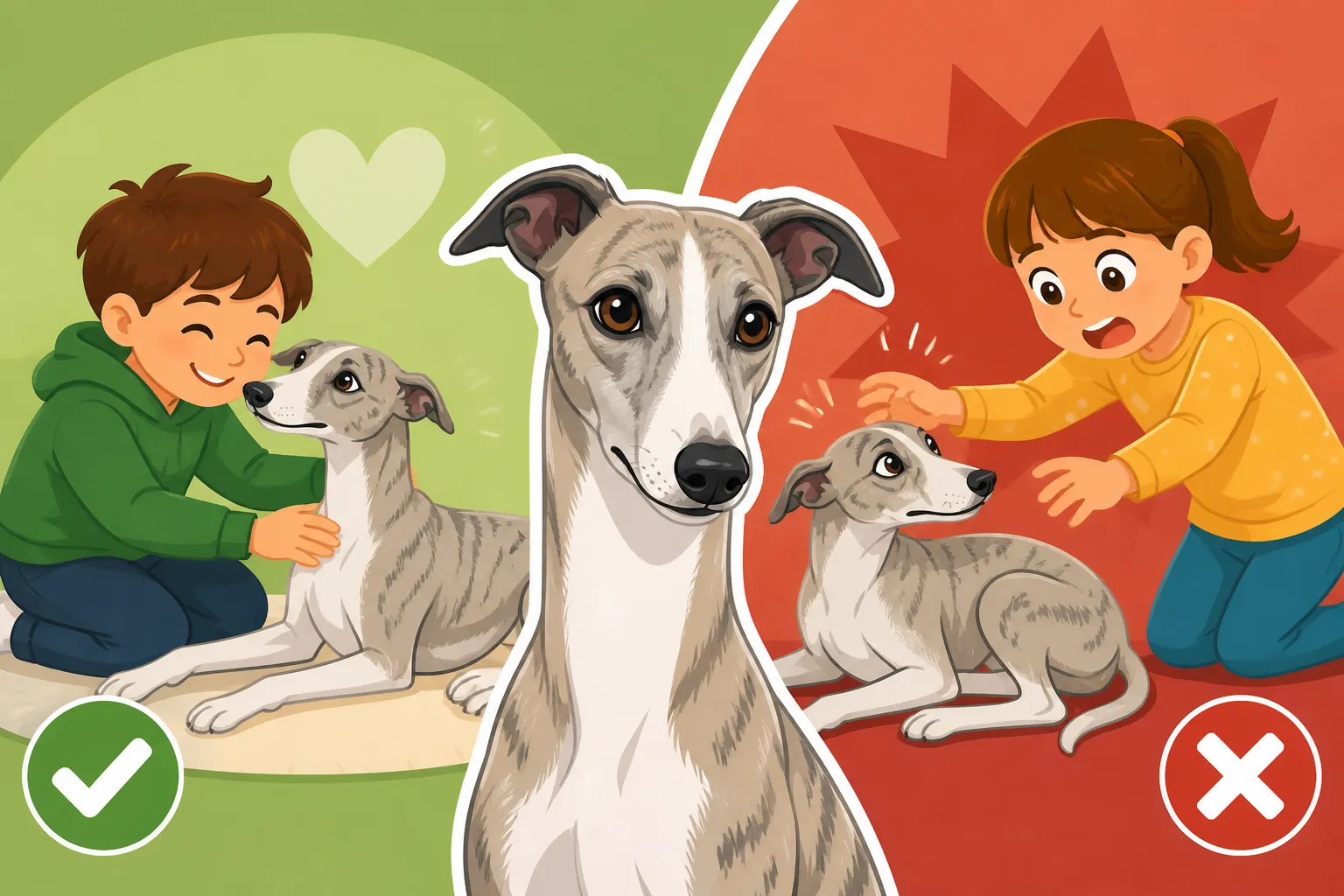
Whether a Whippet Is Fragile Around Children
It's a common and completely understandable worry for anyone bringing a graceful, lean Whippet into a home with children, or considering adding a child to a Whippet household. On the surface, these dogs look incredibly delicate, almost like they could break with a strong gust of wind, let alone the enthusiastic, sometimes clumsy, movements of a child. This guide will delve into whether a Whippet is truly fragile around children, exploring their unique physicality and temperament, identifying potential risks, and offering practical strategies to ensure a safe and happy environment for everyone.
Understanding the Whippet's Physicality and Temperament
Whippets are truly unique, and understanding their physical build and inherent personality is key to appreciating how they interact with the world, especially with our energetic little humans. They often elicit comments about their apparent frailty, but there's more to it than meets the eye.
The Perception of Fragility vs. Reality
Let's be honest, a Whippet’s sleek, fine-boned structure and incredibly thin skin give the impression of extreme delicacy. You can often see their ribs, the arch of their spine, and their hip bones, which can make them look underfed to the uninitiated, but this is actually the picture of a healthy, athletic Whippet. They are built for speed and agility, not for brute force or impact. This combination of fine bones and minimal body fat, coupled with skin that seems to tear if you look at it wrong, does mean they are more susceptible to certain types of injuries than, say, a stocky Labrador.
However, to call them universally "fragile" might be misleading. They are incredibly tough and resilient athletes when it comes to their intended purpose of chasing a lure. They can twist, turn, and sprint with incredible power. It's the accidental impacts, the unexpected bumps, or falls that can pose a risk. A child inadvertently stepping on a paw, or falling onto a sleeping Whippet, could cause a bone fracture or a painful skin laceration that a thicker-skinned, heavier-boned dog might shrug off. Their thin skin, in particular, is notorious for tearing easily, often requiring a trip to the vet for stitches even from what seems like a minor brush with an object. The Thin Skin That Sends a Whippet to the Vet for Stitches So, while they aren't fragile in spirit or in their athletic pursuits, their physical makeup does mean owners need to be extra mindful of potential everyday hazards, especially when tiny, unpredictable humans are in the mix.
Whippet Temperament Around Children
Beyond their physical form, a Whippet's temperament plays a huge role in how they navigate a bustling family life. Generally speaking, Whippets are renowned for being gentle, calm, and incredibly affectionate dogs, especially once they've had their short bursts of zoomies for the day. Indoors, they transform into absolute couch potatoes, content to snuggle on the sofa or burrow under blankets. This inherent sweetness makes them wonderful family companions.
However, a crucial aspect of their temperament is their sensitivity. Whippets are often quite sensitive souls, easily startled by sudden loud noises, quick movements, or unexpected touches. They tend to be "flight" animals rather than "fight" animals; if they feel threatened or overwhelmed, their first instinct is usually to retreat or run away, not to lash out. This is a huge positive when it comes to children, as it means aggression is rare. But it also means they can become anxious or stressed if constantly bombarded by boisterous child's play, or if their personal space is not respected. A Whippet who feels cornered or constantly pestered might try to escape, or at worst, if absolutely unable to flee, might give a warning growl. Understanding this sensitivity is paramount, as it helps us create an environment where both dog and child can thrive harmoniously, respecting each other's boundaries.
Common Scenarios and Potential Risks
Despite their gentle nature, certain situations can arise when Whippets and children coexist. It’s not about blame, but about understanding the dynamic to prevent issues before they start.
Accidental Injuries to the Whippet
This is arguably the biggest concern for Whippet owners with children. Imagine a toddler, unsteady on their feet, taking a tumble directly onto a Whippet napping on the floor. Or a child, excitedly running through the house, accidentally trips over the dog. Because of their aforementioned fine bones and thin skin, these seemingly innocent accidents can lead to significant injuries. Fractures, sprains, or deep skin lacerations that require veterinary attention are not uncommon outcomes. Even a child playing rough, perhaps trying to "hug" the dog with too much force or pulling an ear or tail, can cause pain. A Whippet’s skin is so thin and lacks the protective layer of fat that many other breeds have, making it particularly prone to tears. A simple scratch from a child's toy or fingernail, which might be nothing more than a superficial mark on another breed, can be a full-blown wound on a Whippet, potentially requiring stitches. Treating a Whippet's Skin Tear
When these accidental injuries occur, a Whippet might yelp loudly out of pain and fear, which can be startling for both the child and other family members. While their primary reaction is to flee, if they are trapped or in intense pain, there is always a tiny risk of a defensive snap. It's not out of malice, but pure instinctual self-preservation. Preventing these scenarios requires constant vigilance and proactive measures, ensuring that interactions are always managed and supervised.
Whippet Reactions to Children's Behavior
Children, especially young ones, are often loud, unpredictable, and naturally curious. They move quickly, shriek with joy, and might try to grab or pull at a dog without understanding the consequences. For a sensitive Whippet, this can be overwhelming. A sudden loud noise, like a dropped toy or a child's shout, can make them jump and try to bolt. Persistent prodding or chasing can lead to stress, even if the child means no harm.
A stressed Whippet will often display clear body language signals before resorting to anything more drastic. These might include lip licking, yawning (when not tired), turning their head away, avoiding eye contact, flattening their ears, tucking their tail, or trying to move away. If these signals are ignored, the dog's anxiety can escalate. It's crucial for parents and caregivers to learn to recognize these subtle cues. Forcing a Whippet to endure unwanted attention from a child can erode trust and increase anxiety over time. Giving them the option to retreat and respecting their boundaries is paramount. The goal is a calm and respectful interaction, not a forced one.
Strategies for Safe Coexistence
Creating a harmonious home for both your Whippet and your children is entirely achievable with the right approach and consistent effort. It's about setting clear boundaries and fostering mutual respect.
Educating Children on Gentle Handling
This is perhaps the most critical component. Children need to understand how to interact appropriately with a Whippet, and indeed, with any dog. These aren't just rules; they're vital lessons in empathy and safety. Start early, even with toddlers, using simple, consistent language.
Here are some guidelines to teach:
- Gentle Touch Only: Explain that Whippets have very thin skin and feel things differently. Show them how to pet gently on the shoulders or chest, avoiding pulling tails, ears, or grabbing fur.
- No Riding or Climbing: Absolutely no sitting on or attempting to ride the dog, ever. A Whippet’s back is not designed for this.
- Respect Quiet Time: Teach children that when the Whippet is sleeping or resting in their bed, they are not to be disturbed.
- Approach with Care: Encourage children to approach the dog calmly and let the dog come to them, rather than rushing up to it.
- Reading Body Language: As children get older, teach them to recognize when the Whippet is uncomfortable (e.g., trying to move away, lip-licking, yawning). There are excellent children's books and online resources that help kids understand dog body language.
Consistency is key. Every adult in the household needs to reinforce these rules. It’s an ongoing process, not a one-time lesson.
Providing a Safe Haven for Your Whippet
Just as children need their own space, a Whippet needs a sanctuary, a place where they can retreat and know they will not be disturbed. This is especially important in a home with children, as it gives the dog an "off-switch" from potentially overwhelming interactions.
A crate can be an invaluable tool for this. When properly introduced and made comfortable, a crate becomes a den – a safe, quiet, personal space. Stock it with soft, comfy bedding (you can find fantastic options on Amazon that offer both comfort and durability) and perhaps a favorite chew toy. Cover the crate with a blanket to make it feel even more like a secure den. Teach your children that when the Whippet is in its crate, it is absolutely off-limits. This is the dog's quiet time, and no one is to disturb it. This simple rule prevents so much stress and potential conflict (see Whether a Whippet Puppy Should Be Crated). Beyond a crate, strategically placed dog beds in quiet corners of the house can also serve as safe zones, as long as the children understand that these are the dog's personal areas.
Supervised Interactions and Training
Even with the best education and safe spaces, direct interactions between young children and Whippets should always be supervised. Never leave a young child unsupervised with any dog, regardless of breed or temperament. An adult should always be present to mediate, guide, and intervene if necessary.
Training isn't just for the dog; it’s for the whole family. Teach your Whippet commands like "place" or "go to your bed," so they have a practiced routine for retreating when things get too busy. Use positive reinforcement to reward calm behavior around children. Likewise, children can be taught to participate in gentle training exercises, like asking the dog to "sit" for a treat, fostering a positive relationship. If you're bringing a new Whippet puppy into a family with children, or even an adult dog, an online training program can be incredibly helpful for structured guidance. Services like BAXTER & Bella offer comprehensive online puppy training programs that cover everything from basic manners to socialization, which can be invaluable for integrating a dog into a family dynamic, especially with young ones present. Socializing a Whippet Puppy Their step-by-step approach can help both the dog learn appropriate behaviors and the family understand how to communicate effectively and safely.
Setting Realistic Expectations and Ongoing Care
Bringing a Whippet into a family with children is a long-term commitment. It requires realistic expectations and consistent, thoughtful care to ensure everyone thrives.
Age-Appropriate Interactions
It’s important to understand that a Whippet's interactions will differ greatly depending on the child's age and developmental stage.
- Toddlers (1-3 years): This is the most challenging age. Toddlers are naturally unpredictable, clumsy, and lack impulse control. They might grab, pull, or fall without meaning to cause harm. Direct interactions should be kept very short, highly supervised, and often mediated by an adult. The focus here is primarily on preventing accidental injury to the Whippet and teaching the toddler the absolute basics of gentle touch and respecting space.
- Young Children (4-8 years): Children in this age group are beginning to understand rules and consequences. They can be taught specific ways to interact, such as petting gently, giving the dog space, and recognizing basic warning signs. Supervision remains crucial, but interactions can be slightly longer and more interactive, always with an adult guiding.
- Older Children (9+ years): Older children can become wonderful dog companions. They can be taught a greater understanding of dog behavior, take on responsibilities for feeding or walking (under adult supervision), and form strong, respectful bonds with the Whippet. They can also be instrumental in reinforcing good habits with younger siblings.
The key is adapting your supervision and teaching to the child’s capabilities, rather than expecting the Whippet to tolerate everything.
Regular Check-ups and Injury Prevention
Even with the most diligent supervision and education, accidents can happen. Whippets are prone to skin tears, and occasionally other injuries, simply due to their delicate build and active nature. It's crucial to have a good relationship with your veterinarian and to ensure your Whippet has regular check-ups. This helps catch any minor injuries or stress-related issues early.
Keep a well-stocked first-aid kit at home. For common Whippet woes like skin tears, having antiseptic wipes, non-stick pads, and vet wrap can be incredibly helpful for immediate care before you can get to the vet. What Belongs in a Whippet Owner's First Aid Kit Knowing when a wound needs veterinary attention (which, for Whippets' thin skin, is often sooner rather than later for tears) is essential. When a Whippet's Wound Needs a Vet Always err on the side of caution. Prompt attention to even small injuries can prevent them from becoming more serious or infected, potentially saving you from a costly emergency vet visit. Emergency Stitches: the Whippet Bill Nobody Budgets For
Ultimately, a Whippet can be a fantastic family dog, even with children, provided that the humans in the household are committed to understanding their unique needs and creating a safe, respectful environment for them. Their gentle, loving nature shines brightest when they feel secure and understood.
Here’s a quick guide to help navigate interactions:
| Child's Age Group | Key Challenges | Whippet Needs | Child Education Focus | Adult Supervision Level |
|---|---|---|---|---|
| Toddler (1-3) | Unpredictable, clumsy, grabs, loud | Safe retreat space, calm environment, no forced interaction | "Gentle hands," "no chasing," "leave dog alone in bed" | Constant, Active |
| Young Child (4-8) | Still impulsive, might test boundaries | Respect for personal space, positive interactions | Reading dog signals, gentle petting, calm voices | Close, Direct |
| Older Child (9+) | Can understand rules, may want to engage more | Clear expectations, involvement in care | Dog body language, responsible interaction, respect | Observational, Guiding |
Disclaimer
This article is for general informational purposes only and does not constitute professional advice. Laws, prices and regulations vary by location and change over time. Consult a qualified professional for guidance on your specific situation.