Whether a Whippet’s Hip Bones Should Show
It's a question I've heard countless times from new Whippet owners, and even from seasoned ones who still get comments at the dog park: "Are my Whippet's hip bones supposed to show?" It's a valid concern, born from years of seeing dog breeds with a more "padded" appearance, leading us to believe that visible bones mean an unhealthy dog. But with Whippets, the answer isn't so straightforward, and understanding their unique physique is key to easing your mind and educating others. This guide will delve into why a Whippet's hip bones often do show, what a healthy body condition looks like for this lean breed, and when you should genuinely be concerned.
The Whippet's Naturally Lean Physique
Let's face it, a Whippet looks dramatically different from most other dog breeds you see walking down the street. Their sleek, aerodynamic build isn't just for show; it's a testament to their heritage as sighthounds, bred for incredible speed and agility. This means they are naturally built with minimal body fat and a musculature designed for explosive sprints, not endurance or bulk. When you look at a Whippet, you're not seeing a dog that's supposed to be heavily muscled or thickly padded. Instead, you're observing an athlete optimized for a very specific type of movement.
One of the most striking differences is their incredibly low body fat percentage. Unlike many breeds that carry a good layer of fat for insulation or a more 'cuddly' appearance, Whippets simply don't have it. This is why you often see their ribs, hip bones, and even parts of their spine quite clearly, even when they are at a perfectly healthy weight. It's not a sign of neglect; it's just how they're made. Think of it like a human marathon runner or a competitive cyclist – their bodies are sculpted for performance, with very little excess. Why a Whippet Has So Little Body Fat explores this in more detail, but suffice it to say, their thin skin and lack of subcutaneous fat make every bone and muscle contour more apparent.
This inherent leanness can be a real source of anxiety for owners, especially when well-meaning but uneducated strangers comment on their dog's weight. People are used to seeing dogs with a more rounded appearance, and a Whippet's sharp angles can look alarming to the uninitiated. It's a common frustration to constantly explain that your dog is not starving, but simply a Whippet. Why Strangers Think a Whippet Is Underfed really hits home for many of us who've experienced this. Their physical structure is a finely tuned machine, and a little visible bone is part of that design.
Understanding Body Condition Score for Whippets
To move beyond anecdotal observations and well-meaning comments, veterinarians and breed enthusiasts use a tool called the Body Condition Score (BCS). This isn't just about weight on a scale; it's a hands-on assessment of your dog's fat and muscle reserves. For most breeds, a BCS of 4 or 5 out of 9 is considered ideal. However, for sighthounds like Whippets, their ideal BCS is often a bit lower, typically in the 3-4 range. This slight shift accounts for their naturally leaner build.
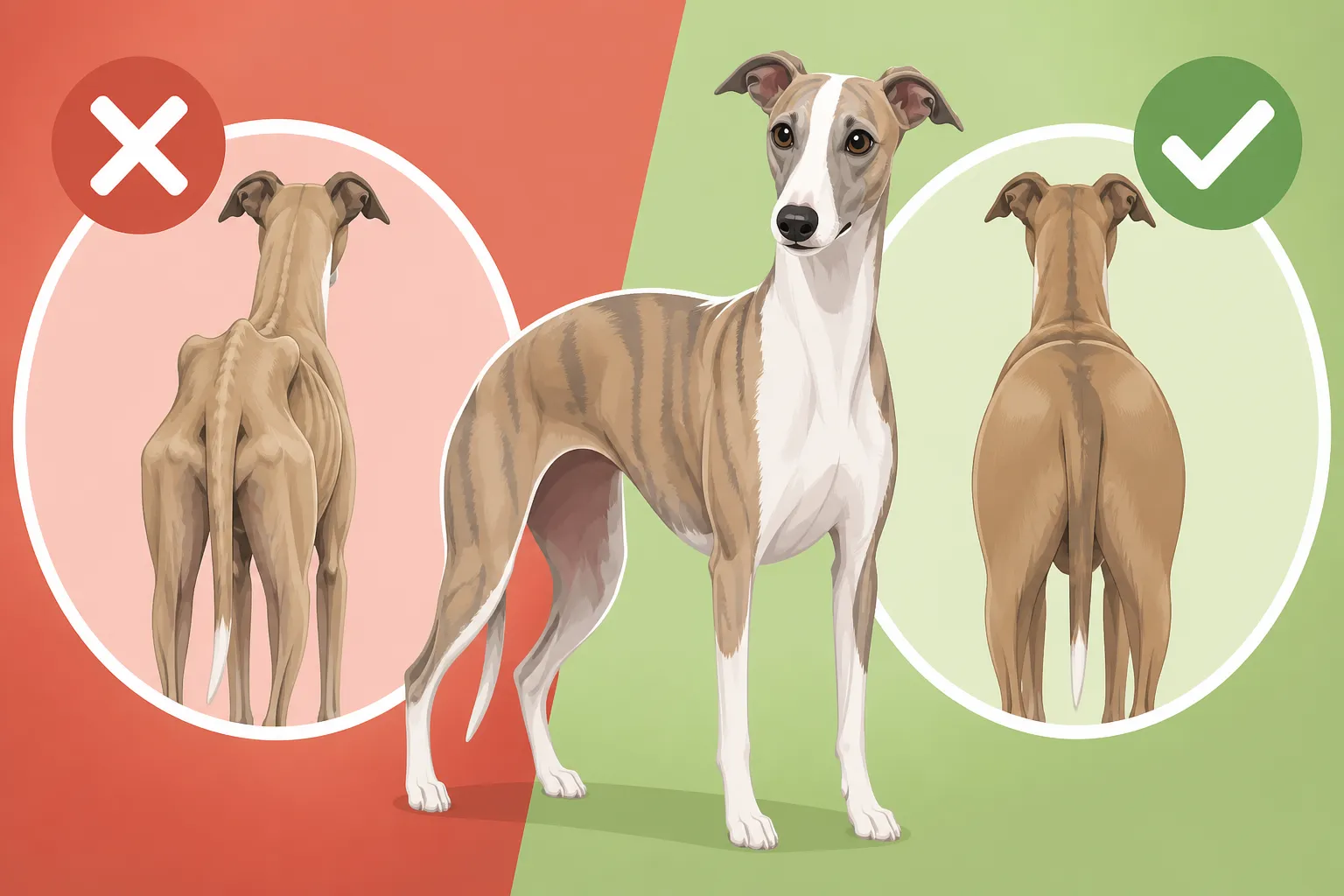
So, what does an ideal BCS look like on a Whippet, specifically concerning their hip bones? When you stand above your Whippet and look down, you should be able to see a distinct waistline, almost an hourglass shape. When you view them from the side, their abdomen should tuck up sharply from their rib cage. Now, for the hip bones: you should be able to feel their hip bones easily, and it's perfectly normal for them to be somewhat visible. They shouldn't be protruding sharply with no muscle covering, but they also shouldn't be completely obscured by a layer of fat.
The key is palpation – actually putting your hands on your dog. You should be able to Feeling a Whippet's Ribs and Hip Bones without pressing hard. While their ribs should be easily felt and often slightly visible, they shouldn't look like they're tenting the skin or be sharply defined without any muscle over them. The spine should also be easily felt, with the individual vertebrae discernible but not sticking out like a row of knuckles. A healthy Whippet will have a visible "tuck-up" behind their ribs and often show the last two or three ribs, and yes, their hip bones will be quite prominent without being devoid of muscle. How Many Ribs Should Show on a Whippet offers more specific guidance on this.
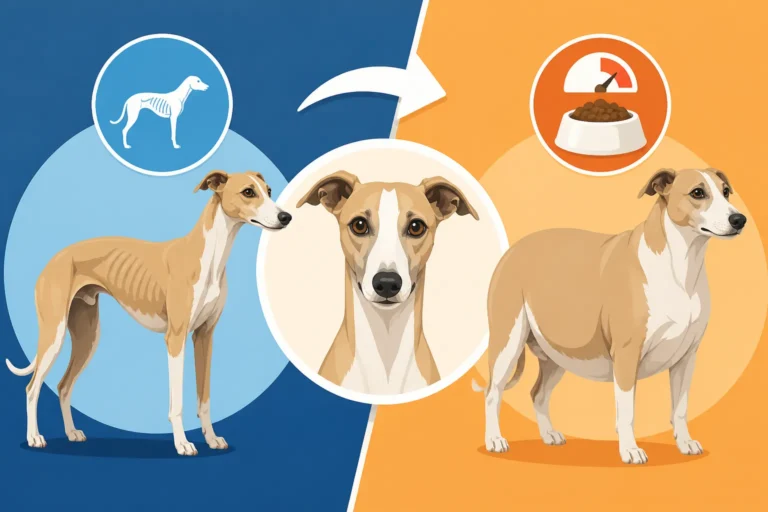
Think of it as a spectrum. At one end, you have an emaciated dog where bones are not just visible but feel completely unprotected, sharp, and painful. At the other end, you have an overweight dog where you can't feel any bones easily because they're covered in too much fat. A healthy Whippet sits in that lean middle, where you can clearly feel and often see bones, but there's a smooth, taut layer of skin and muscle over them, not a sunken, hollow appearance. Your vet will often confirm this body condition score during routine check-ups, giving you peace of mind that their unique physique is indeed healthy. What Body Condition Score a Whippet Should Be provides a full breakdown of this assessment.
When Visible Hip Bones Are a Concern And When They're Not
It’s completely normal for a Whippet's hip bones to be visible, and often quite prominent. This is not a sign of an unhealthy dog but rather a hallmark of their lean, athletic build. If you can easily feel their hip bones, and they have a healthy waist and a good amount of muscle tone, there’s generally no cause for alarm. This is just your Whippet being a Whippet! However, there are times when visible hip bones, combined with other signs, could indicate an issue.
The red flags typically appear when the visibility of the hip bones becomes extreme or is accompanied by other worrying symptoms. For instance, if the hip bones are not only visible but are sharply angled, protruding severely, and feel like they have no muscle or fat covering them whatsoever, that's a sign to pay attention. This is especially true if you notice this change rapidly or if your Whippet also shows other signs of being unwell, such as lethargy, a dull coat, poor appetite, or changes in stool. If your dog's muscles appear wasted around the hips and thighs, making the bones even more pronounced and angular, that's a significant indicator of potential weight loss or muscle atrophy.
It’s also crucial to consider the broader picture. Is your Whippet still energetic and playful? Are they eating well? Are their eyes bright and their coat shiny? If your Whippet is otherwise thriving, those visible hip bones are likely just part of their normal physique. However, if they seem unwell, are refusing food, or have dramatically less energy, then the prominent hip bones become one piece of a larger puzzle. When a Whippet Is Genuinely Too Thin goes into more depth about these concerning signs. It's this combination of factors that should prompt a vet visit, rather than just the sight of a bony rump alone.
A visit to your veterinarian can offer the most accurate assessment. They can rule out underlying health issues, check for parasites, or adjust their diet if necessary. Remember, What a Vet Says About a Whippet's Weight is always the gold standard for advice, especially when you're feeling unsure. Don't let well-meaning comments from others overshadow the professional opinion that your Whippet is perfectly healthy, just built differently.
Maintaining a Healthy Weight for Your Whippet
Keeping your Whippet at their ideal lean body condition is about balance – the right food, appropriate exercise, and regular health checks. It's not about trying to make them "fatten up" to look like a Labrador, but rather ensuring they have enough fuel for their energetic bursts and maintaining their lean muscle mass.
When it comes to diet, quality matters. Whippets are often quite active in short bursts, which means their diet needs to support that energy without adding unnecessary bulk. Look for a high-quality dog food that provides adequate protein and healthy fats. Some Whippets can be notoriously picky eaters, which can make things tricky, but experimenting with different brands or formats can help. For instance, some owners find success with specialized formulas designed for sensitive stomachs, available from retailers like Chewy, or even fresh food options like Ollie, which can be more palatable. It's about finding what works for your dog's individual needs.
Exercise, of course, is paramount. Whippets are known for their incredible speed, but they are also famous couch potatoes. A couple of good sprints or a brisk walk each day is often enough to keep them fit without over-exercising young joints. The goal isn't constant, heavy exercise, but rather appropriate bursts that maintain muscle tone and cardiovascular health. Feeding a Whippet That Sprints and Then Sleeps is a great resource for understanding their unique energy needs. If your Whippet is very active in activities like lure coursing or Fast CAT, their caloric intake might need to be adjusted upwards to support that expenditure, but always under the guidance of visible body condition, not just the food bag recommendations.
Regular vet check-ups are also crucial. Your vet can monitor your Whippet's weight and body condition over time, catching any subtle changes that might indicate an underlying health issue. They can also provide advice on specific dietary needs, especially as your Whippet ages or if they develop any health concerns. Sometimes, a slight tweak to their food, or even the addition of a joint supplement (after veterinary consultation), can make a big difference in maintaining their overall health and muscle condition. For general pet supplies, including bowls, supplements, or even cozy blankets they love to burrow under, platforms like Amazon offer a vast selection.
It can be a delicate balance to strike – Keeping Weight On a Whippet Without Making It Fat is a challenge many Whippet owners face. We want them to be healthy and strong, but not overweight, as excess weight can put unnecessary strain on their delicate joints and hearts. Trust your hands, trust your vet, and trust the innate design of your beautiful, lean Whippet. Their visible hip bones are usually just a normal part of their magnificent form.
Disclaimer
This article is for general informational purposes only and does not constitute professional advice. Laws, prices and regulations vary by location and change over time. Consult a qualified professional for guidance on your specific situation.