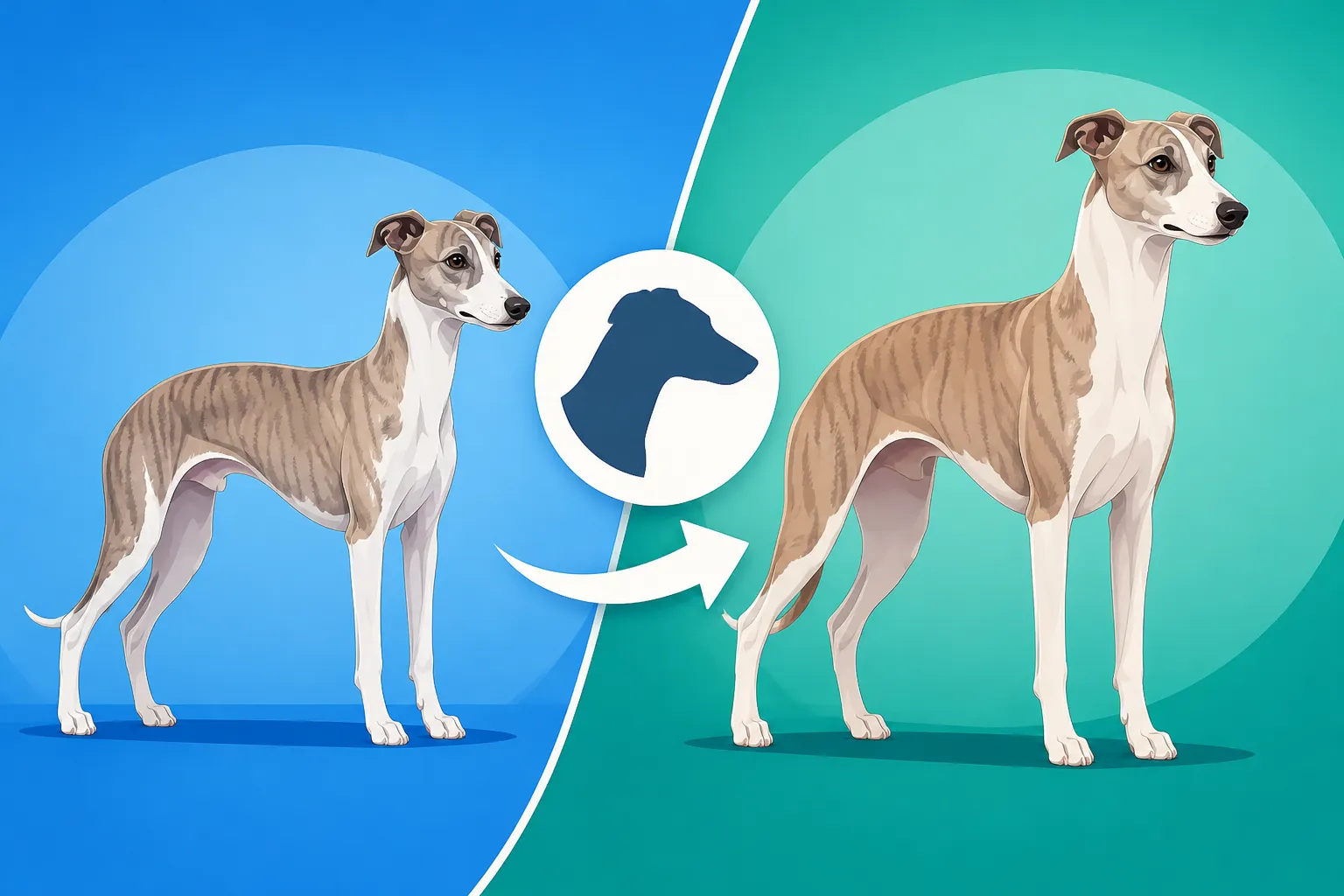
Whether a Whippet Fills Out After Two
A Whippet can still look narrow, leggy, or a little unfinished after its second birthday, which can make owners wonder whether their dog is underweight or simply still maturing. Many Whippets continue to gain muscle and develop a more adult outline after two, but dramatic late growth is not the norm. This guide explains what changes are typical, how to assess condition, and when to ask a veterinarian.
What “filling out” means in a Whippet
Height growth is different from adult shape
Most Whippets reach close to their adult height before they have their finished adult appearance. A young dog may look all legs, ribs, and tucked-up waist, then gradually develop more muscle over the chest, shoulders, thighs, and back. That change is often what owners mean when they say their Whippet has “filled out.”
The skeleton is not usually getting substantially larger after two. Instead, the dog may gain muscle as it matures, becomes more coordinated, and builds strength through ordinary activity. Changes tend to be gradual rather than a sudden transformation. A Whippet can look rangier during adolescence and then more balanced later, even if its height and overall frame have barely changed.
For a closer look at the difference between reaching adult size and continuing to develop, see The Age a Whippet Stops Growing. A young Whippet’s pace of growth matters too: steady development is generally more reassuring than trying to push a puppy to gain weight quickly. Whether a Whippet Puppy Should Grow Slowly covers that concern in more detail.
Muscle, fat, and frame are not the same thing
A Whippet can gain muscle without becoming broad or bulky. The breed is built to be lean and athletic, and its adult outline will not resemble that of a heavily muscled breed. Some dogs develop more visible thigh and shoulder muscle than others because of differences in genetics, activity, age, and individual build.
Fat gain is different. A dog may appear fuller because it is gaining excess body fat, not because it is reaching its mature athletic shape. Extra weight can soften the waist and make the ribs harder to feel. That is not the kind of “filling out” an owner should aim for, even if the dog previously looked very slim.
When someone says their Whippet looks too thin, it helps to look at the whole dog rather than one prominent bone or a single photograph. The topline, waist, muscle, and ease of feeling the ribs all matter. What Body Condition Score a Whippet Should Be explains how to assess those features more consistently than relying on impressions from strangers.
What to expect after a Whippet turns two
A gradual adult outline can continue to develop
Some Whippets look close to their adult shape by two, while others continue to develop a little more muscle and substance afterward. A formerly lanky dog may seem more settled through the chest and hindquarters over time. The changes can be subtle enough that an owner notices them only when comparing older photos or feeling the dog’s muscles during grooming.
A Whippet’s activity also affects what you see. A dog that runs safely and regularly may develop more conditioning than a dog whose exercise is mostly gentle walks. That does not mean every Whippet needs intense exercise to mature, or that extra exercise should be used to force a particular shape. Exercise should suit the individual dog’s age, health, and fitness, with plenty of opportunity to rest.
Adult males and females can also differ in size and substance, but there is variation within each sex. A dog’s family line and natural frame are useful context; a single expected weight is not a reliable standard for every Whippet. These guides offer additional context: What an Adult Male Whippet Weighs and What an Adult Female Whippet Weighs.
Genetics set limits on how much substance a dog gains
A Whippet’s mature build is partly inherited. Some naturally have a finer frame, while others carry more visible muscle or a sturdier outline. Feeding more food cannot change the underlying frame, and it will not reliably create healthy muscle. It can, however, add body fat if the dog is eating more calories than it uses.
It is easy to compare a young dog with a stockier adult at a show, at the park, or in a social media photo and assume something is wrong. But the dogs may differ in age, genetics, fitness, coat condition, posture, or even the angle of the photograph. A Whippet may also look different when standing alert than when curled up on a bed.
Instead of chasing a particular appearance, keep track of your own dog’s condition over time. Take occasional photos from the side and above, and note changes in appetite, activity, and weight. A veterinarian can help determine whether the dog is developing normally for its frame and health history.
How to tell whether your Whippet is too thin or simply lean
Check shape and feel instead of judging by ribs alone
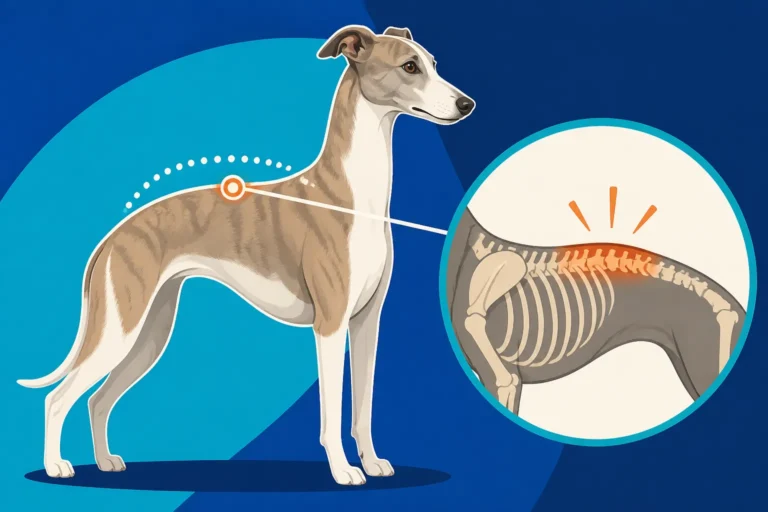
Whippets naturally have a deep chest, a pronounced waist, and a tucked-up abdomen. Their ribs and hip points may be more visible than those of many other breeds, especially when the dog is standing in bright light or has a short, smooth coat. Seeing some rib definition by itself does not automatically mean a Whippet is underweight.
Use your hands as well as your eyes. You should be able to feel the ribs without pressing hard, but they should not feel sharply prominent beneath very little tissue. Look at the dog from above: there should usually be a discernible waist behind the ribs. From the side, the abdomen typically rises toward the hindquarters rather than hanging level with the chest.
A simple body-condition check is more useful when repeated the same way every few weeks. Keep in mind that a thick meal, a curled posture, or a recent sprint can affect how the dog looks temporarily. If you are unsure, ask your veterinarian to assess body condition in person and show you what a healthy condition feels like on your particular Whippet.
Keep a record of weight, appetite, and activity
Weighing your Whippet periodically can help reveal a trend that is hard to notice day to day. The number is most useful when considered alongside body shape and muscle condition, not treated as a goal that every dog must reach. A stable weight may be completely appropriate for one Whippet, while another of similar age and height naturally weighs more.
Keep a short record of food amounts, treats, exercise, and any notable changes in appetite or stool. If you change foods, make the transition gradually and follow your veterinarian’s advice, particularly if your dog has a sensitive stomach or a medical condition. If you’re comparing food options through Chewy, check the feeding guidance on the packaging and use your dog’s condition—not the suggested serving alone—to guide a conversation with your vet.
For an overview of how portion needs vary, see How Much a Whippet Should Eat. If your Whippet has always been lean and you are trying to support a healthy condition without overfeeding, Keeping Weight On a Whippet Without Making It Fat may also be helpful.
Feeding and exercise without forcing a change in shape
Avoid using extra food to make a young Whippet look bigger
It can be tempting to add a larger serving, extra treats, or rich toppers when a Whippet still looks narrow after two. But extra calories do not selectively build muscle. If the dog is already at a healthy body condition, overfeeding may add fat, put unnecessary strain on joints, and make it harder to maintain fitness.
Start with a consistent routine. Measure meals rather than estimating by eye, account for treats, and reassess the dog’s shape regularly. Food labels provide a starting point, but an individual dog’s needs vary with activity, metabolism, neuter status, and health. A veterinarian can help adjust portions if the dog is losing condition, gaining too quickly, or not eating normally.
Chewy can be one place owners compare food choices, but a new food is not a shortcut to a mature build. Look at whether the food is appropriate for the dog’s life stage and health needs, and ask your veterinarian before making a major diet change. If the Whippet is already eating a balanced diet and maintaining a healthy condition, there may be no reason to switch simply because the dog looks lean.
Build fitness gradually and protect recovery time
Regular, age-appropriate activity supports strength and coordination, but strenuous exercise is not a way to hurry maturity. Let your Whippet build fitness gradually, warm up before fast running, and allow time to recover. Uncontrolled sprinting on slippery ground or rough play with much larger dogs can lead to injuries rather than healthy development.
A dog’s willingness to run is not a complete measure of fitness. Whippets can be enthusiastic in short bursts and then spend the afternoon asleep. Watch for changes such as reluctance to move, limping, unusual fatigue, or soreness after exercise. Those signs call for a pause and, if they persist or are significant, veterinary advice.
Keep the goal modest: a comfortable, well-conditioned adult dog, not a particular silhouette copied from another Whippet. If your dog is cheerful, eating normally, maintaining a steady condition, and moving comfortably, it may simply have a naturally fine frame or be making gradual changes that are easy to miss.
| What you notice | What it may mean | A sensible next step |
|---|---|---|
| A lean waist and ribs that are easy to feel | May be a normal Whippet outline | Compare body condition over time and ask your vet if uncertain |
| Gradual muscle development after age two | May be ordinary adult maturation | Keep activity appropriate and avoid increasing food just for appearance |
| Ribs or hip points becoming sharply prominent | Could indicate inadequate condition or a health issue | Arrange a veterinary assessment, especially if the change is new |
| A softer waist and ribs that are difficult to feel | May indicate excess weight rather than healthy filling out | Review portions and treats with your veterinarian |
| Sudden weight loss, poor appetite, vomiting, or diarrhea | May point to a medical problem, not normal maturation | Contact your veterinarian promptly |
When a veterinary check matters
A Whippet that has always been lean, eats well, and stays active may simply be built that way. A Whippet that is losing weight, has a sudden change in appetite, seems weak, or develops persistent digestive signs deserves a veterinary check rather than an attempt to fix the issue by adding food. The same is true if your dog’s shape changes quickly or you notice a drop in muscle.
Bring a record of weight and feeding routine if you have one. Note when the change began, whether the dog’s activity has changed, and whether there have been new foods, medications, or symptoms. These details can help your veterinarian distinguish ordinary variation from a problem that needs investigation.
If you are still unsure whether your two-year-old Whippet is simply maturing or is too thin, ask for a hands-on body-condition assessment. The best answer is not always “feed more” or “wait longer.” It is an assessment of your individual dog, followed by a feeding and exercise plan that supports health rather than a specific look.
Disclaimer
This article is for general informational purposes only and does not constitute professional advice. Laws, prices and regulations vary by location and change over time. Consult a qualified professional for guidance on your specific situation.