The Most Common Whippet Color
A Whippet’s coat may be brindle, fawn, black, blue, white, or a mix, so it’s natural to wonder which color you’re most likely to see. There isn’t a reliable worldwide count that proves one shade is the most common. Brindle is a familiar, frequently seen pattern, but fawn and several other colors are common too. Here’s how to understand the variety without mistaking popularity for a breed rule.
Is brindle the most common Whippet color
Why brindle is so familiar
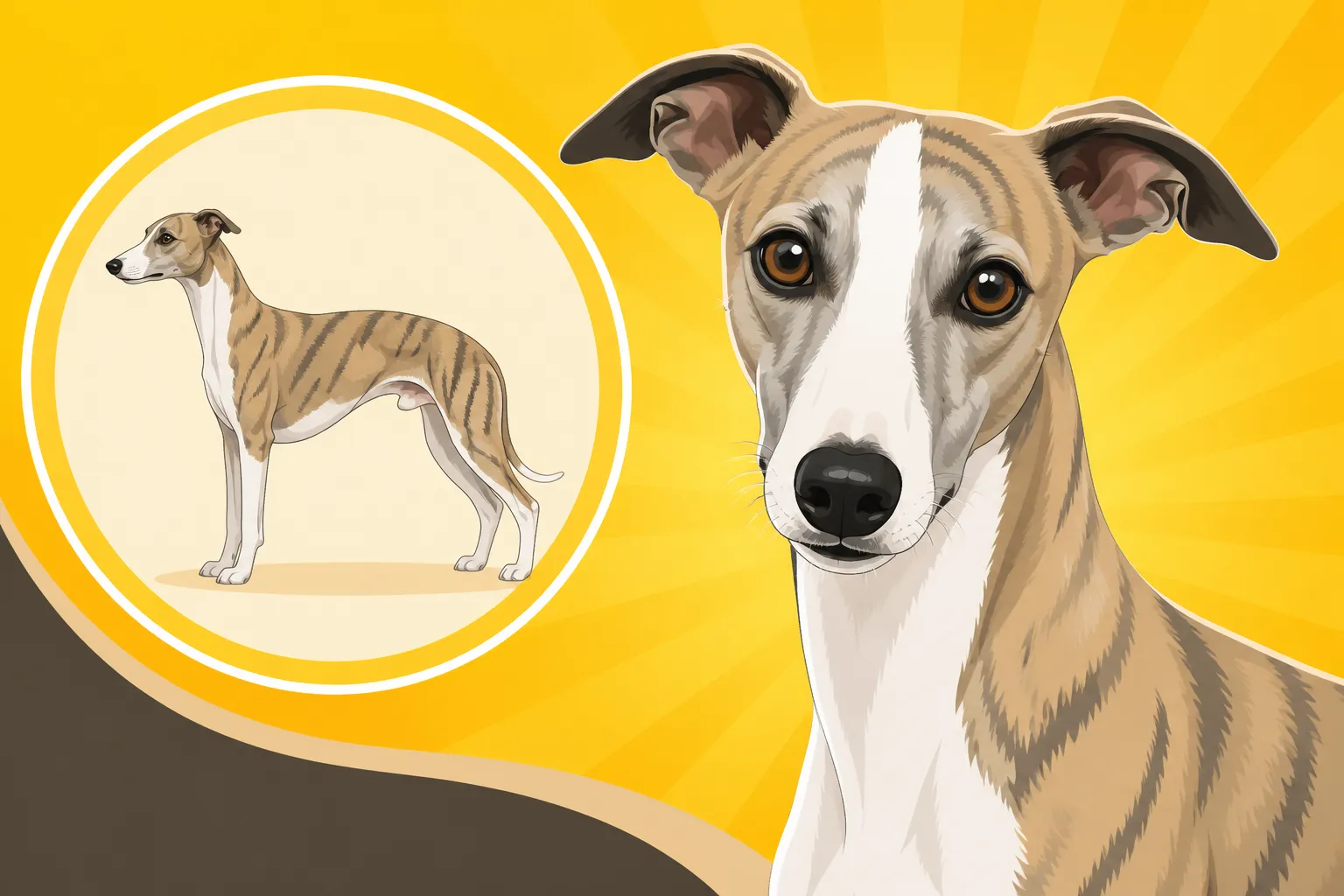
Brindle is a striped or streaked pattern, usually made up of darker markings over a lighter base. On a Whippet, the stripes can be obvious and sharply defined or so subtle that the coat looks nearly solid from a distance. A dog might have brindle across much of its body, or only in certain areas alongside white markings.
That striking contrast makes brindle easy to notice in photos and at dog events. It’s also a pattern many people associate with the breed, which can create the impression that brindle is unquestionably the most common. But being recognizable doesn’t prove that a color or pattern accounts for the largest share of Whippets.
There isn’t a reliable, comprehensive count of Whippet coat colors across countries, breeding lines, and pet homes. Registrations and show records don’t necessarily reflect the colors of all living Whippets, and colors popular in one area or breeding community may be less familiar elsewhere. So it’s fair to call brindle a common and familiar pattern, but not to claim it is definitively the most common everywhere.
For a closer look at the pattern itself, see Whether a Brindle Whippet Is Common. It helps to distinguish “commonly seen” from a measured ranking.
Fawn and other frequently seen colors
Fawn is another color people often see on Whippets. It can range from a pale, sandy cream to a deeper reddish or golden shade. Fawn dogs may have a solid-looking coat, a dark mask, white markings, or a brindle overlay. That overlap matters: owners may describe a dog as fawn, fawn brindle, or fawn and white depending on what stands out most.
Black, white, blue, red, cream, and combinations of these colors also appear. White markings can show up on the chest, feet, face, or tip of the tail, and some Whippets have extensive white areas. A dog’s visual label may depend on whether someone is describing its base color, pattern, or markings.
In practical terms, if you’re choosing a puppy or identifying a Whippet you’ve met, expect variety rather than a single dominant look. The Colors a Whippet Comes In offers a broader overview of the palette, while The Piebald Whippet explains a white pattern that can make a dog look quite different from a mostly solid-colored one.
| Coat description | What it usually means | Why appearances can vary |
|---|---|---|
| Brindle | Dark stripes or streaks over a lighter base | Stripes may be bold, faint, or concentrated in patches |
| Fawn | A shade from pale cream to deeper golden or reddish tan | White markings or brindle can change the overall impression |
| Black | A dark coat that may look solid or include white markings | Sunlight and coat condition can affect how the shade appears |
| Blue | A diluted gray-blue appearance | Lighting can make it look lighter or darker |
| White-marked | White areas combined with another color | The amount and placement of white differ from dog to dog |
What the breed standard says about Whippet color
Color isn’t the defining feature
Whippet breed standards allow a broad range of coat colors and combinations. In other words, there isn’t one required shade that makes a dog a Whippet, and an unusual color by itself doesn’t mean the dog is outside the breed. The Whippet’s overall structure and soundness matter much more than whether its coat is brindle, fawn, black, or something else.
That flexibility is part of why two Whippets can look noticeably different while still sharing the breed’s familiar outline. One might have a dark brindle coat with a small white chest mark; another could be mostly white with fawn patches. Neither should be judged by color alone.
If you’re comparing a particular coat to show requirements, read the standard used by the relevant kennel organization rather than relying on a social media post or a seller’s description. Which Colors the Whippet Standard Allows lays out the standard-focused question, and Whether Whippet Markings Are Faulted can help clarify why a marking that looks unusual to a new owner may not be a problem.
Color names can be subjective
Coat descriptions aren’t always used consistently. One person may call a pale dog cream, while another calls it very light fawn. A blue coat may be described as gray. With brindle, the base color and the stripes can lead to several reasonable descriptions of the same dog.
This is especially noticeable in puppy listings and photos. A camera’s white balance, indoor lighting, shadows, and the dog’s age can all change how a coat looks on screen. A puppy photographed under warm indoor light may appear more golden than it does outdoors. When color matters to you, ask to see the puppy in natural light and, if possible, meet the dog in person.
The label also doesn’t tell you everything about the dog’s ancestry or health. A color name is a visual description, not a health certificate or proof of responsible breeding. If a seller makes a major claim based only on a rare-sounding color, ask about the puppy’s parents, health history, and the breeder’s practices instead of treating the coat shade as evidence.
How Whippet coat color changes and relates to health
Puppy coats may not look exactly the same later
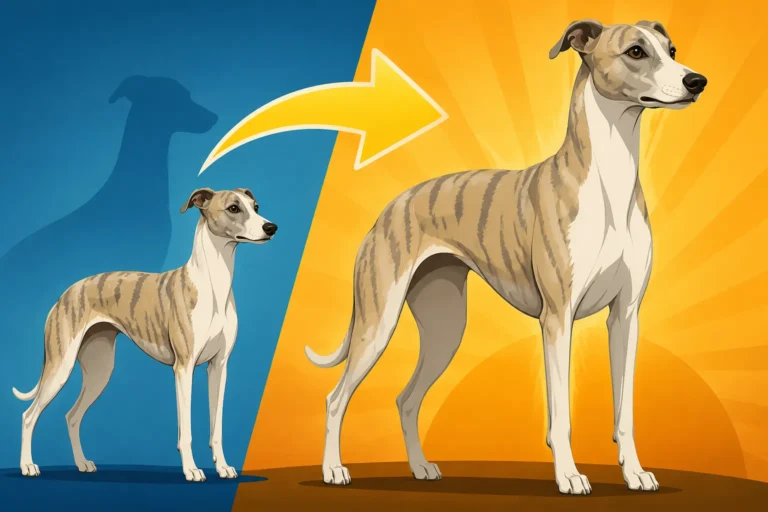
Some Whippet puppies change in appearance as they grow. The coat may seem to deepen, lighten, or become more clearly patterned, especially when the puppy’s markings are subtle at first. Growth, lighting, and coat condition can all affect what an owner thinks they’re seeing. These changes don’t mean every puppy will undergo a dramatic transformation; many retain a broadly similar look as adults.
Brindle stripes can be difficult to make out on a very young puppy, then become easier to see as the coat develops. White markings, on the other hand, are usually visible early. If you’re trying to predict an adult coat from a puppy photo, treat the description as an estimate rather than a guarantee.
For a more detailed discussion, read How a Whippet's Color Changes as It Grows. Breeders may be able to describe how colors have developed in related dogs, but even then, a puppy’s eventual appearance shouldn’t be promised with absolute certainty.
Blue coats deserve sensible, not alarmist, attention
Blue Whippets have a diluted-looking coat color. The word “blue” describes the shade; it doesn’t mean the dog is actually blue in the way a person might imagine from the name. Why a Blue Whippet Is a Dilute explains the color term, and Whether a Blue Whippet Is Purebred addresses the common misconception that a blue coat automatically means a dog isn’t purebred.
Some dilute-coated dogs in different breeds can be prone to coat or skin concerns, but color alone isn’t enough to diagnose a problem in an individual Whippet. Pay attention to the dog in front of you: persistent hair loss, irritated skin, sores, or repeated infections deserve veterinary attention regardless of coat shade. A breeder’s health information and the puppy’s actual skin and coat condition are more useful than assumptions based on color.
A blue coat is not a reason to panic, nor should a buyer ignore a visible skin problem because the seller calls it normal for the color. Ask straightforward questions about the parents’ skin and coat history, and have a veterinarian assess concerns. The same practical approach applies to any Whippet, whatever its color.
Choosing a Whippet by color without losing sight of fit
Prioritize health, temperament, and responsible breeding
It’s fine to have a favorite color. Many people are drawn to a bold brindle, a pale fawn, or a white-marked dog. But color is only one small part of choosing a companion. A puppy’s health, early care, temperament, and the breeder’s transparency will shape daily life far more than whether its coat is the shade you pictured.
When speaking with a breeder, ask what health screening is appropriate for their dogs, how puppies are raised, and what support is offered after placement. Ask to meet the mother if possible and to see where the puppies spend their time. A responsible breeder should be willing to discuss the dogs as individuals and answer questions without relying on claims that a particular color makes a puppy more valuable, healthier, or better suited to a home.
If you’re still exploring the breed, The Whippet Standard Cares So Much About the Topline is a useful reminder that the Whippet’s defining qualities go well beyond coat shade. The broader picture matters: a Whippet’s needs, energy, sensitivity, and fit with your household should come before color preference.
Keep coat care simple and comfortable
Whippets have short coats, so color usually doesn’t require a special grooming routine. A gentle brush or grooming mitt can lift loose hair, while occasional bathing can help when a dog gets dirty. White areas may show mud more clearly, and darker coats may make loose hairs more visible on light furniture, but these are everyday housekeeping differences rather than complicated coat-care needs.
Choose grooming products for dogs and stop using anything that causes redness or itching. If you’re comparing shampoos, coat wipes, or a warm layer for colder weather, Chewy is one retailer where owners can browse pet-care categories; check the product details and suitability for your dog before buying. For a young Whippet with sensitive skin, a veterinarian can help if irritation persists rather than clearing up with basic care.
Color can also affect what you notice, not necessarily what the dog needs. A small tick may be easier to spot on a pale coat than on a dark brindle one, while dirt can stand out more on white markings. Regularly check the skin, ears, nails, and paws regardless of color. Chewy may be a convenient place to compare grooming tools or coats, but fit and comfort matter more than matching the coat to a particular style. For supplies that touch the skin, look for clear product information and discontinue use if irritation develops.
If a white patch gets dirty after a wet walk, rinse and dry it as you would any other part of the coat. If your Whippet needs a jacket in chilly weather, choose one that allows free movement and fits the dog’s deep chest without rubbing. Chewy carries a range of pet-care and apparel options, but a well-fitting, comfortable garment is more useful than one chosen to coordinate with a particular color.
Disclaimer
This article is for general informational purposes only and does not constitute professional advice. Laws, prices and regulations vary by location and change over time. Consult a qualified professional for guidance on your specific situation.