How American and British Whippets Differ
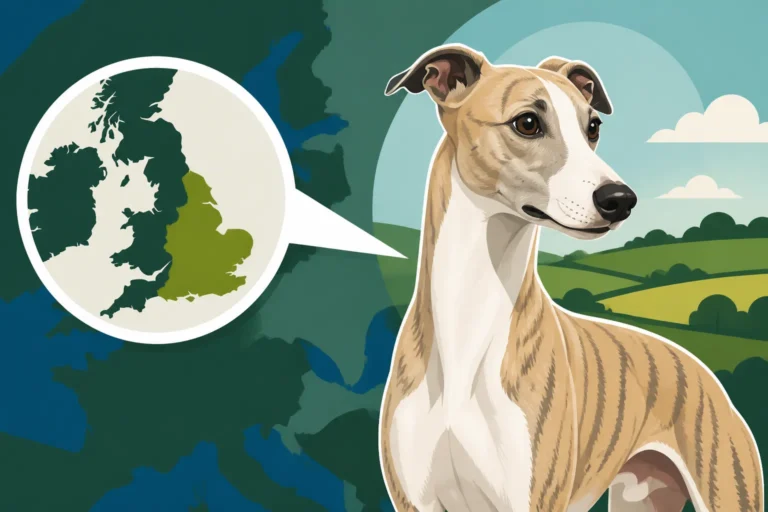
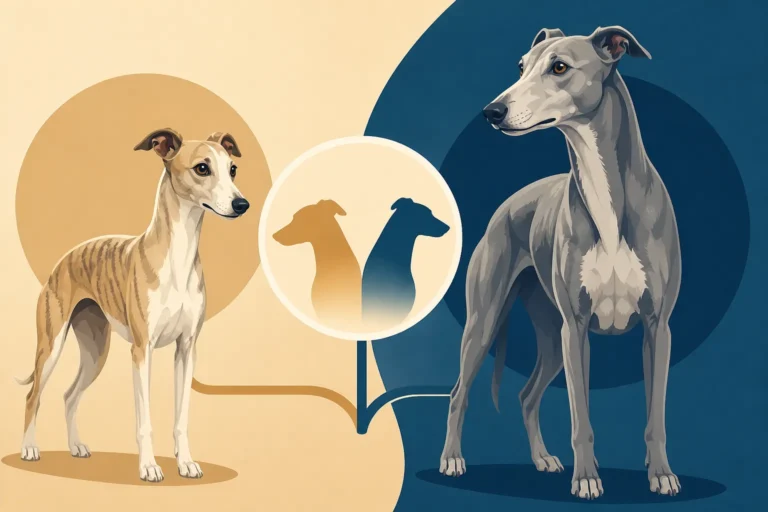
An American Whippet and a British Whippet are the same breed, but their kennel-club standards, show traditions, and racing cultures can make the dogs look or be described a little differently. If you are comparing puppies, pedigrees, or breed standards across the Atlantic, this guide explains what genuinely varies—and what is mostly a matter of individual breeding lines.
American and British Whippets share the same breed identity
The main differences come from standards and breeding traditions
Whippets in the United States and the United Kingdom are not separate breeds. Both are sighthounds bred for speed, and both are expected to have the characteristic combination of a deep chest, flexible topline, long limbs, and a fine, athletic outline. A British-bred dog does not automatically have a different temperament or a distinct kind of ancestry simply because it comes from the UK.
The differences people notice most often come from how breed standards describe the ideal dog, how local breeders interpret those standards, and which activities are popular in a particular area. Show breeders, racing breeders, and people breeding primarily for companion homes may all emphasize different qualities, even within the same country.
That is why a broad claim such as “American Whippets are bigger” can be misleading. Some American show dogs may be taller than many British show dogs, but there are plenty of individual dogs and family lines that do not fit that generalization. A pedigree, the parents’ measurements, and the dog’s overall structure tell you more than the country printed on a kennel name.
They have the same basic sighthound character
An American Whippet and a British Whippet may both be affectionate, sensitive, fast, and very committed to finding the warmest available sofa. They can also share the sighthound instinct to chase movement. A dog that has lived peacefully with a household cat may still react differently to an unfamiliar cat running outdoors.
Training and everyday behavior depend on the individual dog, socialization, health, and experience—not nationality. If you are deciding whether a Whippet suits your home, look closely at your lifestyle and the individual dog rather than assuming one country’s breeding produces a universally calmer or more biddable companion. For more on the breed’s general character, see The Household a Whippet Was Built For and Whether a Whippet Suits a First Time Owner.
How the American and British breed standards compare
Height is the clearest difference on paper
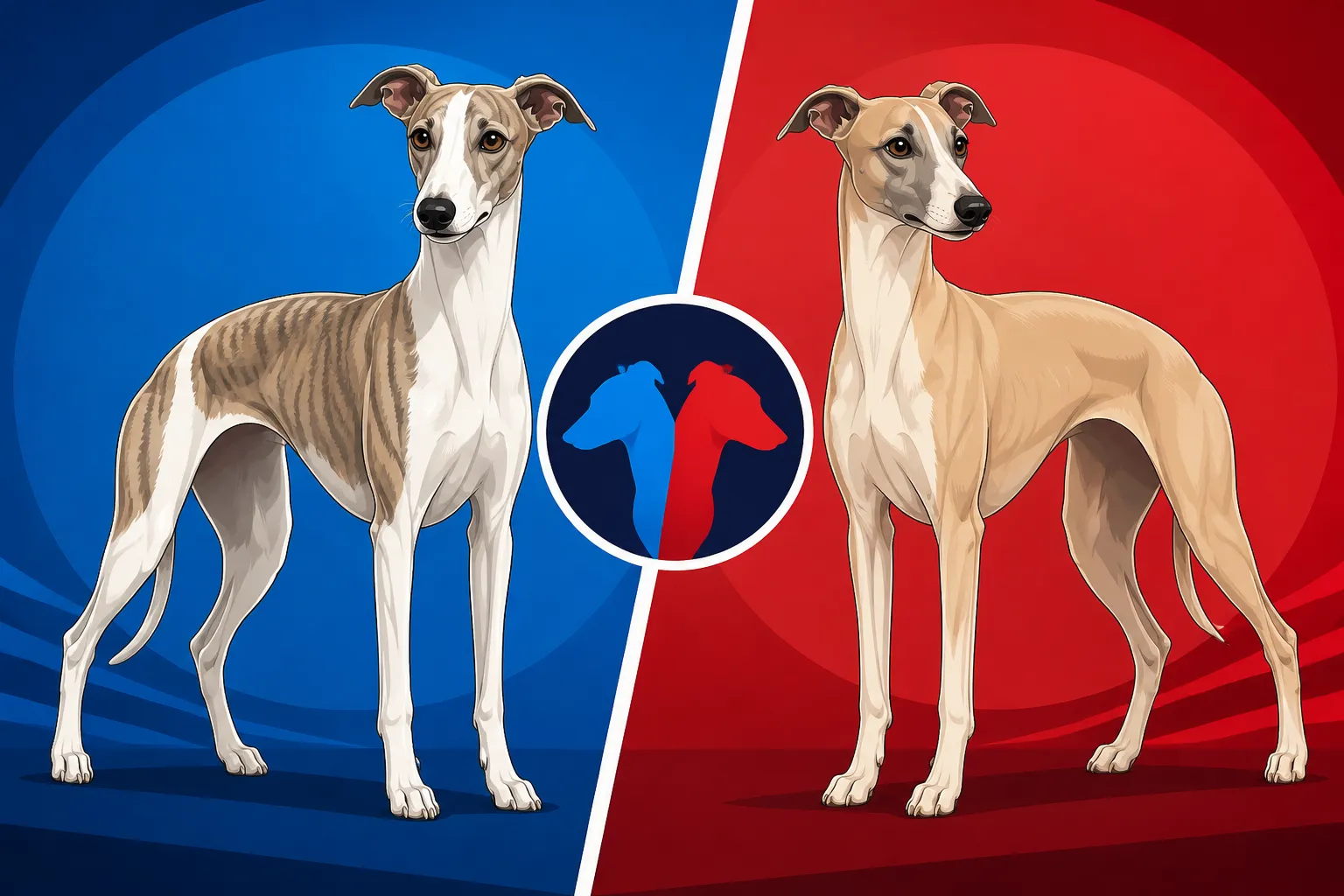
The most noticeable difference between the two standards is the height range. The American Kennel Club standard gives a broader range than the British Kennel Club standard. In the AKC standard, males are listed at 18.5 to 22.5 inches at the shoulder, and females at 17.5 to 21.5 inches. The UK standard gives a narrower range: males are 47 to 51 centimeters, and females are 44 to 47 centimeters.
Those ranges do not mean every American Whippet is taller than every British Whippet. The ranges overlap, and individual dogs vary. They do mean that a dog at the taller end of the AKC range may fall outside the height range preferred by the UK standard. If you are considering showing a dog in another country, check the applicable rules rather than relying on a general description of “American” or “British” type.
| Feature | American Kennel Club standard | British Kennel Club standard | What it means in practice |
|---|---|---|---|
| Male height | 18.5 to 22.5 inches | 47 to 51 centimeters | The American standard allows a broader and taller range |
| Female height | 17.5 to 21.5 inches | 44 to 47 centimeters | There is overlap, but the British range is narrower |
| Breed purpose | Fast, balanced sighthound | Fast, balanced sighthound | Both standards describe the same basic breed type |
| Individual variation | Depends on the dog and breeding line | Depends on the dog and breeding line | Country alone does not predict a dog’s size or build |
Height is only one part of a standard. A dog should not be judged as a good example of the breed just because it falls within a measurement range. Balance, sound movement, condition, and the overall sighthound outline matter too. If you want a fuller explanation of proportions, Why the Whippet Standard Cares So Much About the Topline and What a Whippet's Arch Actually Does offer useful context.
The standards overlap in the qualities they value
The two standards both describe an athletic dog built to run, not a miniature Greyhound or a dog whose appearance should be reduced to a height number. They call for a balanced outline, a deep chest, a tucked-up waist, and a topline that curves over the loin. The wording and measurements differ in places, but the shared idea is a functional, elegant sighthound.
Differences in phrasing can sound more dramatic than they are. Standards are written for judging and breed preservation; they are not a promise that dogs from one country will have a uniform appearance. Even dogs bred for the show ring can differ in head shape, bone, size, and outline while still being recognizable Whippets.
For a puppy buyer, it is sensible to ask how the breeder describes their goals and what adult relatives look like. If show eligibility matters to you, ask whether the dog’s expected size and pedigree suit the rules where you plan to compete. If you are choosing a companion, a small difference in standard height may be far less important than health, temperament, and a good match with your household.
Why Whippets can look different across the Atlantic
Local breeding priorities shape the look
A country’s standard sets boundaries and ideals, but breeders make choices within them. One breeder may favor a particular outline or style of movement; another may prioritize working ability, soundness, or a line’s history of success in racing. As those choices repeat across generations, regional trends can become noticeable.
Those trends are not fixed national traits. Two American kennels may produce dogs that look quite different from each other, just as two British kennels may have distinct styles. A Whippet from racing lines can look different from a show-bred dog regardless of whether it was bred in the United States or the United Kingdom. For background on that distinction, see The Split Between Racing and Show Whippets.
It also helps to be cautious with photos. Camera angle, posture, coat condition, and whether a dog is standing naturally can all change how tall or substantial it appears. When comparing dogs, look at several adult relatives in person or in consistent photographs, rather than drawing conclusions from one puppy picture or a single show-ring pose.
Racing is part of the picture, but not a national dividing line
Whippet racing has a history on both sides of the Atlantic, though events, organizations, and local traditions can differ. A dog bred for a particular racing activity may be selected with performance in mind, while a show breeder may put greater emphasis on meeting the written standard and succeeding in the ring. Many dogs, however, are simply companions, and some participate in more than one activity.
Those categories do not map neatly onto “American” and “British.” Both countries have people who value racing, showing, and companion temperament. Nor does a racing pedigree mean that a dog cannot settle comfortably at home. Individual needs vary, and a young, active Whippet may benefit from safe opportunities to run, training, and enrichment whether or not it has ever raced.
If you are looking at a dog advertised as coming from racing lines, ask what that means in that breeder’s program. Ask about the parents’ activities, the puppy’s expected energy level, and how the breeder supports the dog after it goes home. The practical question is not just where the dog was bred, but what it is likely to need day to day.
Choosing a Whippet from American or British lines
Ask about the individual dog, not just its country
If you are comparing litters, ask the breeder about the parents’ adult height, structure, temperament, and health. Request a chance to meet the dam where possible, and ask whether you can see other adult relatives. A breeder should be able to explain what they value in their dogs without relying on vague claims that one country’s Whippets are superior.
For a companion home, consider how the dog responds to people, unfamiliar settings, handling, and ordinary household activity. A puppy’s behavior is still developing, but the breeder can describe how the litter has been raised and which puppy may suit your experience and routine. If you are researching how breeding decisions are reflected in a dog’s appearance, How American and British Whippets Differ is one question to consider alongside How American and British Whippets Differ—but avoid treating nationality as a shortcut for predicting personality.
Whatever the country of origin, ask about appropriate health information for the parents and the wider family. Breed-related concerns and recommended screening can vary by line and circumstance. A responsible breeder should welcome thoughtful questions and be open about what is known, what is not known, and what support they offer if a problem arises.
Plan for the same basic care needs
An American or British Whippet needs the same practical attention to warmth, safe exercise, dental care, and skin protection. The short coat and lean build can make cold weather uncomfortable, while thin skin can be vulnerable to cuts during rough play or running through brush. A coat should fit the dog’s chest and body rather than simply matching a size label.
For everyday supplies, retailers such as Chewy may offer a convenient way to compare coats, beds, and other basics, but measure the dog and check fit carefully. A Whippet’s deep chest and narrow waist can make ordinary dog clothing sit awkwardly. The same care applies to bedding: a soft, padded resting place can be especially welcome for a lean dog who likes to stretch out on the floor.
Food needs are not determined by whether the dog is American or British. Age, size, activity, body condition, and health are more useful considerations. If you are comparing food options through a retailer such as Chewy, focus on a complete diet suited to your dog and discuss changes with your veterinarian, especially if your Whippet is a puppy, senior, or competing in strenuous activities. For practical background on the breed’s build, see What a Whippet Actually Weighs and How Thin a Whippet Should Look.
Match the dog to your home and activities
Whether you choose a Whippet bred in the United States or the UK, prioritize the dog that suits your household. Think about how much time the dog will spend alone, whether you have a safe enclosed area for exercise, and how you will manage the chase instinct around wildlife and unfamiliar small animals. A secure leash and reliable barriers matter more than the dog’s national origin.
If you expect to compete, check the rules and entry requirements of the organizations where you plan to participate. A dog that fits one country’s show standard may not fit another’s height requirements. For racing or coursing, ask local clubs about the activities available and what training, equipment, and fitness preparation are appropriate.
In short, American and British Whippets are members of the same breed, with the most concrete difference appearing in the written height standards. Their appearance and working background can vary by breeder and line, but there is no dependable rule that nationality alone predicts size, temperament, or suitability as a pet. Meet the dog, ask informed questions, and choose based on the individual in front of you.
Disclaimer
This article is for general informational purposes only and does not constitute professional advice. Laws, prices and regulations vary by location and change over time. Consult a qualified professional for guidance on your specific situation.