What a Whippet Does When It Catches Something
It’s a scenario every Whippet owner dreads: that moment your swift, silent sighthound locks onto something moving – a squirrel, a rabbit, a blowing leaf – and takes off like a shot. Your heart leaps into your throat because you know, deep down, that their instinct to chase is incredibly powerful, and the big question always hangs heavy in the air: what happens if they actually catch it? This guide is here to shed some light on those instinctive behaviors, discuss potential outcomes, and offer realistic ways to manage this deeply ingrained drive.
The Powerful Prey Drive of a Whippet
Whippets are not just dogs; they are finely tuned athletes, living embodiments of the chase. Their very essence is built around speed, agility, and the instinct to pursue. This isn't a behavior they choose, but rather a genetic imperative that has been honed over centuries, initially for hunting and racing. Understanding this fundamental aspect of their being is the first step toward managing it effectively.
Instinctive Behavior: From Sight to Sprint
When a Whippet spots something that triggers its prey drive, a complex sequence of events unfolds in a fraction of a second. Their eyes, designed for scanning vast distances, pick up the movement. Their body tenses, and then, almost without thought, they explode into a sprint. This is the classic "sight-hound" behavior. It’s an incredibly powerful impulse, often overriding any training or commands, no matter how well-practiced. You might call their name, yell "stay!", or offer the highest value treat, but in that moment, the world narrows to just two things: the Whippet and the object of its pursuit. It’s important to understand that this isn’t disobedience; it’s instinct. This is why a Whippet's recall can be so challenging, and why many owners feel a knot in their stomach every time their dog is off leash in an unfenced area. For more on this, you might find Why a Whippet's Chase Instinct Overrides Its Recall insightful.
Their entire physique is designed for this purpose. From their deep chest and flexible spine to their powerful hindquarters and narrow, aerodynamic skull, every feature is optimized for a burst of incredible speed and the ability to turn on a dime. When that prey drive is engaged, it’s like watching a wild animal in its natural element, utterly focused and driven. It’s beautiful, terrifying, and completely natural all at once. For centuries, these dogs were used to catch game, and their ancestral name, "Snap Dog," even alludes to their ability to quickly dispatch small prey. You can learn more about their history as hunters by reading The Older Name Snap Dog for the Whippet.
Why "Catching" Isn't Always "Killing"
Many new Whippet owners fear that if their dog catches a small animal, it will inevitably result in a gruesome end. While it's true that Whippets possess the physical capability to kill small prey quickly, it's not always the outcome, especially with pet Whippets who live in a domestic environment. The act of the chase and capture itself is often the primary driver, rather than a desire to inflict harm for sustenance. They are not typically "shredders" or prolonged attackers in the way some other breeds might be.
Often, if a Whippet catches a small animal like a squirrel or rabbit, the prey is either stunned, injured, or, yes, sometimes killed quickly by the sheer force and speed of the catch. The Whippet might shake it once or twice, mouth it, or carry it around, but a sustained, violent attack is less common than a swift, decisive action. This isn't to say it won't happen, but it helps to distinguish between a wild, instinctual act and a malicious one. The experience is usually over very fast, leaving the owner to deal with the aftermath.
Common Scenarios: What Happens Next?
Understanding what typically occurs when a Whippet successfully closes the distance on its target can help owners prepare and react. The outcome can vary significantly depending on the nature of the "prey" and the environment.
Catching Small Wildlife (Squirrels, Rabbits, Birds)
This is perhaps the most common and anxiety-inducing scenario. You’re out on a walk, perhaps in a park or open field (where a Whippet ideally should always be on a leash, by the way), and suddenly a squirrel darts across their path. The Whippet is off before you can even register it. If they catch it, the event is usually very fast. The squirrel or rabbit, if caught, is often dispatched quickly. A quick shake of the head can cause immense trauma due to the Whippet's powerful jaw and the speed they carry.
Owners frequently report finding the animal either deceased or severely injured. It's a shocking experience for both the owner and, sometimes, the dog. The Whippet might stand over the catch, perhaps nudging it, or might bring it back to you, not as a gift, but as something they've successfully "acquired." It’s crucial in these moments to remain calm and safely recover your dog, and then address the caught animal if it's still alive. This kind of incident underscores why it's so risky to let a Whippet off leash in areas where small wildlife is abundant. For a deeper dive into safe off-leash areas, consider reading Why a Whippet Cannot Be Let Off Leash in an Open Field.
Interactions with Other Pets (Cats, Small Dogs)
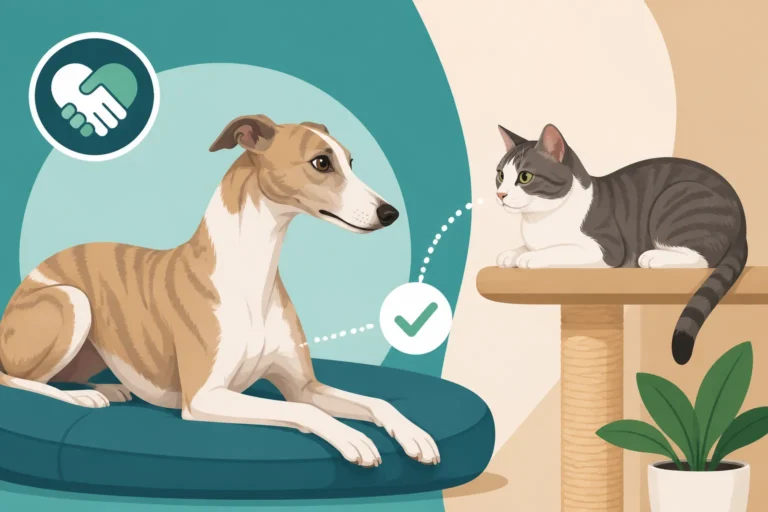
The relationship a Whippet has with other pets, particularly cats and very small dogs, is a delicate balance. A Whippet that has been raised with a cat from puppyhood will typically view that cat as a member of its household and not as prey. They might play chase games, but these are usually tempered by familiarity and the cat's ability to assert itself. You'll often see them curled up together, which is a testament to the power of early socialization. For advice on this, check out Living With a Whippet and a Cat and Introducing a Whippet Puppy to a Resident Cat.
However, the introduction of a new, unfamiliar cat or a small, yappy dog that triggers a chase response can be a different story. Outside the home, an unknown cat might be seen as fair game. With small dogs, while Whippets are generally good-natured and enjoy play with other canines, their play style can be incredibly intense. A full-speed chase by a Whippet, even if intended as play, could accidentally injure a much smaller dog simply due to size and speed disparity. Owners need to be vigilant, especially when their Whippet is interacting with tiny breeds. It’s always better to err on the side of caution and manage interactions closely, ensuring a safe and controlled environment for all parties.
Retrieving Objects (Lures, Toys)
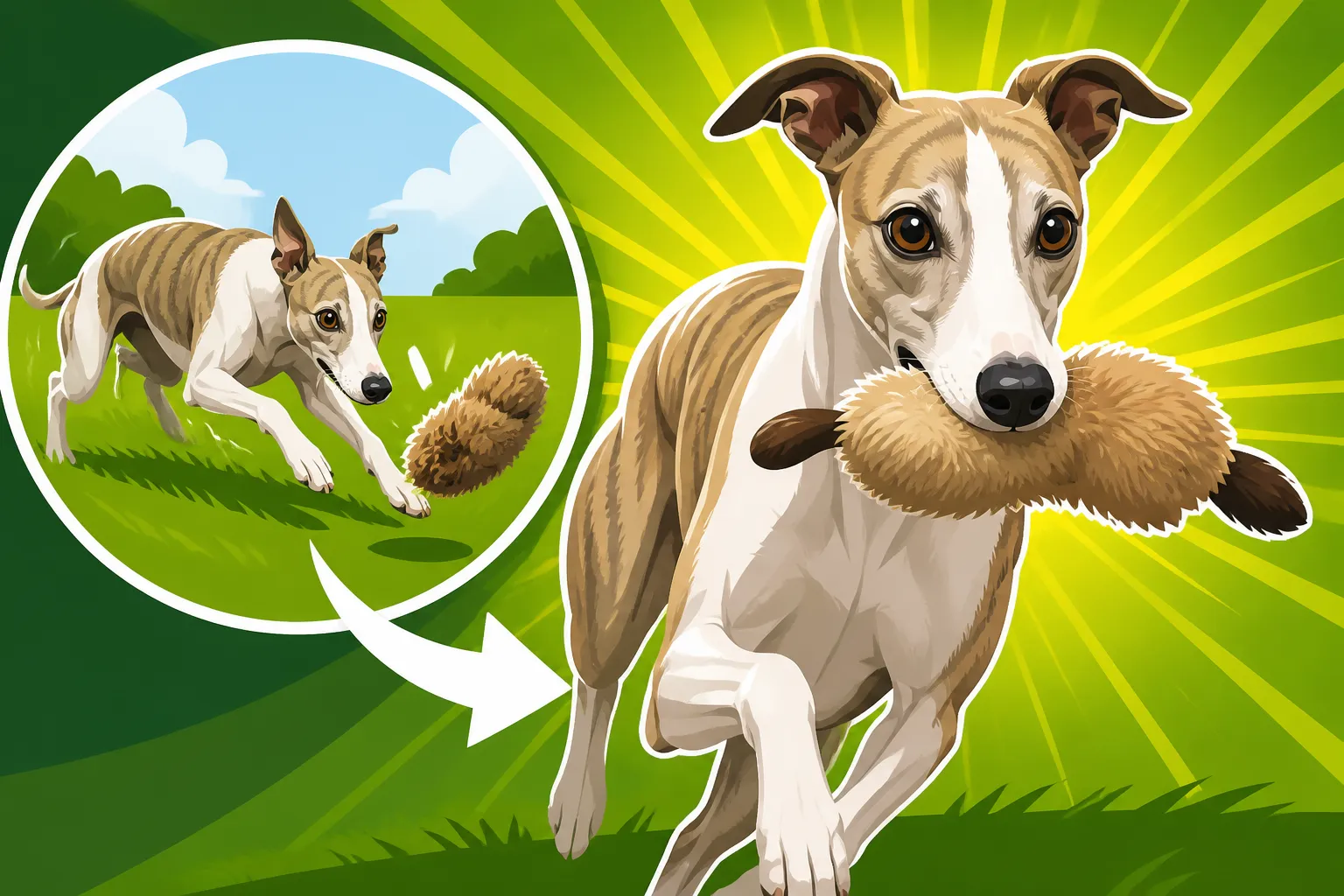
Thankfully, for owners who want to safely channel their Whippet's incredible prey drive, there are sanctioned activities designed just for this purpose. Lure coursing and Fast CAT are perfect examples. In these events, a mechanical lure simulates live prey, zipping across a field, enticing the Whippet to chase. When a Whippet "catches" the lure, it's typically a triumphant pounce, a quick shake, and then a proud stand-over, waiting for the next run or for the owner to retrieve the lure.
These activities provide a safe, exhilarating outlet for their natural instincts without any harm to real animals. The Whippet gets to do what it was born to do – run fast, chase, and "catch" – and the owner gets to witness their dog's pure joy and athletic prowess. It’s a fantastic way to bond with your Whippet and ensure they are mentally and physically satisfied. If you're looking for ways to engage your Whippet's natural drives, How Lure Coursing Channels a Whippet's Drive is an excellent resource.
Managing the Instinct: Training and Prevention
Given the powerful nature of the Whippet's prey drive, proactive management and specific training are not just recommendations; they are essential for their safety and the peace of mind of their owners.
Reliable Recall and Emergency Stops (The Ideal, Not Always Reality)
Every dog owner dreams of a perfect recall, and with a Whippet, it can feel like chasing a mythical creature. While it’s absolutely vital to train a strong recall, even the most dedicated training efforts can be utterly abandoned when a Whippet’s prey drive is engaged. The scent, sight, and movement of a fleeing animal can switch off their hearing instantly. Training involves making yourself more rewarding than the distraction, often through high-value treats and consistent, joyful practice in increasingly distracting environments. But even with daily training, be prepared for the reality that a squirrel, rabbit, or deer might still prove to be an irresistible pull.
An emergency stop, such as a "down" or "freeze" command taught at a distance, can sometimes be a more effective secondary tool. This involves training your Whippet to drop everything and lie down, no matter what. It requires immense consistency and powerful positive reinforcement, gradually adding distractions. Companies like BAXTER & Bella offer comprehensive online training programs that can help you build these foundational obedience skills, though they, too, would caution that true prey drive override is a monumental task for a sighthound. Keep practicing, but always manage expectations for those high-stakes situations. More on this topic can be found in Thirty Five Miles an Hour and No Brakes on a Whippet's Recall.
Leash Discipline and Long Lines
For the safety of your Whippet and local wildlife, leashing your Whippet in unfenced or open public areas is non-negotiable. Even in seemingly safe environments, a sudden movement can spark their flight instinct. A secure leash and a properly fitting collar or harness are your first line of defense. Whippets, with their narrow heads, can easily slip out of standard flat collars, especially when pulling hard, so a martingale collar, which tightens gently when pulled, is often recommended.
For those times when you want to give your Whippet more freedom to run and explore without being entirely off-leash, a long line (a very long leash, often 20-50 feet) is an invaluable tool. It allows them to sprint and explore a wider area while still giving you control to intervene if something catches their eye. Always choose a sturdy, comfortable long line, which you can find readily on platforms like Amazon, and practice with it in a safe, open space before using it in a more stimulating environment. For tips on choosing the right long line, refer to Whether a Long Line Suits a Whippet. And remember, a regular flat collar is often insufficient for a Whippet's unique neck shape; Why a Flat Collar Slides Off a Whippet's Neck explains this in detail.
Secure Fencing and Safe Exercise Spaces
If you have a yard, ensuring it is securely fenced is paramount for a Whippet. They are agile and can clear surprisingly high obstacles if motivated. A fence of at least 5 to 6 feet is generally recommended, and it should be solid enough to prevent them from squeezing through gaps or digging underneath. Regular checks of your fence line for weak spots are a must.
For true off-leash running, where your Whippet can really stretch out and enjoy their speed, seek out specially designed, securely fenced dog parks or, even better, rent private, enclosed fields. Many communities now have sighthound-specific meetups at such fields, providing a safe environment for Whippets to play together without the risk of an accidental chase into danger. This dedicated space is vital for their physical and mental well-being, allowing them to express their natural athleticism. You can learn more about appropriate fence height in How Tall a Fence a Whippet Needs.
After the Catch: What to Do and Consider
Despite all precautions, sometimes the inevitable happens. Knowing how to react calmly and constructively can make a significant difference for both you and your Whippet.
Immediate Action and Safety
If your Whippet has caught a wild animal, your immediate priorities are safety and minimizing further harm. Approach your dog calmly but firmly. Avoid yelling or snatching, as this can startle your Whippet, causing them to guard their "prize" more fiercely or potentially injure the animal further. If the animal is still alive, gently try to get your Whippet to drop it using a high-value treat exchange. Leash your dog immediately. Then, assess the condition of the wild animal from a safe distance. If it's injured, contact a local wildlife rescue or humane society for guidance. Never attempt to handle an injured wild animal yourself, as they can bite or scratch in fear.
Once your Whippet is secure, check them over for any injuries. Even a quick catch can result in scratches, bites, or minor punctures from the struggling animal. Whippets have delicate skin, so even small wounds can require attention. If you find any cuts or abrasions, a quick clean and assessment might be in order, and for anything more serious, a vet visit is warranted. For minor skin issues, Treating a Whippet's Skin Tear offers useful information.
Emotional Impact on Owner and Dog
Catching a wild animal can be a deeply distressing experience for an owner. Feelings of guilt, shock, anger, or sadness are completely normal. It’s important to acknowledge these emotions but also understand that your Whippet was acting on a powerful, ancient instinct. They are not being "bad" or disobedient in a malicious sense. Punishing your Whippet after the fact is not only ineffective but can also damage your bond and make them fearful, especially as Whippets are incredibly sensitive dogs. They won't connect the punishment to the act, only to your sudden anger.
Instead of focusing on blame, focus on what you can learn from the incident. Did it happen in a place you frequent? Was there a lapse in vigilance? Use the experience to reinforce your commitment to responsible management and prevention. Your Whippet needs your understanding and consistent guidance, not your condemnation, especially when their biology is simply doing what it was designed to do.
Learning from the Experience and Moving Forward
Every incident, even an unpleasant one, offers an opportunity for reflection and adjustment. Take a moment to analyze the circumstances: Where did the catch happen? What was the specific trigger? Was the leash secure? Did you miss any early warning signs? These questions can help you refine your management strategies. Perhaps it means avoiding that particular park, doubling down on long-line training, or investing in higher fencing.
The key is consistent, proactive management. Whippets thrive on routine and clear boundaries. While their prey drive is inherent, you can channel it into appropriate outlets like lure coursing or carefully controlled play in secure areas. Embrace the challenge of owning a sighthound – their speed, grace, and unique instincts are part of what makes them so special. It's a journey of understanding and responsible pet ownership, ensuring that your beautiful Whippet can live a full, happy, and safe life. Finding appropriate outlets for their energy, such as those discussed in The Job a Whippet Actually Needs, is crucial.
| Scenario | Whippet Behavior (Likely) | Owner Reaction (Recommended) | Prevention/Management |
|---|---|---|---|
| Small Wildlife (Squirrels, Rabbits, Birds) | Fast chase, capture with a quick shake/bite, often resulting in death or severe injury. May carry or stand over prey. | Shock, sadness, potential guilt. Focus on securing the dog and addressing the wildlife safely (contact rescue if alive). | Strict on-leash walking in unfenced areas. Use a long line in designated safe, open spaces. Secure home fencing. Practice strong "leave it" and recall consistently. |
| Unfamiliar Cats | High likelihood of chase, potential for capture and injury/death, especially if the cat runs. | Similar to wildlife scenarios: shock, distress. Secure your dog and manage the situation safely. | Never allow your Whippet off-leash near unknown cats. Keep leashed during walks. Use secure fencing. Introduce new cats with extreme caution and professional guidance. |
| Very Small Dogs | May initiate high-speed, intense play, which can accidentally cause injury due to size and speed disparity, even without predatory intent. | Concern for the smaller dog's safety. Immediate intervention to separate if play becomes too rough or prey drive seems triggered. | Supervise all interactions with very small dogs closely. Avoid off-leash play with significantly smaller dogs. Use a secure leash and harness in public. |
| Household Cats (Raised Together) | Generally seen as family, not prey. May engage in playful chasing but usually tempered and without intent to harm. | Relief and joy at their peaceful coexistence. Continued vigilance for any changes in dynamic or introduction of new animals. | Early socialization and careful introduction are key. Maintain clear boundaries for play. Continue to manage any outside prey drive to avoid confusion. |
| Lures/Toys (Lure Coursing, Fast CAT) | Enthusiastic, full-speed chase and "capture" of the lure/toy, often with a celebratory pounce and shake. No intent to harm. | Pure joy and pride in your Whippet's athletic ability. Satisfaction that their instincts are being safely channeled. | Regular participation in sighthound-specific sports like lure coursing, Fast CAT, or even organized flirts pole play in a secure area. Provide plenty of appropriate toys for indoor play. |
Disclaimer
This article is for general informational purposes only and does not constitute professional advice. Laws, prices and regulations vary by location and change over time. Consult a qualified professional for guidance on your specific situation.