Living With a Whippet and a Cat
One of the biggest concerns I hear from potential Whippet owners, or even those who already have a beloved feline friend, is the age-old question: "Can a Whippet and a cat truly coexist peacefully?" It’s a completely valid worry, given the Whippet's sighthound heritage and formidable prey drive. This guide is here to walk you through everything you need to know, from understanding their instincts to creating a harmonious home where both your graceful Whippet and your independent cat can thrive together.
Understanding the Whippet's Instincts Around Cats
Let's face it, Whippets are sighthounds. They are bred to chase, and they are incredibly good at it. When you bring a dog with such strong instincts into a home with a cat, it's natural to feel a knot of apprehension in your stomach. It's not about whether your Whippet is "mean" or "aggressive"; it's about deeply ingrained behaviors that have been honed over centuries. Ignoring these instincts or assuming your Whippet will just "figure it out" is setting everyone up for potential heartbreak.
The Sighthound Prey Drive
Whippets possess a profound and powerful prey drive, an instinct that can be a real challenge when living with smaller, fast-moving creatures like cats. This isn't just a playful urge; it's a hardwired response to movement, speed, and size, designed for survival and hunting. When a Whippet spots something small darting across its field of vision, its brain doesn't register "beloved housemate" – it registers "prey." That sudden burst of speed, the focused gaze, the silent pursuit – it's all part of what makes them exceptional hunters, and it can be incredibly intimidating for a cat, and frankly, terrifying for an owner.
This isn't to say every Whippet will relentlessly pursue every cat it sees. Individual personalities vary wildly, and some Whippets simply have a lower prey drive than others. However, it's crucial never to underestimate this fundamental aspect of their breed. A Whippet might live peacefully with one particular cat, yet react completely differently to a new cat, or even a neighborhood squirrel. Understanding this intrinsic drive is the first step toward successful multi-species living, recognizing that management and training will always be part of the equation. It means acknowledging that even the most well-behaved Whippet might have that switch flipped under the right, or wrong, circumstances.
Why Whippets Chase Every Cat But Their Own (and sometimes even their own)
It's a common observation among sighthound owners: their dog might live in perfect harmony with the resident feline, perhaps even snuggling up for naps, but will become a blur of chasing instinct the moment an unfamiliar cat enters the yard. This phenomenon highlights a critical distinction in the Whippet's mind: "my cat" versus "other cat." The resident cat becomes part of the "pack," a known entity, and often, through careful introduction and consistent reinforcement, a non-prey item. They smell familiar, they behave predictably within the home, and they are associated with the comfort and safety of the Whippet's own territory.
However, an unknown cat, especially one encountered outdoors or even one newly introduced to the home, lacks these established markers. Its scent is new, its movements might be perceived as erratic or threatening, and it doesn't have the same "pack member" status. This triggers the primal chase response. Even with their own cat, there can be moments where the instinct flares – a sudden dart from under the sofa, a quick run across the room – and the Whippet might give chase momentarily before remembering who it is. This is why vigilance is always necessary, even in seemingly peaceful homes. Consistent positive interactions help to reinforce the "my cat is friend, not prey" message over time.
Dispelling Myths: Not All Whippets Are "Cat Safe" by Default
There's a persistent myth that all Whippets are inherently "cat safe" simply because they are generally gentle and good-natured dogs. While it's true that Whippets possess a sweet disposition and aren't typically aggressive, confusing this with a lack of prey drive is a dangerous oversight. Their gentleness towards humans and other dogs doesn't automatically extend to small, furry animals that trigger their sighthound instincts. The image of a Whippet curled up with a cat is certainly achievable and beautiful, but it requires deliberate effort, careful management, and a deep understanding of the breed's natural tendencies.
Assuming a Whippet will be fine with a cat without proper introductions and ongoing supervision is a gamble. Every Whippet is an individual; some might have a very low prey drive and adapt easily, while others might struggle immensely, regardless of how much you wish they wouldn't. It's irresponsible to rely on breed stereotypes when the safety of your pets is at stake. Instead, approach the situation with realism: assume your Whippet has a prey drive and work diligently to manage and redirect it, rather than hoping it simply won't manifest. This proactive approach ensures a safer and happier environment for both your Whippet and your feline companion.
Preparing Your Home for a Multi-Species Household
Before you even think about introducing your Whippet and cat, or if you're bringing a new pet into an existing household, preparing your physical space is paramount. This isn't just about making room for a new bed or litter box; it's about strategically designing an environment that minimizes conflict, maximizes security, and allows both animals to feel safe and comfortable. Think of it as creating diplomatic zones within your home, where each species can retreat and feel completely at ease, far from the gaze or reach of the other.
Creating Safe Spaces for Your Cat
Your cat needs an escape route, a sanctuary where your Whippet simply cannot go. This is non-negotiable for their safety and mental well-being. Cats thrive on having elevated perches and hiding spots, and in a multi-pet home, these become even more critical. Think vertical space: tall cat trees, shelves mounted on walls, or even the tops of bookcases that are sturdy and accessible only to your cat. These high vantage points allow your cat to observe the room and feel secure, knowing they can easily escape if the Whippet's attention becomes too intense.
Beyond vertical escapes, consider creating entire rooms or zones that are strictly cat-only. This can be achieved with baby gates that have cat doors, or by simply installing a cat flap high up on a door that only your agile feline can reach. This ensures your cat has undisturbed access to food, water, and litter boxes. Imagine trying to eat your dinner with a large, curious dog constantly sniffing around your plate – that's how your cat might feel without their own private dining and restroom facilities. A safe space dramatically reduces a cat's stress levels, which in turn makes them more confident and less likely to react defensively towards your Whippet.
Secure Barriers and Management Tools
Successfully integrating a Whippet and a cat relies heavily on effective management, especially in the initial stages. Good quality barriers are your best friend here. Standard baby gates can be effective in doorways, but remember that many Whippets are surprisingly athletic and might be able to clear lower gates if motivated. Look for extra-tall or pressure-mounted gates that are harder to breach. These allow for visual and olfactory interaction between your pets without direct physical contact, which is crucial during the slow introduction phase.
Beyond gates, consider crate training your Whippet. A crate can serve as a safe, quiet den for your dog, but also as a way to contain them safely while you’re unable to supervise. This is especially useful during mealtimes or when you leave the house, ensuring your cat can roam freely without fear. Long lines are another invaluable tool, particularly for early supervised interactions, allowing you to maintain control over your Whippet's movements and prevent any unwanted chasing or intense sniffing. You can find a wide variety of suitable gates, crates, and long lines on platforms like Amazon, making it easier to equip your home properly.
Essential Supplies for Both Pets
Having the right gear on hand makes a world of difference in managing a multi-species household. For your Whippet, ensure you have a comfortable, well-fitting martingale collar, as their slender necks can easily slip out of standard collars, especially if they try to bolt after a cat. Why a Whippet Needs a Martingale delves into this further. A sturdy leash is also critical for controlled walks, helping to burn off energy that might otherwise be directed towards your cat. Chew toys and puzzle feeders are fantastic for mental stimulation, keeping your Whippet engaged and less inclined to focus solely on the cat.
For your cat, multiple litter boxes are a must, ideally one more than the number of cats you have, spread throughout the house, with at least one in a dog-free zone. Elevated food and water bowls for the cat prevent the Whippet from "grazing" or drinking from them. Plenty of cat scratchers, both vertical and horizontal, provide appropriate outlets for their natural scratching behavior, potentially diverting them from your furniture. And don't forget comfortable beds for both animals, located in their respective safe spaces. Having everything prepared beforehand alleviates stress for both you and your pets, paving the way for a smoother transition.
The Art of Introduction: Slow and Steady Wins the Race
Introducing a Whippet and a cat is not a race; it's a marathon of patience and careful observation. Rushing the process can create fear, stress, and lasting negative associations that are incredibly difficult to undo. The goal is to gradually acclimate both animals to each other's presence, building positive connections and trust over days, weeks, or even months. Remember, the initial interactions set the tone for their entire relationship, so take your time and don't skip any steps.
Scent Swapping Before First Contact
Before your Whippet and cat even lay eyes on each other, begin with scent swapping. Scent is incredibly important to both dogs and cats, acting as a primary form of communication. Take a small towel or blanket and rub it gently on your cat, focusing on their cheeks and flanks where they have scent glands. Then, place this scented item in your Whippet's bed or near their food bowl. Observe their reaction – is there curiosity, indifference, or a strong negative response? Do the same with a blanket or toy from your Whippet, offering it to your cat.
Repeat this process several times a day for a few days. The idea is to slowly introduce each animal to the other's scent in a non-threatening way, associating it with positive experiences like eating or resting. This helps to normalize the presence of the other species before they ever see each other. By the time they meet, some of the novelty and potential alarm of the "stranger's" scent will have already worn off, making the visual introduction less overwhelming.
Controlled Visual Introductions
Once both pets are tolerating each other's scent without any signs of stress, you can move to controlled visual introductions. This should always happen with a physical barrier between them, such as a sturdy baby gate or a screen door. Have your Whippet on a leash, ideally with another person holding the leash to ensure full control. The first few meetings should be short, just a few minutes, and always end on a positive note. Distract your Whippet with high-value treats or a favorite toy, rewarding them for calm behavior in the cat's presence. The goal is not for them to interact immediately, but simply to exist in the same space without intense reactions.
During these sessions, ensure your cat has an easy escape route or a high perch to retreat to if they feel overwhelmed. Never force the cat to stay or interact. If either animal shows signs of stress – your Whippet fixating, growling, lunging, or your cat hissing, swatting, or bolting – end the session immediately. Gradually increase the duration of these visual encounters, always keeping them positive and supervised. Consistency is key, and it might take many sessions before they can calmly share a space, even with a barrier.
Supervised Interactions and Gradual Integration
Only when both your Whippet and cat are consistently calm and relaxed during barrier-controlled sessions should you consider supervised interactions without the barrier. Even then, start cautiously. Keep your Whippet on a long line or leash, so you can intervene instantly if needed. Have high-value treats ready to reward any calm, non-reactive behavior. If your Whippet glances at the cat and then looks away, reward them. If they lie down calmly, reward them. The focus is always on reinforcing desired behaviors.
Begin with very short, highly supervised sessions in a neutral space, ensuring the cat has vertical escape routes. Never leave them unsupervised until you are absolutely certain of their harmony, which can take many months, if ever. Look for signs of genuine relaxation from both animals – a cat confidently walking past the Whippet, a Whippet ignoring the cat in favor of a toy or nap. Gradually increase the time they spend together, always being prepared to step in and manage the situation. Remember, patience is your greatest asset here; forcing interaction or rushing the process can cause fear and aggression that is very hard to reverse.
Training Your Whippet for Cat-Friendly Behavior
Effective training is the cornerstone of a successful Whippet-cat household. It's not enough to simply manage their environment; you also need to equip your Whippet with the skills to control their natural instincts and respond appropriately in the presence of your feline companion. This means focusing on positive reinforcement, teaching crucial commands, and understanding how to manage their energy and excitement levels.
Positive Reinforcement for Calmness
Whippets are incredibly sensitive dogs, and harsh training methods can actually be counterproductive, leading to fear or a shutdown response. Instead, focus entirely on positive reinforcement. This means rewarding your Whippet enthusiastically for any calm behavior around the cat, no matter how small. Did your Whippet just glance at the cat and then look back at you? Treat! Did they lie down quietly while the cat walked by? Jackpot! The goal is to create a strong positive association: "cat = good things happen to me."
Use high-value treats – something your Whippet absolutely adores – to make these rewards impactful. Keep training sessions short, fun, and frequent. Avoid punishment or scolding, as this can make your Whippet associate the cat with negative experiences, which is the exact opposite of what you want. Think about enrolling in an online puppy school, like those offered by BAXTER & Bella, which often emphasize positive reinforcement techniques that can be adapted for multi-pet household training. Over time, your Whippet will learn that ignoring the cat or being calm in its presence is far more rewarding than chasing. How a Whippet Learns When It Bruises From Pressure further explains their sensitivity.
Teaching Impulse Control and "Leave It"
Two of the most critical commands for a Whippet living with a cat are "Leave It" and "Stay" or "Wait." "Leave It" teaches your Whippet to disengage from something tempting – in this case, the cat – and focus on you instead. Start practicing this command with low-value distractions, like a dropped treat, and gradually increase the difficulty. Once your Whippet reliably leaves food or toys, introduce the cat into the equation, always from a safe distance and with your Whippet on a leash. If your Whippet even looks at the cat and then voluntarily looks back at you, reward heavily.
"Stay" or "Wait" can be invaluable for controlling your Whippet's movements, especially during those moments when the cat might dart past. Practice these commands in various environments, gradually increasing duration and distraction. A strong "Stay" means you can halt your Whippet's progress if the cat unexpectedly appears, giving you time to intervene or redirect. These commands build impulse control, which is essential for managing a sighthound's natural chase drive. Remember, consistency and patience are key; these skills take time and repetition to solidify.
Managing Excitement and Over-Arousal
Whippets, despite their reputation as couch potatoes, are capable of incredible bursts of energy and excitement. This high level of arousal can easily spill over into chasing behavior, especially when a cat is involved. Therefore, managing your Whippet's overall energy and excitement levels is crucial. Ensure your Whippet receives adequate exercise, including opportunities to run safely in a securely fenced area or on a long line. A tired Whippet is often a calm Whippet. How Much Exercise a Whippet Really Needs provides excellent insights into their activity requirements.
Beyond physical exercise, incorporate mental stimulation through puzzle toys, training sessions, and scent games. A mentally engaged Whippet is less likely to be bored and seek "entertainment" from the cat. Learn to recognize the signs of over-arousal in your Whippet – panting, dilated pupils, tense body language, fixated stare – and intervene before they act on their instincts. Redirect their attention with a toy, a training command, or a short walk. The goal is to prevent the chase from ever starting, teaching your Whippet that calm, settled behavior is the expected norm around the cat.
Living in Harmony: Daily Management and Long-Term Strategies
Achieving initial peace between your Whippet and cat is a huge accomplishment, but maintaining that harmony requires ongoing commitment to daily management and long-term strategies. It's about establishing clear routines, respecting boundaries, and continuously observing your pets for any signs of brewing conflict or stress. Think of it as an ongoing diplomatic mission within your own home.
Feeding Arrangements and Resource Guarding
Food can be a major point of contention in any multi-pet household, and a Whippet's opportunistic nature means they will happily gobble down any unguarded meal. To prevent conflict and ensure both animals get adequate nutrition, separate feeding areas are essential. Feed your cat on a counter, a tall cat tree, or behind a cat-only gate where your Whippet cannot reach their food. Consider microchip-activated feeders if you have a particularly persistent Whippet, as these only open for the designated cat.
Similarly, feed your Whippet in a designated area, perhaps in their crate or a separate room, to prevent them from feeling guarded or stressed by the cat's presence. Always pick up any uneaten food immediately after mealtimes. This prevents any temptation for the other pet and reduces the potential for resource guarding. Water bowls can usually be shared, but if you notice any tension around them, provide separate bowls in different locations. Establishing clear feeding protocols removes a common source of friction and promotes a sense of security around food for both animals.
Exercise and Mental Stimulation for Your Whippet
A well-exercised and mentally stimulated Whippet is a much calmer and more manageable housemate. Their high-speed bursts of energy need an outlet. If your Whippet isn't getting enough appropriate physical activity, they're more likely to channel that pent-up energy into chasing the cat or becoming restless. Daily walks, runs in a securely fenced yard, or even structured play sessions with toys can make a significant difference. Remember, while they are couch potatoes indoors, they are athletes outdoors.
Mental stimulation is just as vital. Whippets are intelligent and enjoy having "jobs" to do. Puzzle toys, scent work games (like hiding treats around the house), and regular training sessions keep their minds engaged. This reduces boredom and redirects their natural curiosity and energy away from constantly monitoring the cat. A truly content Whippet, both physically and mentally, is far more likely to relax and coexist peacefully with their feline companion.
Recognizing and Addressing Stress Signals
Even in a seemingly harmonious household, it's crucial to remain observant of your pets' body language and behavior. Both Whippets and cats communicate stress and discomfort in subtle ways, and learning to recognize these signals can prevent minor tensions from escalating into bigger issues. For your Whippet, look for a stiff body, fixed stare, low growl, lip licking, yawning (out of context), or avoidance behaviors. For your cat, watch for flattened ears, dilated pupils, a twitching tail, hissing, growling, swatting, or excessive hiding.
If you observe these signs, intervene immediately to separate the animals calmly. Don't scold them; simply create distance and allow them to de-stress. Re-evaluate the situation: Was there a trigger? Was one animal pushed beyond their comfort zone? Perhaps they need more individual "alone time" away from each other, or you need to reinforce their safe spaces. Addressing stress signals proactively helps maintain a positive environment and reinforces your role as the benevolent manager of their shared space.
Addressing Challenges: When Things Don't Go as Planned
Despite your best efforts, sometimes things don't go perfectly. There might be a chase, a hissed warning, or a moment of tension that leaves you feeling defeated. It's important to remember that setbacks are a normal part of the process when integrating different species, especially those with such strong instincts. The key is how you respond to these challenges – with patience, consistency, and a willingness to seek help when needed.
Dealing with Setbacks and Regressions
You might have a few weeks of perfect harmony, only for your Whippet to suddenly chase the cat again, or for your cat to become reclusive. These regressions can be incredibly frustrating, but they are not uncommon. Instead of feeling disheartened, view them as valuable data points. What might have triggered the setback? Was there a change in routine, an increase in the Whippet's energy levels, a new scent, or simply a misstep in supervision? Why a Whippet's Chase Instinct Overrides Its Recall is a prime example of how even well-trained dogs can regress under certain stimuli.
When a setback occurs, simply go back a step or two in your introduction process. Re-establish barriers, increase supervision, and double down on positive reinforcement for calm behavior. Perhaps your Whippet needs more controlled, leashed interactions before resuming off-leash time. Or maybe your cat needs their safe space reinforced. Don't punish either animal; simply manage the environment more closely. Consistency is your greatest ally in overcoming these temporary bumps in the road.
Seeking Professional Guidance
There are times when despite all your efforts, you feel stuck, or the behavior escalates beyond what you feel comfortable managing. This is absolutely the time to seek professional help. A certified professional dog trainer or a veterinary behaviorist can provide invaluable insight, personalized strategies, and hands-on guidance tailored to your specific situation and pets. They can observe the dynamics in your home, identify triggers you might have missed, and help you implement more effective training and management protocols.
Look for trainers who use positive reinforcement methods and have experience with sighthounds and multi-pet households. Avoid anyone who suggests harsh corrections or "dominance" theories, as these can be detrimental to a sensitive Whippet and exacerbate fear or aggression. Investing in professional help isn't a sign of failure; it's a responsible step towards ensuring the safety and well-being of all your beloved animals. They can help navigate complex situations and offer peace of mind.
When to Re-evaluate the Situation
While the goal is always to achieve harmony, there are rare instances where, despite all best efforts, a Whippet and a cat simply cannot safely coexist. This is an incredibly difficult reality for any pet owner to face, but it's important to prioritize the safety and welfare of both animals. If there are repeated instances of aggression, injury, or if one or both pets are living in a constant state of fear and stress, it might be time for a serious re-evaluation.
Signs that things might not be working include: the cat is constantly hiding, refusing to eat or use the litter box, or showing signs of chronic stress; or the Whippet is relentlessly fixated on the cat, exhibiting dangerous predatory behavior, or becoming increasingly aggressive despite intervention. In such cases, discuss all options with your vet and a certified behaviorist. Sometimes, rehoming one of the animals to a more suitable environment is the kindest, albeit most heartbreaking, decision. This is a last resort, but one that is made out of love and commitment to their well-being.
The Benefits of a Successful Whippet-Cat Household
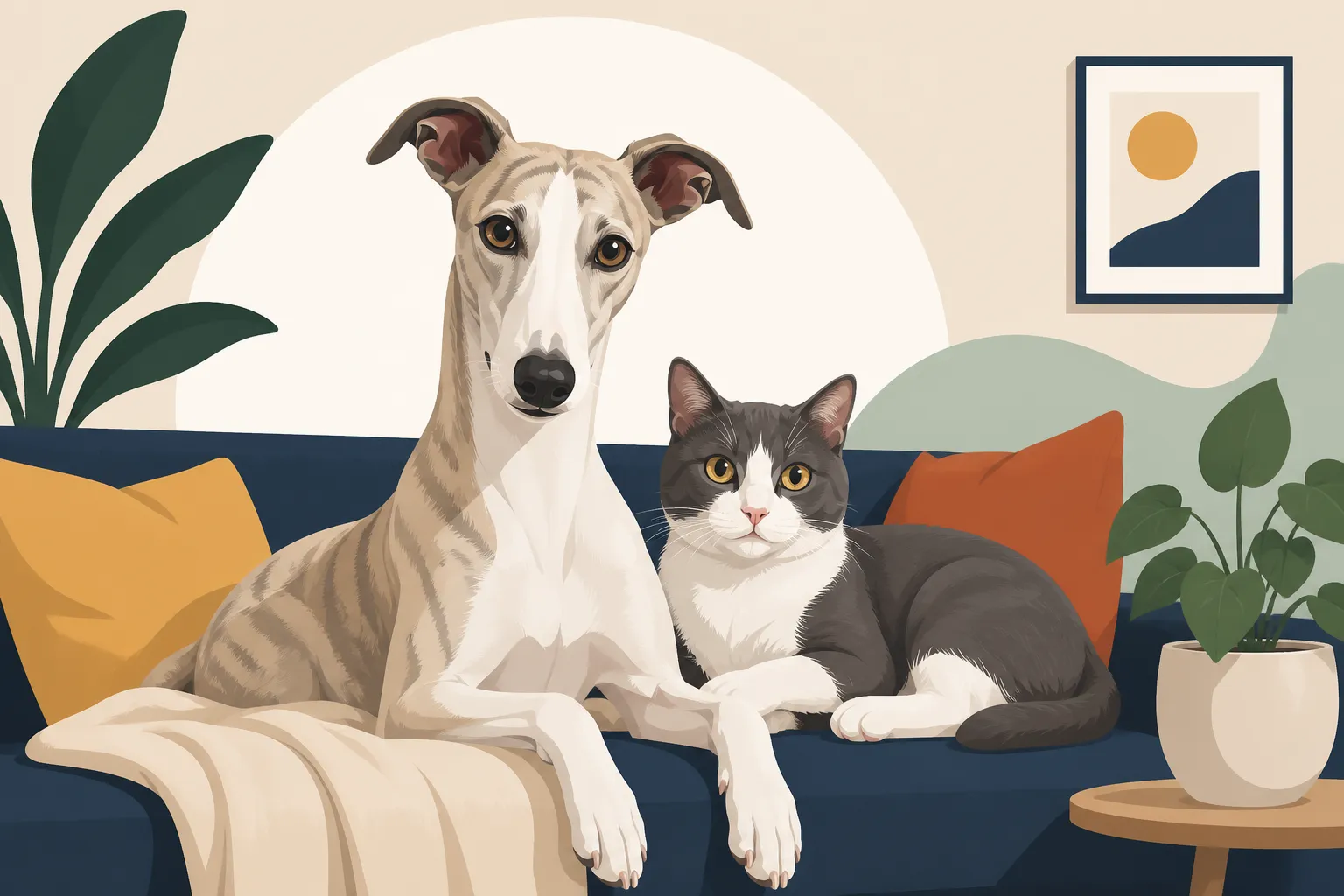
When all the hard work, patience, and careful management pay off, living with a Whippet and a cat can be an incredibly rewarding experience. It’s a joy to watch these two different species not just tolerate each other, but truly become companions, adding a unique and special dynamic to your home. The sight of a Whippet and a cat curled up together is a testament to the power of understanding, training, and love.
Companionship for Both Animals
One of the most beautiful outcomes of a successful integration is the companionship that develops between your Whippet and cat. While they may not play together in the same way two dogs or two cats might, they often find comfort in each other's presence. I've seen Whippets and cats share sunbeams, nap on the same sofa (at a respectful distance, or sometimes even touching!), and simply enjoy the quiet company of another living being. For an only pet, this can be invaluable, especially for preventing Separation Anxiety in a Whippet when you're not home.
This companionship can reduce feelings of loneliness or boredom for both animals, especially if you have a busy household. They become part of each other's routines, offering subtle comfort and interaction that enriches their daily lives. The cat might rub against the Whippet's leg, or the Whippet might gently sniff the cat as they pass by. These small interactions build over time into a quiet, understanding bond that is truly special to witness.
Enrichment and Learning Opportunities
Having a Whippet and a cat living together provides unique enrichment and learning opportunities for both species. Your Whippet learns valuable impulse control, patience, and how to read the body language of another species. They learn that not everything that moves is prey, and that being calm and gentle is rewarding. This broadens their understanding of the world and enhances their social skills beyond just canine interactions.
For your cat, the presence of a Whippet offers mental stimulation. They learn to navigate their environment safely, utilize their vertical spaces more effectively, and communicate their boundaries clearly. They also learn to trust, developing a unique bond with a creature that initially might have seemed threatening. This dynamic environment encourages adaptability and enriches their lives in ways that might not occur in a single-species household. It truly broadens their horizons and understanding.
The Unique Bond You Can Build
The bond you cultivate in a multi-species household is unlike any other. It's a testament to your dedication, patience, and understanding of both your Whippet's instincts and your cat's needs. Watching your Whippet and cat finally settle into a comfortable, accepting coexistence brings a deep sense of satisfaction. It’s a quiet victory, built on countless small efforts and consistent reinforcement.
This unique household often becomes a source of endless anecdotes and heartwarming moments. There's nothing quite like seeing a sleek, powerful Whippet gently approach a tiny cat, or finding them sharing a patch of sunlight, completely at peace. It speaks to the incredible capacity of animals to adapt and form bonds, and your role in facilitating that journey is incredibly rewarding.
Introduction Checklist for Whippets and Cats
This checklist outlines the key steps for introducing your Whippet and cat. Remember, move at their pace, not yours.
| Step | Description | Whippet's Behavior to Look For | Cat's Behavior to Look For |
|---|---|---|---|
| 1. Create Separate Spaces | Ensure cat has unhindered access to food, water, litter, and high perches. Whippet has its own designated feeding/resting area. | Calm, settles easily in its own space. No excessive vocalization. | Confidently uses all resources. No excessive hiding or stress behaviors. |
| 2. Scent Swapping | Rub cloth on cat, place in Whippet's area. Rub cloth on Whippet, place in cat's area. Repeat frequently. | Sniffs cloth with curiosity, then ignores. No growling, fixating, or attempting to destroy. | Sniffs cloth with curiosity, then ignores. No hissing, swatting, or avoidance. |
| 3. Controlled Visual Intro (Barrier) | Whippet on leash, person holding leash. Cat has escape route. Short sessions (2-5 min). Reward calm. | Looks at cat, then looks away. Takes treats from you. No barking, lunging, or intense staring. | Observes Whippet calmly from a distance, or retreats to high perch without excessive fear. No hissing or swatting. |
| 4. Increase Barrier Time | Gradually increase duration of barrier sessions as both remain calm. Continue rewarding calm behavior. | Remains relaxed, takes naps, engages with toys, eats treats while cat is visible through barrier. | Eats, drinks, grooms, and occasionally watches Whippet through barrier without signs of stress. |
| 5. Supervised Interaction (Leashed) | Whippet on long line/leash. Cat has escape routes. Very short sessions (1-2 min). Heavily reward Whippet for ignoring cat or looking at you. | Calmer interest in cat, but easily redirected. Lies down, settles. No intense staring or attempts to approach. | Confidently moves around room, occasionally glances at Whippet. Uses escape routes if needed, but returns. |
| 6. Gradual Off-Leash (Supervised) | Only when Whippet is consistently ignoring cat on leash. Start in large, open room with cat escape routes. Keep sessions short. Constant supervision. | Ignores cat for the most part. Easily called away if showing too much interest. Can lie down near cat without fixating. | Confidently shares space, may approach Whippet cautiously. Relaxed body language (tail up, ears forward). |
| 7. Ongoing Management | Never leave unsupervised until 100% confident (may take months or never). Continue separate feeding. Maintain cat's safe spaces. Provide adequate exercise for Whippet. | Routinely ignores cat. May sniff gently. Shows no predatory interest. | Routinely ignores Whippet. May rub against, groom near, or even nap in same room as Whippet. |
Disclaimer
This article is for general informational purposes only and does not constitute professional advice. Laws, prices and regulations vary by location and change over time. Consult a qualified professional for guidance on your specific situation.