The DNA Test That Finds the Whippet Myostatin Mutation
It's absolutely heart-wrenching to discover that your beloved Whippet might carry a genetic mutation, or worse, be affected by one. The uncertainty, the fear of health problems down the line, and the responsibility of making informed decisions for their future can feel incredibly heavy. This guide is here to walk you through the specifics of the DNA test for the Myostatin mutation in Whippets, helping you understand what it means, why it’s important, and how the results can shape your dog's care and your breeding choices.
Understanding the Myostatin Mutation in Whippets
When you first hear about a "Myostatin mutation" in Whippets, it can sound quite scientific and intimidating. But at its core, it's about a specific gene that plays a significant role in muscle development, and how a slight change in that gene can have noticeable effects on our lean, athletic companions.
What is Myostatin and its Role?
Myostatin, often abbreviated as MSTN, is a protein that naturally occurs in the bodies of many animals, including humans and dogs. Its primary job is to regulate and limit muscle growth. Think of it as your body's internal brake pedal for muscle development. Without this brake, or if the brake isn't working correctly, muscles can grow unchecked. In Whippets, a specific mutation in the Myostatin gene can significantly alter how this protein functions, leading to different degrees of muscle mass. It's not about adding extra protein to their diet; it’s about an internal genetic instruction set.
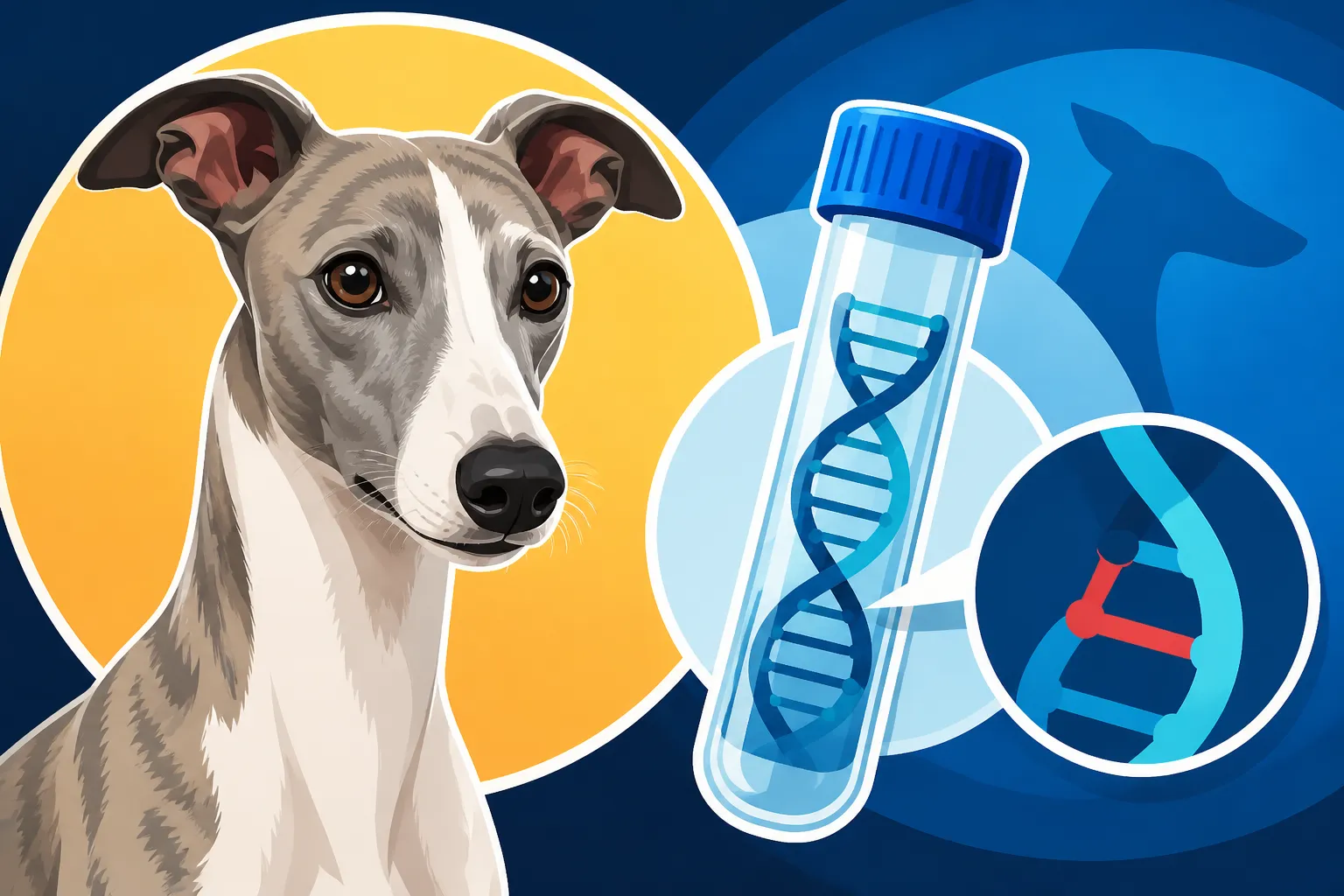
This genetic variant has been identified as a single base-pair deletion in the MSTN gene, specifically a G-deletion in the third exon. What this essentially means is a tiny piece of genetic code is missing. This small change has a big impact because it causes the body to produce a non-functional Myostatin protein, or very little of it. When Myostatin isn't doing its job to limit muscle growth, the muscles can develop much larger than typically seen in the breed. Understanding What Myostatin Does in a Whippet is crucial for any owner or breeder.
The "Bully Whippet" Phenotype
When a Whippet inherits two copies of this mutated gene (one from each parent), they develop what is commonly referred to as "Bully Whippet Syndrome." These dogs exhibit an extraordinary amount of muscle mass, far beyond the typical athletic build of a Whippet. Their muscles are incredibly prominent, giving them a very distinctive, almost exaggerated, appearance. They have broad chests, exceptionally well-defined hindquarters, and an overall bulkier physique that stands in stark contrast to the sleek, fine-boned look of a standard Whippet.
While this extreme musculature might sound impressive, it can come with its own set of challenges. These dogs can be prone to muscle cramping and other musculoskeletal issues. It's a condition that raises significant ethical questions for breeders, as the health and well-being of the dog must always come first. The visual impact is immediate and unmistakable, and once you see a "Bully Whippet," you understand the profound effect of this genetic anomaly. For a deeper dive, consider reading about Bully Whippet Syndrome and the Myostatin Gene Behind It.
The Carrier State
Interestingly, not all Whippets with the Myostatin mutation express the "bully" phenotype. A Whippet can inherit just one copy of the mutated gene from one parent and a normal copy from the other. These dogs are known as carriers. Unlike their "bully" counterparts, carriers don't typically display the same extreme musculature. In fact, many people wouldn't even guess they're carrying the gene just by looking at them. However, they are often noted for being exceptionally fast and athletic.
It's widely believed in the racing world that a single copy of the Myostatin mutation actually confers a performance advantage, making these carrier Whippets faster and more agile than those without the mutation. This has led to a fascinating dynamic in the world of competitive Whippet sports. If you're curious about this aspect, you might find Why One Copy of the Bully Gene Makes a Whippet Faster an enlightening read. The subtle physical differences in a carrier might not be immediately obvious, but their increased athletic prowess is often undeniable, making them highly prized in racing circles.
Why Genetic Testing for Myostatin Matters
For anyone involved with Whippets, whether as a loving pet owner, a passionate show exhibitor, or a dedicated breeder, understanding and utilizing genetic testing for the Myostatin mutation is incredibly important. It's not just about curiosity; it's about responsible dog ownership and contributing to the health and integrity of the breed.
Preventing "Bully Whippet Syndrome"
One of the most compelling reasons for Myostatin testing is the prevention of "Bully Whippet Syndrome." As mentioned, dogs with two copies of the mutated gene (M/M) exhibit the "bully" phenotype, which can come with health and welfare concerns. These dogs can suffer from muscle cramping, difficulty with certain types of exercise, and may even experience issues with their joints and overall mobility due to their extreme muscle mass. Responsible breeders aim to produce healthy, functional dogs, and knowingly producing M/M puppies can go against these ethical principles.
Genetic testing allows breeders to identify carriers (N/M) and affected dogs (M/M) before breeding. By understanding the genetic status of their breeding stock, they can make informed decisions to avoid mating two carriers, which would produce M/M puppies. This proactive approach helps to significantly reduce the incidence of Bully Whippet Syndrome, ensuring that future generations of Whippets can live healthier, more comfortable lives. It's a critical step in maintaining the well-being of the breed and avoiding unnecessary suffering for the dogs. Understanding What Two Copies Do to a Whippet really highlights the importance of this preventative measure.
Identifying Performance Advantages in Carriers
Beyond health concerns, Myostatin testing also holds significant interest for those involved in competitive Whippet sports, such as lure coursing and racing. As previously discussed, Whippets who are carriers (N/M) of the Myostatin mutation often display superior speed and athleticism compared to their non-carrier counterparts (N/N). This genetic advantage is subtle yet powerful, making carrier dogs highly sought after in disciplines where speed is paramount.
For owners and trainers in the racing world, identifying a carrier Whippet through DNA testing can be a game-changer. It allows them to understand a dog's full potential and tailor training regimes to maximize their natural abilities. However, this also comes with the responsibility of ensuring the dog's welfare. While carriers are generally healthy, their increased muscle mass and speed mean they still need appropriate conditioning and care to prevent injuries. The test isn't just about identifying a problem; it's about recognizing and responsibly harnessing a unique genetic gift. Many wonder Whether a Bully Whippet Can Race, but it's the carriers who truly shine on the track.
Informed Breeding Decisions
For dedicated Whippet breeders, Myostatin DNA testing is an indispensable tool for informed decision-making. Knowing the genetic status of prospective breeding pairs allows them to predict the likelihood of producing puppies with either the carrier or "bully" phenotype.
Here’s how the combinations typically break down:
- N/N (Clear) x N/N (Clear): All puppies will be N/N.
- N/N (Clear) x N/M (Carrier): Roughly 50% N/N, 50% N/M. No M/M puppies.
- N/N (Clear) x M/M (Affected): All puppies will be N/M carriers.
- N/M (Carrier) x N/M (Carrier): Roughly 25% N/N, 50% N/M, 25% M/M. This pairing risks producing "bully" puppies.
- N/M (Carrier) x M/M (Affected): Roughly 50% N/M, 50% M/M. High risk of "bully" puppies.
- M/M (Affected) x M/M (Affected): All puppies will be M/M.
Breeders committed to the long-term health of the breed will typically avoid pairings that could result in M/M puppies. This might mean strategically breeding carriers to clear dogs to continue passing on desired traits without risking the "bully" condition. This careful planning ensures not only the health of individual puppies but also helps manage the prevalence of the gene within the broader Whippet population. Many ethical breeders also perform The Health Tests Both Whippet Parents Should Have alongside Myostatin testing to ensure the best possible outcomes.
How the Myostatin DNA Test Works
The idea of genetic testing might conjure images of complex laboratory procedures, but for Myostatin, the process is surprisingly straightforward and accessible to most Whippet owners and breeders. It's designed to be minimally invasive for your dog and provides clear, actionable results.
The Simple Sampling Process
Gone are the days when genetic testing required a blood draw. For the Myostatin mutation, the most common and convenient method is a simple cheek swab. You'll typically receive a kit from a reputable canine DNA testing laboratory. This kit usually contains a few sterile swabs, often resembling large Q-tips, and detailed instructions.
The process involves gently rubbing the sterile swab against the inside of your Whippet's cheek and gums for about 10-20 seconds. This collects epithelial cells, which contain your dog's DNA. It's crucial to ensure your dog hasn't eaten or drunk anything, or had contact with other dogs' mouths, for at least an hour before swabbing to prevent contamination. Once collected, the swab is allowed to air dry and then placed back into its protective sleeve or envelope, ready to be mailed back to the lab. It's quick, painless, and something you can easily do at home without a vet visit, though your vet can certainly assist if you're unsure.
Which Labs Offer the Test
Several reputable canine genetic testing laboratories offer the Myostatin mutation test for Whippets. These labs are generally well-regarded within the dog community for their accuracy and reliability. Some of the more prominent names in the industry include Embark Veterinary, Wisdom Panel, and OptiGen. Each lab might have slight variations in their testing panels or reporting, but they all provide accurate results for the MSTN gene.
When choosing a lab, it's wise to consider their turnaround time, the cost, and whether they offer comprehensive health panels that might include other genetic tests relevant to Whippets, such as for Phosphofructokinase Deficiency in a Whippet or eye conditions. While direct costs for individual tests vary, expect to pay anywhere from $60 to $150 specifically for the Myostatin test, or a bit more if it's part of a larger panel. Some owners even factor these costs into their overall pet care budget, recognizing that early knowledge can sometimes prevent more expensive health issues down the line – a consideration that pet insurance providers like Healthy Paws would certainly appreciate when assessing long-term health.
Interpreting the Results
Once your sample has been processed by the lab, you'll receive a report detailing your Whippet's Myostatin status. The results are typically presented using clear genetic terminology, often with symbols indicating the presence or absence of the mutation.
The three possible outcomes are:
- N/N (Normal/Clear): This means your Whippet has two normal copies of the Myostatin gene and does not carry the mutation. They will not develop Bully Whippet Syndrome, nor will they pass the mutation on to any offspring. This is the desired status for breeding pairs if the goal is to eliminate the mutation from a line.
- N/M (Normal/Mutant or Carrier): This indicates your Whippet has one normal copy and one mutated copy of the Myostatin gene. They are a carrier. These dogs typically have a more athletic build and are often faster than N/N Whippets. While they won't develop the full "bully" phenotype, they can pass the mutated gene on to 50% of their offspring. This status is often sought after in performance lines for the athletic advantage, but breeders must be careful with their pairings.
- M/M (Mutant/Mutant or Affected): This signifies your Whippet has two copies of the mutated Myostatin gene. These are the "Bully Whippets" who exhibit pronounced musculature. They will pass a mutated copy of the gene to 100% of their offspring. This result indicates a dog that may face specific health considerations related to their muscle mass.
Here's a quick summary of the results:
| Genotype | Description | Phenotype (Appearance) | Health Implications | Breeding Implications |
|---|---|---|---|---|
| N/N | Normal/Clear | Typical Whippet | No Myostatin-related health issues | Will not pass on the mutation |
| N/M | Normal/Mutant/Carrier | More athletic, faster | Generally healthy, rarely shows negative effects | Will pass on the mutation to ~50% of offspring |
| M/M | Mutant/Mutant/Affected | "Bully" (extreme muscle) | Muscle cramping, potential mobility issues, unique care needs | Will pass on the mutation to 100% of offspring |
Understanding these results is fundamental for making informed decisions about your Whippet's lifestyle, care, and any potential breeding plans.
The Impact of Myostatin Status on Your Whippet's Life
Discovering your Whippet's Myostatin status can feel like uncovering a piece of their unique genetic puzzle. Whether they're clear, a carrier, or affected, this knowledge empowers you to tailor their care, training, and even social interactions to best suit their individual needs.
Living with a "Clear" N/N Whippet
If your Whippet's DNA test results come back as N/N, congratulations! This means your dog has two normal copies of the Myostatin gene and is considered "clear" of the mutation. For you, as an owner, this brings immense peace of mind. Your Whippet will develop and maintain the typical lean, elegant, and athletic physique characteristic of the breed, without any genetic predisposition to the extreme muscle mass associated with the "bully" syndrome.
Living with an N/N Whippet generally means you'll focus on the standard care considerations for the breed: a balanced diet, regular appropriate exercise tailored to their energy levels (which are high, despite their couch potato reputation!), and routine veterinary check-ups. You won't need to worry about the specific muscle-related health issues that can affect M/M dogs. This doesn't mean they're immune to all health problems, of course – all dogs can have unexpected issues. Still, it removes one significant genetic concern, allowing you to enjoy your Whippet's natural grace and speed without this particular worry. A good pet insurance plan from a company like Healthy Paws can still provide a valuable safety net for any unforeseen health challenges that might arise during their The Twelve to Fifteen Years a Whippet Lives.
Managing a Carrier N/M Whippet
Owning an N/M (carrier) Whippet presents a slightly different scenario. These dogs possess one normal and one mutated copy of the Myostatin gene, and they often excel in speed and athleticism. You might find your N/M Whippet to be a true powerhouse on the lure coursing field or track, exhibiting incredible bursts of speed and agility that truly set them apart. This enhanced muscle development can make them fantastic candidates for performance sports, and many owners are thrilled with their dogs' natural abilities.
From a health perspective, N/M Whippets are generally healthy and do not typically suffer from the adverse effects seen in M/M dogs. Their muscle development is enhanced but not usually to an extreme that causes problems. However, their increased athleticism might mean you need to be particularly mindful of their physical conditioning, ensuring proper warm-ups and cool-downs to prevent strains or injuries, especially if they are heavily involved in sports. If you are a breeder, understanding the carrier status is crucial for making responsible breeding choices to avoid producing M/M puppies. For the pet owner, it simply means you have an exceptionally fast and agile companion to enjoy.
Caring for an "Affected" M/M Whippet
Caring for an M/M (affected) Whippet, or a "Bully Whippet," requires a more specialized approach. These dogs have two copies of the mutated gene and will exhibit the pronounced, exaggerated muscle mass. While some owners are drawn to this unique appearance, it's important to be realistic about the potential health and lifestyle implications. "Bully" Whippets can experience muscle cramping, stiffness, and sometimes even difficulty with fluid movement. Their muscle density can also make them feel different to touch, much firmer than a typical Whippet.
Daily management often involves careful consideration of exercise, diet, and veterinary care. Intense, prolonged exercise might lead to cramping, so structured, moderate activity is often more appropriate. Their diet might need to be carefully balanced to support their muscle mass without leading to obesity, which would put additional strain on their system. Regular veterinary check-ups are essential, and your vet should be aware of their Myostatin status so they can look for any muscle-related issues. Special attention might also be needed for joint health due to the increased stress on their skeletal system. While Whether a Bully Whippet Lives a Normal Life is a common question, it often involves a more attentive and informed care plan.
Breeding Considerations and Ethical Responsibilities
For anyone involved in breeding Whippets, the Myostatin DNA test introduces a layer of crucial information that directly impacts ethical practice, the health of future generations, and the integrity of the breed. It's not just about producing puppies; it's about making thoughtful choices.
Strategies for Breeders
Armed with Myostatin test results, breeders have several strategies to responsibly manage the gene within their lines. The primary goal for most ethical breeders is to avoid producing M/M (Bully Whippet Syndrome) puppies, which can experience health challenges.
- Breeding Clear to Clear (N/N x N/N): This is the safest approach if the aim is to guarantee all offspring are clear of the mutation. No M/M or N/M puppies will be produced. This is excellent for breeders wanting to ensure a line free of the gene.
- Breeding Clear to Carrier (N/N x N/M): This pairing will produce approximately 50% N/N (clear) and 50% N/M (carrier) puppies. No M/M puppies will be produced. This strategy allows breeders to utilize valuable traits from a carrier parent (e.g., exceptional conformation or temperament, or racing prowess) while safely avoiding the "bully" condition. The offspring would then need to be tested to identify which are clear and which are carriers for future breeding decisions.
- Avoiding Carrier to Carrier (N/M x N/M): This pairing is generally discouraged by ethical breeders because it carries a 25% risk of producing M/M (Bully Whippet Syndrome) puppies. While it also yields N/N and N/M puppies, the risk of M/M is considered too high by many. If a breeder absolutely must use two carriers due to very rare and exceptional traits in both dogs, they should be prepared for the possibility of M/M puppies and have a plan for their placement and care. This is a critical point that helps explain Whether Two Carrier Whippets Should Be Bred Together.
- Strategic Use of Affected (M/M) Dogs: Breeding an M/M dog to an N/N dog will produce 100% N/M carrier puppies. This is a strategy used by some who wish to introduce certain traits from an M/M dog into a line, but it means all offspring will be carriers. This is a rare and often debated practice, as it perpetuates the carrier state.
These strategies allow breeders to make informed decisions that balance genetic diversity, desired traits, and the paramount importance of health and welfare.
The Debate Around Breeding Carriers
The topic of breeding Myostatin carriers (N/M) often sparks lively debate within the Whippet community. On one hand, carriers are generally healthy, often possess superior athleticism, and can carry other desirable traits that breeders don't want to lose from the gene pool. Excluding all carriers from breeding could significantly reduce genetic diversity, especially in smaller gene pools or if the carrier gene is widespread, as indicated by How Common the Bully Whippet Mutation Is.
However, the counter-argument emphasizes the ethical responsibility to minimize the risk of producing M/M (Bully Whippet) puppies. Even if carriers themselves are healthy, breeding two carriers together knowingly creates a 25% chance of M/M offspring. This debate highlights the tension between preserving valuable genetic lines and preventing a condition that can impact a dog's quality of life. Many breeders choose to only breed carriers to clear dogs (N/M x N/N) to harvest the benefits of the carrier trait without risking affected offspring, but this requires continued testing of all progeny.
The Future of Whippet Breeding and Myostatin
The availability of the Myostatin DNA test has revolutionized responsible breeding practices in Whippets. It provides an invaluable tool that allows breeders to move beyond guesswork and make precise, evidence-based decisions. As genetic testing becomes more widespread and affordable, the expectation is that more breeders will incorporate it into their standard health screening protocols.
This advanced testing means that in the future, the prevalence of Bully Whippet Syndrome could be significantly reduced, or even eliminated, from well-managed breeding programs. It also ensures that the unique athletic qualities of carrier Whippets can be understood and selectively maintained in performance lines without inadvertently causing health issues. The continuous adoption of such genetic tests by reputable breeders, alongside other health screenings, contributes to a healthier, more predictable future for the Whippet breed overall. It's an exciting time where science directly informs and improves the welfare of our beloved dogs, a commitment that helps ensure companies like Healthy Paws can continue to support healthy, happy pets for years to come.
Disclaimer
This article is intended for informational purposes only and does not constitute veterinary advice. Always consult with a qualified veterinarian for any health concerns or before making any decisions about your dog's care or breeding program.