How Common the Bully Whippet Mutation Is
It's completely normal to feel a mix of curiosity and perhaps a little worry when you hear about something like the "bully Whippet mutation." In the close-knit world of Whippet owners, we often hear whispers or see photos that spark questions about what's truly healthy and typical for our lean, athletic companions. This guide is here to cut through the confusion and give you a straightforward, deeply informative look at how common the myostatin gene mutation is in Whippets, clarifying what it means for the breed and for individual dogs.
Understanding the Myostatin Gene in Whippets
Before we dive into how common this mutation is, let’s first wrap our heads around what the myostatin gene actually is and why it plays such a pivotal role in the Whippet’s unique physique. It’s a fascinating piece of genetics that really explains a lot about our favorite sighthounds.
What is the Myostatin Gene?
Think of the myostatin gene as a natural governor or a "brake pedal" for muscle growth in nearly all mammals, including us and our Whippets. Its job is to produce a protein called myostatin, and this protein's main function is to limit the size and growth of skeletal muscles. Without it, muscles would just keep growing unchecked. In a typical dog, this system works perfectly, ensuring muscle development is proportionate and efficient for their intended activities. For a Whippet, this precise control helps create that elegant, streamlined, yet incredibly powerful physique we all admire. It’s what gives them their incredible speed without unnecessary bulk. If you're keen to understand the mechanics, we have a whole piece on What Myostatin Does in a Whippet.
The typical Whippet phenotype, with its finely chiseled muscles and deep chest, is a direct result of this gene working as intended, albeit with some natural variations in muscle definition that are normal within the breed. It’s a balance of strength and leanness, allowing them to hit those incredible speeds. When everything is in balance, you see a dog that looks ready to sprint at a moment’s notice, but also one that can curl up gracefully on the sofa, not an overly muscular bodybuilder.
The Specific Mutation Responsible for the "Bully" Look
Now, here’s where things get interesting and where the "bully" aspect comes into play. The myostatin mutation in Whippets involves a specific deletion within the gene. When a Whippet inherits two copies of this mutated gene (one from each parent), the normal production of myostatin is significantly disrupted, or in some cases, almost entirely stopped. This leads to what’s known as hypertrophy – an excessive, accelerated growth of muscle tissue.
This double-copy mutation is what results in the distinct "bully" Whippet phenotype: an extremely muscular build, far more pronounced than a standard Whippet. Their muscles bulge, particularly in the neck, shoulders, and hindquarters, giving them a very different silhouette. This condition is formally referred to as Bully Whippet Syndrome and the Myostatin Gene Behind It. While visually striking, it’s important to understand the underlying genetic mechanics and the potential implications for the dog's health and athleticism. It's not just a "big dog," it's a dog whose muscle growth regulatory system isn't working as it typically should.
The Frequency of the Bully Whippet Mutation
So, how often do we actually see this muscle-bound Whippet? And what about the gene itself lurking in the background? It’s a question many new owners, and even experienced ones, ponder, especially when they see a particularly muscular Whippet.
How Common is the "Bully" Two Copies Expression?
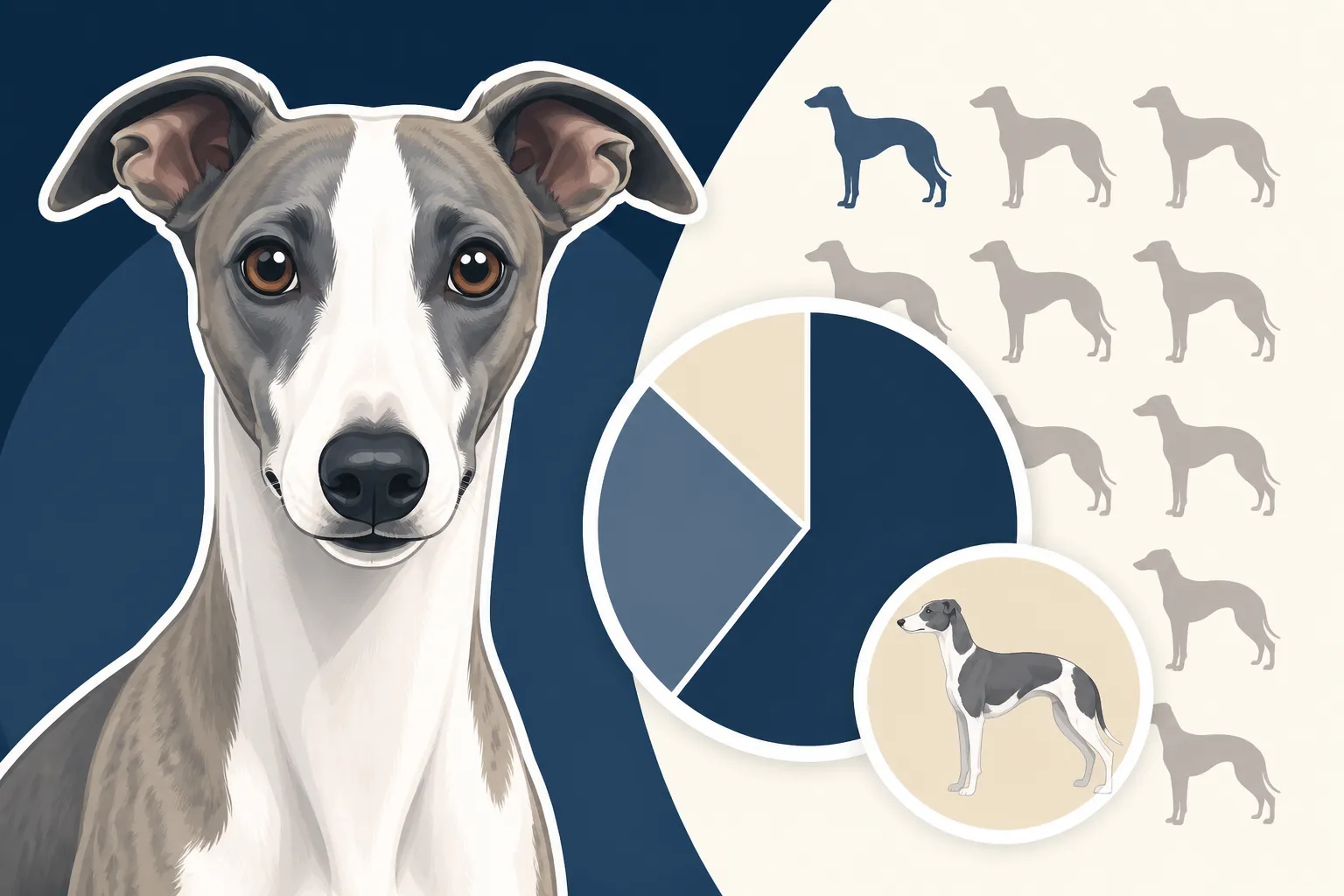
The full "bully" phenotype, where a Whippet has two copies of the mutated myostatin gene (often denoted as m/m), is actually quite rare in the broader Whippet population. You might occasionally encounter photos online or hear anecdotal stories, but you're unlikely to see one walking down the street at your local park. Reputable breeders actively test for this mutation and, generally, avoid breeding two carriers together precisely because this combination produces affected puppies. The reason is simple: while these dogs are incredibly muscular, they can face certain health and functional challenges due to their extreme physique.
The general consensus among Whippet fanciers and health experts is that the "bully" expression is not something commonly sought after by the vast majority of breeders aiming for healthy, functional, and breed-standard Whippets. In fact, many view it as a genetic anomaly that, while fascinating, isn't ideal for the overall health and well-being of the dog. The focus is always on producing sound, healthy dogs, and extreme muscling can sometimes come with a cost. You can learn more about What Two Copies Do to a Whippet to understand the full picture.
The Prevalence of Carrier One Copy Whippets
Now, this is where it gets interesting – and much more common! Whippets who carry just one copy of the mutated myostatin gene (m/N, meaning one normal gene and one mutated gene) are significantly more prevalent than their double-mutant counterparts. These "carrier" Whippets often exhibit a phenotype that’s slightly more muscular than a typical Whippet, but without the extreme, sometimes exaggerated, bulk of a full "bully" Whippet. They are often notably athletic and fast.
In fact, the presence of one copy of the myostatin mutation has been linked to increased speed and athletic performance in Whippets, particularly in racing. Many competitive racing Whippets are, in fact, carriers of this gene. Studies and genetic testing data suggest that a notable percentage of the Whippet population, particularly those from active racing lines, carry this single mutation. While exact figures can vary, some estimates suggest that perhaps 10-20% or even higher of Whippets could be carriers, especially in certain lines. This is a topic of much discussion among racing enthusiasts, as a carrier Whippet often possesses a distinct advantage in terms of sheer acceleration and speed. It’s truly amazing how Why One Copy of the Bully Gene Makes a Whippet Faster can affect their performance.
Why the Mutation Isn't More Widespread and Why It Persists
The reason the full "bully" mutation (two copies) isn't widespread boils down to basic genetics and responsible breeding. Whippets with two copies of the myostatin mutation can experience health issues like increased muscle cramping, difficulty moving due to their excessive bulk, and sometimes even jaw problems. These challenges naturally make them less desirable for most pet owners and for breeders focused on health and longevity. The natural selection, coupled with careful breeding practices, acts to limit the proliferation of this double-mutant phenotype.
However, the mutation persists in the gene pool primarily because of the distinct athletic advantage it confers to carriers (those with one copy). These carriers are not typically affected by the adverse health issues seen in double-mutants, and their enhanced muscle development and speed are highly valued in performance sports like lure coursing and racing. Therefore, the gene continues to be present, passed down by healthy, high-performing carriers, even if the "bully" expression itself is largely avoided. It’s a fascinating example of a gene having both a beneficial and a detrimental expression depending on how many copies are inherited.
Testing and Responsible Breeding Practices
Given the complexities of the myostatin gene, responsible breeders play a critical role in managing its presence in the Whippet population. For owners, understanding these practices is key to making informed decisions when choosing a puppy.
The Importance of DNA Testing for Myostatin
The good news is that we don't have to rely on guesswork anymore. Thanks to advancements in canine genetics, a simple, non-invasive DNA test can accurately determine a Whippet's myostatin status. This test can identify whether a dog is clear (N/N – two normal copies), a carrier (m/N – one normal, one mutated copy), or affected (m/m – two mutated copies). For any potential Whippet parent or owner, this test is an invaluable tool. It eliminates the uncertainty and provides concrete information about a dog's genetic makeup regarding this specific trait. If you're curious about the process, you can look into The DNA Test That Finds the Whippet Myostatin Mutation.
This testing allows breeders to make educated decisions about pairings. For example, breeding two carriers together would result in approximately 25% "bully" puppies, 50% carriers, and 25% clear puppies. By knowing the genetic status of their breeding stock, breeders can actively prevent the production of affected puppies, thereby improving the overall health of the breed. It also empowers puppy buyers to ask the right questions and ensure they are bringing home a dog whose genetic background aligns with their expectations for health and temperament.
Breeder Responsibility and Transparency
Responsible Whippet breeders prioritize the health and well-being of their dogs above all else. This means they are proactive about health testing, including for myostatin. An ethical breeder will not only test their breeding animals but will also be completely transparent about the results with prospective puppy buyers. They understand that while a carrier Whippet can be an excellent, healthy companion and even a top athlete, knowingly breeding two carriers without careful consideration or without informing buyers is not responsible.
If you're looking for a Whippet puppy, don't hesitate to ask about the myostatin status of both parents. A good breeder will be happy to discuss their testing protocols and show you documentation. While some breeders might selectively breed carriers for performance advantages, they should still be committed to ensuring no affected puppies are produced, and they should clearly communicate the genetic status of their puppies. The practice of breeders testing for myostatin is becoming more common, and you might find it helpful to read up on Whether Whippet Breeders Test for Myostatin. Transparency helps ensure that owners are prepared for any potential considerations, though thankfully, most carriers lead perfectly normal lives.
Here's a quick overview of the myostatin genotypes:
| Genotype | Description | Phenotype (Appearance/Muscling) | Athletic Impact | Prevalence |
|---|---|---|---|---|
| N/N | Two normal copies | Typical Whippet muscling | Normal speed | Most Common |
| m/N | One normal, one mutated copy | Moderately increased muscling, lean and athletic | Often faster, enhanced performance | Common |
| m/m | Two mutated copies | Extremely muscular, "bully" phenotype | Potential for cramping, reduced stamina | Very Rare |
Living with a Myostatin Carrier or an Affected Whippet
So, you've got a grasp on the genetics and prevalence. What does this mean for the day-to-day life with a Whippet that might carry this gene, or, in rare cases, one that expresses the full "bully" phenotype?
Health Considerations for Carriers
The vast majority of Whippets carrying a single copy of the myostatin mutation (m/N) live completely normal, healthy lives without any significant health concerns. In fact, as we've discussed, these dogs are often celebrated for their enhanced athleticism and speed. They have that slightly more defined musculature that many find incredibly appealing, and they can excel in sports like lure coursing, Fast CAT, and racing. For them, it's generally a bonus, not a burden. Many owners find their carrier Whippets to be boundless sources of energy, enjoying long runs and vigorous play, fitting perfectly into the typical Whippet lifestyle of short bursts of activity followed by extensive naps.
Of course, like any athletic dog, it's always wise to be mindful of their physical condition, ensure proper warm-ups before strenuous activity, and maintain a balanced diet. But generally speaking, owning a myostatin carrier Whippet doesn't present any unique health challenges that would set them apart from any other healthy, active Whippet.
Specific Needs of "Bully" Whippets
While extremely rare, Whippets with two copies of the myostatin mutation (m/m) do have more specific needs due to their exaggerated musculature. Their sheer muscle mass can be quite intense, leading to a different set of challenges than a typical Whippet. These dogs might experience muscle stiffness or a propensity for cramping, especially after exercise. Imagine trying to run a marathon with muscles that are already super tight – it’s a bit like that. For more detailed information, you can read about Why a Bully Whippet Cramps.
Their powerful physique, while impressive, can sometimes compromise their agility and endurance compared to a standard Whippet. Daily exercise needs to be managed carefully to prevent overexertion or injury. They might not have the same fluid, effortless gait as a typical Whippet and could require more consideration for joint health due to their increased body mass and muscle pull. Because of these unique considerations, if you happen to find yourself with an affected Whippet, consulting with a veterinarian experienced with sighthounds is paramount. They can help you develop a tailored exercise and dietary plan to support their specific muscular needs and manage any discomfort. It’s a commitment, and it speaks to the importance of responsible breeding to avoid these situations for the dogs’ sake. This is also where pet insurance can be a huge help. Unexpected vet visits for muscle issues or other health challenges can add up quickly. Companies like Healthy Paws offer comprehensive coverage that can provide peace of mind for these unique situations, covering a significant portion of those unforeseen veterinary bills that can pop up over a Whippet's lifetime. Understanding What Insuring a Whippet Costs Monthly is a smart step for any owner. Ultimately, the goal is to ensure that even a "bully" Whippet can lead as comfortable and fulfilling a life as possible, acknowledging their distinct requirements. If you're wondering about their long-term prospects, we have a resource on Whether a Bully Whippet Lives a Normal Life.
Disclaimer
Please remember that this article is intended for informational purposes only and should not be considered a substitute for professional veterinary advice. Always consult with a qualified veterinarian for any health concerns or before making any decisions about your Whippet's care.