Whether a Whippet’s Packed Cell Volume Looks Anemic in Reverse
It's an utterly nerve-wracking experience, isn't it? You take your beloved Whippet to the vet, perhaps for a routine check-up or because something just seems a little off, and then the bloodwork comes back. You scan the results, looking for familiar numbers, only to find some of them flagged as "high" or outside the "normal" range. For many Whippet owners, the packed cell volume (PCV) often raises an eyebrow, making you wonder if your otherwise lean, vibrant dog is suffering from some hidden ailment like polycythemia. This guide is here to reassure you and explain why your Whippet’s PCV might look "anemic in reverse" compared to other breeds, and when to truly be concerned.
Understanding Your Whippet's Packed Cell Volume (PCV)
Getting a handle on what the packed cell volume actually represents is the first step to understanding why your Whippet's numbers might look a little different. It's a crucial piece of your dog's overall health puzzle, but like so many things with sighthounds, their "normal" isn't always the same as every other dog out there.
What PCV Actually Measures
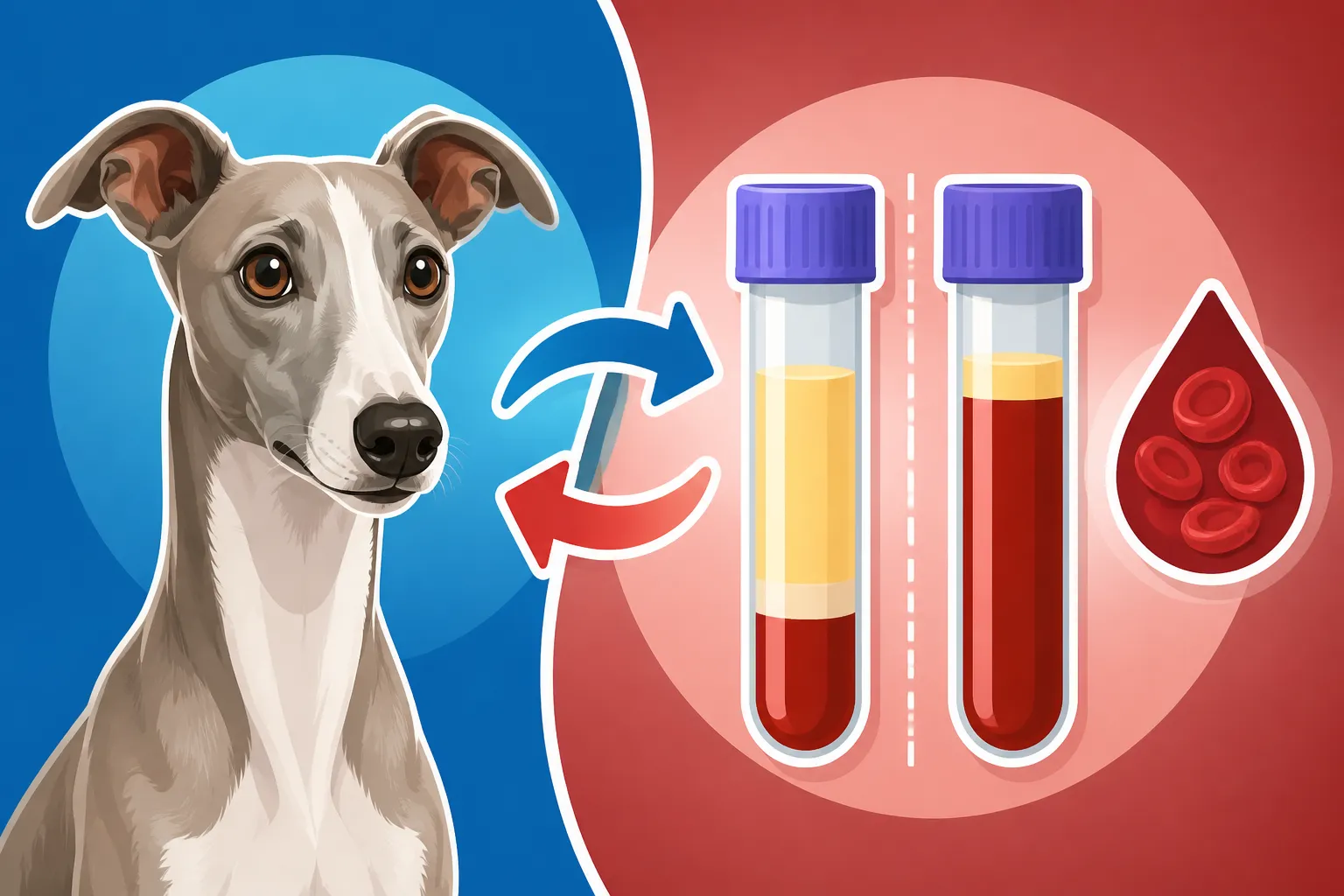
Packed Cell Volume, often called hematocrit (HCT), is a measurement of the percentage of red blood cells in your dog's blood. Imagine taking a tube of your dog's blood and spinning it very fast in a centrifuge. The heavier red blood cells settle at the bottom, separating from the plasma and white blood cells. The height of that column of red blood cells, expressed as a percentage of the total blood volume, is the PCV. It gives your vet a quick snapshot of how well your dog's blood can carry oxygen. A low PCV indicates anemia, meaning not enough red blood cells to carry oxygen efficiently, leading to lethargy and weakness. Conversely, a high PCV means a higher concentration of red blood cells, which could indicate dehydration or, in rare cases, a serious underlying condition like polycythemia vera.
For a Whippet, these numbers are particularly interesting because their very physiology is geared towards explosive speed and efficient oxygen delivery. Their bodies are finely tuned athletes, even if they spend most of their day curled up on the sofa. This inherent athleticism means their systems are optimized for performance, and that optimization extends right down to their blood composition. So, when you look at those numbers, it's important to keep their unique design in mind.
The Standard Reference Range Versus the Whippet Reality
Most veterinary labs provide a "normal" reference range for PCV that is derived from a broad population of canine breeds. For a general dog population, a normal PCV might hover somewhere between 37% and 55%. If your Whippet's bloodwork comes back at 58% or even 60%, you might understandably panic, seeing it flagged as "high." However, this is where the Whippet reality diverges from the standard expectation.
Sighthounds, including Whippets, Greyhounds, and Salukis, are known for naturally having higher packed cell volumes. Their bodies produce and maintain a greater number of red blood cells to enhance their oxygen-carrying capacity, which is vital for their incredible bursts of speed and endurance during a chase. This isn't a sign of illness; it's simply a physiological adaptation. It's why many experienced sighthound vets will tell you that a Whippet's "normal" PCV can easily be in the high 50s or even low 60s, without any cause for alarm. It's truly a case where The Bloodwork Numbers That Look Wrong on a Healthy Whippet are actually perfectly fine for your lean, muscular companion.
It’s easy to get caught up in the anxiety of a flagged result, especially when your vet might not be intimately familiar with sighthound specific blood values. This is why advocating for your Whippet and understanding these nuances yourself is so important.
Why a Whippet's PCV Can Be Naturally Higher
The reasons behind a Whippet's often elevated PCV are rooted in their evolutionary history and their athletic build. They are, after all, miniature Greyhounds, bred for speed and agility. Their bodies are masterpieces of engineering designed for short, intense bursts of effort.
The Athletic Heart and Lungs
Whippets possess incredibly efficient cardiovascular and respiratory systems. Their large lungs and powerful hearts work in tandem to quickly circulate oxygen-rich blood throughout their bodies, especially to their massive leg muscles when they're running. This heightened demand for oxygen delivery translates directly into a need for more red blood cells. Think of it like a high-performance sports car needing a more robust fuel delivery system than a standard sedan; a Whippet's body is constantly primed for action, even when they're dreaming on the couch.
This physiological characteristic is a testament to their heritage. They were bred to chase lures, to participate in rag racing in the coalfields of England, and their bodies adapted over generations to excel at it. It's why you might hear discussions about Why a Whippet's Big Heart Is Not a Diagnosis or Why an Athletic Whippet's Heart Is Bigger. These are not abnormalities but functional advantages that contribute to their unique performance capabilities. A higher PCV means more oxygen can be transported per unit of blood, giving them that extra edge in speed and stamina when it counts.
So, when your vet sees a slightly elevated PCV, it often reflects this beautiful, natural adaptation. It's their body's way of being ready to sprint at a moment's notice, even if that "moment" is just a squirrel darting across the yard.
"Sighthound Physiology" and Unique Bloodwork
Beyond just the PCV, sighthounds in general have a range of physiological traits that make their "normal" different from other breeds. Their unique metabolism and muscle mass affect various blood parameters. This is often referred to as "sighthound physiology" among veterinarians who specialize in these breeds. It's a recognition that you can't always apply general canine norms to these specialized athletes.
For instance, their thyroid readings can often appear lower than non-sighthound breeds, and their creatinine levels might be slightly higher due to their large muscle mass. These are not necessarily indicators of disease, but rather baseline characteristics of the breed. This means that a vet who understands Whether a Whippet Needs Sighthound Reference Ranges is invaluable. They won't jump to conclusions based on numbers that, in a Labrador, would be a red flag, but in a Whippet, are perfectly normal.
It’s empowering to understand these differences yourself, so you can have an informed conversation with your vet. If you live in an area where sighthound-specialist vets are available, seeking one out can provide immense peace of mind. Knowing these unique physiological quirks is part of truly understanding and caring for your Whippet.
When a High PCV is Cause for Concern (and When It's Not)
While a naturally higher PCV is common in Whippets, it doesn't mean you should ignore a high reading completely. The key is context and understanding how other factors, both in your dog's body and their environment, can influence these numbers.
Distinguishing Healthy High from Problematic High
The crucial difference between a healthy, elevated PCV and a concerning one often comes down to other clinical signs and additional bloodwork parameters. A truly problematic high PCV, often indicative of dehydration or a condition like polycythemia vera (an overproduction of red blood cells by the bone marrow), will usually be accompanied by other indicators.
For example, if your Whippet has a high PCV and is lethargic, has sunken eyes, dry gums, or has recently experienced vomiting or diarrhea, then dehydration is a very real possibility, and veterinary intervention is needed immediately. In cases of dehydration, the total blood volume decreases, making the existing red blood cells appear more concentrated. Your vet would typically look at other markers like total protein (TP) or albumin, which also tend to be elevated with dehydration. On the other hand, polycythemia vera is a rarer condition where the body actively produces too many red blood cells, independent of hydration status. This would often result in PCV levels significantly higher than a Whippet's typical healthy range, perhaps consistently in the mid-60s to 70s, and would be investigated further with additional tests to rule out secondary causes or to confirm a primary bone marrow disorder.
| Condition | PCV Range (Whippet) | Accompanying Signs | Action Needed |
|---|---|---|---|
| Normal Healthy Whippet | 55% – 65% | Energetic, well-hydrated, normal appetite, no other symptoms | No action, consistent monitoring with vet |
| Dehydration | Elevated (e.g., > 65-70%) | Lethargy, sunken eyes, dry gums, loss of skin elasticity, vomiting/diarrhea | Immediate veterinary care, fluid therapy |
| Polycythemia Vera (Primary) | Significantly Elevated (> 70%) | Reddened mucous membranes, lethargy, weakness, nosebleeds, seizures, unexplained bruising | Veterinary investigation, possible medication/phlebotomy |
| Secondary Polycythemia | Elevated | Dependent on underlying cause (e.g., kidney disease, heart disease, respiratory issues) | Treat underlying condition |
Always look at the whole picture. Your vet isn't just looking at one number; they're piecing together a comprehensive understanding of your Whippet's health, taking into account their behavior, physical exam, and all lab results.
The Importance of a Sighthound-Savvy Vet
This brings us to a critical point: the value of having a veterinarian who is knowledgeable about sighthound physiology. Not every vet encounters Whippets or Greyhounds frequently, and it’s completely understandable if they are more accustomed to interpreting bloodwork based on general canine populations. However, for a Whippet owner, a vet who understands these breed-specific quirks can save you a lot of worry and potentially prevent unnecessary diagnostics or treatments.
A sighthound-savvy vet will immediately recognize that a PCV in the high 50s or low 60s is often perfectly normal for your Whippet. They won't jump to conclusions about dehydration or disease without considering the full clinical picture. They'll also be aware of other sighthound-specific nuances, such as their unique anesthetic requirements (which is why Why Anesthesia Is Riskier in a Whippet is such an important topic to understand) or why their liver values might differ. If your current vet seems unfamiliar with these differences, don't hesitate to politely educate them or, if necessary, seek a second opinion from a specialist or a vet known to have experience with sighthounds. This proactive approach can make all the difference in your Whippet's care.
Finding such a vet might mean a bit of a drive, but the peace of mind is often worth it. They can confidently interpret those bloodwork numbers, understanding the healthy variations that make your Whippet so special.
Interpreting Your Whippet's Bloodwork Holistically
Ultimately, good veterinary care for your Whippet is about looking at the big picture. Bloodwork is a powerful diagnostic tool, but it's only one piece of the puzzle. It needs to be interpreted in the context of your dog's overall health, lifestyle, and breed-specific traits.
Looking Beyond Just the Numbers
When you receive your Whippet's bloodwork results, it's easy to fixate on any "high" or "low" flags. However, your veterinarian is trained to look at the entire panel, considering how different values relate to each other and, crucially, how they relate to your Whippet's physical examination and current symptoms. A single high PCV, for instance, might be dismissed as normal if your Whippet is otherwise bright, alert, well-hydrated, and has a normal total protein count. Conversely, a PCV that's within the general "normal" range but is actually much lower than your Whippet's usual baseline could be a subtle sign of a problem. This is why having a history of your Whippet's previous bloodwork is incredibly helpful – it establishes their personal normal.
Also consider the circumstances surrounding the blood draw. Was your Whippet particularly stressed or excited at the vet? This can sometimes cause a temporary increase in PCV due to splenic contraction, which releases stored red blood cells into circulation. Was your Whippet a bit under-hydrated because you restricted water before the appointment for a fasted blood draw? These minor variables can impact results, and a good vet will take them into account. Understanding What a Whippet Needs Every Day in terms of hydration, nutrition, and exercise also contributes to a clearer picture of their health.
Proactive Health Management and Vet Communication
Being an active participant in your Whippet's healthcare is one of the best things you can do for them. Don't be afraid to ask questions. If your vet notes a high PCV, ask if it's considered normal for a sighthound, especially if they haven't explicitly mentioned it. Discuss your Whippet's hydration levels, energy, and appetite. Keep a record of your Whippet's previous bloodwork results so you can track trends over time, providing even more context.
Regular check-ups, even when your Whippet seems perfectly healthy, are vital. They establish a baseline for your dog, making it easier to spot genuine changes in bloodwork that might indicate an emerging health issue. Unexpected vet bills for diagnostics or treatments can add up, which is why many Whippet owners opt for pet insurance from providers like Healthy Paws. Having a plan for these unforeseen expenses can allow you to make the best decisions for your Whippet's health without financial stress. Taking a proactive approach, armed with knowledge and a good relationship with your vet, ensures your Whippet receives the best possible care throughout their life.
Disclaimer
This article is for general informational purposes only and does not constitute professional advice. Laws, prices and regulations vary by location and change over time. Consult a qualified professional for guidance on your specific situation.