What Two Copies Do to a Whippet
It's incredibly frustrating when you hear terms like "bully gene" or "double-muscled" associated with Whippets, often without a clear understanding of what that truly means for the dog's life and well-being. This guide will take a deep dive into what it signifies when a Whippet inherits two copies of the myostatin gene mutation, exploring the unique physical characteristics, potential health implications, and practical care considerations to help you confidently navigate life with one of these special hounds.
Understanding the Myostatin Gene and the Double Dose
The myostatin gene has become a topic of significant discussion within the Whippet community, especially concerning dogs that inherit two copies of a specific mutation. It's not just a fancy genetic term; it profoundly impacts a Whippet's physique and, consequently, their care needs.
The Role of Myostatin in Muscle Growth
To really get to grips with what two copies of this gene mutation mean, we first need a quick, easy-to-understand primer on myostatin itself. Think of myostatin as your body's natural "brake pedal" for muscle growth. Every living creature, from humans to dogs, has this gene, and its job is to regulate how much muscle mass can be developed. Without it, or with a faulty version, muscles tend to grow unchecked, leading to a much more pronounced, heavily muscled physique. For a deeper understanding of this fundamental process, you might find our article on What Myostatin Does in a Whippet particularly insightful.
In a typical Whippet, myostatin does its job, ensuring they have their characteristic lean, athletic build – powerful but not excessively bulky. It’s all about balance. This natural regulation is crucial for their agility, speed, and overall health. When this gene is altered, that balance shifts dramatically, and the effects are quite visible, making it clear why understanding this genetic component is so vital for owners and breeders alike.
What Does "Two Copies" Actually Mean Genetically?
When we talk about "two copies" of the myostatin gene mutation, we're referring to a dog that has inherited one mutated copy from each parent. Genes come in pairs, one from mom and one from dad. In the case of the myostatin gene, a specific mutation, often referred to as the "bully gene," affects how the muscle-regulating protein is produced. If a Whippet receives a normal copy from one parent and a mutated copy from the other, they are considered a "carrier" and are often faster, as we explore in Why One Copy of the Bully Gene Makes a Whippet Faster.
However, a Whippet with two mutated copies (often denoted as "m/m" or "homozygous for the mutation") has no functional myostatin. This means there's no brake pedal on their muscle growth. The result is a substantial increase in muscle mass, giving them a very distinct, heavily muscled appearance that sets them apart even from carrier Whippets, let alone those with two normal copies. It's a clear-cut genetic outcome, and it’s what gives rise to the unique characteristics of what’s colloquially known as a "bully Whippet."
Differentiating from a Single Copy Carrier
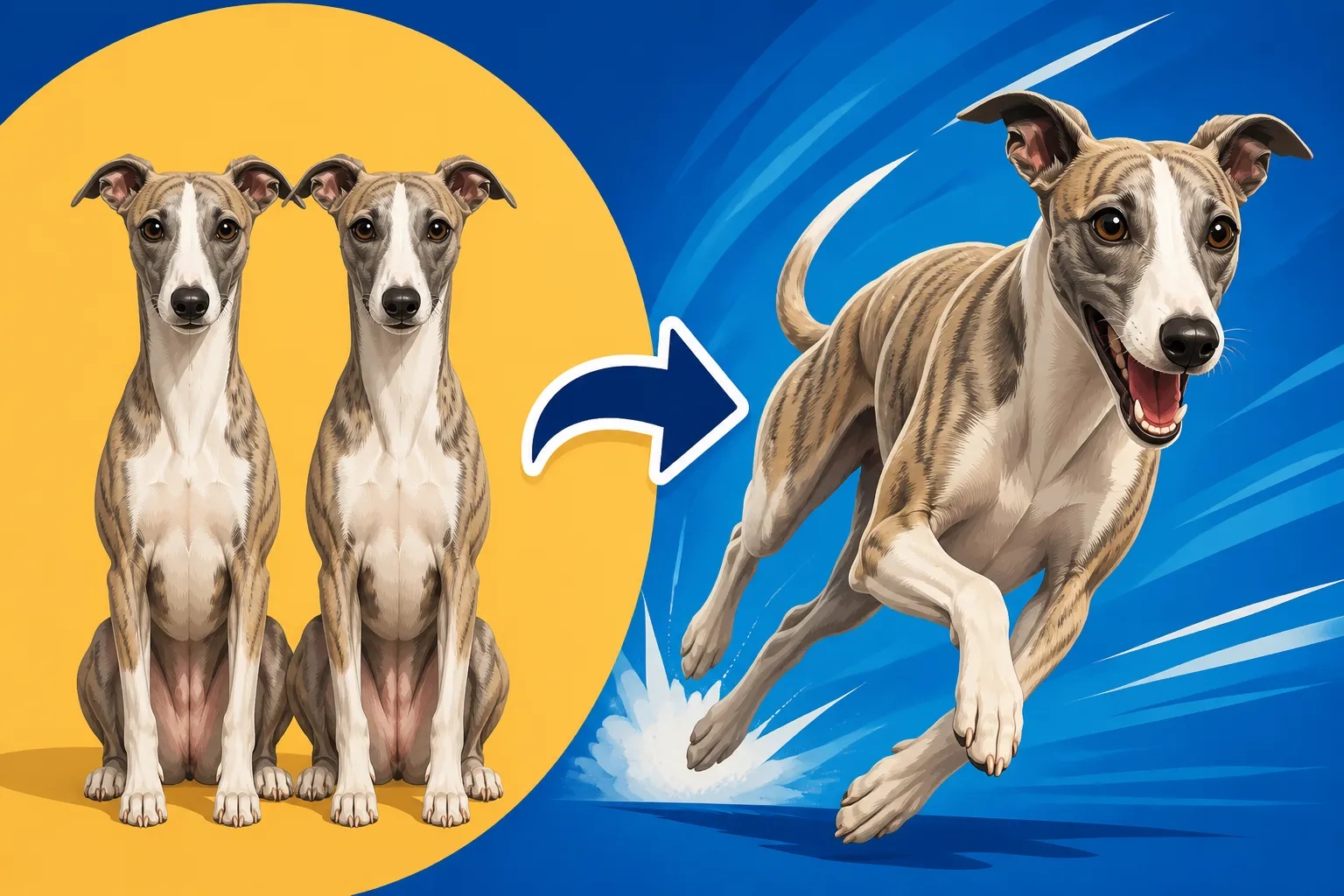
It's easy to confuse a Whippet with two copies of the myostatin mutation with a carrier, but there's a world of difference in their physical presentation and, often, their needs. A carrier Whippet, having only one copy of the mutation, still produces some functional myostatin. This often translates to a slightly more muscular build than a typical Whippet, giving them an edge in speed and power, which is why many top racing Whippets are actually carriers. They maintain the classic Whippet elegance but with enhanced musculature.
A Whippet with two copies, however, is on a different level entirely. Their musculature is dramatically exaggerated across their entire body – think bulging thighs, a broad chest, and an incredibly dense, powerful neck. The finesse and lean lines of a typical or even carrier Whippet are replaced by sheer mass. This distinction isn't just cosmetic; it impacts their movement, energy expenditure, and can even influence certain health considerations, which we'll delve into further. It’s a very different animal compared to those with one or no copies of the mutation.
The Distinctive Physical Characteristics of a Bully Whippet
A Whippet with two copies of the myostatin mutation is visually striking, often eliciting awe and sometimes concern from those unfamiliar with the genetic phenomenon. Their unique physique is truly a sight to behold, but it also comes with practical considerations for their daily life.
Exaggerated Muscling and Appearance
The most defining characteristic of a Whippet with two copies of the myostatin mutation is their extraordinary muscle development. We're not talking about a dog that just looks "fit"; we're talking about a level of musculature that's almost cartoonish, often referred to as "bully Whippet syndrome." Their shoulders, thighs, neck, and chest boast a density and bulk that you simply don't see in a standard Whippet. The muscles literally bulge, giving them a much squatter, broader, and incredibly powerful appearance.
This extreme muscling significantly alters their silhouette. Where a typical Whippet possesses long, elegant lines and a deep tuck-up, a bully Whippet appears much more compact and robust. Their movement, while still powerful, might be less fluid and graceful than their lighter counterparts. It's a look that often leads strangers to mistake them for a different breed entirely, or to question their health, unaware that this is a genetic predisposition. The visible development of this muscle mass usually becomes apparent relatively early, with "The Age a Bully Whippet's Muscling Shows" detailing this timeline.
Jaw Structure and Dental Implications
Beyond the obvious muscle mass, another area significantly impacted by the double myostatin mutation is the jaw structure. Due to the overall increase in bone and muscle density, these Whippets often have a broader, deeper, and sometimes more prominent jawline compared to a typical Whippet. This can lead to a slightly different head shape, which aligns with their overall more robust build.
However, this altered jaw structure isn't just about aesthetics; it can have practical implications for their dental health. While a standard Whippet is already prone to dental issues due to their narrow muzzle and crowded teeth, a bully Whippet's jaw might exacerbate this. The extra bone and muscle can sometimes lead to teeth being even more crowded or misaligned, creating additional pockets for food and plaque to accumulate. This means diligent dental care, including regular brushing and potentially more frequent professional cleanings, becomes even more critical. You might want to read more about "The Jaw Problems a Bully Whippet Develops" to be fully prepared.
Size and Weight Considerations
Despite their incredibly muscular appearance, Whippets with two copies of the myostatin mutation don't necessarily grow to be much taller than standard Whippets. The primary difference is in their girth and weight. Their bone structure itself can be a bit heavier, supporting the increased muscle mass, leading to a much stockier overall build. They carry significantly more weight than a typical Whippet of the same height, purely due to the muscle density.
This increased weight and bulk mean that while they retain the Whippet's speed and power, their agility might be slightly compromised. They're still incredibly fast over short distances, but their ability to turn sharply or sustain prolonged bursts of speed might differ. It’s a unique balance of extreme power within a still relatively compact frame. Owners need to understand that this added weight, while muscular, still puts different kinds of stress on their joints and cardiovascular system compared to a lighter, more traditionally built Whippet, which factors into long-term health and exercise planning.
Health and Lifespan Considerations for Whippets with Two Copies
Living with a Whippet that carries two copies of the myostatin gene mutation means being aware of certain health considerations that differ from a standard Whippet. While many lead full, happy lives, their unique physiology requires thoughtful management.
Muscular Cramping and Exertional Rhabdomyolysis
One of the most widely discussed health concerns for Whippets with two copies of the myostatin mutation is their predisposition to muscular cramping and, in more severe cases, exertional rhabdomyolysis. Because their muscles are so incredibly dense and large, they can be more prone to seizing up, especially after intense exercise or during periods of excitement. This isn't just a minor cramp; it can be incredibly painful, leading to a dog becoming stiff, unable to move, and showing signs of distress. If you’ve ever had a charley horse so bad you couldn’t walk, imagine that across your entire body.
Exertional rhabdomyolysis, though less common, is a more serious condition where muscle tissue breaks down due to extreme exertion. This releases harmful substances into the bloodstream that can damage the kidneys. Signs include dark urine (often described as coffee-colored), extreme weakness, and severe muscle pain. Immediate veterinary attention is crucial if you suspect this. Understanding "Why a Bully Whippet Cramps" is vital for prevention and immediate care. Careful warm-ups, cool-downs, and avoiding extreme, prolonged, or sudden bursts of high-intensity exercise without proper conditioning are essential strategies for owners to implement.
Joint and Skeletal Health Concerns
The sheer volume of muscle mass carried by these Whippets places a different kind of strain on their skeletal system and joints. While Whippets are generally a hardy breed, the increased weight and power of a double-mutant Whippet can put additional stress on their hips, elbows, and spine. This doesn't mean they're inherently delicate, but it does mean proactive joint care and careful management of their physical activity are paramount throughout their lives.
Owners should be mindful of their puppy's growth plates, ensuring that vigorous, high-impact activities are avoided until they are fully mature. As they age, monitoring for signs of arthritis or joint discomfort becomes increasingly important. Maintaining a healthy, lean body condition (even with all that muscle!) is key to minimizing stress on their joints. Supplements like glucosamine and chondroitin, or even Omega-3 fatty acids, might be beneficial, but always consult your vet. Pet insurance providers like Healthy Paws can be a real lifeline here, helping cover the costs of diagnostics or treatments if joint issues arise later in life, giving owners peace of mind.
Overall Lifespan Expectations
A common question that arises with any unique genetic trait is its impact on overall lifespan. For Whippets with two copies of the myostatin mutation, there isn't definitive, long-term scientific data suggesting a significantly shortened lifespan purely due to the double-muscling itself. Many bully Whippets live a normal, happy life, often reaching the typical Whippet lifespan of 12-15 years, as explored in "The Twelve to Fifteen Years a Whippet Lives."
However, their unique physiology does mean that vigilant care and attention to the previously mentioned health concerns are crucial. Managing their exercise to prevent muscle injury, staying on top of dental hygiene, and maintaining optimal weight will contribute significantly to their longevity and quality of life. Owners who are proactive in managing these aspects can expect their double-muscled Whippet to enjoy a fulfilling life, just like any other well-cared-for Whippet. It's about informed ownership and adapting care to their specific needs.
Training and Exercise Adaptations for a Bully Whippet
Training and exercising a Whippet with two copies of the myostatin mutation requires a slightly different approach than a standard Whippet. Their incredible power and unique physical makeup mean adjustments are necessary to keep them healthy, happy, and injury-free.
Managing Energy and Preventing Injury
While Whippets are known for being 40-mile-an-hour couch potatoes, a double-muscled Whippet can sometimes have a different energy profile. They possess immense power and can achieve incredible bursts of speed, but they might not have the same stamina for prolonged, continuous running as a lighter Whippet. Their muscle density can sometimes lead to them "heating up" faster during intense activity or being more prone to strains if not properly conditioned. It’s a delicate balance of channeling their drive without overdoing it.
Preventing injury is paramount. Their heavy musculature, while impressive, can sometimes predispose them to muscle strains or even tears if they engage in sudden, explosive movements without proper preparation. Think of a human bodybuilder; they don't just jump off the couch and sprint a marathon. Warm-ups and cool-downs become critically important. A brisk walk to get the blood flowing before a sprint session, and another gentle walk afterwards, can make a huge difference in preventing those painful cramps or more serious injuries.
Tailoring Exercise Regimes
Given their specific needs, tailoring an appropriate exercise regime for a bully Whippet is key. They still need to run and stretch those powerful muscles, but the type and duration of exercise might differ. Instead of long, sustained jogs, they might thrive on several shorter, intense sprints interspersed with periods of rest. Secure, fenced areas are a must for these powerhouses, as their chase instinct is still incredibly strong, and their speed means they can cover vast distances in seconds.
Activities like lure coursing or Fast CAT, where they chase a mechanical lure over a relatively short, straight course, can be fantastic outlets for their speed and prey drive, provided they are properly conditioned and allowed to warm up adequately. However, consideration for "Whether a Bully Whippet Can Race" should involve careful assessment of their conformation and risk of injury, especially in competitive events with tight turns. It's about quality over quantity: satisfying their need to run at top speed without pushing them past their physical limits. Consult with your vet on the best exercise plan, especially if you plan to engage in competitive sports.
Socialization and Temperament
Despite their intimidating "bully" appearance, these Whippets typically retain the sweet, gentle, and often sensitive temperament characteristic of the breed. They are generally not aggressive, but like all Whippets, they can be a bit reserved with strangers or new situations. Their powerful build doesn't equate to a tougher personality; in fact, many are just as soft-hearted and prone to snuggling as any other Whippet.
Early and consistent socialization is crucial for any puppy, and it's no different for a double-muscled Whippet. Exposing them to various sights, sounds, people, and friendly dogs in a positive and controlled manner helps build confidence and ensures they grow into well-adjusted adults. Given their impressive physique, some people might be intimidated by them, so ensuring they are well-behaved and comfortable in different environments can help dispel misconceptions and promote positive interactions.
Daily Care and Management for a Double-Mutant Whippet
Providing optimal daily care for a Whippet with two copies of the myostatin mutation involves specific considerations for their diet, comfort, and regular veterinary check-ups. Their unique body composition means that a "one-size-fits-all" approach simply won't do.
Nutritional Needs and Weight Management
Feeding a bully Whippet correctly is a balancing act. While their massive musculature might suggest a need for enormous quantities of food, it's crucial to prevent them from becoming overweight. An overweight bully Whippet faces increased strain on their already densely packed joints and cardiovascular system, exacerbating any potential health concerns. Their energy requirements can vary; while they might burn a lot during intense sprints, they also spend significant time relaxing, like other Whippets.
A high-quality diet, rich in protein to support muscle maintenance, but carefully portioned, is essential. Monitoring their body condition score is more important than relying solely on the amount stated on a food bag. You should still be able to feel their ribs and hip bones, even through all that muscle, without them being visibly bony. If you're struggling to keep their weight just right, consulting with a vet or a canine nutritionist is highly recommended. Remember, keeping weight on a Whippet without making it fat is a science, and even more so for these unique individuals.
Bedding and Comfort Requirements
Just like their leaner counterparts, Whippets with two copies of the myostatin mutation have very little body fat to cushion their bones. This means that comfortable, supportive bedding isn't a luxury; it's an absolute necessity. They are prone to pressure sores and calluses, especially on their elbows, hips, and hocks, if forced to lie on hard surfaces. Good quality orthopedic beds, memory foam mats, and soft blankets are indispensable.
Imagine all that muscle with very little padding directly over bone; it's not comfortable, and it can lead to skin irritation and joint pain over time. Therefore, having multiple comfortable sleeping spots throughout your home is ideal, ensuring they always have a soft place to rest their powerful bodies. From their crate to the living room, every area where they might nap should be plush and inviting. Exploring options like "The Beds a Whippet Owner Keeps Buying" might offer good suggestions for suitable bedding.
Veterinary Care and Early Detection
Consistent and informed veterinary care is crucial for any Whippet, but perhaps even more so for those with two copies of the myostatin mutation. Finding a veterinarian who understands sighthound physiology, and specifically the implications of the bully gene, can make a significant difference. They can help monitor for muscle issues, assess joint health, and provide tailored advice on nutrition and exercise. It's definitely worth checking out "Whether a Whippet Needs a Vet Who Knows Sighthounds".
Regular check-ups, even when your dog seems perfectly healthy, are important for early detection of any emerging issues. Open communication with your vet about their exercise routine, any changes in gait, or signs of discomfort is key. Given the potential for unexpected medical needs, such as treatment for muscle cramps or joint management, having comprehensive pet insurance can be a huge benefit. Companies like Healthy Paws offer robust plans that can help manage the financial strain of specialized care, ensuring you can always provide the best for your unique companion without worrying about the bill.
Dispelling Myths and Embracing the Bully Whippet
The existence of Whippets with two copies of the myostatin mutation has, unfortunately, led to some misconceptions and ethical debates. It’s important to separate fact from fiction and to approach their care with understanding and responsibility.
Beyond the "Bully" Label
The term "bully Whippet" itself, while descriptive of their physique, can sometimes carry negative connotations, implying aggression or an undesirable trait. However, it's crucial to remember that these dogs are, at their core, still Whippets. They possess the same gentle, affectionate, and sensitive nature as any other Whippet. Their increased muscle mass does not make them more aggressive, mean, or "bully-like" in temperament. They are typically sweet-natured, loyal companions who thrive on human interaction and comfortable living.
Their appearance is simply a result of a specific genetic mutation, not a reflection of their personality or inherent value as a pet. It's a testament to responsible ownership to look past the superficial label and appreciate them for the unique, loving dogs they are. Educating others about their true nature can help dispel myths and foster a more accepting environment for these special hounds.
Breeding Ethics and Genetic Testing
The presence of the myostatin mutation raises important ethical questions for breeders. While carrier Whippets can be incredibly successful in racing, intentionally breeding two carriers together to produce double-mutant Whippets is a contentious issue. The potential health challenges associated with two copies, such as severe cramping and joint strain, lead many responsible breeders to avoid such pairings. As discussed in "Whether a Bully Whippet Should Be Bred," the focus should always be on health and welfare.
Fortunately, a simple and affordable DNA test can identify if a Whippet carries one or two copies of the myostatin mutation. This allows breeders to make informed decisions to prevent unintended pairings that could result in double-mutant offspring. The availability of "The DNA Test That Finds the Whippet Myostatin Mutation" means there's no excuse for accidental litters. For potential owners, inquiring about the myostatin status of the parents is a responsible step, providing transparency and ensuring you understand the genetic background of your future companion. Many insurance providers, like Healthy Paws, even encourage proactive health testing as part of responsible pet ownership.
Finding the Right Home for These Unique Dogs
Despite their special needs, Whippets with two copies of the myostatin mutation can make wonderful pets for the right family. They require owners who are informed, committed to their specific care requirements, and willing to provide a structured, loving environment. They are not necessarily suitable for every home, particularly those looking for a traditional Whippet physique or those unprepared for the potential health management involved. You might wonder "Whether a Bully Whippet Belongs in a Pet Home", and the answer is absolutely, with the right owner.
Ideal owners are those who appreciate their unique beauty, are proactive about their health (including regular vet visits, considering pet insurance like Healthy Paws, and mindful exercise), and are patient and understanding of their specific needs. They thrive in homes where they can be cherished indoor companions, receiving plenty of soft bedding, good nutrition, and appropriate exercise. Embracing a bully Whippet means embracing a slightly different, but equally rewarding, Whippet experience.
| Characteristic | Typical Whippet (N/N) | Carrier Whippet (N/m) | Bully Whippet (m/m) |
|---|---|---|---|
| Myostatin Gene | Two normal copies | One normal, one mutated copy | Two mutated copies |
| Muscle Mass | Lean, elegant, athletic | Slightly more muscular than N/N | Exaggerated, dense, "bully" musculature |
| Speed/Athleticism | Excellent speed, agile | Often faster, very powerful | Immense power, fast over short bursts |
| Appearance | Classic sighthound lines, deep tuck-up | Slightly more defined musculature | Broad, stocky, bulging muscles, less refined |
| Health Concerns | Typical Whippet health concerns | Generally healthy | Increased risk of muscle cramping, rhabdomyolysis, potential joint strain |
| Exercise Needs | Daily sprints, regular walks, moderate stamina | Daily sprints, high intensity, good stamina | Shorter, intense sprints; careful warm-ups/cool-downs crucial; less endurance |
| Temperament | Gentle, affectionate, sensitive | Gentle, affectionate, sensitive | Gentle, affectionate, sensitive (despite appearance) |
Disclaimer
Please remember that the information provided in this guide is for informational purposes only and is not a substitute for professional veterinary advice. Always consult with a qualified veterinarian regarding your Whippet's specific health concerns and care needs, especially concerning genetic conditions and tailored management plans.