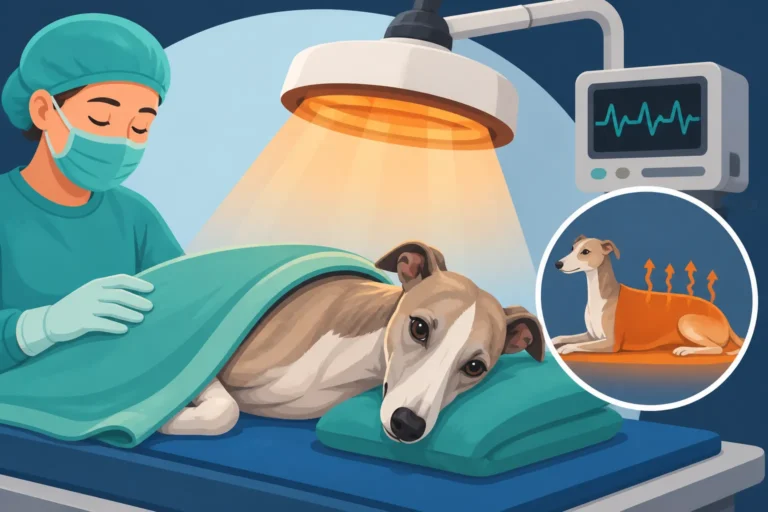
The Age a Whippet Develops a Heart Murmur
It can be incredibly unsettling to hear your vet mention a "heart murmur" when examining your beloved Whippet. For many of us, the immediate thought jumps to the worst-case scenario, imagining a fragile heart struggling to keep up. This worry is compounded by how lean and athletic Whippets naturally are, making their hearts feel prominent even when perfectly healthy. This guide aims to demystify heart murmurs in Whippets, shedding light on when they typically develop, what they mean, and how to manage them, helping you feel more prepared and less anxious.
Understanding Heart Murmurs in Whippets
Finding out your Whippet has a heart murmur can be a scary moment, and it’s completely natural to feel overwhelmed. But before panic sets in, it's crucial to understand what a heart murmur truly is and how it relates specifically to our lean, athletic companions.
What Exactly is a Heart Murmur?
At its simplest, a heart murmur isn't a disease in itself; it's an abnormal sound heard during the heartbeat, caused by turbulent blood flow. Think of it like a river that usually flows smoothly, but then hits a rock or a narrow bend, causing the water to become choppy and noisy. In the heart, this turbulence can be caused by blood flowing through a narrowed valve, a leaky valve, or even an opening between heart chambers that shouldn't be there. Your vet hears these sounds using a stethoscope, and they're distinct from the normal "lub-dub" of a healthy heart.
The crucial distinction lies between what we call "innocent" or "physiological" murmurs and "pathological" murmurs. An innocent murmur is typically harmless, often temporary, and doesn't indicate underlying heart disease. These are more common in young, rapidly growing puppies or very athletic dogs. Pathological murmurs, however, do signal an underlying structural problem with the heart that needs attention. The challenge for both you and your vet is determining which type you're dealing with, especially with a breed like the Whippet whose physical characteristics can sometimes mimic heart issues.
The Athletic Whippet Heart and Normal Sounds
Whippets are built for speed and endurance, and their cardiovascular system is no exception. They possess what's often referred to as an "athletic heart." This means their hearts are typically larger and more efficient than those of less active breeds, pumping blood with incredible force to support their bursts of speed and sustained activity. Because of this, it's common for a Whippet's heart to produce strong, sometimes even audible, sounds that might make a less experienced vet pause. It's truly a marvel of natural engineering, and knowing that a Why a Whippet's Big Heart Is Not a Diagnosis can be perfectly normal is a huge reassurance for many owners.
Their incredibly lean build also plays a role here. With very little body fat or muscle mass insulating their chest cavity, heart sounds are often much more pronounced in a Whippet than in a fluffier or heavier-set dog. What might sound like a faint murmur in another breed could seem louder in a Whippet simply because there's less tissue to muffle the sound. This is why a vet experienced with sighthounds is invaluable; they understand these nuances and can better distinguish between the powerful, healthy sounds of a Whippet's athletic heart and an actual abnormal murmur. It’s not about ignoring symptoms, but about having the right context for what you're hearing.
Age of Onset for Whippet Heart Murmurs
The age at which a heart murmur first appears can tell us a lot about its potential cause and significance in your Whippet. It’s not a one-size-fits-all situation, and different stages of life bring different considerations.
When Murmurs Typically Appear in Whippets
For many Whippet owners, the appearance of a heart murmur is something that usually occurs as their dogs transition from middle age into their senior years. While puppies can occasionally present with congenital murmurs—problems they're born with—these are often detected during their very first vet visits and are generally less common in Whippets compared to some other breeds prone to specific birth defects. It’s much more common for an acquired murmur, one that develops over time, to show up in a Whippet that’s around eight years old or older. This aligns with The Age a Whippet Counts as a Senior, a time when many other age-related changes, both subtle and overt, start to make an appearance.
This doesn't mean you should ignore a murmur found in a younger dog, but it does shift the focus. If a murmur is found in a Whippet puppy, your vet will want to investigate congenital issues. For an older Whippet, the most common culprit is a degenerative condition that slowly progresses over time. These age-related changes can be insidious, developing silently for years before they become significant enough to produce an audible murmur or cause noticeable symptoms. Regular veterinary check-ups are crucial during these later years, not just for murmurs but for overall well-being, especially as you start Caring for a Whippet Past Ten.
Early-Onset Murmurs vs. Age-Related Changes
When we talk about early-onset murmurs, we're typically referring to those present from birth or developing within the first few months of life. These are often indicators of congenital heart defects, meaning there's a structural abnormality in the heart that the puppy was born with. Conditions like Patent Ductus Arteriosus (PDA), where a fetal blood vessel doesn't close properly after birth, or various forms of valve stenosis (narrowing) can cause murmurs in young Whippets. While less frequent in the breed, they do occur, and early detection is vital for the best possible outcome. A murmur heard at an eight-week puppy check warrants immediate follow-up, often including an echocardiogram to determine the precise cause and severity.
In stark contrast, murmurs that emerge in the senior years are almost always due to degenerative changes. For Whippets, just like many small to medium-sized breeds, the most common age-related heart issue is Mitral Valve Disease (MVD). This is a slow, progressive thickening and degeneration of the heart's mitral valve, leading to a leaky valve and inefficient blood flow. It’s a wear-and-tear condition, much like arthritis in joints, that simply takes time to manifest. Understanding this distinction is key: an early murmur requires checking for a birth defect, while a later-onset murmur typically points to an age-related degenerative process that needs careful monitoring and, eventually, management.
Common Causes and Types of Whippet Heart Murmurs
When a vet detects a heart murmur in your Whippet, the next step is often to identify its cause. Not all murmurs are created equal, and understanding the most common culprits can help you process the information your vet provides.
Mitral Valve Disease in Whippets
Without a doubt, the most common cause of a heart murmur in an older Whippet is Mitral Valve Disease, often abbreviated as MVD. This is a progressive condition where the mitral valve, located on the left side of the heart, gradually thickens and degenerates. As the valve leaflets become stiff and deformed, they can no longer close tightly, leading to a backflow of blood (regurgitation) into the left atrium during each heartbeat. This turbulent backflow is what your vet hears as a murmur. For more in-depth information, you can explore resources on Mitral Valve Disease in a Whippet.
It's a disheartening reality that Mitral Valve Disease Is What Ends Most Old Whippets, making it a significant concern for senior Whippet owners. The progression of MVD varies greatly between individuals; some dogs live for years with a mild murmur and never develop clinical signs, while others progress more rapidly to congestive heart failure. Early detection through regular vet exams and prompt referral to a specialist for an echocardiogram if a murmur is noted, are crucial. Understanding the nature of MVD helps manage expectations and allows for timely intervention to improve quality of life. Veterinary insurance providers like Healthy Paws can be a real lifeline here, helping to cover the costs of ongoing monitoring and potential medications for such chronic conditions.
Other Potential Causes
While Mitral Valve Disease dominates in older Whippets, several other factors can lead to a heart murmur. Firstly, "physiological" or "innocent" murmurs are fairly common, especially in young, otherwise healthy, and very active Whippet puppies. These murmurs are usually soft, often disappear as the dog matures, and don't signify any underlying heart disease. They are simply the sound of blood moving rapidly through a small, still-developing heart. Your vet will often monitor these closely to ensure they resolve or don't worsen.
Beyond MVD and innocent murmurs, other conditions, though less common in Whippets, can still cause a murmur. Congenital defects like Subaortic Stenosis (SAS) or Patent Ductus Arteriosus (PDA) are structural abnormalities present from birth. These typically cause louder, more distinct murmurs and are often diagnosed in puppyhood. Additionally, systemic issues unrelated to the heart's structure can induce a temporary murmur. Conditions such as severe anemia, fever, or an overactive thyroid (hyperthyroidism) can increase the speed and turbulence of blood flow, leading to a murmur that resolves once the underlying issue is treated. It's why a thorough diagnostic workup, not just listening to the heart, is so important when a murmur is discovered.
Diagnosis and Monitoring a Whippet's Heart
The journey from detecting a heart murmur to understanding its full implications for your Whippet involves a series of diagnostic steps. It's a process of careful evaluation, moving from initial assessment to more specialized tests.
Initial Vet Examination and Grading
The first step in diagnosing a heart murmur is always a physical examination by your veterinarian. They will carefully listen to your Whippet's heart using a stethoscope – a process called auscultation. During this examination, they're not just listening for the presence of a murmur, but also trying to pinpoint its location, its timing within the heartbeat, and its intensity. This intensity is often graded on a scale from I to VI, with I being very soft and barely audible, and VI being very loud and palpable (you can feel it with your hand on the chest). It's important to remember that The Grade at Which a Whippet's Murmur Matters but does not always directly correlate with the severity of the underlying heart disease. A grade I murmur could sometimes be significant, while a loud grade IV murmur might be well-compensated.
Alongside listening to the heart, your vet will also assess other vital signs, check the pulse, listen to the lungs, and generally evaluate your Whippet's overall health. They will likely discuss your Whippet's activity levels, breathing patterns, and any changes you've noticed at home. This initial comprehensive check-up is foundational, and it's something every Whippet should have regularly, especially as they get older. If you're wondering Whether a Whippet Should Have a Cardiac Exam as a routine part of their care, the answer is a resounding yes, as these regular checks are often how murmurs are first identified before they lead to more serious issues.
Advanced Diagnostics and Specialist Referrals
Once a murmur is detected, especially if it's moderate to severe, persistent, or accompanied by symptoms, your veterinarian will typically recommend further diagnostics. The gold standard for truly understanding the cause and severity of a heart murmur is an echocardiogram. This is an ultrasound of the heart that provides real-time images of the heart's structure, allowing the cardiologist to visualize the valves, chambers, and blood flow. It can identify thickened valves, measure chamber sizes, assess the pumping function, and detect any structural abnormalities or fluid buildup. Knowing What an Echocardiogram Costs on a Whippet can help you plan financially, and this is where robust pet insurance like Healthy Paws can significantly ease the burden, covering a large portion of these specialized tests.
In addition to an echocardiogram, your vet might suggest chest X-rays to check for overall heart size, look for fluid in the lungs (a sign of congestive heart failure), or assess the pulmonary vessels. An electrocardiogram (ECG) might be performed to evaluate the heart's electrical activity and detect any arrhythmias. Blood tests, including a proBNP test which measures a hormone released when heart muscle is stretched, can also provide valuable information about heart strain. Often, if a significant murmur is found, a referral to a board-certified veterinary cardiologist is recommended. These specialists have the expertise and equipment to provide the most accurate diagnosis and treatment plan. While a What a Cardiology Referral Costs a Whippet Owner can be a concern, it's often the best path to a clear diagnosis and the most effective management strategy for your beloved Whippet.
Living with a Whippet Heart Murmur
Discovering your Whippet has a heart murmur can feel like a life-altering diagnosis, but it doesn't always mean the end of their happy, active life. Many Whippets live comfortably for years with a murmur, especially with appropriate management.
Management and Treatment Options
It's important to understand that not every heart murmur requires immediate treatment. A low-grade physiological murmur in a young, asymptomatic Whippet might only warrant careful monitoring during routine check-ups. However, if the murmur is due to a progressive condition like Mitral Valve Disease and shows signs of worsening or affecting heart function, medication typically becomes necessary. For MVD, a common medication is pimobendan (Vetmedin), which helps the heart pump more efficiently and dilates blood vessels, reducing the heart's workload. Diuretics, like furosemide, are often used to manage fluid buildup in the lungs if congestive heart failure develops, and ACE inhibitors might be prescribed to help control blood pressure and further reduce cardiac strain. Many owners wonder Whether Heart Medication Extends a Whippet's Life, and studies have shown that in some cases, especially with drugs like pimobendan, it can significantly delay the onset of clinical signs and improve longevity and quality of life.
Beyond medication, lifestyle adjustments play a crucial role. While your Whippet will still need appropriate exercise, your vet might advise against overly strenuous activities if their heart disease is advanced. However, for many Whippets with well-managed murmurs, they can still enjoy their favorite pastimes. Understanding Whether a Whippet With a Murmur Can Still Run is a common question, and often, with monitoring and proper care, they can continue to lead active lives, just perhaps with some modifications. A balanced diet and maintaining a healthy weight are also paramount to avoid putting extra strain on the heart. Regular veterinary check-ups are essential to monitor the murmur's progression, adjust medications, and catch any new symptoms early. This ongoing care, including consultations and prescription refills, is where pet health insurance like Healthy Paws can really shine, making comprehensive treatment more accessible.
Prognosis and Quality of Life Considerations
The prognosis for a Whippet with a heart murmur varies dramatically depending on the underlying cause, the grade of the murmur, and the stage of any associated heart disease. An innocent murmur carries an excellent prognosis, as it typically resolves or never causes problems. For those with Mitral Valve Disease, the outlook depends on how rapidly the disease progresses. Some Whippets might live for years with a mild murmur, while others may progress to congestive heart failure more quickly. Early diagnosis and proactive management, including appropriate medications and regular follow-ups with a veterinary cardiologist, can significantly extend both the quantity and quality of life.
The ultimate goal, always, is to maintain an excellent quality of life for your Whippet. This means keeping them comfortable, happy, and as active as possible for as long as possible. Pay close attention to subtle changes at home, such as increased coughing, difficulty breathing, reduced stamina, or changes in appetite. These can be early indicators that the heart disease is progressing and that adjustments to their treatment plan might be needed. Your veterinarian and veterinary cardiologist will be your most valuable partners in navigating this journey, helping you make informed decisions about their care, ensuring your beloved Whippet can continue to thrive despite their heart murmur.
| Murmur Type | Typical Onset Age | Common Causes in Whippets | Significance |
|---|---|---|---|
| Physiological (Innocent) | Puppyhood to young adult | Rapid blood flow in growing hearts, lean build | Benign, usually resolves, no underlying heart disease. |
| Congenital | Puppyhood (birth to 6 months) | Structural defects (e.g., PDA, SAS) | Requires further diagnostics; may need surgical or medical intervention. |
| Acquired (Degenerative) | Middle-aged to senior (8+ years) | Mitral Valve Disease (most common), other valve issues | Progressive, may lead to heart failure; requires monitoring and medication. |
| Secondary | Any age | Anemia, fever, hyperthyroidism | Resolves when underlying condition is treated; indicates systemic issue. |
Disclaimer
This article is intended for informational purposes only and does not constitute medical advice. Always consult with a qualified veterinarian or veterinary specialist for any health concerns or before making any decisions about your Whippet's health or treatment plan.