Whether a Whippet’s Enlarged Heart Is Normal
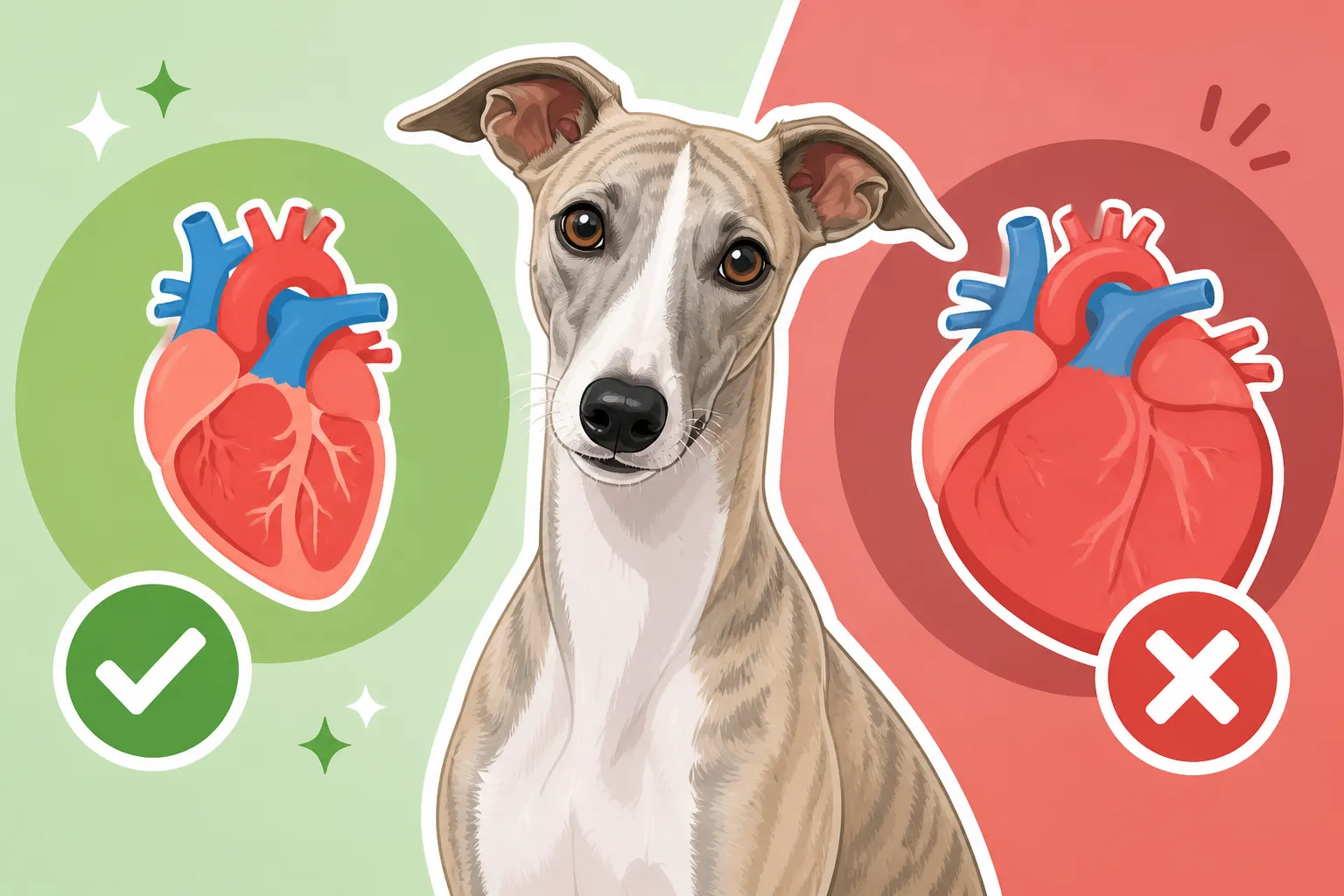
It’s a moment that can make any Whippet owner’s heart skip a beat: your vet mentions your beloved sighthound has an "enlarged heart." Immediately, your mind jumps to the worst-case scenarios, imagining endless specialist visits and a shortened lifespan. But here's the crucial thing: for a Whippet, what looks like an enlarged heart on a standard X-ray often isn't a sign of disease at all, but rather a perfectly normal, athletic adaptation. This guide will delve into why a Whippet's heart is a magnificent powerhouse, how to differentiate between a healthy, large heart and a genuinely diseased one, and what steps you can take to understand your dog’s unique cardiac profile.
Understanding the Whippet Heart: Built for Speed, Not for Show
Whippets are canine athletes, precision-engineered for bursts of incredible speed. Their bodies are streamlined, their muscles are lean, and every system, including their cardiovascular system, is optimized for peak performance. This athletic build means their hearts operate differently from those of less active, or even other active, breeds.
The Athletic Heart vs. the Average Dog's Heart
Think about a human marathon runner or a professional cyclist. Their hearts are typically larger and more efficient than someone who leads a sedentary lifestyle. This isn't a sign of heart disease; it's a physiological adaptation to sustained physical demand. They have a greater stroke volume, meaning their hearts pump more blood with each beat, and often a lower resting heart rate. Whippets are no different. Their hearts are accustomed to pumping blood rapidly and efficiently to power their explosive sprints. This means their heart muscle is often thicker and their heart chambers are larger than what you’d find in, say, a Bulldog or a Pug. It’s a specialized organ, finely tuned for bursts of energy and rapid recovery. When a standard vet, perhaps more accustomed to general practice and a wider range of breeds, sees a Whippet's X-ray, they might naturally compare it to the "average" canine heart, which can lead to misinterpretations.
Why a Whippet's Heart Looks Different on X-Ray
An X-ray provides a two-dimensional image of a three-dimensional organ. On an X-ray, the heart size is often assessed using various metrics, like the Vertebral Heart Score (VHS). While a higher VHS typically indicates an enlarged heart, for a Whippet, those standard reference ranges can be misleading. A Whippet's deep chest and unique body conformation mean its heart naturally appears larger and more elongated in the chest cavity compared to other breeds. What might be considered a mildly enlarged heart in a Labrador Retriever, for example, could be perfectly normal for a Whippet. This is why it’s so important for your veterinarian to understand sighthound physiology. They should be aware that a Whippet's heart simply takes up more space and presents differently on an X-ray. Without this understanding, a misdiagnosis of cardiomyopathy or other serious conditions could easily occur, leading to unnecessary worry and potentially invasive tests. If your vet notes that your Whippet’s heart looks bigger on an X-ray, it's worth having a discussion about whether they are using sighthound-specific reference ranges. You can learn more about how a Whippet's heart looks enlarged on X ray in a dedicated resource.
The Role of Genetics and Breed-Specific Traits
Beyond their athleticism, Whippets also have genetic predispositions that contribute to their unique cardiac profile. These dogs, along with Greyhounds and other sighthounds, have a naturally higher red blood cell count, a characteristic that further enhances their oxygen-carrying capacity during intense activity. This isn't just about the heart's size but also its efficiency and the demands placed upon it. The breed standard itself indirectly reflects these physiological adaptations, describing a deep chest and well-sprung ribs that house these powerful organs. It's truly a marvel of natural selection, demonstrating how centuries of breeding for speed and agility have sculpted every aspect of their anatomy. Understanding "Why a Whippet's Big Heart Is Not a Diagnosis" is key for owners to avoid undue stress when their vet first mentions heart size.
Distinguishing Normal Enlargement from Disease
The challenge for veterinarians, and indeed for concerned Whippet owners, is to discern between this normal, athletic enlargement and a pathological condition. It’s a fine line, and often requires more than just a single X-ray.
Benchmarks for a Healthy Whippet Heart Size
While standard VHS values might cause alarm, research has established sighthound-specific reference ranges that account for their unique physiology. For example, a VHS up to 11.5 or even slightly higher might be perfectly acceptable for a Whippet, whereas in a non-sighthound breed, anything over 10.5 is often considered suspect. Beyond simple size measurements, a healthy Whippet heart should maintain normal function. This means the heart should be pumping blood efficiently, without signs of significant regurgitation through valves or excessive pressure in the chambers. Clinical signs are also crucial; a healthy Whippet with an "athletic heart" will typically be asymptomatic, displaying no coughing, exercise intolerance, or fainting spells. They should be just as eager to zoom around the yard and then curl up on the sofa as ever. This inherent athleticism and vitality are strong indicators of a functionally sound heart, even if it looks large. If your vet expresses concern about the size of your Whippet's heart, asking about their familiarity with sighthound cardiac norms can provide valuable insight.
When "Big" Becomes a Problem: Signs of Actual Cardiac Issues
While a large heart can be normal, it's vital to recognize when that size indicates a genuine problem. True cardiac disease in Whippets, as in any breed, manifests with specific symptoms. Keep a keen eye out for any changes in your Whippet’s behavior or physical state. This could include a persistent cough, especially one that worsens at night or after exercise, lethargy, decreased appetite, difficulty breathing, a distended abdomen (ascites), or fainting episodes. Even subtle changes in exercise tolerance, such as your Whippet tiring more quickly on walks or during play, could be a red flag. These are not signs of a healthy, athletic heart, but rather indicators that the heart is struggling to keep up with the body's demands. If you notice any of these signs, it's absolutely imperative to seek veterinary attention promptly. Early diagnosis and intervention can significantly improve the prognosis for many cardiac conditions.
The Limitations of X-Rays Alone in Diagnosis
As discussed, an X-ray is a useful screening tool, but it's fundamentally limited when it comes to definitive cardiac diagnosis in Whippets. It provides an anatomical snapshot, showing size and silhouette, but it tells us very little about the heart's function. It can't assess blood flow, valve integrity, or the thickness of the heart muscle walls. Because of this, relying solely on an X-ray to diagnose a Whippet’s heart condition can lead to false positives and unnecessary anxiety. This is particularly true if your vet doesn't routinely see sighthounds. The critical takeaway here is that if an X-ray suggests an enlarged heart in your Whippet, the next step should almost always be a more advanced diagnostic test rather than an immediate conclusion of disease. This brings us to the importance of specialized cardiac diagnostics.
Common Cardiac Conditions in Whippets and How They Present
While many large Whippet hearts are perfectly healthy, these dogs are not entirely immune to cardiac issues. Understanding the more common conditions can help owners know what to look for and when to be genuinely concerned.
Mitral Valve Disease in a Whippet: A Senior Concern
One of the most common heart conditions that can affect Whippets, especially as they age, is Mitral Valve Disease (MVD). This is an age-related degenerative condition where the mitral valve, located between the left atrium and left ventricle, starts to thicken and doesn't close properly. This allows blood to leak backward into the atrium with each heartbeat, creating a characteristic "murmur" that a vet can hear with a stethoscope. While MVD is incredibly common in smaller breeds, Whippets can also develop it, though often at a later age. The severity of the murmur doesn't always correlate with the severity of the disease, and many Whippets live long, full lives with low-grade murmurs. However, as the disease progresses, the heart works harder to compensate, leading to enlargement and eventual congestive heart failure. Signs of advanced MVD include coughing, particularly at night, reduced stamina, and difficulty breathing. It's crucial to understand that not all murmurs are cause for alarm, especially in younger, athletic Whippets who can have innocent flow murmurs. However, regular cardiac check-ups, especially as your Whippet ages, are important to monitor any changes. For more detailed information, consider reading about Mitral Valve Disease in a Whippet.
Dilated Cardiomyopathy in a Whippet: Less Common but Serious
Dilated Cardiomyopathy (DCM) is a serious condition where the heart's chambers become enlarged and the muscle walls thin and weaken, impairing its ability to pump blood effectively. While some larger breeds like Doberman Pinschers and Great Danes are famously predisposed to DCM, it is less common in Whippets. However, it can still occur and carries a grave prognosis. When it does appear in sighthounds, it often presents differently than in other breeds, sometimes with more subtle signs initially. Symptoms are similar to those of advanced MVD: lethargy, exercise intolerance, coughing, weight loss, and collapse. Diagnosis typically involves an echocardiogram to visualize the heart's structure and function. Because it’s less typical for Whippets, it’s often considered after ruling out more common conditions or athletic heart characteristics. While you might encounter information about Dilated Cardiomyopathy in a Whippet, remember it's not the primary concern for most Whippet owners.
Arrhythmias in a Whippet: Irregular Beats and Their Significance
An arrhythmia is an abnormal heart rhythm. This can mean the heart beats too fast (tachycardia), too slow (bradycardia), or irregularly. Just like humans, dogs can experience various types of arrhythmias. Some, especially in highly athletic dogs like Whippets, can be benign and require no treatment, known as "athletic arrhythmias." For instance, some sighthounds naturally have a lower resting heart rate or exhibit sinus arrhythmia, which is a normal variation in heart rate linked to breathing. However, other arrhythmias can be pathological and indicate an underlying heart problem. These might cause dizziness, weakness, fainting (syncope), or sudden collapse. If your vet detects an irregular heartbeat, they might recommend an electrocardiogram (ECG) or a Holter monitor (a portable ECG that records heart activity over 24-48 hours) to precisely identify the type and severity of the arrhythmia. It's important to remember that not every skipped beat or irregular rhythm is a crisis, but persistent or symptomatic arrhythmias warrant thorough investigation. You can delve deeper into Arrhythmias in a Whippet to understand more.
Diagnostic Tools and What They Reveal
Given the nuances of a Whippet's heart, proper diagnosis goes beyond a simple stethoscope check or X-ray. Advanced imaging and specialist consultations are often the key to getting a clear picture.
Why a Whippet Needs an Echocardiogram to Confirm
If your veterinarian expresses concern about your Whippet's heart size on an X-ray, or detects a significant murmur, the gold standard for definitive diagnosis is an echocardiogram. This is a non-invasive ultrasound of the heart that allows a veterinary cardiologist to visualize the heart's chambers, valves, and major blood vessels in real-time. An echocardiogram provides dynamic information: it shows how well the heart muscle is contracting, the direction and speed of blood flow, the integrity of the valves, and precise measurements of chamber size and wall thickness. This is critical for Whippets because it can distinguish between a normal, athletic enlargement and actual pathological changes. For example, it can clearly show if a seemingly large heart is simply robust and healthy ("Why an Athletic Whippet's Heart Is Bigger"), or if it's struggling due to conditions like MVD or DCM. It’s the definitive test that answers the question: is this enlargement normal, or is there an underlying issue? Understanding whether a Whippet needs an echocardiogram to confirm can save a lot of worry and ensure appropriate next steps.
Electrocardiograms ECGs and Holter Monitors
Beyond structural assessment with an echocardiogram, evaluating the heart's electrical activity is crucial, especially if arrhythmias are suspected. An electrocardiogram (ECG) records the electrical signals generated by the heart, showing the rate and rhythm of the heartbeat. This quick, non-invasive test can identify various types of arrhythmias, conduction disturbances, and signs of heart muscle strain. However, a standard ECG only captures a snapshot of a few minutes. If a Whippet's arrhythmia is intermittent, a standard ECG might miss it. In such cases, a Holter monitor is invaluable. This small, portable device is worn by your Whippet, typically for 24 to 48 hours, continuously recording its heart rhythm as it goes about its daily activities. This allows the cardiologist to detect sporadic arrhythmias that might not be present during a brief clinic visit. Both ECGs and Holter monitors are essential tools in providing a comprehensive cardiac evaluation, especially when trying to pinpoint the nature of an irregular heartbeat or unexplained collapse.
The Importance of a Sighthound-Knowledgeable Vet
This cannot be stressed enough: the unique physiology of sighthounds means that a general practitioner, however competent, might misinterpret diagnostic findings without specific sighthound knowledge. Their lean body mass, distinct bloodwork values (like "The Bloodwork Numbers That Look Wrong on a Healthy Whippet"), and unique responses to certain medications mean they are not "just like other dogs." When it comes to cardiac health, a vet experienced with sighthounds will be familiar with the normal variations in heart size and rhythm that are characteristic of the breed. They will understand "Why a Whippet Needs a Sighthound Anesthesia Protocol" and apply appropriate diagnostic criteria. If your local vet raises concerns about your Whippet's heart, don't hesitate to ask if they have experience with sighthounds or if a referral to a board-certified veterinary cardiologist is advisable. Finding a vet who genuinely understands the breed can make all the difference in accurate diagnosis and appropriate care, potentially saving you from unnecessary stress and treatments.
Managing a Whippet with a Heart Condition
If, unfortunately, your Whippet is diagnosed with a genuine heart condition rather than simply a normal athletic heart, understanding management strategies becomes paramount.
Treatment Options and Prognosis
The specific treatment for a heart condition in a Whippet will depend entirely on the diagnosis, its severity, and the stage of the disease. For early-stage Mitral Valve Disease, for example, your vet might recommend simply monitoring the condition with regular check-ups. As it progresses, medications such as ACE inhibitors (like enalapril or benazepril), diuretics (like furosemide) to reduce fluid buildup, and pimobendan to improve heart muscle contraction might be prescribed. For arrhythmias, anti-arrhythmic drugs (e.g., sotalol, mexiletine) may be used. In very advanced cases, specialized procedures or even pacemakers might be considered, though these are less common in general practice. The prognosis varies widely; some Whippets can live comfortably for years with well-managed heart disease, while others might have a more rapidly progressing condition. The key is consistent veterinary care and diligent adherence to medication schedules. Remember, the goal of treatment is to improve your Whippet’s quality of life and slow the progression of the disease, not necessarily to cure it.
Lifestyle Adjustments for Cardiac Whippets
Living with a Whippet diagnosed with a heart condition often requires some lifestyle adjustments to minimize stress on their cardiovascular system. While an athletic Whippet with a healthy heart can run and play to their heart's content, one with heart disease might need a more moderated exercise regimen. This doesn't mean no exercise at all – gentle, consistent walks are still beneficial – but intense sprints, chasing, or prolonged strenuous activity might need to be curtailed. Your vet or cardiologist will provide specific recommendations tailored to your Whippet's condition. Dietary changes might also be suggested, such as a low-sodium diet to help manage fluid retention, especially if congestive heart failure is a concern. Monitoring their weight is also important, as obesity puts extra strain on the heart. Keeping an eye on your Whippet's breathing rate at rest and reporting any changes can also be a simple yet effective way to track their condition at home. Caring for an Old Whippet That Feels the Cold might also include measures to prevent shivering, as this also taxes the heart.
Financial Considerations and Pet Insurance
A diagnosis of heart disease can bring not only emotional stress but also significant financial concerns. The cost of diagnostic tests, ongoing medications, and specialist consultations can quickly add up. For example, an echocardiogram can range from a few hundred to over a thousand dollars, and monthly heart medications can cost anywhere from $50 to several hundred dollars, depending on the specific drugs and dosages needed. This is where pet insurance can be a huge relief. Providers like Healthy Paws offer comprehensive plans that can cover a significant portion of veterinary bills for unexpected illnesses and chronic conditions, including heart disease. If you have pet insurance, it’s always wise to review your policy details to understand what is covered and what your deductible and reimbursement rates are. Even if you don't have insurance, discussing financial options and potential payment plans with your vet clinic is a good idea. While we all hope our Whippets remain healthy for their full "The Twelve to Fifteen Years a Whippet Lives", having a plan for unexpected health challenges is always prudent. Investing in pet insurance like Healthy Paws when your Whippet is young can provide peace of mind for future unforeseen health issues.
Table: Differentiating a Healthy Athletic Heart from a Diseased Heart in Whippets
| Characteristic | Healthy Athletic Whippet Heart | Diseased Whippet Heart (e.g., MVD, DCM) |
|---|---|---|
| Appearance on X-Ray | Appears larger than standard norms, often elongated. Normal overall shape. | May appear enlarged, sometimes with specific chamber enlargement or abnormal shape. |
| Echocardiogram Findings | Normal chamber sizes, strong muscle contraction, healthy valve function, efficient blood flow. | Enlarged chambers, thinned or thickened walls, poor muscle contraction, valve leakage, abnormal blood flow. |
| Heart Sound | Clear heart sounds, possibly an "innocent" flow murmur in some cases. | Often accompanied by a noticeable heart murmur (MVD) or muffled sounds (DCM). |
| Clinical Signs | Asymptomatic. High energy, excellent exercise tolerance, normal breathing. | Coughing, lethargy, exercise intolerance, difficulty breathing, fainting, weight loss. |
| Breathing | Normal resting respiratory rate (typically 15-30 breaths/minute). | Increased resting respiratory rate, panting, labored breathing. |
| Energy Levels | Typically high energy, loves to sprint and play, then crash for sleep. | Reduced stamina, tires easily, reluctance to play or exercise. |
| Prognosis | Excellent; a normal variant. | Varies depending on condition and stage; requires ongoing management. |
Disclaimer
The information provided in this article is for general informational purposes only and is not intended as a substitute for professional veterinary advice, diagnosis, or treatment. Always seek the advice of your veterinarian or other qualified animal health provider with any questions you may have regarding a medical condition or the health and welfare of your pet. Never disregard professional veterinary advice or delay in seeking it because of something you have read in this article.