Warming a Whippet During Surgery
It’s a terrifying moment for any Whippet owner: dropping your beloved, lean companion off for surgery, knowing their unique physiology makes anesthesia a more delicate dance. One of the biggest worries, often whispered among us, is how to keep them warm and safe, especially when their thin skin and lack of body fat make them so susceptible to the cold. This guide aims to demystify the crucial process of warming a Whippet during surgery, offering peace of mind and practical knowledge for advocating for your sighthound.
Why Whippets Get Chilly So Easily During Surgery
Whippets, with their sleek lines and athletic build, are truly special creatures, but these very traits that make them so elegant also contribute to a significant challenge when they undergo anesthesia: they get cold, fast. It’s not just a minor inconvenience; hypothermia during surgery can lead to serious complications. Understanding why this happens is the first step in ensuring your Whippet receives the best possible care.
The Lack of Natural Insulation
One of the most obvious reasons Whippets struggle with temperature regulation is their incredibly low body fat percentage and fine, thin coat. Unlike breeds with thick double coats or ample subcutaneous fat, a Whippet has virtually no natural insulation to hold in body heat. Imagine stepping out into winter with just a t-shirt – that's somewhat akin to how your Whippet feels even in a moderately cool operating room.
When a Whippet is prepped for surgery, they’re often shaved, further exposing their skin to the ambient air. Then, the surgical scrub, typically an alcohol-based solution, evaporates quickly from their large surface area, leading to rapid heat loss. This isn't unique to Whippets, of course, but their inherent lack of insulation means they start at a disadvantage compared to, say, a Labrador Retriever or a Bulldog. The air conditioning in an operating suite, designed for human comfort and infection control, can feel downright Arctic to a lean sighthound. This is a critical factor that veterinary teams must actively counteract from the moment your Whippet steps into the prep area until they are fully recovered.
Anesthesia's Impact on Body Temperature Regulation
Beyond their physical characteristics, the anesthetic drugs themselves play a huge role in why Whippets can't maintain their body temperature. Anesthesia affects the hypothalamus, the part of the brain responsible for thermoregulation, essentially dialing down its ability to sense and respond to changes in body temperature. This means your Whippet can't shiver to generate heat, nor can they constrict blood vessels in their extremities to conserve warmth.
Furthermore, many anesthetic agents cause vasodilation, meaning blood vessels near the skin's surface open up, leading to even more heat loss. This effect, combined with the immobility and muscle relaxation induced by the drugs, creates a perfect storm for a Whippet to experience a significant drop in core body temperature. It's a complex interplay of physiology and pharmacology, highlighting why specialized care, sometimes requiring a veterinary team well-versed in "Why a Whippet Needs a Sighthound Anesthesia Protocol", is so vital for our sighthound companions.
The Risks of Hypothermia During and After Whippet Surgery
Hypothermia in a Whippet isn't just about them feeling a bit cold; it’s a serious complication that can significantly impact their recovery and overall outcome. A drop in core body temperature, even a seemingly small one, sets off a cascade of physiological responses that can delay healing, increase pain, and even lead to life-threatening issues.
Delayed Recovery and Increased Complications
One of the most immediate and noticeable effects of hypothermia in a Whippet is a prolonged and rougher recovery from anesthesia. When a dog's body temperature is too low, their metabolism slows down, which means anesthetic drugs are processed and eliminated from their system much more slowly. This can lead to your Whippet being groggier for longer, taking more time to fully wake up, and potentially experiencing more disorientation and discomfort. You might wonder, "How Slowly a Whippet Wakes From Sedation", and hypothermia certainly plays a role in extending that period.
Beyond just waking up, hypothermia can also weaken the immune system, making your Whippet more susceptible to post-surgical infections. Wound healing can be impaired because reduced blood flow to the surgical site limits the delivery of oxygen and nutrients essential for tissue repair. Additionally, hypothermic patients often experience increased post-operative pain and shivering, which can be distressing for the dog and delay their ability to rest and recover comfortably.
Cardiovascular and Coagulation Issues
Perhaps the most critical dangers of surgical hypothermia relate to the cardiovascular system and blood clotting. A significant drop in body temperature can cause bradycardia (a dangerously slow heart rate) and arrhythmias (irregular heartbeats). For a dog breed already known for its unique cardiac characteristics, such as "Why a Whippet's Big Heart Is Not a Diagnosis", any additional stress on the heart is a serious concern. The heart simply has to work harder in a cold body, which is not ideal during the delicate post-surgical period.
Furthermore, hypothermia can interfere with the blood's ability to clot properly. Platelets, crucial for stopping bleeding, become less effective at lower temperatures. This can increase the risk of excessive bleeding during and after surgery, which is particularly worrying for procedures that are already prone to some blood loss. Ensuring your Whippet stays warm is not just about comfort; it's about protecting their vital organ function and minimizing critical risks. Many pet insurance plans, like those offered by Healthy Paws, recognize the importance of comprehensive care and can help cover the costs associated with these kinds of potential complications.
Effective Warming Methods Used in Veterinary Clinics
Thankfully, modern veterinary medicine has a range of sophisticated and highly effective tools and techniques to combat hypothermia in Whippets during surgery. A good veterinary team will employ a multi-modal approach, using several methods simultaneously to ensure your sighthound maintains a safe and stable core body temperature.
Active External Warming Techniques
When it comes to keeping a Whippet warm, active external warming is often the first line of defense. These methods directly apply heat to the patient's body surface.
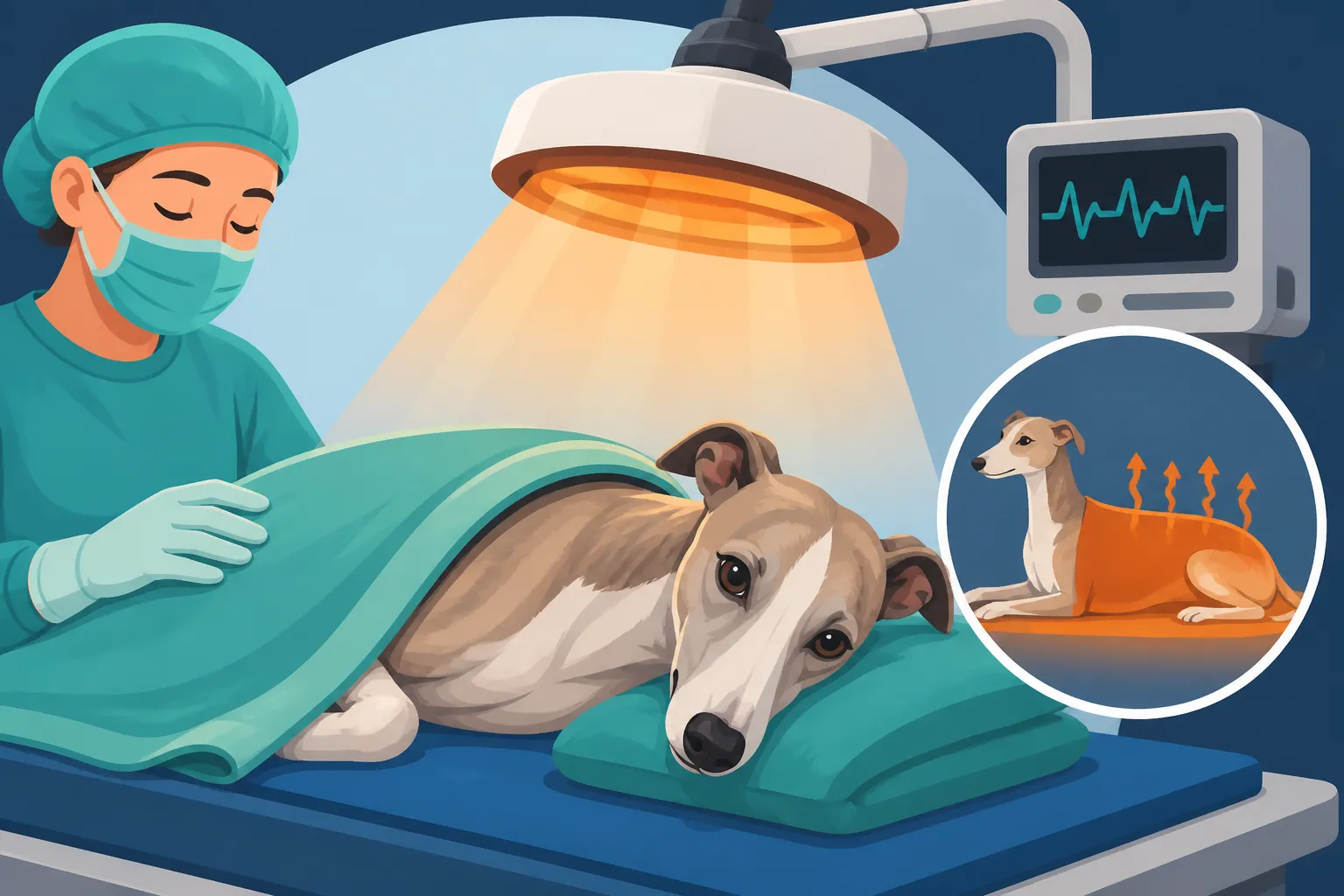
- Forced-Air Warming Blankets: These are perhaps the gold standard in veterinary and human medicine. Brands like Bair Hugger are common, using a portable unit to blow warm air through a specialized blanket that drapes over the patient. This warm air circulates around the Whippet's body, providing gentle, even heat. It's incredibly effective because it covers a large surface area and the air temperature can be precisely controlled, preventing burns while maximizing heat transfer.
- Circulating Warm Water Blankets: Another excellent option involves blankets with internal channels through which warm water continuously circulates. These are placed directly beneath or over the Whippet. The steady, conductive heat helps to prevent heat loss to the cold operating table and actively warms the patient. Like forced-air systems, the water temperature is regulated, ensuring safety.
- Heated Surgical Tables: Many modern veterinary clinics have surgical tables that are thermostatically controlled, meaning they can be warmed to a comfortable and safe temperature. This conductive heat prevents the Whippet from losing body heat to a cold surface, which is a common problem given their minimal padding.
- Warm Blankets and Towels: While not as active as the powered options, warm towels or blankets, freshly removed from a dryer or a dedicated warming cabinet, are invaluable during pre-op and recovery. They provide immediate comfort and some insulation, especially important for breeds like the Whippet where "A Whippet Has No Insulation and No Padding". These are often used in conjunction with more advanced warming methods.
Active Internal Warming Techniques
Sometimes, especially in longer procedures or for very compromised patients, veterinary teams will use methods that warm the Whippet from the inside out.
- Warm Intravenous (IV) Fluids: Administering IV fluids that have been warmed to body temperature (or slightly above) is a highly effective way to transfer heat directly into the circulatory system. Imagine a slow, continuous warm bath for the inside of their body. This helps counteract the cooling effect of room-temperature fluids that would otherwise drop the Whippet's core temperature.
- Warm Surgical Lavage Solutions: In abdominal or thoracic surgeries, vets might use warm sterile saline to rinse the surgical site. This not only cleans the area but also helps to prevent internal organs from cooling down during the open procedure.
Monitoring and Environmental Control
Constant monitoring is crucial. A good veterinary team will use esophageal or rectal thermometers to continuously track the Whippet's core body temperature throughout the entire procedure and well into recovery. This allows them to adjust warming methods as needed, ensuring the temperature stays within a safe range. Additionally, controlling the ambient room temperature, particularly in the recovery area, is often overlooked but incredibly important for a Whippet's comfort and continued warmth. When choosing a veterinary practice, it's always worth asking if they are familiar with "Whether a Whippet Needs a Vet Who Knows Sighthounds" and their unique needs, including robust warming protocols.
Here's a quick look at common warming methods:
| Method | Type | How It Works | Pros | Cons |
|---|---|---|---|---|
| Forced-Air Warming Blankets (e.g., Bair Hugger) | External | Warm air blown through a specialized blanket covering the patient. | Even heat distribution, precise temperature control. | Can be bulky, requires specific equipment. |
| Circulating Warm Water Blankets | External | Warm water circulates through channels within a blanket. | Consistent conductive heat, effective for long procedures. | Requires specific equipment, potential for water leaks. |
| Heated Surgical Tables | External | Table surface is warmed to a controlled temperature. | Prevents conductive heat loss to cold surfaces. | Only heats the contact surface, can't be used for full body. |
| Warm IV Fluids | Internal | Intravenous fluids are warmed before administration. | Direct internal warming, helps maintain core temperature. | Requires an IV fluid warmer, effects can be subtle initially. |
| Warm Blankets/Towels | External | Pre-warmed fabric wrapped around the patient. | Immediate comfort, easy to use, versatile. | Provides insulation, not active heating; cools quickly. |
What You Can Do as a Whippet Owner
While the veterinary team bears the primary responsibility for your Whippet's safety during surgery, there are definite steps you can take as a proactive owner to contribute to their warmth and comfort. Being informed and advocating for your dog is one of the best ways to ensure a smooth experience.
Pre-Surgical Discussions and Advocacy
Before the day of surgery, schedule a thorough discussion with your veterinarian and the veterinary technicians who will be caring for your Whippet. Don't be shy about asking specific questions regarding their anesthesia protocol for sighthounds. Inquire about:
- Specific Warming Devices: Ask what warming methods they routinely use. Do they have forced-air warming blankets, circulating warm water pads, or heated surgical tables? The more specific you are, the more reassuring their answers will be.
- Temperature Monitoring: How will they monitor your Whippet's core body temperature? Esophageal thermometers are generally preferred for accuracy during surgery.
- Recovery Area Warming: How will they keep your Whippet warm during recovery? A significant amount of heat loss can occur in the immediate post-operative period.
Expressing your concerns clearly and calmly allows the veterinary staff to understand your priorities. Most reputable clinics will appreciate your engagement and be happy to explain their safety measures. Knowing these details can also help you budget for potential costs, especially if you have pet insurance like Healthy Paws, which is designed to help with unexpected veterinary expenses.
Bringing Comfort from Home
Sometimes, the simplest things can make a difference. If your vet allows it, ask if you can bring a favorite blanket or a soft, familiar piece of bedding from home that can be used in your Whippet's recovery kennel. The familiar scent can be comforting, and the extra layer of insulation, even if just for short periods, can help maintain warmth.
It's also important to follow all pre-surgical instructions carefully, including any directives about fasting. While it might seem unrelated, improper fasting can complicate anesthesia, which in turn can indirectly impact recovery and the body's ability to maintain temperature. Preparing your Whippet thoroughly for their procedure is part of setting them up for success.
Post-Operative Care at Home
Once your Whippet is home, your role in keeping them warm continues. They might still be a little groggy, and their body's ability to regulate temperature might not be fully back to normal.
- Warm, Draft-Free Environment: Ensure your home is warm and free of drafts, especially in their designated recovery spot. A cozy dog bed, perhaps one of the "The Beds a Whippet Owner Keeps Buying", with plenty of soft blankets for burrowing, is ideal.
- Gentle Monitoring: Feel your Whippet's ears and paws. If they feel cold, add another blanket or gently increase the room temperature. However, avoid overheating; you want them comfortably warm, not sweaty. If they're shivering uncontrollably or seem abnormally cold, contact your vet immediately.
- Coats and Pajamas: For many Whippets, a soft fleece or sweater, or even "Whether a Whippet Needs Pajamas for Sleeping", can provide invaluable extra warmth for the first few days home. This is especially true for senior Whippets, for whom "Caring for an Old Whippet That Feels the Cold" becomes an ongoing consideration.
Your vigilance and care at home are just as important as the care they receive at the clinic. By taking these steps, you’re actively contributing to your Whippet's safe and comfortable recovery.
Disclaimer
The information provided in this guide is for general informational purposes only and does not constitute veterinary medical advice. Always consult with a qualified veterinarian for any health concerns or before making any decisions about your Whippet's medical care or treatment.