Leash Reactivity in a Whippet
There's nothing quite like the dream of a peaceful stroll with your elegant Whippet, trotting calmly by your side. Then reality hits: another dog appears, a cyclist whizzes by, or a child runs past, and your graceful companion transforms into a lunging, barking, pulling tornado at the end of the leash. This frustrating behavior, known as leash reactivity, is a common struggle for many Whippet owners, but understanding its roots and implementing effective strategies can bring back those serene walks you envisioned.
1. Understanding Leash Reactivity in Whippets
Leash reactivity isn't just "being naughty" or aggressive; it's a complex set of behaviors driven by underlying emotions like fear, frustration, or overexcitement. When your Whippet reacts on leash, they're not trying to give you a hard time; they're genuinely struggling to cope with something in their environment.
1.1. What Does Leash Reactivity Look Like?
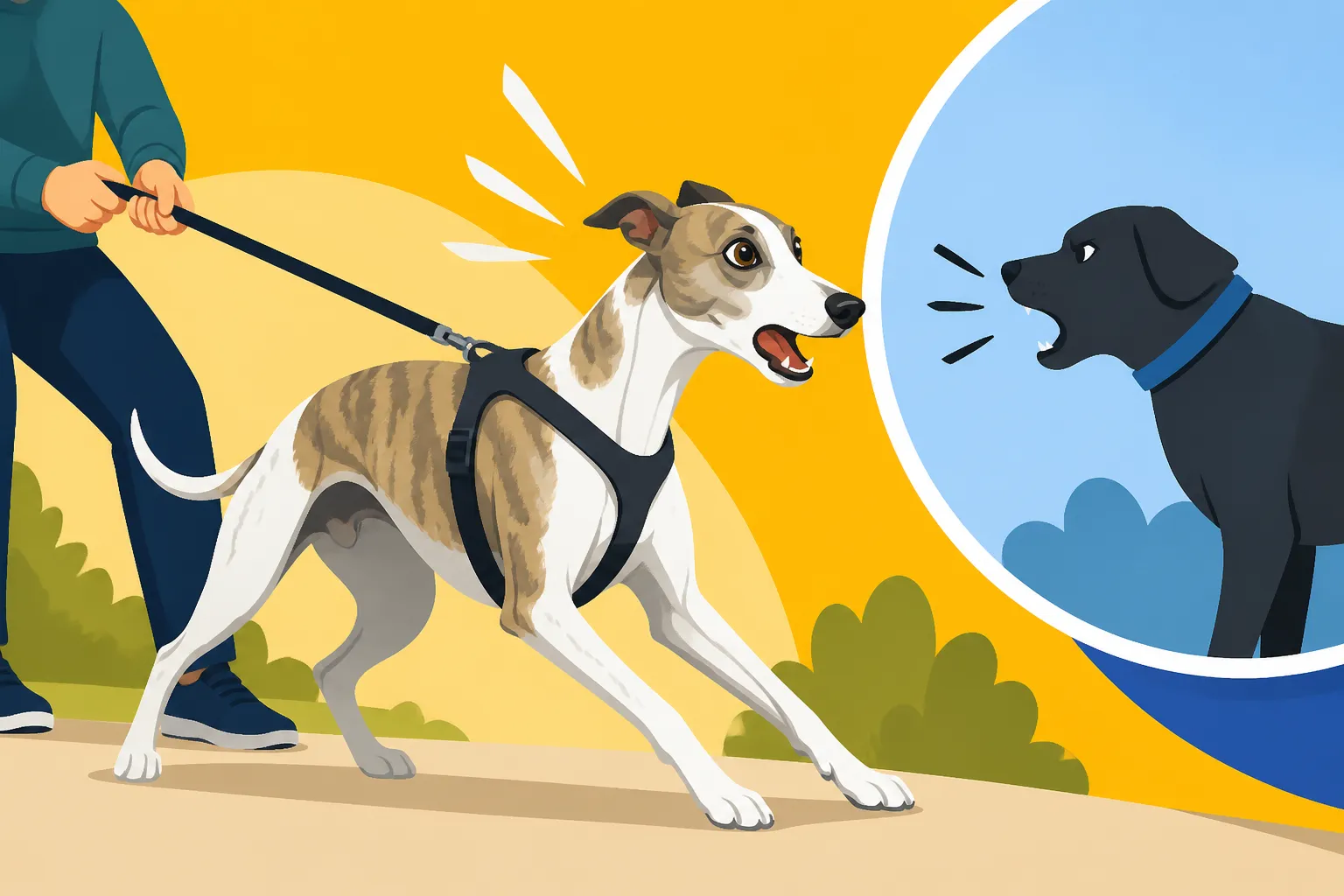
When a Whippet is leash reactive, their behavior can manifest in various ways, often escalating quickly. You might see them suddenly pull with all their might, their body stiffening and hackles potentially raised. Loud, insistent barking is common, sometimes accompanied by growling or snarling. They might lunge forward, trying to get closer to (or further away from) the trigger, making it feel like you're holding onto a rocket. In some cases, a reactive Whippet might freeze, staring intently at the trigger, trembling, or trying desperately to retreat and hide behind you. It's important to remember that these actions are usually rooted in a heightened emotional state, not necessarily an intention to harm. While it can look alarming to passersby, it's frequently a plea for distance or an explosion of pent-up energy rather than true aggression, though aggression can certainly stem from chronic fear or frustration.
1.2. Why Sighthounds Are Often Prone
Whippets, like many sighthounds, possess a unique blend of traits that can make them particularly susceptible to leash reactivity. First, their incredible sight and high prey drive mean they detect movement and distant objects far sooner and more intensely than many other breeds. A squirrel darting across the park or a dog playing vigorously can ignite an instinctual chase response that's hard to override when constrained by a leash. Secondly, Whippets are often highly sensitive dogs. They can be wary of direct approaches from unfamiliar dogs or people, preferring to observe from a distance or engage in more polite, arcing introductions. Sighthound Manners: A Whippet Meeting Other Dogs highlights this preference for a different social etiquette. Being unable to control their personal space or retreat when they feel uncomfortable can quickly lead to frustration or fear-based reactions. Their lean, finely-boned bodies also mean they lack the physical "padding" of thicker-coated breeds, which can make them more sensitive to physical bumps or rough play from other dogs, compounding any fear.
1.3. Common Triggers for a Whippet
The triggers for leash reactivity can be highly individual, but certain things tend to set off Whippets more frequently. Other dogs are probably the most common culprit, especially if they are boisterous, off-leash, or approach too quickly. Some Whippets react more to specific types of dogs – perhaps larger, hairier breeds, or those with different play styles. People can also be triggers, particularly those moving quickly, carrying unusual objects, or children whose unpredictable movements and high-pitched voices can be alarming. Small, fast-moving animals like squirrels, rabbits, or even blowing leaves can trigger that intense prey drive, sending your Whippet into a frenzy of pulling and barking. Even inanimate objects like bicycles, skateboards, or strollers can be a problem, especially if they appear suddenly. Understanding your Whippet's specific triggers is the first step toward effective management and training.
2. The Root Causes Behind Your Whippet's Reactions
It’s easy to feel embarrassed or frustrated when your Whippet acts out on leash, but remember that there's always a reason for their behavior. Pinpointing that reason is crucial to helping them. Often, what looks like aggression is actually a manifestation of deeper, unresolved feelings.
2.1. Frustration and Lack of Control
One of the most common drivers of leash reactivity in Whippets is sheer frustration. Imagine seeing something you desperately want to interact with – perhaps another dog you want to play with, or a squirrel you instinctually want to chase – but you're tethered, unable to move freely. This constant state of wanting to engage but being prevented can build up quickly. For many Whippets, the leash prevents them from performing natural sighthound behaviors, like circling before approaching another dog or bolting after perceived prey. When this frustration boils over, it often erupts in barking, lunging, and pulling. They learn that these behaviors, even if unwanted by you, sometimes create distance from the trigger or get a reaction from you, reinforcing the cycle.
2.2. Fear or Anxiety
Fear and anxiety are powerful motivators for reactive behavior. A Whippet might have had a negative experience with another dog or person, leading them to anticipate trouble whenever they see a similar trigger. This could be anything from being growled at by an off-leash dog to being startled by a loud noise during a walk. Feeling trapped on a leash can exacerbate these fears, as they can't flee from perceived threats. Some Whippets are also naturally more sensitive or genetically predisposed to nervousness. This heightened sensitivity means they might perceive everyday occurrences as more threatening than a bolder dog would. If your Whippet tends to shrink away, tuck their tail, or try to hide when a trigger appears, fear is likely a significant component. Understanding that their lunging might actually be a desperate attempt to create space from something scary can shift your perspective and guide your training approach. It’s also worth considering if they are generally anxious, which might be explored further in topics like Whether a Whippet Is Nervous of Strangers.
2.3. Overstimulation and Sensory Overload
For a sensitive breed like the Whippet, the world can be a noisy, fast-moving, and sometimes overwhelming place. A busy street corner with cars zooming by, people chatting, kids playing, and other dogs barking can lead to sensory overload. Whippets are built for quick bursts of speed and quiet observation, not for constant high-level stimulation. When their senses are bombarded, they can become overwhelmed, leading to a "meltdown" reaction. This might look like frantic barking, spinning, or an inability to focus on you at all. It's their way of saying, "Too much, too fast, I can't cope!" This is particularly true for Whippet puppies who need careful, controlled exposure to new things, as outlined in guides like Socializing a Whippet Puppy. Without proper, gentle introductions to the world, they can quickly become reactive to everyday sights and sounds.
2.4. Inadequate Socialization or Learned Behavior
Sometimes, leash reactivity stems from a lack of appropriate early socialization. Puppies need carefully managed, positive experiences with a wide variety of sights, sounds, people, and well-behaved dogs during their critical developmental window. If a Whippet puppy missed out on these crucial experiences, they might grow up to be fearful or uncertain in new situations. On the flip side, some reactive behaviors are inadvertently learned. For example, if your Whippet lunges and barks, and you instinctively pull them away, they might associate their barking with the trigger disappearing. This "negative reinforcement" teaches them that their reactive behavior works to achieve their goal (making the scary thing go away). This is why positive, reward-based training is so crucial; harsh corrections or punishments can often backfire on a sensitive breed like a Whippet, potentially making the fear or frustration worse, as discussed in How a Whippet Reacts to a Raised Voice.
3. Practical Strategies for Managing and Reducing Reactivity
While it can feel overwhelming, managing and reducing leash reactivity is absolutely possible with consistency, patience, and the right approach. Remember, it's a marathon, not a sprint, and every small step forward is a victory.
3.1. Immediate Management: Avoiding Triggers and Creating Distance
The most crucial first step in dealing with leash reactivity is proactive management: avoid triggers whenever possible. This isn't giving up on training; it's preventing your Whippet from practicing and reinforcing the reactive behavior. Walk your Whippet during off-peak hours when fewer dogs or people are out. Explore new, quieter routes, perhaps through industrial parks on weekends or nature trails during weekdays. Become a "human radar," constantly scanning your environment for potential triggers. If you spot a trigger approaching, change direction immediately. A sharp U-turn or ducking behind a parked car can create the distance your Whippet needs to stay under threshold – that point before they react. Think of it as controlling the environment to set your dog up for success. Remember, a Whippet’s natural instinct to chase means that an open field with distractions is rarely a safe off-leash environment, as explored in Why a Whippet Cannot Be Let Off Leash in an Open Field.
3.2. Essential Gear for Reactive Whippets
Using the right equipment can make a world of difference in your ability to manage a reactive Whippet. A well-fitting martingale collar is almost a non-negotiable for sighthounds, whose slender necks allow them to slip out of standard flat collars with alarming ease. It tightens gently, preventing escape without choking. Many owners also find a front-clip harness to be incredibly helpful. Instead of pulling from the back, which can encourage more pulling, a front-clip harness redirects your Whippet's momentum to their side, making it harder for them to lunge with full force. Brands available on platforms like Amazon offer a wide variety of martingale collars and front-clip harnesses suitable for Whippets. For training in truly secure, private areas, a long line (15-30 feet) can give your Whippet a sense of freedom to explore while still keeping them safely connected to you. Always ensure any equipment you use is comfortable, doesn't chafe your Whippet's delicate skin, and allows for full range of motion.
3.3. Positive Reinforcement Training Techniques
Once you have management in place, you can start actively training your Whippet using positive reinforcement. This means rewarding desired behaviors and changing your dog's emotional response to triggers.
- Counter-Conditioning and Desensitization: The goal here is to change your Whippet's negative association with a trigger into a positive one. When you see a trigger (like another dog) at a distance where your Whippet notices it but doesn't react, immediately start feeding them high-value treats. The moment the trigger disappears, stop the treats. Over time, your Whippet learns that the appearance of the trigger predicts delicious food, changing their emotional state from fear/frustration to anticipation.
- "Look At That" (LAT) Game: This simple but effective game teaches your Whippet to look at a trigger and then immediately look back at you for a reward. The sequence is: trigger appears > your Whippet looks at it > your Whippet looks at you > you mark (with a verbal "yes!" or clicker) and treat. This builds a habit of checking in with you rather than reacting.
- Engage-Disengage: This technique builds on LAT. When your Whippet sees a trigger at a safe distance, reward them for looking at it (engage). Then, move away slightly or wait for them to voluntarily look away, and reward them again (disengage). This teaches them that engaging with the trigger doesn't have to lead to a reaction and that disengaging brings rewards.
Consistency is key, and Whippets, despite their sensitive nature, are often quick learners with the right motivation, as discussed in How Quickly a Whippet Learns. Short, fun training sessions are usually more effective than long, drawn-out ones because Whippets can get bored easily. For structured, self-paced guidance on these techniques, online puppy schools like BAXTER & Bella can be an excellent resource, offering step-by-step videos and support that allow you to work at your Whippet's pace in a low-stress environment.
3.4. Seeking Professional Guidance
While self-help resources are valuable, there are times when professional help is essential. If your Whippet's reactivity is severe, involves aggression, or you're simply not seeing progress on your own, don't hesitate to reach out to a certified professional dog trainer (CPDT) or a veterinary behaviorist. A CPDT can assess your specific situation, help identify subtle triggers, and guide you through tailored training plans. For more complex cases, especially those involving significant fear, anxiety, or aggression, a veterinary behaviorist (a DVM with specialized training in animal behavior) can offer medical interventions alongside behavioral modification, ensuring a holistic approach to your Whippet's well-being. They can also rule out any underlying medical conditions contributing to the reactivity.
4. Living a Fulfilling Life with a Reactive Whippet
Dealing with leash reactivity can be challenging and emotionally taxing, but it doesn't mean your Whippet can't live a wonderful, happy life. It simply means adapting your lifestyle and understanding their unique needs.
4.1. Creating a Predictable Routine and Safe Spaces
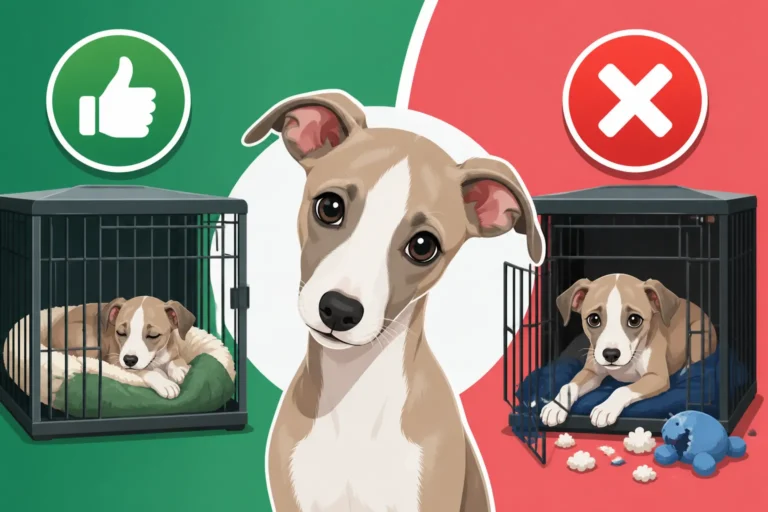
Whippets thrive on routine and predictability. A consistent daily schedule for walks, meals, and playtime can significantly reduce overall anxiety and stress, which often fuel reactive behaviors. Knowing what to expect can make them feel more secure. Within your home, create safe spaces where your Whippet can retreat and feel completely unthreatened. This might be a cozy crate, a designated bed in a quiet room, or a spot under a blanket on the sofa. These sanctuaries are crucial for allowing them to decompress after potentially stressful outdoor experiences or simply to escape household hustle and bustle. Decompression walks in quiet areas, where there are no demands on them and they can sniff and explore at their own pace, are also incredibly beneficial for mental well-being. If you live in a particularly busy area, consider if your Whippet would truly thrive there, as discussed in Why a Whippet Suits a Quiet Home.
4.2. Enriching Your Whippet's Life Beyond the Leash
Since leash walks can be stressful, finding alternative ways to provide mental and physical enrichment is vital. Puzzle toys, snuffle mats, and food-dispensing toys can provide engaging mental stimulation, helping to tire your Whippet's brain without the pressure of a walk. If your Whippet enjoys the company of other dogs, arrange playdates with known, calm, and compatible canine friends in a secure, private yard. This allows them to express their natural play behaviors without the triggers of a public park. Engaging in scent work or trick training can also build confidence and strengthen your bond. Remember, a well-exercised and mentally stimulated Whippet is often a less reactive one, even if that exercise needs to be creative. They may not need a "job" in the traditional sense, but they do need outlets for their minds and bodies, as highlighted in The Job a Whippet Actually Needs.
4.3. Managing Your Own Emotions and Expectations
Let's be honest: having a reactive dog can be incredibly frustrating, embarrassing, and even isolating. It's easy to get angry or upset when your Whippet has a meltdown on a walk. However, your emotions directly impact your dog. Dogs are masters at reading our body language and energy. If you're tense, anxious, or angry, your Whippet will pick up on that, which can heighten their own stress and reactivity. Practice taking deep breaths, staying calm, and remembering that your Whippet is doing the best they can. Celebrate small victories – a walk where they only had one mild reaction instead of five, or when they looked at you instead of lunging at a distant dog. Adjust your expectations. It's okay if your Whippet never becomes the "social butterfly" of the dog park. Focus on progress, not perfection.
4.4. The Importance of Patience and Consistency
Dealing with leash reactivity requires a long-term commitment. There are no quick fixes or magic bullets. Progress often happens in fits and starts, with good days and bad days. It's easy to get discouraged when you feel like you're taking two steps forward and one step back. However, consistency in your training, management, and emotional response is paramount. Every interaction, every walk, is a learning opportunity for your Whippet. Build trust by always being their advocate, protecting them from triggers, and rewarding their efforts. Understand that for a sensitive breed, negative experiences or inconsistent handling can leave a lasting impression, as explored in How Long a Whippet Holds a Grudge. With unwavering patience and consistent effort, you can help your Whippet feel safer and more confident in the world, transforming those stressful walks into more enjoyable experiences for both of you.
Disclaimer
This article is for general informational purposes only and does not constitute professional advice. Laws, prices and regulations vary by location and change over time. Consult a qualified professional for guidance on your specific situation.