Food Guarding in a Whippet
The sight of your graceful Whippet, usually so gentle and sweet, suddenly tensing, stiffening, or even growling over their food can be truly alarming. It’s a behavior that catches many Whippet owners off guard because it seems so out of character for these loving, sensitive dogs. But food guarding, also known as resource guarding, is a deep-seated instinct, and while it can be unsettling, it's something many dogs, including our beloved sighthounds, can exhibit. This guide will help you understand why your Whippet might be guarding their food, how to recognize the signs, and most importantly, what steps you can take to prevent and manage this behavior safely and effectively, fostering a more harmonious relationship with your sensitive companion.
The Instinctive Roots of Food Guarding in Whippets
It's easy to take food for granted in our human world, but for dogs, especially those whose ancestors lived by their wits, food is a precious commodity. Food guarding isn't a sign of malice or a poorly behaved dog; it's a primal survival instinct, and understanding its roots is the first step toward compassionately addressing it.
Survival Instincts and Resource Scarcity
Think about it from a dog's perspective. In the wild, or even just a few generations back, a meal wasn't guaranteed. Food meant survival, and protecting it from others was crucial. This inherent drive to safeguard valuable resources is hardwired into their DNA. Your Whippet, despite living a pampered life in your home, still carries these ancient instincts. When they have food, their brain can, in some scenarios, register it as a resource that needs defending, even if there's no real threat. This doesn't mean your Whippet thinks you're going to steal their dinner, but the underlying instinct can manifest as guarding behavior if not properly managed or if certain triggers are present.
For some Whippets, particularly those from rescue backgrounds, past experiences can amplify this instinct. A dog who has known hunger, competed with littermates or other dogs for food, or even been inadvertently teased or had food taken away in the past, may develop a stronger propensity to guard. They might have learned that asserting ownership is the only way to ensure they get to eat. It's a learned response to perceived insecurity, even if their current environment is perfectly safe and abundant. For these sensitive dogs, trust building around food is paramount.
The Role of Early Life Experiences
A puppy's early environment plays a significant role in shaping their attitude toward food. In a healthy litter, puppies learn bite inhibition and social etiquette from their mother and siblings. They learn that while they might compete for a nipple or a piece of kibble, aggressive guarding isn't usually tolerated by the mother or the stronger littermates. However, if a puppy grows up in an environment where resources are truly scarce, or where competition is allowed to get out of hand, they might learn that aggressive guarding is necessary for survival.
Even in well-meaning homes, accidental human behaviors can inadvertently reinforce guarding. If a child constantly bothers a dog while it's eating, or if an owner frequently removes the bowl to "teach" the dog, it can create anxiety around meal times. A Whippet, known for their sensitive nature, can quickly become wary and defensive if they feel their meal is threatened or interrupted. It's about developing trust and positive associations with human presence during feeding. Remember that How a Whippet Learns When It Bruises From Pressure means that harsh corrections or physical interventions around food are likely to be counterproductive and damaging to your bond.
Spotting the Subtle (and Not-So-Subtle) Signs
Food guarding in Whippets can manifest in a spectrum of behaviors, from very subtle cues that are easy to miss to obvious, unmistakable warnings. Learning to identify these signs early is crucial for effective management and preventing escalation. Ignoring the subtle hints often leads to more pronounced and potentially dangerous displays.
The Grumbles, Glares, and Stiffening Stance
Initially, your Whippet might offer very subtle signals that they're uncomfortable with your proximity to their food. These might include:
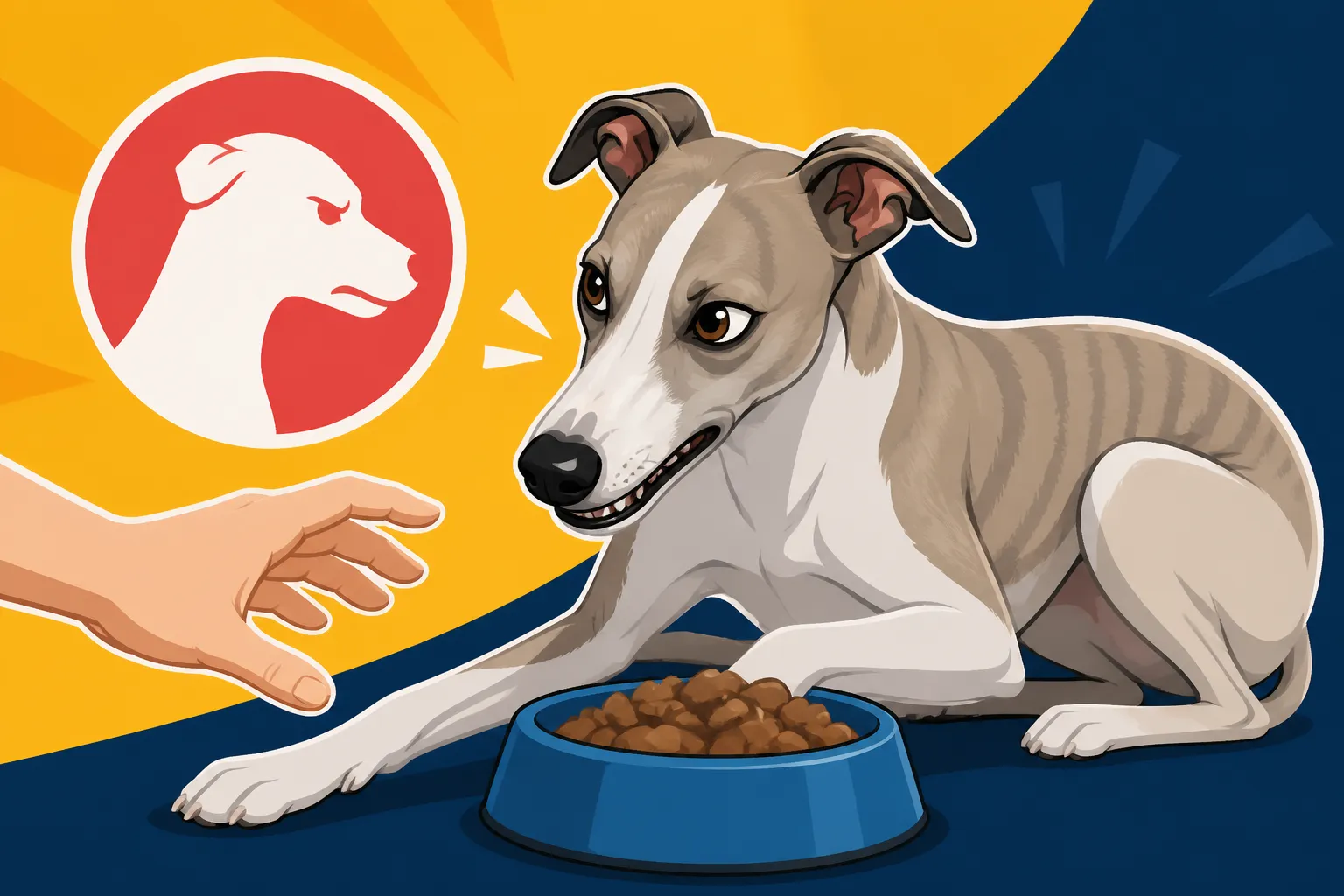
- Freezing or Stiffening: Your Whippet might suddenly stop eating and become very still, rigid, and tense as you approach. Their body language is saying, "Don't come closer."
- Hard Stare or Whale Eye: They might give you a direct, unblinking stare, or show the whites of their eyes (often called "whale eye"), indicating anxiety and potential defensiveness.
- Low Growl or Mumble: A barely audible growl, a low rumble from deep in their chest, or even a soft whimper can be a warning shot. It's their way of communicating displeasure before resorting to more overt actions.
- Body Blocking: They might position their body over the food bowl, turn their back to you, or subtly lean over the food to shield it from your view or reach. This is a clear attempt to assert ownership.
- Eating Faster: Sometimes, a guarding Whippet will start to rapidly consume their food as you approach, as if trying to finish it before you can interfere. This is often seen in dogs who tend to bolt their food, which can be linked to underlying anxiety about resource availability. You might want to explore ideas like The Whippet That Bolts Its Food to help slow them down and reduce this perceived urgency.
It's vital not to punish these early warnings. A growl is a dog's way of saying, "I'm uncomfortable, please back off." If you punish the growl, the dog might learn to skip that warning and go straight to a bite in the future because their initial communication was suppressed.
Escalation: From Snaps to Bites
If the subtle warnings are ignored or if the dog feels increasingly threatened, the guarding behavior can escalate. This is when things become more dangerous:
- Snapping or Lunging: Your Whippet might snap the air in your direction or lunge toward you without making contact. This is a very clear and serious warning that they are prepared to defend their food.
- Direct Growling and Barking: The growls become louder, more sustained, and might be accompanied by baring teeth. They might also bark aggressively specifically at you when you are near the food.
- Biting: In the most severe cases, if the dog feels trapped, cornered, or that their warnings are completely disregarded, they may resort to biting. This is often a last resort for a dog that feels intensely threatened and has exhausted all other communication methods. A bite is never "out of nowhere" – there are always earlier signals that were missed.
It's important to remember that this escalation doesn't make your Whippet "bad"; it means their instincts are overwhelming their learned behaviors, and they are feeling genuinely threatened in that moment. Understanding Why a Whippet Shuts Down When Corrected highlights why punitive methods for guarding are not only ineffective but harmful, as they damage trust and can exacerbate the problem.
Practical Strategies for Prevention and Management
Addressing food guarding requires a consistent, patient, and positive approach. The goal is to change your Whippet's emotional response to your presence near their food from anxiety or possessiveness to anticipation and comfort. This is not about dominating your dog, but about building trust and teaching them that humans near their food bowl mean good things.
Building Trust Through Positive Associations
The cornerstone of managing food guarding is desensitization and counter-conditioning. This means gradually exposing your Whippet to your presence near their food while simultaneously creating positive experiences.
- "Leave It" and "Drop It" Training: Start practicing "leave it" and "drop it" commands with less valuable items, gradually increasing the value of the items. Reward heavily when they comply. This teaches them that letting go of something prized results in an even better reward, not loss. How Quickly a Whippet Learns means they can pick these up, especially if you make it fun and rewarding.
- The "Trade Up" Game: When your Whippet is eating, stand a safe distance away and toss a high-value treat (like a small piece of cooked chicken or cheese) near their bowl, but not in it. Do this periodically. This teaches them that your approach isn't to take, but to give even better things. Over time, you can gradually decrease the distance. Never take the food away without offering a trade.
- Mealtime Presence: Initially, simply be present in the room while your Whippet eats, but far enough away that they don't show any guarding signs. As they relax, slowly decrease your distance over many sessions. If they show any sign of guarding, you've moved too quickly – increase your distance again. The goal is for them to feel completely comfortable with you being near.
- Hand Feeding (with caution): For mild cases, you can try hand-feeding portions of their meal. This builds a direct positive association with your hands and food. Offer a small portion, let them eat, then offer another. Always be calm and non-threatening. If your Whippet shows any discomfort, stop and revert to simpler desensitization.
When choosing rewards, remember that What a Whippet Will Work For is often high-value, small, and easily consumable treats. For these training sessions, skip the kibble and go straight for the good stuff!
Structured Feeding Environments and Tools
The environment where your Whippet eats can also play a significant role. Making meal times predictable, safe, and stress-free is crucial.
- Designated Feeding Area: Feed your Whippet in a quiet, low-traffic area where they won't be disturbed by children, other pets, or sudden noises. This reduces the perceived need to guard. Many people use a crate for feeding, as it provides a secure, personal space.
- Separate Feeding: If you have multiple pets, always feed them in separate rooms or crates to eliminate any competition or perceived threat. This is especially important if you notice any guarding behavior between animals.
- High-Sided or Heavy Bowls: While not a solution to guarding, using a heavy, stable bowl can prevent your Whippet from being able to easily pick it up and move it to "hide" their food, which can be a mild guarding behavior in itself. For fast eaters, a slow-feeder bowl can also help by extending mealtime and reducing the frantic feeling of needing to finish quickly. You can find many effective slow-feeder options on Amazon that make dinner less of a race and more of an enjoyable activity.
- No Interruption Rule: Establish a firm rule that no one, especially children, should disturb the Whippet while they are eating. This helps them feel secure that their food won't be taken away. This goes for toys and beds too – teach everyone in the household to respect the dog's space and resources.
| Severity of Guarding | Common Signs | Recommended Actions |
|---|---|---|
| Mild | Stiffening, hard stare, subtle body blocking, eating faster. | Toss high-value treats near the bowl. Practice "trade up" game. Ensure quiet feeding area. |
| Moderate | Low growl, direct stare, audible body blocking, snapping air. | Immediately cease approaching. Focus on "trade up" from further distance. Consult a professional trainer. Use a barrier for feeding. |
| Severe | Loud growling, snarling, lunging, biting. | STOP all direct interaction with food bowl. Immediately seek a certified professional behaviorist. Feed behind a sturdy barrier. |
Enrichment and General Training
Beyond direct food-related training, a well-adjusted, confident Whippet is less likely to feel the need to guard.
- Consistent Positive Reinforcement Training: Engaging in regular, reward-based training sessions for general obedience (sit, stay, come) builds a strong bond and reinforces positive interactions. Whether Positive Training Alone Works on a Whippet is a question many ask, but for sensitive dogs like Whippets, it's often the most effective and least damaging approach.
- Mental and Physical Exercise: Ensure your Whippet gets adequate physical exercise and mental stimulation. A bored or under-exercised dog can develop anxiety or obsessive behaviors, including guarding. Even though they are couch potatoes, they still need their zoomies!
- Puzzle Toys and Chews: Offer puzzle toys or long-lasting chews in a designated, safe area away from their main meal. This teaches them to enjoy resources calmly without feeling threatened. This can also be a great use for items found on Amazon, giving your Whippet independent enrichment.
When to Call in the Professionals (and Which Kind)
While prevention and management strategies can be highly effective, some cases of food guarding require expert intervention. Knowing when to call in a professional is crucial for both your safety and your Whippet's well-being.
Recognizing Severity and Risk
If your Whippet's guarding behavior involves growling, snarling, lunging, or especially snapping or biting, it's time to seek professional help. These are serious warning signs that the behavior is deeply ingrained or that your attempts at management aren't sufficient. Never feel ashamed to reach out; it's a sign of a responsible pet owner committed to their dog's welfare. Ignoring severe guarding can lead to dangerous situations, particularly in households with children or other pets. A professional can assess the specific triggers, the severity of the guarding, and create a tailored, safe, and effective behavior modification plan.
Finding a Qualified Professional Behaviorist
Not all dog trainers are equipped to handle resource guarding, especially when aggression is involved. Look for a certified professional dog trainer (CPDT) or, ideally, a certified applied animal behaviorist (CAAB) or a veterinary behaviorist (DACVB). These professionals have advanced education and experience in animal behavior and can help diagnose underlying issues and implement appropriate training and management plans. They often work using positive reinforcement methods and can guide you through the desensitization and counter-conditioning protocols safely. They might also suggest specific exercises that relate to The Whippet That Steals Off the Counter if guarding extends beyond the bowl.
When searching for a professional, ask about their certifications, their experience with resource guarding, and their training philosophy. Avoid anyone who suggests punitive methods, "alpha" techniques, or force, as these can severely damage your Whippet's trust and exacerbate fear-based behaviors.
Online Resources and Structured Learning Programs
In addition to in-person professionals, many excellent online resources can provide guidance and support, especially for milder cases or for owners looking to educate themselves further. Online dog training platforms or virtual consultations with certified trainers can offer valuable insights and structured learning programs.
For instance, programs like those offered by BAXTER & Bella provide comprehensive online puppy and dog training resources, often including modules on common behavior challenges like resource guarding, using positive reinforcement techniques. While they may not replace one-on-one expert advice for severe cases, they can be an excellent supplement for learning foundational skills, understanding canine body language, and implementing management strategies in a structured way. They can help you build confidence in your training approach and strengthen your bond with your Whippet.
Remember, addressing food guarding is a journey of patience, consistency, and empathy. By understanding your Whippet's instincts and employing positive, trust-building strategies, you can help them feel secure about their resources, ensuring meal times are a peaceful and enjoyable experience for everyone.
Disclaimer
This article is for general informational purposes only and does not constitute professional advice. Laws, prices and regulations vary by location and change over time. Consult a qualified professional for guidance on your specific situation.