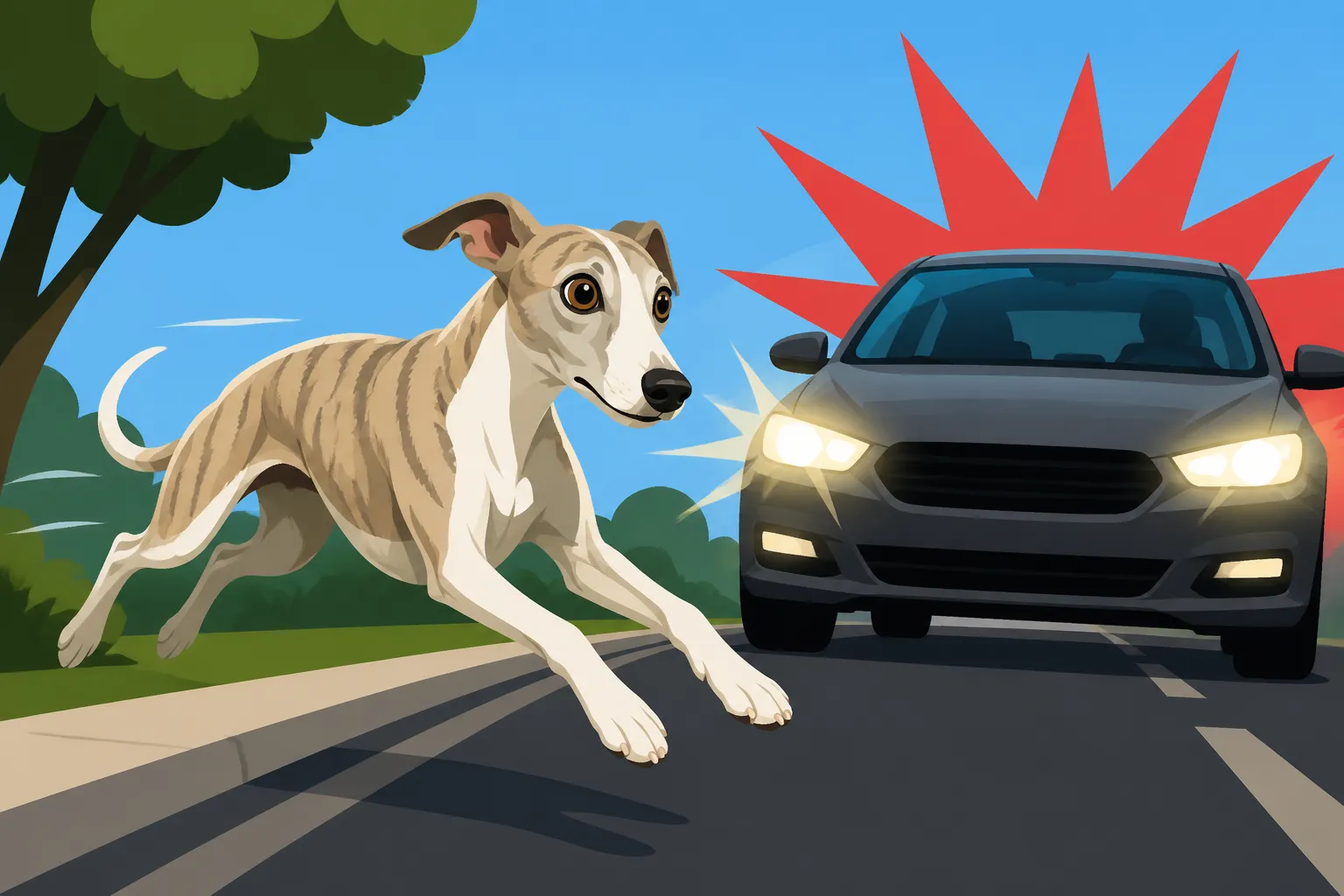
Why a Loose Whippet Runs Into Traffic
There are few things more terrifying for a Whippet owner than the sight of their beloved, lean companion slipping their lead or finding a gap in a fence, bolting straight toward a busy road. That heart-stopping, breath-catching moment is a universal nightmare, often leaving us wondering why a dog that seems so bonded and well-trained would disregard everything to chase a fleeting instinct. This guide is here to shed light on the powerful drives and unique traits that make a loose Whippet so prone to running into traffic, and crucially, what we can do to manage these inherent risks and keep them safe.
The Deep-Rooted Sighthound Instinct: Prey Drive Overrides All
To truly understand why a Whippet might ignore your frantic calls and head straight for danger, we have to look back at their very origins. Whippets are sighthounds, bred for centuries to spot, chase, and catch small, fast-moving prey over open ground. This isn't just a learned behavior; it's hardwired into their DNA, a primal urge that can override almost everything else in the heat of the moment. It’s what makes them such incredible athletes, but also presents significant challenges in domestic settings.
The Irresistible Call of the Chase
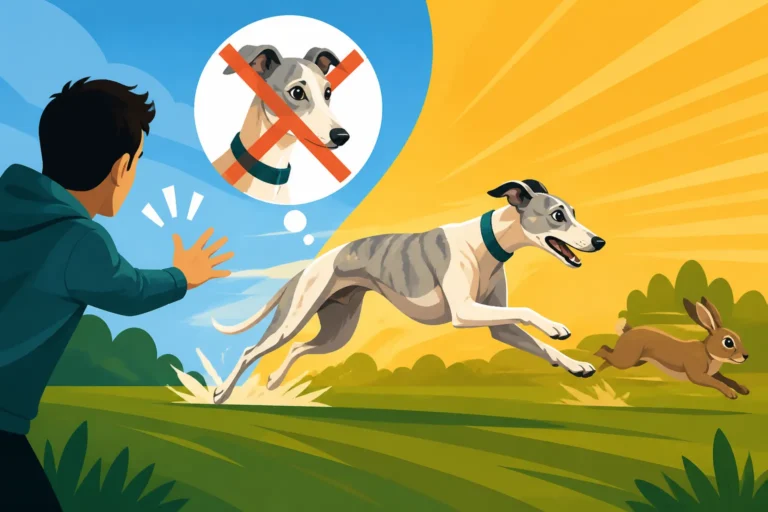
Imagine seeing a blur of fur or a flash of movement – a squirrel scrambling up a tree, a rabbit darting across a field, or even just a plastic bag blowing across the street. For a Whippet, this isn't just an interesting sight; it's a direct challenge, an instinctual command to pursue. Their eyes are designed for distance and motion detection, and once they lock onto something, the world around them can effectively cease to exist. They don't process the concept of a road or a car when that instinct kicks in. They only see the target and the path to catch it.
This incredible drive means that even a well-socialized Whippet, one who lives happily with cats at home, can be completely transformed by the sight of an unknown feline or a small animal on the street. It’s not malice; it’s instinct. Many owners grapple with this internal conflict, knowing their dog is gentle at home, yet a relentless hunter outdoors. Understanding this fundamental aspect of their breed helps us approach safety with more realism. It’s why topics like Why a Whippet's Chase Instinct Overrides Its Recall are so vital for us to explore.
Tunnel Vision: When the World Narrows to a Target
When a Whippet’s prey drive is activated, their perception of their surroundings narrows dramatically. They enter a state often referred to as "target fixation." It's like putting on blinders, where the only thing that matters is the object of their pursuit. The sounds of traffic, the sight of a familiar human, even a sudden loud noise, can be momentarily filtered out or severely deprioritized. Their entire being is focused on that one goal: the chase.
This isn't a sign of disobedience or a lack of love for you; it's a profound biological response. They are simply doing what generations of their ancestors were bred to do. When you see your Whippet hurtling across a park, seemingly deaf to your shouts, it’s not that they’re ignoring you out of spite, but rather that their brain is so singularly focused on the hunt that your voice barely registers. This is a critical factor in why Thirty Five Miles an Hour and No Brakes on a Whippet's Recall is such a stark reality for sighthound owners.
The Whippet's Unparalleled Speed and Acceleration
Beyond the powerful prey drive, the sheer athletic capability of a Whippet makes any uncontrolled dash toward traffic incredibly dangerous. These dogs are built for speed, agility, and explosive acceleration, traits that are wonderful in a safe, enclosed space but perilous near busy roads.
The Burst of Speed That Defies Catching
A Whippet can go from a standstill to full sprint in just a few strides. They are masters of acceleration, capable of reaching impressive speeds almost instantly. You might feel confident in your own quick reactions, but it's a rare human that can outmaneuver or outrun a Whippet in full chase mode. This explosive burst means that once they've committed to a chase, covering a significant distance – including crossing a road – happens in the blink of an eye.
It's tempting to think you could grab them if they just hesitated, but a Whippet in pursuit rarely hesitates. Their lean, muscular bodies are designed for maximum efficiency in movement, making them incredibly difficult to intercept once they decide to run. This characteristic is why articles such as How Fast a Whippet Actually Runs often highlight the challenges owners face in controlling their dogs when off-leash in inappropriate areas.
Distance Covered in the Blink of an Eye
What seems like a short distance to us – say, across a street or to the other side of a small park – is nothing for a Whippet in full flight. They cover ground with astonishing speed, making it nearly impossible for you to react, anticipate, or prevent them from reaching a dangerous area like a roadway. A few seconds of inattention, a momentary lapse in leash grip, or an unexpected opening in a fence can be all it takes for them to be out of reach and directly in harm's way.
This rapid covering of distance means that the consequences of a loose Whippet can escalate frighteningly fast. A tiny patch of grass next to a road, seemingly safe for a quick potty break, can become a launchpad for a chase that ends tragically. It reinforces why vigilance and secure environments are paramount for this breed. We often discuss How Far a Whippet Can Sprint Before It Tires, and while they don't have endless stamina for distance, their initial burst is more than enough to put them in severe danger.
Environmental Factors and "Target Fixation"
Even beyond the inherent drives and physical capabilities, the environment itself plays a huge role in why a Whippet might bolt into traffic. Urban and suburban settings are full of unexpected stimuli that can trigger that intense prey drive, and the very layout of these areas often puts them in direct conflict with fast-moving vehicles.
The Distractions of an Urban Environment
City parks and suburban streets, while offering green spaces, are a minefield of potential distractions for a Whippet. Not only are there squirrels and rabbits, but also children on scooters, bicycles, stray plastic bags, even shadows that mimic movement. Each of these can be enough to ignite that powerful chase instinct. Unlike other breeds that might pause or look back for guidance, a Whippet's tunnel vision means they often don't register the surrounding concrete and metal dangers.
The constant flow of traffic, the noise, and the sudden movements of cars can also contribute to their disorientation or over-stimulation, making them even less likely to respond to a recall. They might perceive a car as just another fast-moving object in their peripheral vision, not a threat to be avoided. This is a crucial distinction from many other breeds, and it's why understanding Why a Whippet Cannot Be Let Off Leash in an Open Field is literally a matter of life and death.
Overwhelmed by Sensory Input
Whippets are sensitive creatures, and while they can be calm and collected indoors, the sensory overload of a busy outdoor environment can be intense. The cacophony of city sounds – horns honking, sirens wailing, footsteps, voices – combined with a myriad of smells and visual stimuli, can put them into a highly aroused state. In this heightened state, their ability to process complex commands or prioritize safety diminishes significantly.
An unexpected loud noise, like a backfiring car or a sudden shout, might not make them cower and run back to you, as some dogs might. Instead, it could startle them into a flight response, or worse, cause them to bolt in a random, panic-driven direction – which could easily be straight into traffic. This is particularly true if they are already on the cusp of reacting to a visual stimulus. It underscores the difficulty of getting a reliable recall when your Whippet is distracted or overstimulated, a challenge explored in How Far a Whippet's Recall Can Be Trusted.
Training Challenges: Why Recall Can Fail When It Matters Most
We all want a dog with a perfect recall, and many Whippets can achieve this in low-distraction environments. However, the reality is that the unique wiring of a sighthound means that even the best-trained Whippet can have a recall failure when their prey drive is truly engaged.
The Limitations of Even a "Perfect" Recall
You might have spent countless hours practicing recall in your yard or a quiet park. Your Whippet comes flying back to you, tail wagging, every single time. This builds confidence, but it can also lead to a false sense of security. The truth is, a "perfect" recall in a controlled environment doesn't always translate to reliability when a real-world, high-value distraction, like a bounding deer or a fleeing rabbit, appears.
For a Whippet, the reward of the chase is incredibly powerful, often outweighing any treat or praise you can offer in that critical moment. It's not that they don't know the command; it's that their instinctive drive temporarily overrides their learned response. This is why many experienced sighthound owners will tell you that off-leash time in unfenced areas is simply not worth the risk. It’s not about their intelligence, but about the strength of their ancient instincts.
Building a Rock-Solid Emergency Stop
Given the limitations of a standard recall, many Whippet owners focus on an "emergency stop" or "down-stay" command, which can be invaluable. This command aims to get your Whippet to drop to the ground or freeze in place, regardless of what they are pursuing. It's a challenging command to teach and proof, requiring immense patience and consistent, high-value rewards. However, even this isn't foolproof against an extreme prey drive.
Training resources, like those offered by BAXTER & Bella, can provide structured guidance for these advanced commands. The key is practicing in incrementally more distracting environments, always ensuring success before moving to the next level. The goal isn't just to teach the command, but to build such a strong positive association with it that it can compete with the thrill of the chase. This diligent work is crucial for Proofing a Whippet's Recall Against Prey.
Prevention and Management: Keeping Your Whippet Safe
Given all these powerful instincts and physical capabilities, the most effective approach to preventing a Whippet from running into traffic is always through prevention and careful management. It’s about creating an environment where the opportunity for them to bolt into danger is minimized, if not eliminated entirely.
Secure Fencing and Leash Protocols
This cannot be stressed enough: a secure, physical barrier is your Whippet's best friend. For yard time, a fence needs to be tall enough and sturdy enough to contain them. A surprising number of Whippets can clear fences that might deter other breeds, so consider the height carefully. Many recommend at least a six-foot fence, and some agile Whippets might even test that. Also, check for gaps underneath or loose boards. If your Whippet is a digger, which is less common but not unheard of, you might need to secure the bottom of the fence. Learning How Tall a Fence a Whippet Needs is crucial for home safety.
When out and about, a leash is non-negotiable in any unfenced public area, especially near roads. And not just any leash and collar will do. Whippets have narrow, strong necks and can easily slip out of standard flat collars. A martingale collar, which tightens gently when pulled, is often recommended, as it prevents them from backing out of their collar. Alternatively, a well-fitting sighthound-specific harness can also be a secure option, provided it's one they can't easily wriggle out of. You can find a wide variety of these specialized collars and harnesses on platforms like Amazon, ensuring you get a snug and safe fit. It is vital to consider Whether a Martingale Suits a Whippet and The Harness a Whippet Backs Out Of before making a purchase.
Here's a quick comparison of common collar and harness types for Whippets:
| Equipment Type | Pros | Cons | Best Use |
|---|---|---|---|
| Flat Buckle Collar | Easy to put on, holds ID tags. | Easily slipped, especially by a determined Whippet. | Only for ID tags; not recommended for leash walking. |
| Martingale Collar | Prevents slipping, humane tightening. | Can be harsh if constantly pulling, not for tie-outs. | Everyday walks, training, good for preventing escapes. |
| Front-Clip Harness | Discourages pulling, offers good control, secure. | Can tangle legs if not fitted well, some dogs dislike. | Training for leash manners, general walks, good for slender builds. |
| Back-Clip Harness | Comfortable, less pressure on neck, easy to use. | Can encourage pulling, easier to back out of if not secure. | Low-pulling dogs, good for comfort, less control than front-clip. |
| Sighthound Harness | Designed for deep chests and slender builds, very secure. | Can be harder to find, may require custom fitting. | Highly recommended for escape artists, provides excellent security. |
Training Aids and Specialized Equipment
While prevention is key, ongoing training is also essential. Even on a leash, a strong prey drive can lead to sudden lunges. Using a secure training leash, sometimes called a long line, can give your Whippet a bit more freedom in a truly safe, enclosed area while still maintaining control. For behavioral issues related to over-excitement or pulling, products available through online retailers like Amazon, such as specialized training leashes or even treat pouches, can support your efforts.
Consider enrolling in positive reinforcement training classes or utilizing online resources like BAXTER & Bella. These programs can help you build a stronger bond with your Whippet, teach impulse control, and refine those emergency commands. While no training can completely eliminate a sighthound's prey drive, consistent, positive reinforcement can significantly improve their responsiveness in less-than-ideal situations. You might also want to explore activities like How Lure Coursing Channels a Whippet's Drive, which provides a safe and appropriate outlet for their natural instincts. This way, they can satisfy their innate desire to chase without ever putting themselves in danger. Every single day, your Whippet relies on you to ensure What a Whippet Needs Every Day includes safety and mental enrichment.
Disclaimer
This article is for general informational purposes only and does not constitute professional advice. Laws, prices and regulations vary by location and change over time. Consult a qualified professional for guidance on your specific situation.